
In the rapidly evolving landscape of digital communication, the shift from text-based messaging to symbol-centric interaction has redefined how humans convey nuance, emotion, and intent. Among the vast library of Unicode characters, the blue butterfly emoji ( ) has emerged as a particularly potent symbol. While a casual user might view it as a mere digital illustration of nature, its significance within the tech ecosystem—spanning social media algorithms, user interface (UI) design, and natural language processing (NLP)—is profound. To understand what the blue butterfly emoji means in a tech context, one must look beyond the insect and into the infrastructure of modern digital linguistics.

The Technical Framework: Unicode Standards and Cross-Platform Rendering
The blue butterfly emoji is not merely an image; it is a standardized piece of data. Understanding its meaning begins with the technical architecture that allows it to appear across billions of devices globally.
From U+1F98B to Your Screen
Every emoji starts as a code point assigned by the Unicode Consortium. The butterfly emoji, specifically designated as U+1F98B, was added to Unicode 9.0 in 2016. In technical terms, this standardization ensures that when a user in Tokyo sends a butterfly emoji to a user in New York, the underlying data remains consistent. However, the interpretation of that data—the “rendering”—is handled by the operating system (OS).
Apple, Google, Microsoft, and Samsung each employ different design philosophies for their emoji sets. Apple’s rendition of the is often highly detailed and photorealistic, leaning into the aesthetic “skeuomorphism” that characterizes much of iOS. In contrast, Google’s Noto Color Emoji set often favors a flatter, more vibrant design. These subtle differences in UI design can influence the perceived tone of the message, demonstrating how software design dictates the emotional “output” of a standardized data point.
The Challenge of Fragmentation
One of the primary hurdles in tech communication is “fragmentation.” Because different platforms update their Unicode support at different speeds, a new emoji sent from a cutting-edge smartphone might appear as a “tofu” symbol (a blank box ☒) on an older device. The blue butterfly, being a relatively established character, serves as a benchmark for platform compatibility. It represents a successful integration of biological imagery into the universal digital lexicon, showing how tech companies prioritize “emotional utility” in their software updates to keep users engaged.
Algorithmic Influence and Social Media Context
In the realm of social media technology, emojis function as more than just decorations; they are critical metadata used by algorithms to categorize content, gauge sentiment, and drive engagement.
The Blue Butterfly on TikTok and Instagram
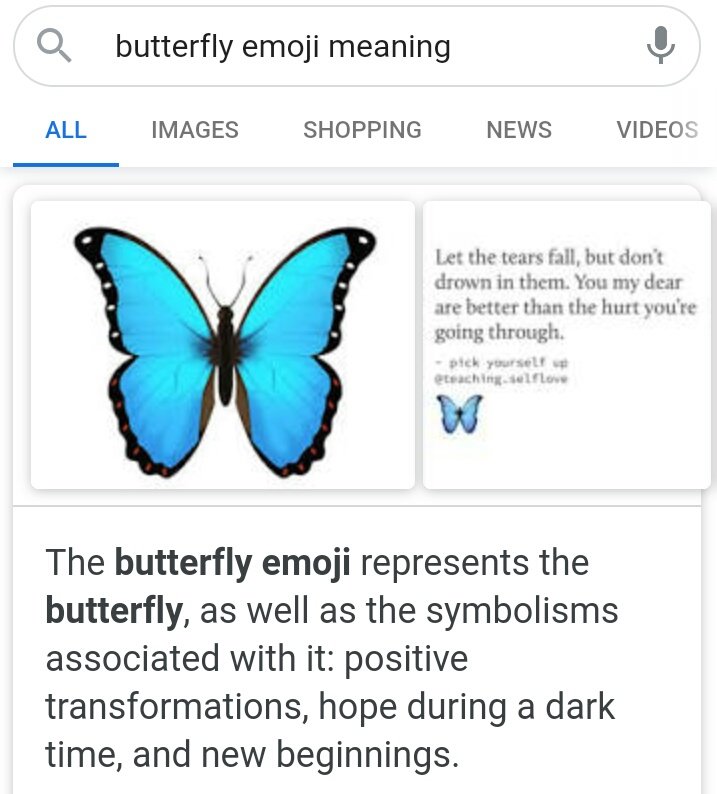
On platforms like TikTok and Instagram, the blue butterfly has been adopted by specific subcultures, often signifying “transformation,” “rebirth,” or “positivity.” From a tech perspective, these emojis act as informal “tags.” When a user includes in their caption, the platform’s recommendation engine interprets this as a signal.
For instance, if a user frequently interacts with posts containing the blue butterfly, the algorithm (a complex neural network) learns to associate that symbol with the user’s aesthetic preferences. This creates a feedback loop: the emoji helps the AI categorize the content into “niches”—such as wellness, fashion, or digital art—thereby optimizing the user’s “For You” page. In this sense, the blue butterfly is a data anchor that helps refine machine learning models.
Sentiment Analysis and AI Interpretation
Large Language Models (LLMs) and sentiment analysis tools used by tech firms monitor the usage of emojis to understand public mood. The blue butterfly is generally categorized under “high-valence” (positive) and “low-arousal” (calm) sentiment.
Developers building customer service bots or social listening tools program their AI to recognize the butterfly as a sign of user satisfaction or aesthetic appreciation. However, the tech becomes even more sophisticated when detecting “sarcastic” or “coded” usage. The ability of an AI to distinguish between a literal butterfly and a symbolic representation of a “butterfly effect” in a chaotic system is a testament to the current frontier of Natural Language Understanding (NLP).
Digital Linguistics: How Technology Redefines Non-Verbal Communication
The blue butterfly emoji occupies a unique space in digital linguistics, serving as a “gestural” bridge in a medium that lacks physical body language.
The Symbolism of Transformation in the Digital Age
Technologically mediated communication is often criticized for being “cold.” The blue butterfly addresses this by acting as a shorthand for complex concepts. In the context of “Tech-Talk,” the butterfly is often used to symbolize the “Butterfly Effect” in software engineering—the idea that a small bug or code change can have massive, non-linear impacts on an entire system.
Furthermore, the butterfly represents “Digital Metamorphosis.” As companies undergo digital transformation, moving legacy systems to the cloud, the butterfly emoji is frequently used in internal Slack channels or LinkedIn updates to signal a successful migration or a “rebirth” of a product UI. It has become the unofficial icon for the “Version 2.0” of the digital self.
Meta-Data and Emotional Resonance
Every time a user selects the blue butterfly from their “frequently used” menu, they are interacting with an interface designed for speed. Mobile OS developers use predictive text technology to suggest emojis based on keywords. Typing “transformation” or “pretty” often triggers the suggestion. This is a deliberate UI choice to reduce “friction” in digital communication. By suggesting the butterfly, the technology is actively shaping the user’s linguistic output, encouraging the use of visual symbols over polysyllabic adjectives. This shift represents a fundamental change in human cognitive processing—moving from linear text to associative imagery.
Privacy, Security, and Coded Language in Messaging Apps
While the blue butterfly appears innocent, the tech world must also account for its use in encrypted communications and “dark social” channels.
Steganography and Symbolic Shortcuts
In the world of cybersecurity and digital privacy, emojis are sometimes used in “steganography”—the practice of concealing a message within another non-secret message. Because the blue butterfly is so common, it can be used as a “trigger” or a “signal” in coded communications between parties who wish to avoid detection by keyword-based surveillance filters.
For example, a group of developers might use the emoji in a private Discord or Telegram channel to signify that a specific server deployment is live or that a security patch has been successfully “metamorphosed” into the master branch. Using common symbols as secret keys is a low-tech but effective way to add a layer of human-centric obfuscation to digital interactions.
The Role of Emojis in End-to-End Encrypted Spaces
In apps like Signal or WhatsApp, which feature end-to-end encryption (E2EE), the service provider cannot see the content of the messages, but they can see “metadata.” However, since emojis are part of the encrypted payload, the meaning of the blue butterfly remains strictly between the sender and the receiver.
The tech behind emoji reactions—where a user can “long-press” a message to react with a —is a specialized UI feature designed to minimize data usage. Instead of sending a whole new message string, the app sends a small reaction packet. This efficiency is crucial for maintaining performance in low-bandwidth environments, proving that the blue butterfly is as much a feat of data engineering as it is a visual icon.

Conclusion: More Than Just a Bug in the System
The blue butterfly emoji is a microcosm of the modern tech landscape. It is a product of international standardization (Unicode), a tool for algorithmic sorting (social media), a medium for sentiment analysis (AI), and a shorthand for complex human emotions (UI/UX).
To ask “what does a blue butterfly emoji mean” is to ask how technology interprets the human experience. It means that we have successfully translated a fleeting moment of nature into a 16-bit character that can be processed, analyzed, and transmitted across the globe in milliseconds. Whether it is signaling a “butterfly effect” in a codebase or acting as a tag for a viral TikTok trend, the remains a testament to the power of digital symbols in an increasingly automated world. As we move toward more immersive technologies like the Metaverse and AR, the role of these symbols will only grow, further blurring the line between biological beauty and digital utility.
aViewFromTheCave is a participant in the Amazon Services LLC Associates Program, an affiliate advertising program designed to provide a means for sites to earn advertising fees by advertising and linking to Amazon.com. Amazon, the Amazon logo, AmazonSupply, and the AmazonSupply logo are trademarks of Amazon.com, Inc. or its affiliates. As an Amazon Associate we earn affiliate commissions from qualifying purchases.