
When we attempt to visualize a blockchain, the mind often defaults to a literal chain of glowing metallic cubes or a scrolling green rain of code reminiscent of science fiction. However, for software engineers, data architects, and technology enthusiasts, the “look” of a blockchain is found in its logical structure, its cryptographic fingerprints, and its decentralized network topology. To understand what a blockchain looks like is to understand the intersection of data structures, peer-to-peer networking, and advanced cryptography.
At its core, a blockchain is a distributed ledger, but visually and technically, it is a complex architectural stack. It is a chronological database where every entry is inextricably linked to the one preceding it, creating a structural integrity that is virtually impossible to breach without detection.
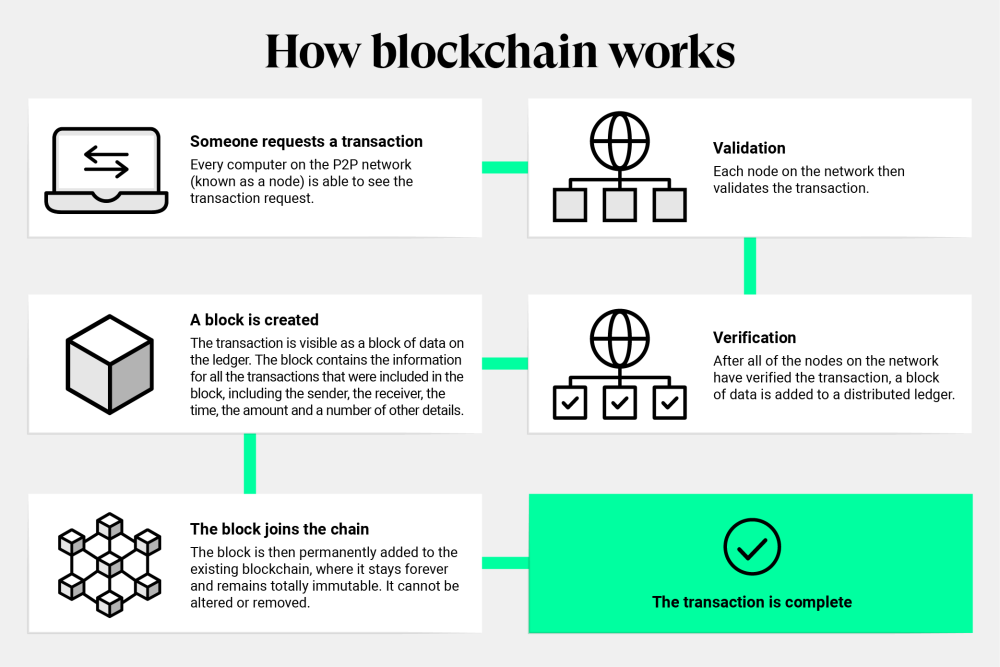
The Anatomy of a Block: Data, Hash, and Connectivity
To understand the macro structure of a blockchain, we must first look at the micro level: the individual block. If we were to inspect the “software anatomy” of a block, we would see three distinct primary components that define its appearance and function.
The Data Payload
The “body” of the block contains the actual information being recorded. In a financial context, these are transaction records. In a supply chain context, these might be IoT sensor readings or location stamps. In a digital identity framework, these could be encrypted credential hashes. From a technical perspective, this data is often organized in a way that prioritizes space efficiency and speed, often utilizing a specific data structure known as a Merkle Tree.
The Cryptographic Hash
Every block has a unique identifier known as a hash. Imagine a digital fingerprint produced by a cryptographic algorithm (such as SHA-256). This hash is a string of alphanumeric characters that represents the entirety of the block’s contents. If a single bit of data within the block changes, the hash changes entirely. Visually, the hash functions as the “seal” of the block, ensuring that its contents are immutable once written.
The Previous Hash: The “Chain” in Blockchain
The most critical visual element of a blockchain’s architecture is the inclusion of the previous block’s hash within the current block’s header. This is what creates the “chain.” If you were to map this out, you would see a series of data packets where each one points backward to its predecessor. This backward-pointing reference ensures that you cannot change a block in the middle of the sequence without breaking every subsequent link in the chain.
The Network Topology: Visualizing Decentralization
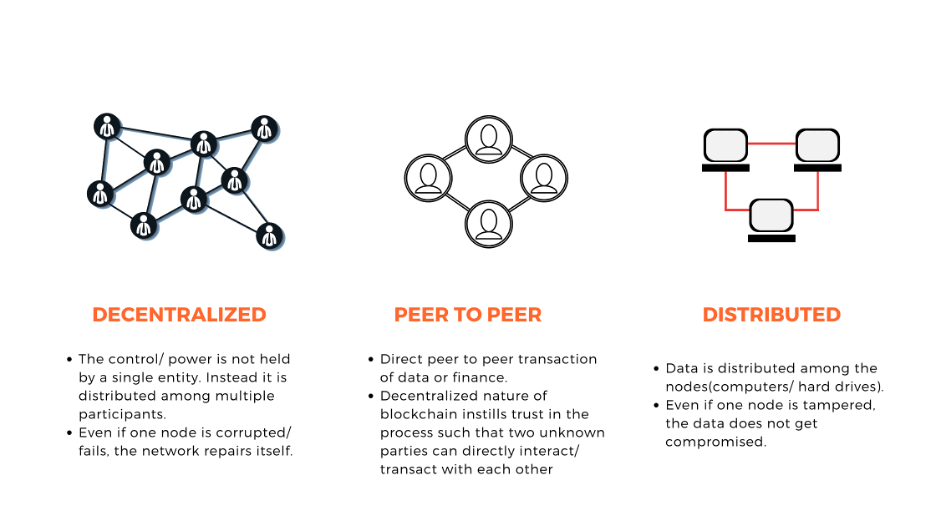
If the individual blocks are the vertebrae, the network topology is the nervous system. Unlike traditional “client-server” models, where a central hub connects to various spokes, a blockchain looks like a dense, interconnected web of equal participants.
Peer-to-Peer (P2P) Infrastructure
In a centralized system, the map of the network looks like a star, with all lines leading to a single point of failure. In a blockchain, the network looks like a mesh. Every “node”—a computer running the blockchain software—connects to multiple other nodes. They share information laterally rather than vertically. This mesh-like appearance is the visual representation of resilience; there is no “off” switch because the data exists in thousands of places simultaneously.
The Mempool: The Waiting Room
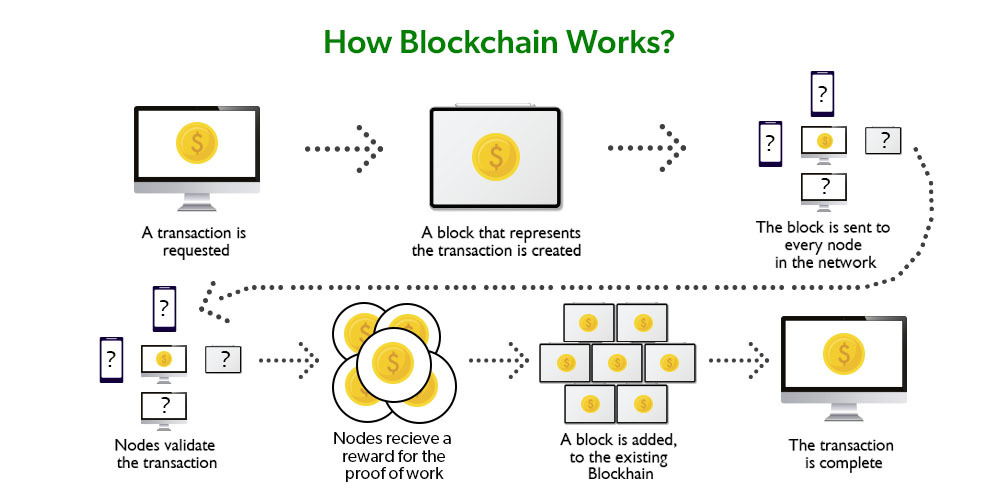
Before data is “chained,” it exists in a secondary visual space called the Memory Pool, or mempool. To a developer, the mempool looks like a fluctuating queue of unconfirmed transactions. Nodes broadcast these transactions to one another, and they sit in this digital waiting room until a validator or miner selects them to be bundled into a new block. Visualizing the mempool allows us to see the “heartbeat” of the network—the constant inflow of new data waiting to be finalized.
Consensus Mechanisms in Motion
The way these nodes agree on the “truth” is called consensus. Whether it is Proof of Work (PoW) or Proof of Stake (PoS), the visual flow of data changes. In PoW, you would see a massive expenditure of computational energy as nodes solve complex puzzles. In PoS, the visualization shifts toward “validators” who are chosen based on their stake in the network. In both cases, the “look” of the network is one of constant synchronization, where every node works to ensure its local copy of the ledger matches everyone else’s.
Data Organization: The Elegance of the Merkle Tree
Internally, a block does not just hold a messy pile of data. It uses a highly organized structure called a Merkle Tree (or binary hash tree). This is one of the most beautiful aspects of blockchain tech from a mathematical perspective.
Summarizing Large Datasets
A Merkle Tree starts at the bottom with individual transaction hashes. These are paired and hashed together to create a new layer of hashes, which are then paired and hashed again, continuing upward until only one hash remains at the top. This final hash is known as the Merkle Root.
Efficient Verification
The Merkle Tree allows a computer to verify if a specific transaction is included in a block without having to download the entire block. By following the “path” of hashes up the tree, the software can prove data integrity in seconds. Visually, this looks like a pyramid or an upside-down tree, where the “leaves” are the data and the “root” is the ultimate summary. This structure is what allows mobile wallets and “light nodes” to function without storing terabytes of data.
The Ledger as a Living Document: Immutability and State
When we ask what a blockchain looks like, we are also asking about its “state.” In computer science, the state is the current status of all information in the system at a specific point in time.
The Immutable Record
A blockchain looks like a “write-only” ledger. You can add new lines (blocks), but you can never erase or edit old ones. This creates a vertical timeline of history. If you want to “change” a balance or a piece of data, you must add a new entry that reflects the change, leaving the original error or entry visible in the previous blocks. This transparency is a core tenet of digital security.
Smart Contracts: The Programmable Layer
On advanced blockchains like Ethereum or Solana, the blockchain doesn’t just store data; it stores code. These are known as smart contracts. Visually, these look like automated vending machines living on the chain. When a certain condition is met (if X happens), the code automatically executes a result (then do Y). This adds a layer of “logic” to the visual map of the blockchain, turning it from a static record-keeper into a global, decentralized computer.
Security through Design: The Visualization of Cryptography
Digital security is often invisible, but in a blockchain, it is woven into the very fabric of the data’s appearance. The security of the system relies on the “asymmetric” nature of cryptography.
Public and Private Keys
Every participant on a blockchain has a public key (their address) and a private key (their secret signature). If you were to look at a transaction on a block explorer, you would see long strings of hexadecimal characters. These strings are the masks that provide privacy while maintaining accountability. The blockchain looks like a public glass box: everyone can see the contents, but only those with the correct keys can move or “unlock” specific assets within it.
The 51% Visual Barrier
The security of a blockchain can also be visualized as a barrier. For an attacker to rewrite the history of a blockchain, they would need to control more than half of the network’s resources (hashing power or staked tokens). On a large network like Bitcoin, this barrier is so high it is effectively a wall. The “look” of a secure blockchain is one of massive, distributed agreement that becomes exponentially harder to change the further back in time you go.
The Future: From Chains to Directed Acyclic Graphs (DAGs)
As technology evolves, the “look” of the blockchain is changing. Some modern protocols are moving away from the linear “chain” entirely and moving toward a structure called a Directed Acyclic Graph (DAG).
In a DAG, there are no blocks. Instead, every new transaction must confirm two or more previous transactions. This creates a web-like structure that grows in multiple directions at once, rather than a single line. This “tangle” of connections allows for much higher speeds and scalability, representing the next frontier of how we visualize distributed ledger technology.
Ultimately, a blockchain looks like the ultimate digital truth-machine. It is a structure where mathematics replaces trust, and where the architecture itself provides the security. It is a masterpiece of software engineering that combines the rigidity of a chronological chain with the fluid, organic resilience of a global peer-to-peer network. Whether viewed as a Merkle Tree, a P2P mesh, or a cryptographic timeline, the blockchain remains the most significant shift in data architecture of the 21st century.
aViewFromTheCave is a participant in the Amazon Services LLC Associates Program, an affiliate advertising program designed to provide a means for sites to earn advertising fees by advertising and linking to Amazon.com. Amazon, the Amazon logo, AmazonSupply, and the AmazonSupply logo are trademarks of Amazon.com, Inc. or its affiliates. As an Amazon Associate we earn affiliate commissions from qualifying purchases.