
When most people think of Bitcoin, they visualize a shiny, gold-plated coin embossed with a stylized “B” and two vertical strokes. This image, widely used by media outlets and stock photo agencies, has become the universal shorthand for the world’s first cryptocurrency. However, if you were to open a computer, a hard drive, or even the most sophisticated digital wallet, you would never find a file or an object that looks like that gold coin.
In reality, Bitcoin has no physical form. It is not a JPEG, it is not a PDF, and it is not a “coin” in the traditional sense. To understand what a Bitcoin actually “looks” like, one must look past the metaphors and dive into the world of distributed systems, cryptographic hash functions, and hexadecimal strings. From a technology perspective, a Bitcoin is an intangible sequence of data—a digital record of ownership verified by a global network of computers.
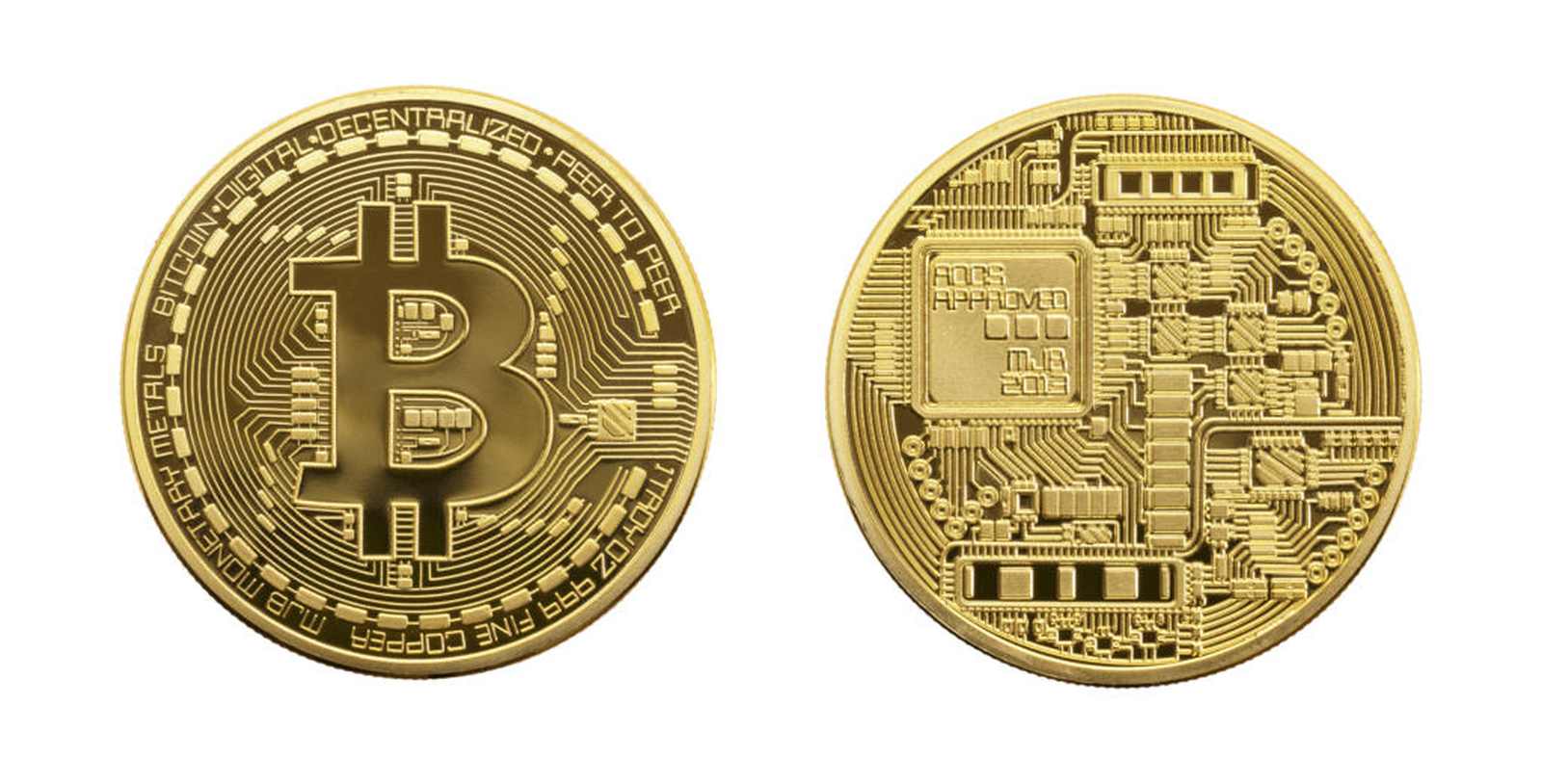
The Myth of the Physical Coin vs. the Reality of Data
The physical representation of Bitcoin is a marketing necessity, not a technical reality. Humans are evolved to understand value through tangible objects, so the “gold coin” imagery serves as a bridge between the physical world of fiat currency and the abstract world of computer science. But to the software that runs the network, Bitcoin looks like something entirely different.
The Symbolic Representation and the UI
In software applications—such as Coinbase, Metamask, or hardware wallet interfaces—Bitcoin is represented by a user interface (UI) element. This is usually a numerical value displayed next to a logo. When you check your balance, the app isn’t “holding” coins; it is querying the blockchain to sum up the values associated with your digital address. The visual “look” here is purely cosmetic, designed to make complex backend data digestible for the average user.
Digital Signatures and Public Keys
Technically, if you were to “see” a Bitcoin at its most granular level, you would be looking at a pair of cryptographic keys: a public key and a private key. These are long strings of alphanumeric characters generated via the Elliptic Curve Digital Signature Algorithm (ECDSA).
- The Public Key: This is like your email address or a GPS coordinate. It is the visible identifier that tells the network where the value is located.
- The Private Key: This is a 256-bit secret number. It “looks” like a long string of random characters (e.g.,
5Kb8kLf9sg...). This key is the only thing that allows a user to move “coins.” If you lose this string of data, the Bitcoin essentially ceases to exist to you, because the data remains locked on the ledger with no way to unlock it.
The Anatomy of a Transaction: What’s Under the Hood
To understand the “shape” of Bitcoin, one must look at how it moves. In the Bitcoin protocol, there is no single entity called a “coin.” Instead, the system operates on a model known as UTXO (Unspent Transaction Output).
The Unspent Transaction Output (UTXO) Model
When someone sends you 1.5 BTC, your wallet doesn’t show a single “1.5 BTC” file. Instead, the blockchain records a transaction where someone else’s output became your input. If you later want to spend 0.5 BTC, the software looks at your “pile” of unspent transactions.
What Bitcoin “looks like” in this context is a series of interconnected links in a massive, transparent chain. Each link contains metadata: the version number, the input (where the money came from), the output (where it is going), and the “locktime.” This structure ensures that every fraction of a Bitcoin can be traced back to the moment it was “mined” into existence.
Scripting and Cryptographic Proofs
Every Bitcoin transaction includes a small piece of code known as a “Script.” This is a Forth-like, stack-based execution language. If you were to look at a raw transaction, you would see commands like OP_DUP, OP_HASH160, and OP_EQUALVERIFY.
This is the “DNA” of a Bitcoin. It is a set of instructions that says: “This value can only be moved if the person providing the signature can prove they possess the private key corresponding to this public hash.” Therefore, a Bitcoin looks less like a coin and more like a mathematical puzzle that can only be solved by the rightful owner.

Visualizing the Blockchain: The Ledger as a Living Organism
If we zoom out from individual keys and transactions, the “macro” view of what Bitcoin looks like is the blockchain itself. This is a distributed ledger, a file that is currently hundreds of gigabytes in size, shared across tens of thousands of nodes globally.
Block Headers and Merkle Trees
The blockchain is organized into “blocks.” Each block has a specific structure. At the top is the Block Header, which is an 80-byte chunk of data. This header contains the version, the hash of the previous block (creating the “chain”), the timestamp, and the Merkle Root.
The Merkle Root is a fascinating piece of digital architecture. It is a single hash that represents thousands of transactions within that block. By using a “Merkle Tree” structure, the system can verify if a specific transaction exists in a block without having to download the entire block. If you could visualize this, it would look like a massive, inverted tree of data where every leaf (transaction) leads up to a single root (the hash).
Nodes and Network Propagation
On a network level, Bitcoin looks like a global “gossip protocol.” When a transaction is made, it doesn’t just go to one server. It is broadcast to “nodes”—computers running the Bitcoin Core software. These nodes check the transaction against the consensus rules (the “laws” of the software).
If the transaction is valid, the node passes it on to its peers. Visually, this looks like a massive web of light, with data packets pulsing across the globe in seconds. This decentralized network is the “body” of Bitcoin; the software ensures that every node sees the same reality, creating a single, immutable version of the truth.
Security Architecture: How Encryption Shapes Bitcoin’s “Form”
The “look” of Bitcoin is also defined by the intense computational work required to secure it. This is the realm of “Proof of Work,” where the abstract digital asset meets the physical laws of thermodynamics.
SHA-256: The Mathematical Fingerprint
The primary tool that gives Bitcoin its security and “shape” is the SHA-256 (Secure Hash Algorithm 256-bit). This is a cryptographic hash function that takes any input and turns it into a fixed-length string of 64 hexadecimal characters.
Everything in Bitcoin—transactions, blocks, addresses—is processed through SHA-256. If you change a single bit of data in a transaction, the resulting hash changes entirely. This makes the data “look” like a series of unique, tamper-evident fingerprints. Mining is the process of trying to find a hash that starts with a specific number of zeros. This requires trillions of guesses per second, consuming massive amounts of electricity. In this sense, a Bitcoin “looks” like the spent energy of thousands of ASICs (Application-Specific Integrated Circuits) working in unison.
Cold Storage and Physical Manifestations of Private Keys
While the Bitcoin itself is digital, the way we interact with its security often takes a physical form. This is the only place where the “what does it look like” question returns to the physical world.
- Hardware Wallets: These look like USB sticks or small calculators (e.g., Ledger or Trezor). They store the private keys in a “secure element” chip, disconnected from the internet.
- Paper Wallets: Some users print their private keys and QR codes on paper. In this instance, a Bitcoin “looks” like a series of black and white squares (the QR code) and a string of text.
- Seed Phrases: Most modern wallets use a “BIP-39” standard, which turns the complex private key into 12 or 24 simple English words (e.g., “apple, chair, ocean…”). For many users, this list of words is what their Bitcoin “looks like.” It is the ultimate recovery key—the digital essence of their wealth reduced to a human-readable format.

Conclusion: The Beauty of the Intangible
So, what does a Bitcoin look like? It depends on the lens through which you view it.
To a graphic designer, it is an orange circle with a white “B.” To a software developer, it is a series of UTXOs and scripts written in a stack-based language. To a network engineer, it is a peer-to-peer gossip protocol broadcasting 80-byte block headers. To a cryptographer, it is the elegant application of the SHA-256 hash function and Elliptic Curve mathematics.
Ultimately, Bitcoin is the first successful attempt to create “digital scarcity.” It doesn’t need to look like a gold coin because its value isn’t derived from its physical form, but from the integrity of its code and the strength of its network. It is a masterpiece of computer science—a transparent, immutable, and global ledger that exists everywhere and nowhere at once. When you look at Bitcoin, you aren’t looking at an object; you are looking at the future of digital architecture.
aViewFromTheCave is a participant in the Amazon Services LLC Associates Program, an affiliate advertising program designed to provide a means for sites to earn advertising fees by advertising and linking to Amazon.com. Amazon, the Amazon logo, AmazonSupply, and the AmazonSupply logo are trademarks of Amazon.com, Inc. or its affiliates. As an Amazon Associate we earn affiliate commissions from qualifying purchases.