
As vehicles transition from purely mechanical machines into complex “computers on wheels,” the importance of low-level hardware components has never been more critical. At the heart of a car’s sophisticated electrical architecture lies a simple yet vital component: the fuse. For any tech enthusiast or DIY mechanic, understanding how to diagnose a hardware failure at the circuit level is a foundational skill.
When a modern infotainment system goes dark, or a driver-assistance sensor fails to initialize, the culprit is often a physical break in the circuit. But what does a bad car fuse look like, and how can you distinguish a hardware failure from a software glitch? This guide provides a deep dive into the visual and technical diagnostics of automotive fuses.
Understanding the Role of Fuses in Modern Automotive Tech
Before peering into a fuse box, it is essential to understand the technical “why” behind these components. In the ecosystem of vehicle electronics, fuses act as the ultimate fail-safe. They are designed to be the weakest link in a circuit, sacrificing themselves to protect expensive hardware modules—like the Engine Control Unit (ECU) or the Advanced Driver Assistance Systems (ADAS)—from power surges or short circuits.
The Circuit Breaker of the Mobile Ecosystem
Just as a surge protector shields your high-end gaming PC, a car fuse protects the delicate microprocessors within your vehicle. A fuse is essentially a calibrated piece of zinc or copper alloy. When the electrical current (amperage) exceeds the fuse’s rated capacity, the metal strip heats up and melts. This physical “break” stops the flow of electricity instantly, preventing the excess current from reaching and potentially frying sensitive digital components.
Why Modern Gadgets Depend on Fuse Integrity
Modern vehicles are packed with aftermarket and OEM gadgets, from dashcams and GPS units to integrated Wi-Fi hotspots and biometric sensors. Each of these devices draws power from the vehicle’s central electrical bus. If you plug a high-draw accessory into a 12V socket rated for a lower amperage, the fuse will blow to prevent the wiring harness from overheating. In the world of automotive tech, a blown fuse is not a “bug”—it is a feature working exactly as intended to preserve the integrity of the hardware stack.
Visual Identification: How to Spot a Blown Fuse
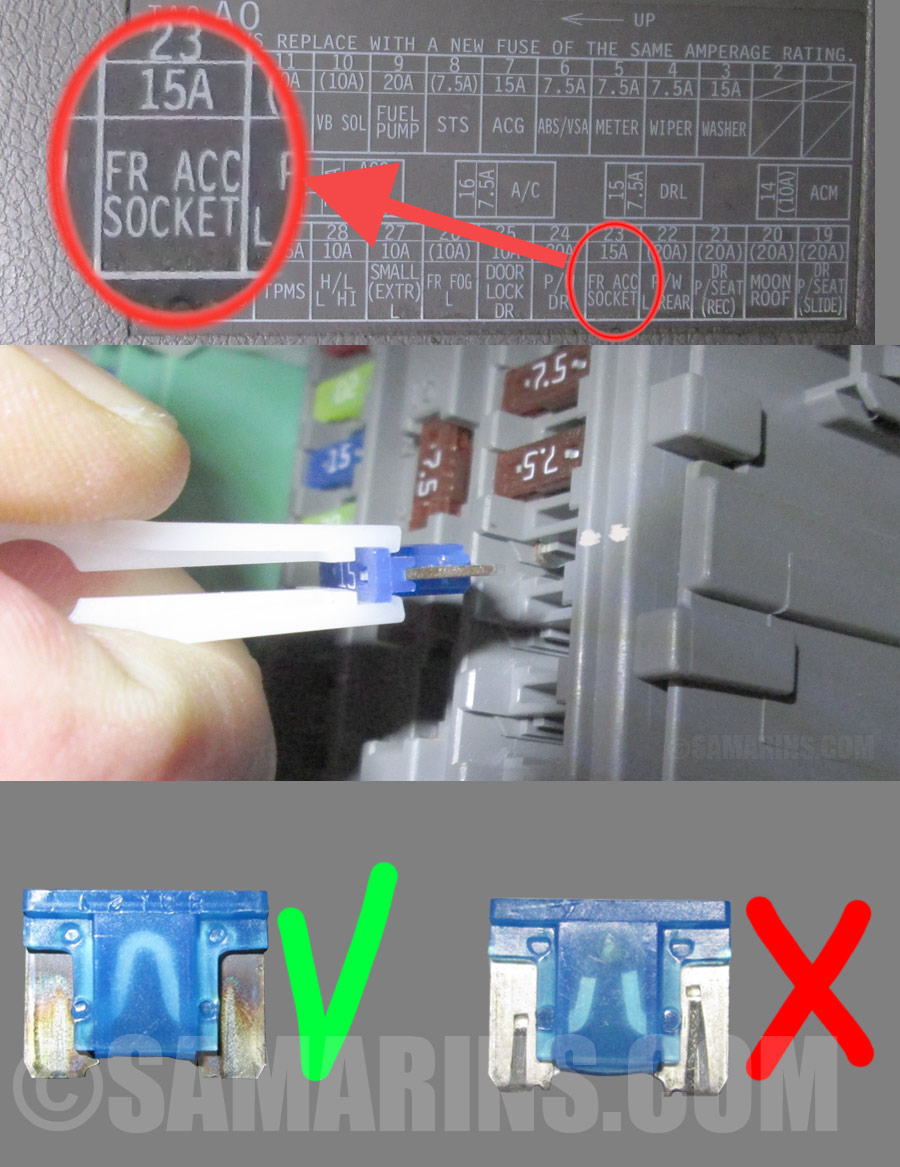
While modern diagnostic tools are helpful, the most common way to identify a faulty fuse is through a simple visual inspection. Most modern vehicles use “blade-style” fuses, which feature a transparent plastic housing specifically designed to allow for quick visual troubleshooting.
The Broken Filament Test
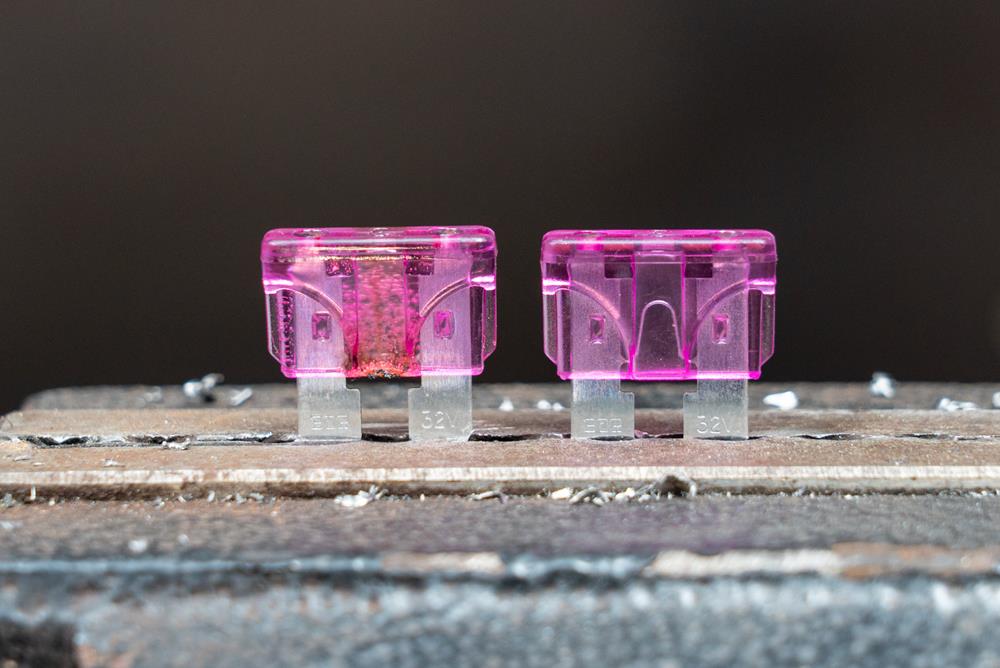
The most definitive sign of a bad fuse is a visible break in the internal metal strip. When looking through the side or top of the translucent plastic casing, you will see a U-shaped or S-shaped wire connecting the two metal terminals.
- A Good Fuse: The metal strip is continuous, smooth, and unbroken.
- A Bad Fuse: There is a clear gap, a melted section, or a jagged break in the middle of the wire. Even a microscopic fracture can be enough to kill the power to a high-tech module.
Assessing Discoloration and “Clouding”
Sometimes, the failure is more dramatic than a simple break. If a circuit experiences a massive “hard short,” the metal doesn’t just melt; it vaporizes. This often leaves a dark, brownish, or black scorch mark on the inside of the plastic housing. In some cases, the plastic itself may look “cloudy” or slightly melted. If you see any signs of thermal distress or charring, the fuse is definitively bad and must be replaced. Furthermore, this type of failure often indicates a more serious technical issue in the wiring that requires further investigation.
Comparing Standard, Mini, and Micro Fuses
As vehicle tech has become more compact, so have the fuses. You may encounter several form factors:
- Maxi Fuses: Large fuses used for high-current circuits like the alternator.
- Regular (ATO/ATC): The standard size found in most cars since the 1980s.
- Mini and Low-Profile Mini: Smaller versions designed to save space in crowded fuse panels.
- Micro2 and Micro3: The latest in miniaturization tech, often used in vehicles with high-density electronic modules.
Regardless of the size, the visual diagnostic remains the same: look for the “gap” in the metal bridge.
Digital Diagnostic Tools: Beyond Visual Inspection
In the realm of professional tech diagnostics, relying solely on your eyes can lead to “false negatives.” Sometimes a fuse may look intact but have a hairline fracture or internal resistance that prevents it from carrying a load. To be 100% certain, you need to use digital hardware.
Using a Multimeter for Continuity Testing
A digital multimeter is the gold standard for testing automotive electronics. To test a fuse, set your multimeter to the Continuity setting (the icon that looks like a sound wave).
- Touch the two probes together to ensure the meter beeps.
- Touch the probes to the two small metal test points on the top of the fuse (you don’t even need to remove the fuse from the box for this).
- If the meter beeps, the circuit is continuous (the fuse is good).
- If there is silence, the fuse is blown, even if it looks fine to the naked eye.
Test Lights: The Essential Diagnostic Tool
A digital test light is another “gadget” every tech-savvy owner should have. By grounding the clip and touching the probe to the test points on the fuse while the ignition is on, you can see if power is flowing through the fuse. If the light glows on one side of the fuse but not the other, the “bridge” is broken, and the fuse is bad.
Reading OBD-II Scanners for Fuse-Related Errors
When a fuse blows for a critical component like the Transmission Control Module or an Oxygen Sensor, the vehicle’s onboard computer will log a Diagnostic Trouble Code (DTC). Using an OBD-II scanner—a piece of tech that interfaces with your car’s internal network—you might see codes like “P0600” (Serial Communication Link Malfunction). While the code doesn’t explicitly say “the fuse is blown,” a savvy tech enthusiast knows that a “loss of communication” with a hardware module often starts with a check of the power source: the fuse.
Troubleshooting the Tech Stack: Common Causes of Fuse Failure
Replacing a blown fuse is easy, but if you don’t address the root cause, the new fuse will likely blow as soon as you turn the key. In modern vehicles, fuse failures are often linked to the way we interact with technology.
Aftermarket Gadgets and Power Overload
The most common cause of blown fuses in the digital age is the “over-accessorized” cabin. High-wattage power inverters, aftermarket subwoofers, and multi-port USB hubs can exceed the amperage rating of the factory circuit. If you are running a high-definition dashcam, a radar detector, and a smartphone fast-charger off the same 12V cigarette lighter circuit, you are likely pushing the hardware to its thermal limit.
Short Circuits in Sensor Wiring
Modern cars are wrapped in a web of sensors—ultrasonic sensors in bumpers, cameras in mirrors, and radar in the grille. These components are often exposed to the elements. Corrosion in a sensor connector or a wire pinched during a minor fender bender can create a “short to ground.” This causes a sudden spike in current that pops the fuse to protect the central computer.
Wear and Tear in High-Tech Infotainment Systems
As vehicles age, the cooling fans inside head units or the motors in motorized screens can begin to bind. This mechanical resistance requires more electrical torque, which draws more current. If your infotainment fuse blows repeatedly, it may be a sign that the internal hardware of the unit is reaching its end-of-life and is drawing more power than the circuit was engineered to handle.
Best Practices for Replacing Automotive Hardware
Once you have identified a bad fuse, the replacement process must be handled with technical precision to avoid damaging the vehicle’s digital architecture.
Sourcing the Right Amperage for Digital Stability
Fuses are color-coded by amperage: for example, 10A is usually red, 15A is blue, and 20A is yellow. Never replace a blown fuse with one of a higher amperage. If a 10A fuse blows, replacing it with a 20A fuse might stop the fuse from blowing, but it will allow excessive current to flow into your vehicle’s sensitive microchips, potentially causing a fire or permanent hardware failure. Always match the “Tech Specs” of the original fuse.

Preventive Maintenance for Vehicle Longevity
Just as you update software to keep your devices running smoothly, you should periodically inspect your vehicle’s “hardware protection layer.” Ensure the fuse box cover is tightly sealed to prevent moisture from corroding the terminals. If you live in a humid climate, using a small amount of dielectric grease on the fuse blades can improve conductivity and prevent “nuisance blows” caused by resistance-related heat.
In conclusion, knowing what a bad car fuse looks like is more than just a mechanical skill; it is a vital part of managing the complex technology that powers our modern lives. By combining visual inspection with digital diagnostic tools, you can quickly troubleshoot hardware failures, save money on professional repairs, and ensure your vehicle’s sophisticated electronics remain protected.
aViewFromTheCave is a participant in the Amazon Services LLC Associates Program, an affiliate advertising program designed to provide a means for sites to earn advertising fees by advertising and linking to Amazon.com. Amazon, the Amazon logo, AmazonSupply, and the AmazonSupply logo are trademarks of Amazon.com, Inc. or its affiliates. As an Amazon Associate we earn affiliate commissions from qualifying purchases.