
In the rapidly evolving landscape of home entertainment, the AV receiver (Audio-Video Receiver) remains one of the most misunderstood yet essential pieces of technology. While modern smart TVs claim to do it all, any tech enthusiast or audiophile will tell you that the true heart of a high-performance media room isn’t the screen—it is the AV receiver.
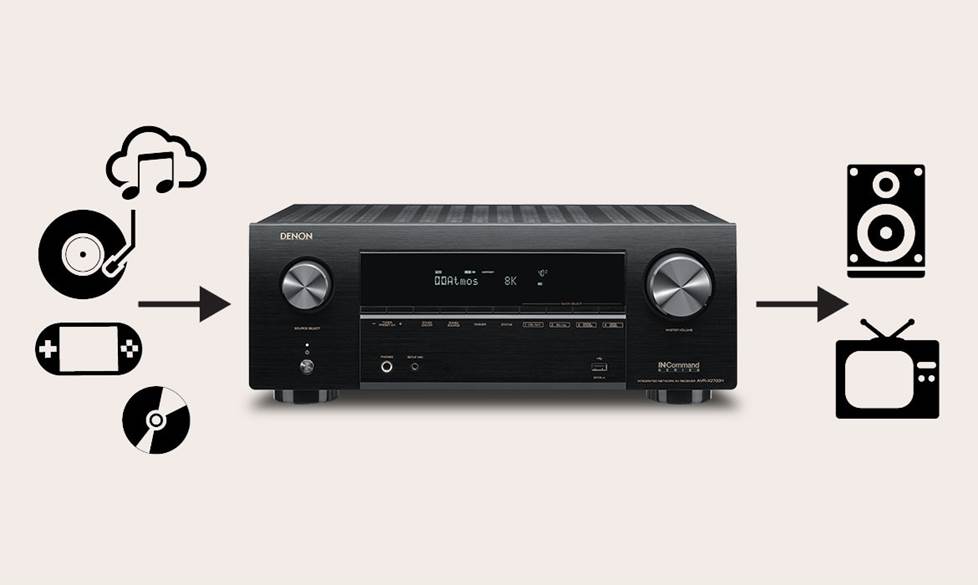
Essentially, an AV receiver acts as the “brain” or the central hub of a home theater system. It is a multi-functional device that combines a digital-to-analog converter (DAC), a preamplifier, a multi-channel power amplifier, and a video processor into a single chassis. Its primary mission is to receive audio and video signals from various sources, process them with precision, and distribute them to the appropriate output devices, such as your television, projector, and speakers.
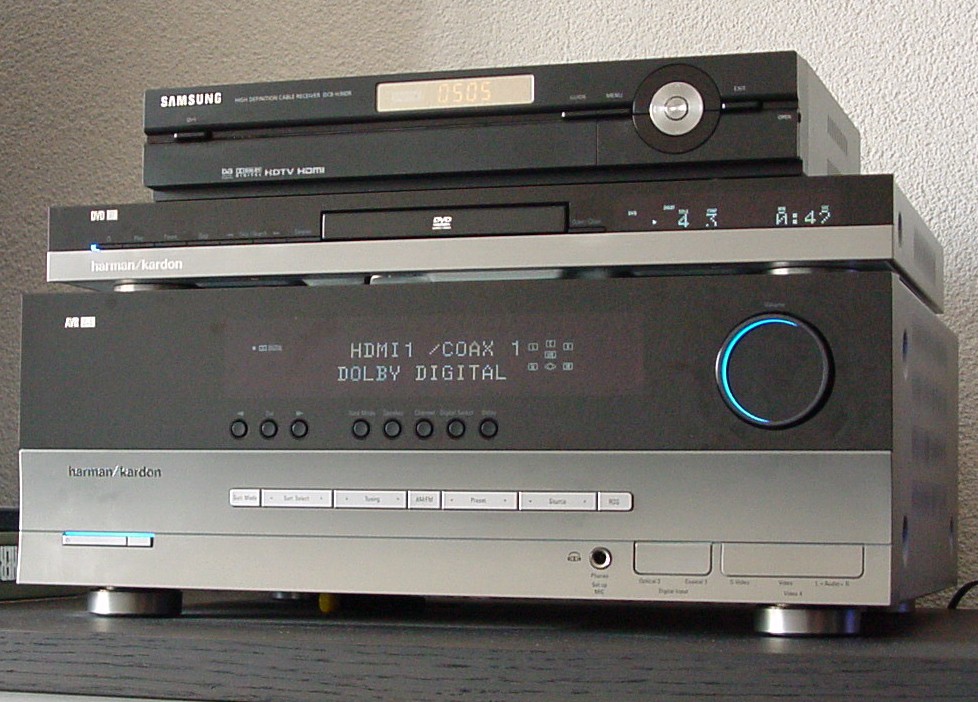
As we dive deeper into the technical intricacies of these devices, we will explore how they manage the complex signal chains of modern media and why they remain indispensable in an era of wireless convenience.
Decoding the Basics: The Core Functions of an AV Receiver
To understand what an AV receiver does, one must look at it as a traffic controller for data. In a standard setup, you might have a gaming console, a 4K Blu-ray player, a streaming box, and perhaps even a vinyl turntable. Without a receiver, managing these inputs would be a cabling nightmare.
Video Switching and Routing
The most immediate benefit of an AV receiver is its role as a video switcher. By connecting all your source gadgets into the HDMI inputs on the back of the receiver, you only need a single HDMI cable running to your TV or projector. When you toggle inputs on the receiver’s remote, it seamlessly switches both the audio and video signals. Modern high-end receivers feature sophisticated circuitry to ensure that this switching happens with minimal “handshake” latency, ensuring a smooth transition between your PlayStation 5 and your Apple TV 4K.
Audio Processing and Decoding
This is where the “tech” truly shines. Most digital media—whether it’s a Netflix stream or a UHD disc—is encoded in compressed formats like Dolby Digital or DTS. The AV receiver contains specialized Digital Signal Processors (DSPs) that “unpack” these formats. It identifies which part of the sound belongs in the center channel (dialogue), which belongs in the subwoofers (explosions), and which should be sent to the rear speakers (ambient noise). This processing happens in real-time with microsecond precision to ensure audio-visual synchronization.
Internal Amplification
Unlike a soundbar, which usually has small, built-in digital amps, a dedicated AV receiver houses robust power amplification stages. Its job is to take the low-voltage audio signal it has processed and “magnify” it into a high-voltage signal capable of physically moving the cones of large, high-fidelity speakers. The quality of these internal amplifiers determines the “headroom” of your system—the ability to play loud, dynamic sounds without distortion or clipping.
The Evolution of Connectivity: Inputs, Outputs, and Wireless Integration
The back panel of a modern AV receiver is a testament to the history and future of consumer electronics. While it supports legacy technology, its primary focus is on high-bandwidth digital communication.
The Reign of HDMI 2.1
For the modern tech user, HDMI 2.1 is the gold standard. High-performance receivers now support 4K resolution at 120Hz and 8K at 60Hz. This is critical for gamers who require Variable Refresh Rate (VRR) and Auto Low Latency Mode (ALLM) to ensure a fluid, tear-free gaming experience. An AV receiver acts as a repeater for these signals, and top-tier models ensure that the signal passes through (Pass-Through) without adding input lag or degrading the chroma subsampling (the color accuracy of the image).
Networking and Wireless Audio Protocols
The modern receiver is no longer an isolated “black box”; it is a networked computer. Most current models feature Wi-Fi and Ethernet connectivity, allowing them to integrate into a wider digital ecosystem. This enables protocols such as:
- AirPlay 2 and Chromecast: For seamless casting from mobile devices.
- Hi-Res Streaming: Integrated support for services like Tidal or Qobuz, allowing the receiver to pull high-bitrate FLAC or MQA files directly from the cloud.
- Multi-Room Audio: Platforms like HEOS or MusicCast allow the receiver to stream music to wireless speakers in other rooms, all controlled via a smartphone app.
Legacy Connections in a Digital World
Despite the digital shift, receivers maintain a bridge to the past. Many still include Phono inputs with dedicated grounding for turntables, as well as optical and coaxial digital inputs for older CD players. This versatility ensures that an AV receiver remains the central nervous system for every generation of tech in your home.
Immersive Sound and Visual Excellence: Understanding Modern Standards
We are currently living in the era of “object-based audio,” a technological leap that has redefined the home theater experience. An AV receiver is the only consumer device capable of fully rendering these complex formats.
Multi-Dimensional Audio: Dolby Atmos and DTS:X
Traditional “surround sound” was channel-based (e.g., 5.1 or 7.1). Today’s receivers support Dolby Atmos and DTS:X, which treat individual sounds as “objects” in a 3D space. Instead of a sound being sent simply to the “left rear speaker,” the metadata tells the receiver to place that sound “three feet above and two feet behind the listener.” The receiver’s processor then calculates exactly how to distribute that sound across your specific speaker layout to create a seamless hemisphere of audio.
Visual Fidelity: HDR, 8K, and Beyond
While the receiver is primarily praised for audio, its role in the visual chain is equally vital. It acts as a gatekeeper for High Dynamic Range (HDR) metadata. High-end receivers support HDR10+, Dolby Vision, and HLG. By processing these signals correctly, the receiver ensures that the metadata reaches your display intact, resulting in the deep blacks and dazzling highlights that modern OLED and QLED panels are designed to showcase.
Room Calibration and Smart Integration
One of the most impressive technological feats of a modern AV receiver is its ability to “understand” the room it is in. Every room has unique acoustics; furniture, windows, and wall materials all affect how sound waves bounce and dissipate.
Software-Driven Acoustic Optimization
Most mid-to-high-end receivers come with a calibrated microphone and proprietary software (such as Audyssey, Dirac Live, or YPAO). When you run a calibration, the receiver emits a series of test tones. It measures the distance of each speaker, the frequency response of the room, and any problematic echoes.
The onboard computer then applies complex Digital Equalization (EQ) curves to “fix” the room’s acoustic flaws. This ensures that the bass is tight rather than “boomy” and that dialogue remains crystal clear regardless of the room’s layout.
Smart Home Ecosystems and Voice Control
As we move toward the “Smart Home,” the AV receiver has adapted. Integration with platforms like Amazon Alexa, Google Assistant, and Josh.ai allows users to control their entire theater setup through voice commands. Furthermore, support for protocols like Control4 or Crestron allows the receiver to trigger “scenes”—for example, when you hit “Play” on the receiver, it can signal your smart lights to dim and your motorized shades to close.
Choosing the Right Receiver for Your Tech Ecosystem
With so many features packed into one device, selecting the right receiver requires a balance of current needs and future-proofing.
Power Ratings and Channel Counts
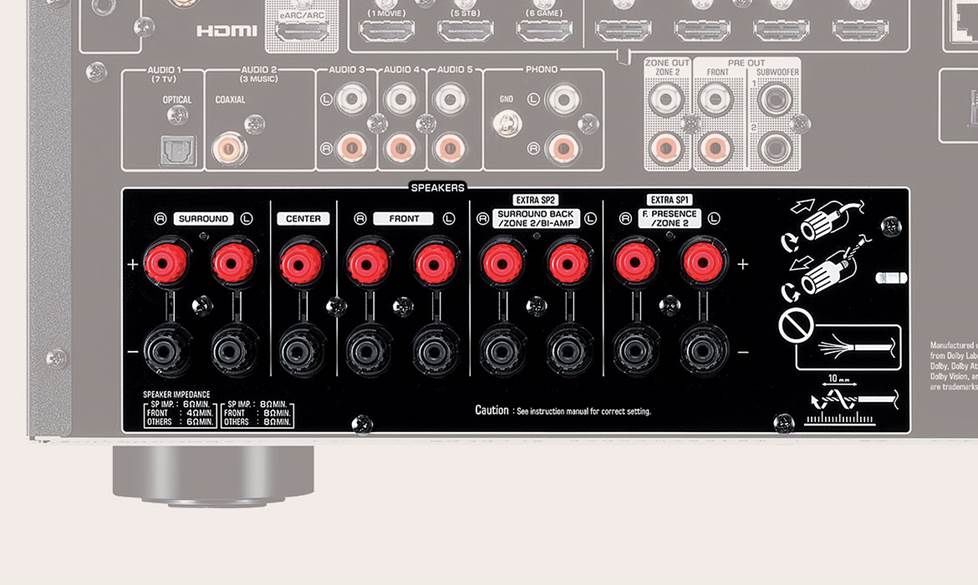
The most basic tech spec to look for is the channel count. A 5.1-channel receiver supports five speakers and one subwoofer. However, if you want a modern Atmos experience, you should look for at least a 7.2 or 9.2-channel receiver. The “.2” refers to the ability to run two subwoofers, which provides a much more even distribution of low-frequency effects across a seating area. Power ratings (measured in Watts per channel) are also crucial; higher-sensitivity speakers require less power, while larger, high-end towers often need the extra “grunt” of a high-current amplifier to perform at their best.
Future-Proofing Your Purchase
Technology cycles move fast. To ensure your receiver doesn’t become obsolete in three years, focus on its processing capabilities. Look for HDCP 2.3 support (the latest copy protection standard) and at least a few HDMI 2.1 ports. Additionally, check for eARC (Enhanced Audio Return Channel) support. This allows your TV to send high-bitrate, uncompressed audio (like Dolby Atmos) back to the receiver through the same HDMI cable used for video, simplifying your setup significantly.
Conclusion
An AV receiver is much more than a simple amplifier; it is a sophisticated computer dedicated to the art of sight and sound. By acting as a central hub for video switching, audio decoding, power amplification, and room correction, it elevates a standard living room into a professional-grade cinema.
In a world where digital files and streaming formats are becoming increasingly complex, the AV receiver provides the processing power and connectivity necessary to decode that data and present it exactly as the creators intended. Whether you are a hardcore gamer looking for 120Hz fluidity or a movie buff seeking the immersion of Dolby Atmos, the AV receiver is the piece of technology that brings the entire experience to life.
aViewFromTheCave is a participant in the Amazon Services LLC Associates Program, an affiliate advertising program designed to provide a means for sites to earn advertising fees by advertising and linking to Amazon.com. Amazon, the Amazon logo, AmazonSupply, and the AmazonSupply logo are trademarks of Amazon.com, Inc. or its affiliates. As an Amazon Associate we earn affiliate commissions from qualifying purchases.