
In the vast landscape of mechanical engineering, few inventions have played as pivotal a role in the democratization of power as the 2-stroke engine. Often characterized by its distinctive high-pitched hum and remarkable power-to-weight ratio, this technology has served as the backbone for everything from the earliest motorcycles to the most heavy-duty industrial chainsaws. To understand what a 2-stroke engine means is to explore a masterclass in minimalist design and high-efficiency output.
While modern technology is rapidly pivoting toward electrification and digital propulsion, the 2-stroke engine remains a cornerstone of mechanical tech. It represents a specific era of innovation where the goal was to extract the maximum possible energy from the smallest possible footprint. This article delves into the technical intricacies, the engineering trade-offs, and the modern innovations that continue to make 2-stroke technology a relevant subject in the tech world today.

The Fundamental Mechanics of 2-Stroke Technology
At its core, the 2-stroke engine is defined by its combustion cycle. Unlike a standard 4-stroke engine—found in most modern cars—which requires four distinct movements of the piston to complete one power cycle (intake, compression, combustion, and exhaust), the 2-stroke engine accomplishes these tasks in just two strokes. This fundamental difference in mechanical logic dictates everything about how the machine performs.
The Two Phases: Compression and Power
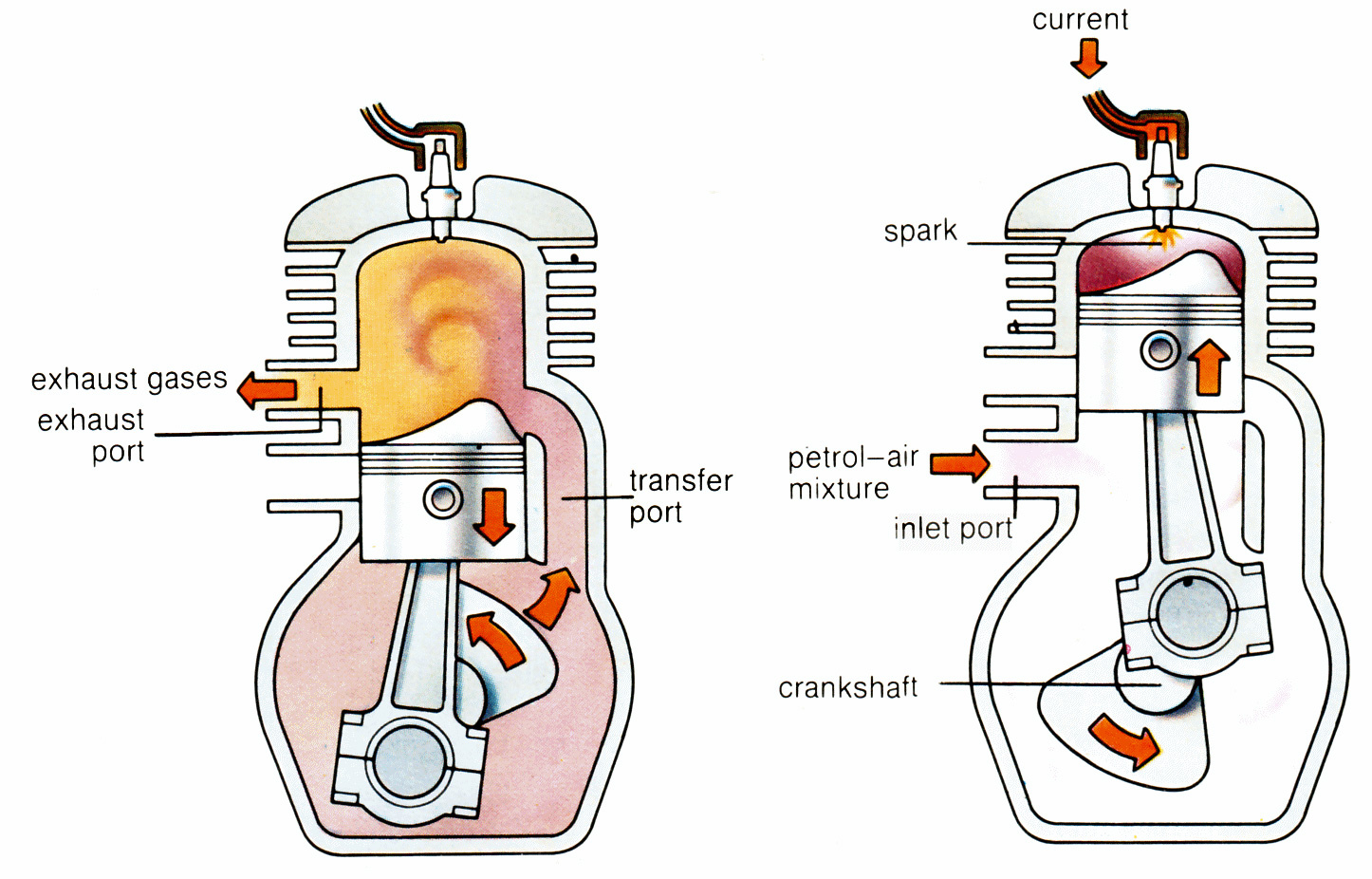
The brilliance of the 2-stroke cycle lies in its concurrency. In the first stroke, the piston moves upward, compressing the air-fuel mixture in the combustion chamber while simultaneously creating a vacuum in the crankcase below, drawing in a fresh charge of fuel and air. As the piston reaches the top, the spark plug ignites the mixture.
The second stroke is the power stroke. The explosion forces the piston downward, which does two things: it turns the crankshaft to provide power and compresses the mixture in the crankcase. As the piston nears the bottom of its travel, the exhaust port is uncovered, allowing spent gases to escape, while the intake port opens to let the new, compressed mixture from the crankcase rush into the cylinder. This elegant “push-pull” dynamic means that every single revolution of the crankshaft results in a power stroke, effectively doubling the firing frequency compared to a 4-stroke engine.
Simplicity in Design: Fewer Moving Parts
One of the most significant technological advantages of the 2-stroke engine is its lack of a complex valve train. Most 2-stroke designs do not utilize intake or exhaust valves, camshafts, or timing belts. Instead, they rely on “ports”—precisely machined openings in the cylinder walls that are covered and uncovered by the movement of the piston itself.
This reduction in moving parts is not merely an exercise in simplicity; it is a tactical engineering choice. Fewer parts mean less internal friction, lower manufacturing costs, and a significantly reduced total weight. For engineers designing portable technology or high-performance racing machinery, the 2-stroke offers a mechanical density that is difficult to replicate with more complex 4-stroke or hybrid systems.
Key Advantages and Technical Trade-offs
In the world of technology, every design choice involves a compromise. The 2-stroke engine is no exception. Its high output is balanced by specific operational requirements and environmental challenges that have driven decades of engineering research and development.
Power-to-Weight Ratio: Why It Dominates Small Gadgets
The primary reason 2-stroke technology remains the gold standard for handheld power tools and lightweight recreation is its power-to-weight ratio. Because it fires once every revolution, a 2-stroke engine can theoretically produce twice the power of a 4-stroke engine of the same displacement.
When you look at a professional-grade chainsaw or a high-performance dirt bike, the goal is to maximize power while minimizing the physical burden on the operator. A 4-stroke engine of equivalent power would require a heavy oil sump, valves, and a more robust cooling system, making the device unwieldy. The 2-stroke’s ability to deliver high torque and rapid acceleration in a compact frame is a technological feat that has yet to be fully surpassed by battery-powered alternatives in high-demand industrial settings.
The Efficiency Challenge and Emissions Control
The 2-stroke’s greatest strength is also its greatest technical hurdle: the scavenging process. Because the intake and exhaust ports are open at the same time, a portion of the fresh fuel-air mixture often escapes out the exhaust before it can be burned. This leads to higher fuel consumption and increased unburned hydrocarbon emissions.

Furthermore, because 2-stroke engines typically use the crankcase to transport fuel, they cannot have a dedicated oil reservoir like a car engine. Instead, lubricating oil must be mixed directly into the fuel. When this “pre-mix” burns, it creates the characteristic blue smoke associated with older 2-stroke technology. Solving this “dirty” combustion profile has been the focus of modern mechanical engineering, leading to the development of sophisticated direct-injection systems that mimic the precision of modern automotive tech.
Applications Across the Modern Tech Landscape
Despite the rise of electric motors, 2-stroke technology occupies several critical niches where high energy density and reliability are non-negotiable. Its application is a testament to the “form follows function” philosophy of industrial design.
Marine Technology and Outboard Motors
For decades, the marine industry relied almost exclusively on 2-stroke technology. On the water, weight is the enemy of speed and fuel economy. A lightweight 2-stroke outboard motor allows a boat to plane faster and carry a larger payload. While 4-stroke outboards have gained market share due to stricter environmental regulations, “Direct Fuel Injection” (DFI) 2-strokes have staged a technological comeback. These modern marine engines use computer-controlled injectors to spray fuel directly into the cylinder after the exhaust port has closed, significantly increasing efficiency and making them as clean-running as their 4-stroke counterparts.
Industrial Tools and Portable Power Equipment
In the realm of forestry, construction, and landscaping, 2-stroke engines are essential. A worker operating a leaf blower or a concrete saw for eight hours a day requires a tool that is light enough to maneuver but powerful enough to handle dense material.
The tech behind these tools has evolved to include “stratified scavenging” systems. This engineering innovation uses a “buffer” of pure air to push out exhaust gases, preventing the fresh fuel from escaping. This allows professional tools to meet rigorous EPA and EU emission standards while maintaining the lightweight benefits that 2-stroke technology provides.
The Future of 2-Stroke Technology in a Green Era
As we move toward a carbon-neutral future, the role of internal combustion is being questioned. However, the 2-stroke engine is undergoing a digital and chemical transformation that may extend its lifespan in specialized sectors.
Direct Injection and Modern Innovations
The transition from carburetors to Electronic Fuel Injection (EFI) has revolutionized the 2-stroke engine. Modern snowmobiles and motorcycles now use Engine Control Units (ECUs) to monitor atmospheric pressure, temperature, and throttle position in real-time. This digital oversight allows for “Transfer Port Injection” (TPI), where fuel is injected at the exact micro-second needed for optimal combustion.
This marriage of old-school mechanical simplicity with high-tech digital sensors has resulted in engines that are more powerful, more fuel-efficient, and far more reliable than the 2-strokes of the 20th century. It proves that even “legacy” technology can be updated for the modern era through smart engineering.
2-Stroke vs. Electric: The Shift in Portable Technology
The biggest competitor to 2-stroke technology today is the Lithium-ion battery. For consumer-grade lawnmowers and small trimmers, electric tech is winning. It is quieter, requires less maintenance, and produces zero localized emissions.
However, in the “pro-sumer” and industrial markets, the 2-stroke engine still holds a technological edge. Energy density remains the deciding factor; a tank of gasoline contains significantly more energy than a battery of the same weight. Until battery technology can provide the same power-to-weight ratio for sustained, heavy-duty use (such as fighting wildfires with chainsaws in remote areas), 2-stroke technology will remain an indispensable tool in the professional arsenal.
Conclusion
What does a 2-stroke engine mean? In the context of technology, it means an obsession with efficiency, a commitment to simplicity, and a masterclass in power delivery. It represents a mechanical solution to a physics problem: how to get the most work out of the smallest possible machine.
While the 2-stroke engine may no longer dominate the streets as it once did, its evolution into a high-tech, digitally-managed, and precision-engineered power source ensures its place in our technological future. Whether it is powering an outboard motor in the middle of the ocean or a rescue saw in a disaster zone, the 2-stroke engine remains a vital piece of tech that continues to push the boundaries of what is possible with internal combustion. As we look forward, the lessons learned from 2-stroke engineering—minimizing weight, reducing complexity, and maximizing output—will continue to inform the next generation of power systems, whether they run on fossil fuels, synthetic e-fuels, or electricity.
aViewFromTheCave is a participant in the Amazon Services LLC Associates Program, an affiliate advertising program designed to provide a means for sites to earn advertising fees by advertising and linking to Amazon.com. Amazon, the Amazon logo, AmazonSupply, and the AmazonSupply logo are trademarks of Amazon.com, Inc. or its affiliates. As an Amazon Associate we earn affiliate commissions from qualifying purchases.