
In the world of personal finance and global commerce, the terminology used in the spirits industry often conceals a sophisticated web of taxation, production costs, and profit margin optimization. When a consumer asks, “What does 70 proof mean?” they are usually looking for a measurement of alcohol content. However, for the investor, the business owner, or the financial analyst, “70 proof” represents a specific economic threshold that dictates everything from excise tax liabilities to retail price points.
In simple technical terms, “proof” is a measure of the content of ethanol (alcohol) in an alcoholic beverage. In the United States, the proof is exactly double the percentage of Alcohol by Volume (ABV). Therefore, a 70 proof spirit contains 35% ABV. While 80 proof (40% ABV) has historically been the standard for “hard” liquors like vodka, gin, and bourbon, the 70 proof mark has become a strategic financial pivot point for the modern beverage industry.
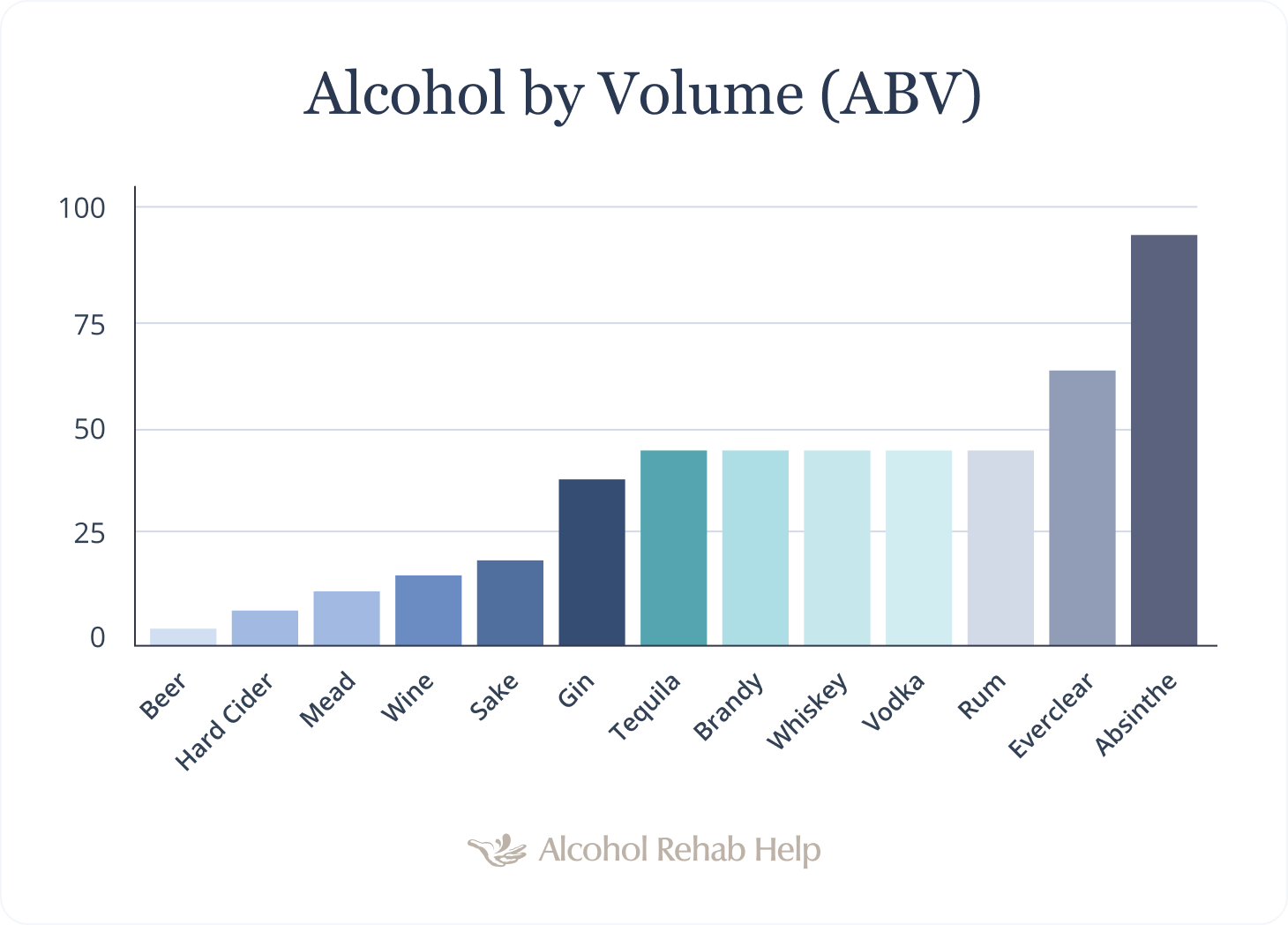
The Financial Definition of Proof and the Impact on Valuation
To understand the money behind the bottle, one must first understand how the conversion from proof to volume affects the valuation of a product line. The history of “proof” itself is rooted in 16th-century taxation; spirits were tested with gunpowder, and if the spirit could still ignite after being soaked in the powder, it was “proved” to be of a certain strength and thus taxed at a higher rate.
The Mathematical Conversion for Commodity Valuation
In the spirits business, alcohol is a commodity. When a distillery produces a high-strength distillate—often coming off the still at 140 to 190 proof—it represents a concentrated asset. The process of “proofing down” a spirit involves adding demineralized water to reach a desired bottling strength, such as 70 proof. From a financial perspective, this is a volume-expansion exercise. By taking a high-proof concentrate and diluting it to 70 proof instead of 80 proof, a company increases its inventory volume by approximately 12.5% without adding significant raw material costs. This expansion directly impacts the Gross Margin of the product.
Historical Tax Origins and Modern Revenue Impacts
Governments worldwide view alcohol as a primary source of excise revenue. In many jurisdictions, taxes are calculated based on the “proof gallon”—a gallon of spirits that is 50% alcohol (100 proof) at 60 degrees Fahrenheit. Because the tax is often tiered or calculated per unit of pure alcohol, 70 proof spirits occupy a unique niche. They allow producers to offer a product that feels “substantial” to the consumer while minimizing the per-bottle tax burden that would be triggered by a higher ABV. For a large-scale producer moving millions of cases, the difference between 70 and 80 proof can result in tens of millions of dollars in tax savings annually.
Production Costs and Profit Margins of 70 Proof Spirits
The shift toward 70 proof products—particularly in the flavored whiskey and vodka categories—is a masterclass in margin optimization. While premium aged spirits often boast higher proofs to satisfy connoisseurs, the “value” and “lifestyle” segments of the market have embraced 35% ABV as an ideal financial equilibrium.
The “Watering Down” Strategy as a Growth Lever
From a business finance perspective, water is the cheapest ingredient in a bottle of liquor. When a brand like Fireball or various flavored Smirnoff expressions bottles at 70 proof, they are maximizing the yield of their base distillate. If a company has 1,000 gallons of pure ethanol, they can produce significantly more bottles of 70 proof liquid than they could of 100 proof liquid. This increased “yield per batch” lowers the Cost of Goods Sold (COGS) per unit. When these units are sold at a similar price point to their higher-proof counterparts, the Net Profit Margin expands significantly.
Lowering Excise Tax Liabilities and Logistics Costs
Excise taxes are frequently the largest single cost component in the spirit supply chain, often exceeding the cost of the liquid and the packaging combined. In the United States, the Federal Excise Tax (FET) is a significant factor, but international markets like the UK or Southeast Asia have even more aggressive “sin taxes” based on alcohol content. By maintaining a 70 proof standard, brands can navigate international trade barriers and lower their “landed cost” in foreign markets. Furthermore, lower alcohol content can occasionally result in lower insurance premiums for warehousing and shipping, as the liquid is slightly less volatile (though still flammable).
Market Trends: The Rise of Low-ABV for High-ROI
The beverage industry is currently witnessing a “low and no” alcohol revolution. However, the most profitable segment of this trend isn’t necessarily 0% alcohol; it is the 70 proof “sessionable” spirit. This trend is driven by changing consumer demographics and a corporate focus on high Return on Investment (ROI).
The “Sessionable” Economy and Consumer Spending
Millennial and Gen Z consumers are increasingly “sober-curious” or focused on “moderation.” This shift in consumer behavior has created a lucrative market for 70 proof spirits. These products are marketed as being easier to drink, better for cocktails, and less likely to lead to severe hangovers. From a money perspective, this creates a “high-frequency” consumer. A consumer might drink three cocktails made with 70 proof spirit in the time they would have consumed two made with 100 proof spirit. This increases the “burn rate” of the product in the household, leading to more frequent repurchases and higher Lifetime Value (LTV) per customer.
Targeting the Gen Z and Millennial Demographic
Flavored spirits, which almost exclusively sit at the 70 proof mark, are the primary entry point for younger legal-drinking-age consumers. These products—honey-flavored bourbons, lime-infused tequilas, and fruit-forward vodkas—carry higher price premiums despite their lower alcohol content. The “flavor” adds perceived value, allowing companies to charge a “premium” price for a product that is objectively cheaper to produce than a standard 80 or 90 proof aged spirit. This is a classic example of “value-added” financial strategy: using branding and flavor profiles to decouple the price of the product from its commodity alcohol content.
Investing in the Spirits Sector: Risks and Rewards
For investors looking at companies like Diageo (DEO), Pernod Ricard (PRNDY), or Brown-Forman (BF.B), understanding the “proof” of the portfolio is essential for fundamental analysis. The product mix—the balance between high-proof “prestige” spirits and 70 proof “volume” spirits—determines the company’s resilience against economic downturns.
Risk Factors in Alcohol Taxation and Regulation
The primary risk to the 70 proof business model is legislative. If governments decide to shift from a “per-unit-of-alcohol” tax to a “per-bottle” tax regardless of proof, the margin advantage of 70 proof spirits would vanish overnight. Additionally, as health organizations push for clearer labeling of alcohol content and caloric value, the “health-conscious” marketing of lower-proof spirits may face stricter scrutiny. Investors must monitor the World Health Organization (WHO) and local regulatory bodies for shifts in “sin tax” structures that could compress margins.
Portfolio Diversification with Craft and Premium Labels
While 70 proof spirits drive volume and immediate cash flow, the “Premiumization” trend is where long-term capital appreciation often lies. High-proof, “barrel-strength” (often 110–130 proof) spirits cater to the collector market. These bottles can appreciate in value like fine wine or art. A balanced beverage conglomerate uses its 70 proof flavored lines to generate the consistent cash flow needed to fund the long-term aging process (often 10–20 years) of its high-proof, high-margin prestige bottles. As an investor, analyzing the ratio of “volume-fillers” (70 proof) to “value-drivers” (high-proof aged stock) is key to assessing a company’s long-term financial health.
Conclusion: The Bottom Line on 70 Proof
What does 70 proof mean? In the world of finance, it means a 35% alcohol concentration that serves as a strategic tool for corporate profitability. It is a benchmark that allows for lower tax liabilities, reduced production costs, and higher consumer turnover.
For the savvy individual interested in the intersection of business and lifestyle, 70 proof is more than just a label on a bottle of flavored rum or whiskey. It is a reflection of a global industry’s effort to balance consumer demand for “lighter” options with the corporate necessity for wider margins. Whether you are analyzing a stock, starting a craft distillery, or simply managing your own discretionary spending, recognizing the economic machinery behind the “proof” allows for a clearer view of where the money is truly flowing in the multi-billion dollar spirits trade.
aViewFromTheCave is a participant in the Amazon Services LLC Associates Program, an affiliate advertising program designed to provide a means for sites to earn advertising fees by advertising and linking to Amazon.com. Amazon, the Amazon logo, AmazonSupply, and the AmazonSupply logo are trademarks of Amazon.com, Inc. or its affiliates. As an Amazon Associate we earn affiliate commissions from qualifying purchases.