
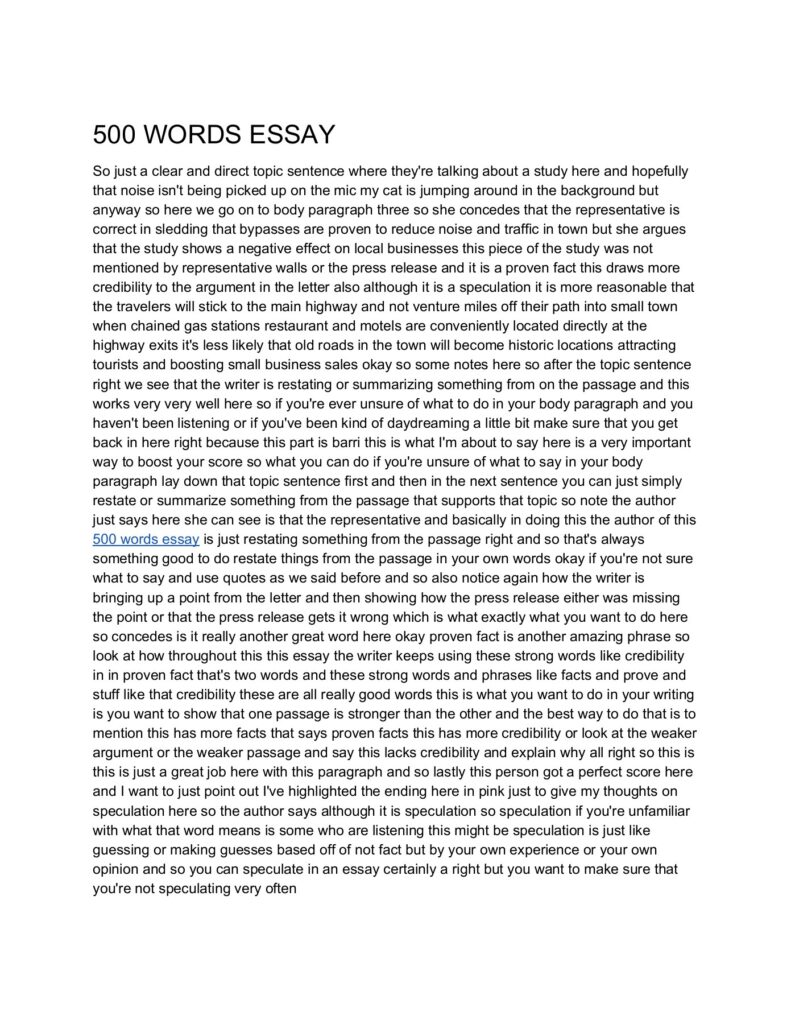
In the landscape of modern digital communication, the 500-word essay remains a foundational unit of information. Whether it is a blog post, a software documentation summary, or an academic submission, this specific length serves as a “Goldilocks” zone—long enough to provide substantive depth, yet short enough to hold a reader’s attention in an era of dwindling focus. However, the question “what does a 500-word essay look like” has shifted from a matter of ink and paper to a complex intersection of software formatting, AI integration, and user interface design.

In this guide, we explore the visual and technical parameters of the 500-word essay through the lens of contemporary technology, examining how digital tools define its structure, appearance, and impact.
The Visual Architecture: UI, UX, and Word Processing Standards
When we ask what 500 words “look like,” we are primarily discussing the spatial distribution of text on a screen. In the realm of technology, this is a matter of User Experience (UX). A block of text that is poorly formatted can repel a user, regardless of the quality of the content.
Standard Formatting in Modern Word Processors
In ubiquitous tools like Google Docs, Microsoft Word, or Notion, a 500-word essay typically occupies approximately one full page if single-spaced, or two pages if double-spaced. Tech standards generally dictate a 12-point font size, often utilizing modern Sans-Serif typefaces like Calibri, Arial, or Roboto for digital legibility.
From a technical perspective, “what it looks like” involves specific margins. The industry standard is a 1-inch margin on all sides. When viewed through a word processor’s interface, this creates a balanced “white space” ratio. Tech-savvy writers often utilize the “Document Outline” feature, which automatically detects headers to provide a navigational sidebar, transforming a flat essay into a structured digital document.
The Impact of White Space and Digital Legibility
In the tech world, “Readability” is a metric often calculated by algorithms. A 500-word essay should not look like a monolithic wall of text. Instead, modern formatting software encourages the use of “chunking.”
This means a 500-word piece usually looks like three to five distinct paragraphs. Technology has changed our visual expectations; we now look for bullet points, bolded keywords, and hyperlinked text. A 500-word essay on a high-resolution Retina display looks different than it does on a printed sheet; the backlighting of screens necessitates more frequent paragraph breaks to reduce eye strain, a concept known in tech circles as “Eye-Tracking Optimization.”
Leveraging AI and Tech for Structural Precision
The creation of a 500-word essay has been revolutionized by Artificial Intelligence (AI) and Large Language Models (LLMs). Today, what an essay “looks like” is often determined by the prompts and parameters set within an AI interface.
Using LLMs to Outline and Draft
When utilizing AI tools like ChatGPT or Claude to generate or refine a 500-word essay, the structure is often the first thing the software handles. A 500-word limit is a specific constraint that AI excels at. The technology allows for a “top-down” construction: an introduction (approx. 75 words), three body paragraphs (approx. 100-125 words each), and a conclusion (approx. 75 words).
Advanced users utilize “Prompt Engineering” to ensure the essay doesn’t just meet the word count but also adheres to a specific tone. The technology allows for real-time adjustments, where a user can highlight a section and command the software to “expand this technical detail” or “condense this paragraph to fit the page.” This iterative process ensures that the visual “length” of the essay remains consistent while maximizing the information density.
Real-Time Word Count Tracking and Metadata
Modern writing environments are equipped with sophisticated telemetry. In markdown editors like Obsidian or VS Code, writers use plugins that track word counts in real-time, often displaying them in a status bar at the bottom of the IDE (Integrated Development Environment).
Furthermore, a 500-word essay in a tech context often includes “Metadata”—hidden data about the data. This might look like YAML front matter at the top of the document, specifying the author, the date, the tech stack discussed, and the “Reading Time” (typically 2 minutes for a 500-word piece). This metadata is a crucial part of what a digital essay “is,” even if it isn’t always part of what the final reader “sees.”
Optimization and Refinement Software
Once an essay reaches the 500-word mark, the role of technology shifts from creation to refinement. A 500-word essay “looks” professional when it has been scrubbed by algorithmic checkers.
Grammar and Style Checkers (Grammarly/Hemingway)
Software like Grammarly and the Hemingway App provide a visual overlay to the essay. To a writer using these tools, a 500-word essay looks like a colorful map of potential improvements. Blue underlines might indicate clarity issues, while red underlines signify grammatical errors.
The Hemingway App, in particular, focuses on the “Tech-Style” of writing—advocating for bold, clear sentences. It assigns a “Readability Grade Level.” A technical 500-word essay usually looks best when it targets a Grade 9 or 10 level, ensuring that the complex technology being discussed is accessible to a broader audience. These tools also provide a “Sentiment Analysis,” showing whether the essay looks “positive,” “neutral,” or “analytical” to an AI’s eyes.
Ensuring Plagiarism-Free Content with Tech
In an era of generative AI, the integrity of a 500-word essay is verified through “Originality AI” and plagiarism detectors like Turnitin or Copyscape. These tools compare the essay’s fingerprint against billions of web pages.
What the essay “looks like” to these scanners is a series of n-grams—sequences of words that are checked for statistical uniqueness. For the modern tech professional, providing a “Similarity Report” is often a required accompaniment to the essay itself. This report is a visual testament to the essay’s authenticity, highlighting any quoted material and ensuring that the 500 words are a result of genuine synthesis rather than simple duplication.
The 500-Word Benchmark in Content Management Systems (CMS)
For many, a 500-word essay is destined for a website or a corporate blog. In this context, what the essay “looks like” is heavily influenced by the Content Management System (CMS) like WordPress, HubSpot, or Ghost.
SEO Benefits of the Short-Form Essay
From a Search Engine Optimization (SEO) perspective, 500 words is often considered the minimum threshold for a page to be indexed effectively by Google’s crawlers. SEO plugins like Yoast or RankMath provide a checklist that changes the essay’s appearance.
The essay will “look” optimized when it contains a primary keyword in the first 100 words, has H2 and H3 subheadings every 150-200 words, and includes alt-text for any embedded technical diagrams. The technology behind search engines prefers this structure because it allows bots to “parse” the essay quickly, determining its relevance to user queries.
Mobile Optimization and Responsive Design
Finally, we must consider how a 500-word essay looks on a mobile device. Given that over 50% of web traffic is mobile, responsive design technology is paramount. On a smartphone, 500 words can feel like a much longer piece.
A well-designed CMS will automatically adjust the line-height and font-weight. It might break a 500-word essay into “paginated” views or utilize “Infinite Scroll.” To a mobile user, the essay looks like a series of digestible “cards” or screens. This technical adaptation ensures that the 500-word essay remains an effective communication tool, regardless of the hardware being used to consume it.

Conclusion
A 500-word essay is no longer just a sequence of sentences; it is a structured data set that interacts with various software ecosystems. Visually, it is defined by the UI/UX of word processors and the “chunking” requirements of digital screens. Structurally, it is often shaped by the capabilities of AI and the constraints of SEO algorithms. Technically, its quality is validated by grammar-checking software and plagiarism detectors.
Understanding “what a 500-word essay looks like” in the modern era requires an appreciation for the tech stack that supports it. By mastering these digital tools, writers can ensure their 500 words are not only visually appealing but also technically optimized for the high-speed, high-stakes world of digital information.
aViewFromTheCave is a participant in the Amazon Services LLC Associates Program, an affiliate advertising program designed to provide a means for sites to earn advertising fees by advertising and linking to Amazon.com. Amazon, the Amazon logo, AmazonSupply, and the AmazonSupply logo are trademarks of Amazon.com, Inc. or its affiliates. As an Amazon Associate we earn affiliate commissions from qualifying purchases.