
In the world of business finance and wealth creation, there is a recurring tragedy: the gap between a brilliant strategy and the actual results. Most organizations and entrepreneurs fail not because they lack a vision for financial success, but because they struggle to execute that vision amidst the chaos of daily operations. This is where the “4 Disciplines of Execution” (4DX) framework comes into play. Developed by Chris McChesney, Sean Covey, and Jim Huling, 4DX is a formula for installing a culture of execution that leads to tangible, bottom-line results.
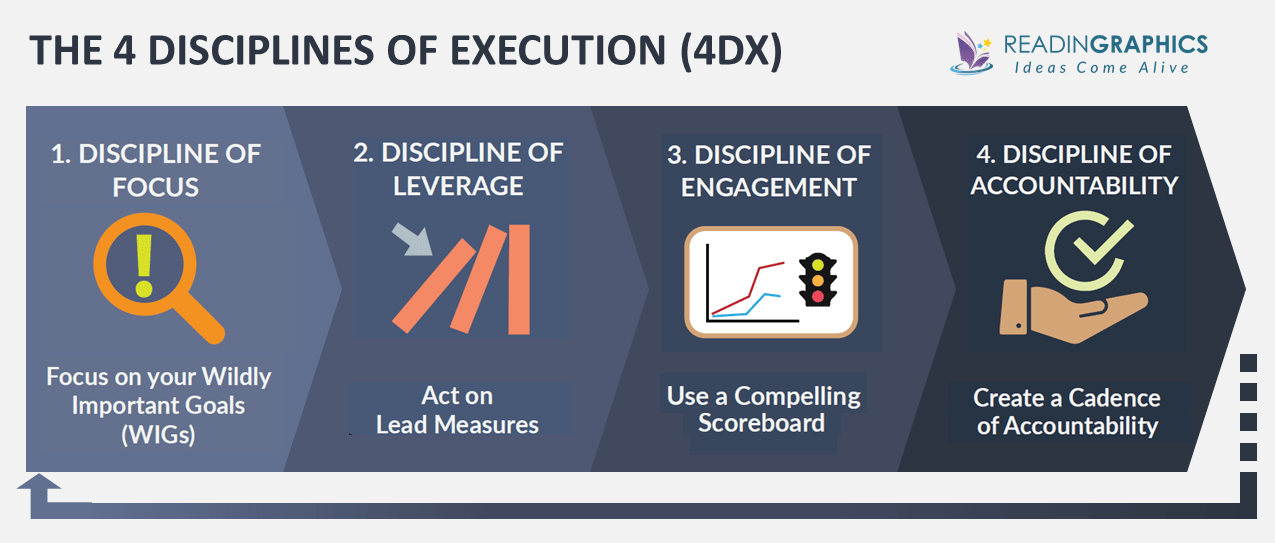
For those focused on the “Money” niche—whether you are a CFO, a business owner, or an investor—understanding what the 4 Disciplines of Execution mean is essential. It is the difference between a business that merely survives its overhead and one that scales its profit margins systematically.
The Financial Imperative of Strategy Execution
In business finance, strategy is often synonymous with the annual budget or a five-year growth plan. However, a plan is simply a piece of paper until it is translated into human action. The primary challenge to financial execution is what the 4DX authors call “The Whirlwind.”
Overcoming the “Whirlwind” of Daily Operations
The Whirlwind refers to the massive amount of energy required just to keep the business running day-to-day. It is the urgent emails, the payroll issues, the customer complaints, and the maintenance of current revenue streams. The Whirlwind is necessary for survival, but it is the enemy of execution.
From a financial perspective, the Whirlwind consumes your most valuable capital: human focus and time. If your team spends 100% of their energy on the Whirlwind, the business will stagnate. To achieve significant financial growth or a breakthrough in ROI (Return on Investment), you must find a way to execute strategic goals even while the Whirlwind is screaming for attention.
The Gap Between Financial Planning and Results
Many businesses invest heavily in financial tools and forecasting software, yet they consistently miss their targets. This “execution gap” occurs because the people responsible for the numbers don’t change their behaviors. Traditional business finance often looks at “Lag Measures”—results that have already happened. 4DX shifts the focus toward the behaviors that drive those results, ensuring that the financial plan becomes a reality rather than a historical wish list.
Discipline 1: Focus on the Wildly Important Goal (WIG)
The first discipline of execution is to focus your finest effort on one or two goals that will make all the difference, instead of giving mediocre effort to dozens of goals. In the context of business finance, this is about identifying the “Wildly Important Goal” (WIG).
Defining Financial WIGs
A WIG is a goal where failure to achieve it renders all other accomplishments secondary. When looking at your finances, a WIG should be expressed in a clear format: “From X to Y by When.”
For example, a vague goal like “increase revenue” is not a WIG. A financial WIG would be: “Increase net profit margin from 12% to 18% by December 31st.” This clarity creates a focal point for every dollar spent and every hour worked. By narrowing the focus, you prevent the dilution of resources, ensuring that your capital is concentrated where it will generate the highest return.
Narrowing the Focus for Maximum Capital Efficiency
Multi-tasking is as much a financial sin as it is a productivity one. When a company tries to pursue ten different strategic initiatives at once, it spreads its financial and human capital too thin. Discipline 1 requires leaders to say “no” to good ideas so they can say “yes” to the one “wildly important” idea. This disciplined approach to goal-setting ensures that the organization’s primary financial drivers are getting the “best” energy of the team, leading to more predictable cash flows and higher valuation.
Discipline 2: Act on Lead Measures
Discipline 2 is the discipline of leverage. Once you have defined your financial WIG, you must identify the actions that will drive that goal. This involves understanding the difference between Lag Measures and Lead Measures.
Distinguishing Between Lag and Lead Measures in Finance
Most financial reports are “Lag Measures.” Revenue, net income, and ROI are all data points about things that have already occurred. By the time you see these numbers on a P&L statement, you can no longer change them. They are “lagging” behind the actions that created them.
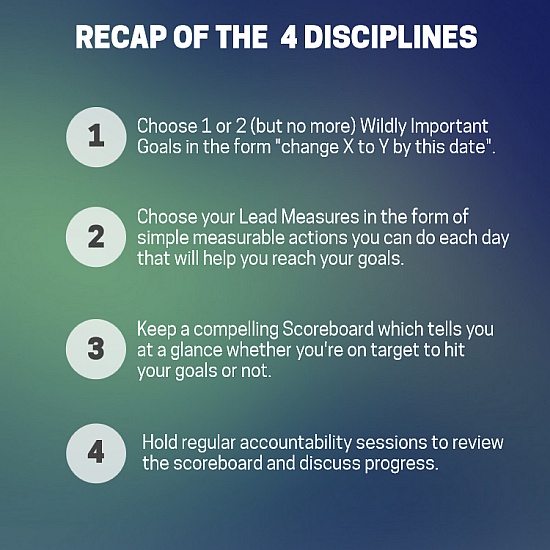
“Lead Measures,” on the other hand, are predictive and influenceable. They measure the new behaviors that will drive the Lag Measure. If your WIG is to increase quarterly sales revenue (Lag), a Lead Measure might be the number of outbound sales calls made per day or the conversion rate of new leads. In business finance, focusing on Lead Measures allows you to manage the future rather than just reporting on the past.
Identifying High-Leverage Activities
To drive financial success, you must identify the “levers” that have the greatest impact on your WIG. These are activities that the team can actually control. If you want to reduce operational costs, a Lead Measure might be “reducing energy consumption by 10% per unit” or “negotiating a 5% discount with the top three suppliers.”
By tracking these lead indicators, you create a feedback loop. If the Lead Measures are moving but the Lag Measure (the money) isn’t, you know you have the wrong strategy. If the Lead Measures aren’t moving, you know you have an execution problem.
Discipline 3: Keep a Compelling Scoreboard
People play differently when they are keeping score. Discipline 3 is about ensuring that everyone knows at all times whether or not they are winning. This is particularly crucial in business finance, where “the score” is often hidden in complex spreadsheets that only the accounting department understands.
Visualizing Fiscal Success
A compelling scoreboard is not a complex financial dashboard. It is a simple, visual representation of the WIG and the Lead Measures that anyone can understand at a glance. It should show where the team is now, where they need to be, and whether they are “in the green” or “in the red.”
When employees can see the direct link between their daily actions (Lead Measures) and the company’s financial health (Lag Measures), their engagement levels skyrocket. A scoreboard turns the abstract concept of “profitability” into a tangible game that the team wants to win.
Engagement Through Financial Transparency
In many organizations, the financial health of the company is a “black box” to the average employee. 4DX breaks this barrier. By involving the team in tracking the Lead Measures that impact the bottom line, you foster a sense of ownership. When a team sees that their efforts to reduce waste are directly moving the “profitability” needle on the scoreboard, they become more invested in the fiscal success of the enterprise. This transparency is a powerful tool for driving a culture of high performance and financial accountability.
Discipline 4: Create a Cadence of Accountability
The first three disciplines set the game up, but Discipline 4 is where the game is actually played. It is the discipline of accountability—the consistent rhythm of meetings focused on the WIG.
The WIG Session: A Weekly Financial Check-in
A “WIG Session” is a weekly meeting, usually lasting no more than 20 to 30 minutes, with a strictly defined agenda. During this meeting, team members report on the commitments they made the previous week, review the scoreboard, and make new commitments for the coming week.
From a business finance perspective, this cadence ensures that the strategic financial goals are never eclipsed by the Whirlwind. It provides a regular forum to troubleshoot financial roadblocks and re-allocate resources in real-time. Instead of waiting for a monthly or quarterly financial review to realize you are off track, the WIG session allows for weekly micro-adjustments that keep the business on the path to its financial targets.
Building a Culture of Results-Oriented Performance
The beauty of the 4DX framework is that it moves accountability away from “top-down” management and toward “peer-to-peer” commitment. In a WIG session, team members make commitments to each other, not just to the boss.
In a finance-focused environment, this builds a culture where results matter more than activities. It’s no longer about “being busy”; it’s about “did you do the one thing this week that will help us hit our profit target?” This relentless focus on execution ensures that the organization’s financial strategy isn’t just a dream—it’s a calculated, weekly pursuit of excellence that inevitably leads to increased wealth, stability, and growth.

Conclusion: The Financial ROI of 4DX
What does the 4 Disciplines of Execution mean? It means moving beyond the theory of business finance and into the practice of generating results. By narrowing focus (WIGs), leveraging predictive actions (Lead Measures), maintaining a visible score (Scoreboard), and fostering a rhythm of accountability (Cadence), businesses can effectively “print” their own success.
In an era where capital is precious and competition is fierce, the ability to execute is the ultimate competitive advantage. For anyone looking to master the world of money and business finance, 4DX provides the roadmap to turn strategic intent into financial reality.
aViewFromTheCave is a participant in the Amazon Services LLC Associates Program, an affiliate advertising program designed to provide a means for sites to earn advertising fees by advertising and linking to Amazon.com. Amazon, the Amazon logo, AmazonSupply, and the AmazonSupply logo are trademarks of Amazon.com, Inc. or its affiliates. As an Amazon Associate we earn affiliate commissions from qualifying purchases.