
In the modern professional kitchen or the high-end residential culinary space, stainless steel is the gold standard for aesthetics and durability. However, this material is notorious for its vulnerability to fingerprints, smudges, and stubborn grease buildup. Maintaining that signature luster is not merely a matter of hygiene; it is a critical component of brand presentation for businesses and a point of pride for residential design enthusiasts. When choosing the right cleaning solution, one must navigate the intersection of chemical science and surface protection.
The Chemistry of Stainless Steel Surfaces
To understand how to clean stainless steel effectively, one must first understand the material itself. Stainless steel is an alloy that contains at least 10.5% chromium. This chromium reacts with oxygen in the atmosphere to form a microscopic, invisible layer of chromium oxide. This “passive layer” is what makes the metal resistant to rust and corrosion.
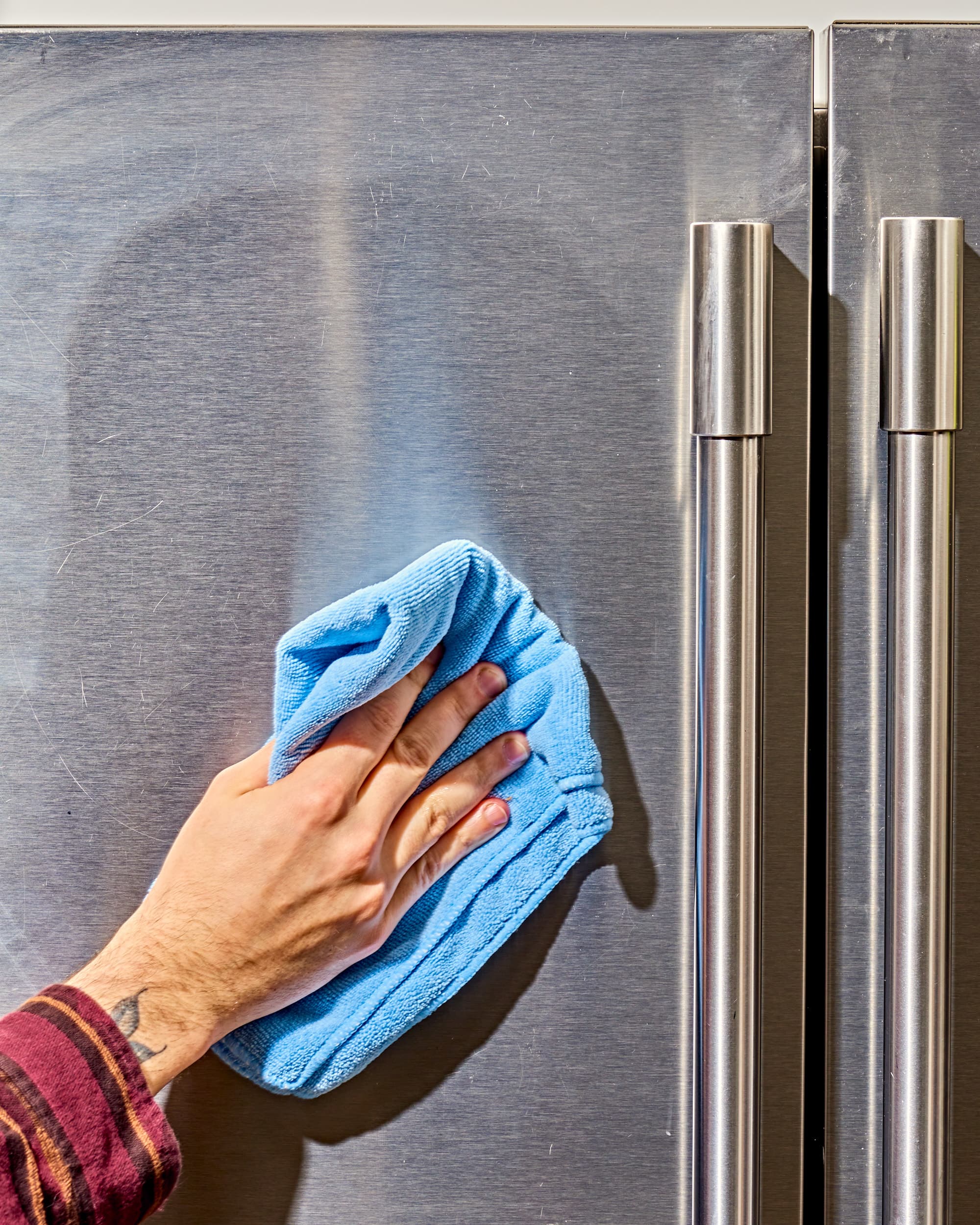
When we clean these surfaces, the goal is to remove organic debris—such as oils from fingerprints or splattered fats from cooking—without damaging this delicate chromium oxide layer. If you use abrasive cleaners or harsh chemicals, you risk scratching the surface or causing microscopic pits, which can eventually lead to rust.
Understanding Grain Direction
Before applying any product, you must identify the “grain” of the steel. Just like wood, stainless steel has microscopic lines that run in one direction—either horizontally or vertically. Cleaning against the grain can trap dirt and cleaning agents inside these microscopic grooves, leading to a streaky, dull appearance. Always wipe and polish following the direction of the metal’s finish.
The Dangers of Household “All-Purpose” Cleaners
Many people fall into the trap of using standard all-purpose cleaners or bleach-based disinfectants. This is a critical mistake. Bleach and products containing high levels of chlorides will aggressively attack the chromium oxide layer, leading to permanent staining and pitting. Even some mild abrasive powders, if used repeatedly, will wear away the polished sheen, leaving your appliances looking permanently cloudy.
Choosing Professional-Grade Cleaning Agents
In a professional setting, efficiency and surface integrity are paramount. Whether you are managing a commercial kitchen or maintaining a premium appliance showroom, the tools you select dictate the longevity of the equipment.
Mild Detergents and Microfiber
For daily maintenance, you do not need harsh solvents. A simple solution of a few drops of mild dish soap mixed with warm, distilled water is often the best preventative measure. Distilled water is preferable because it lacks the minerals found in tap water, which can leave behind hard water spots once the surface dries. When pairing this with a high-quality microfiber cloth—which captures oils and fine dust particles—you can maintain a pristine finish without any chemical residue.
Specialized Solvent-Based Cleaners
When appliances have been neglected or are covered in heavy cooking grease, mild soap may not be sufficient. In these instances, professional stainless steel cleaners formulated with refined mineral oils or silicones are recommended. These products do two things: they dissolve the grease and leave behind a thin, protective film that resists future fingerprints.
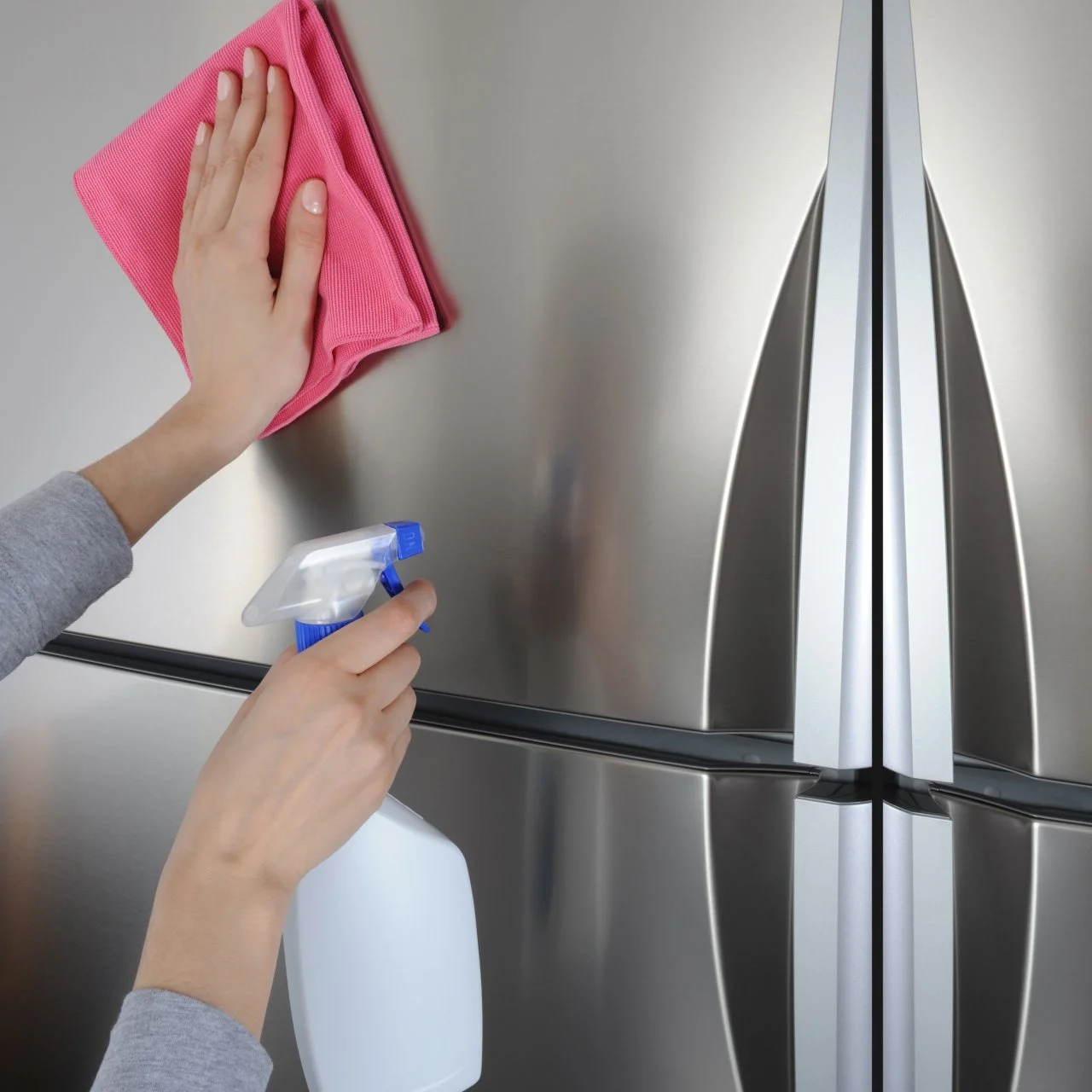
However, care must be taken with the application. Over-applying these oils can lead to a sticky, dust-attracting buildup. The key is to apply the cleaner to the cloth rather than directly to the appliance. This ensures a uniform, thin coating that polishes rather than saturates the steel.
Why Avoid Vinegar and Ammonia?
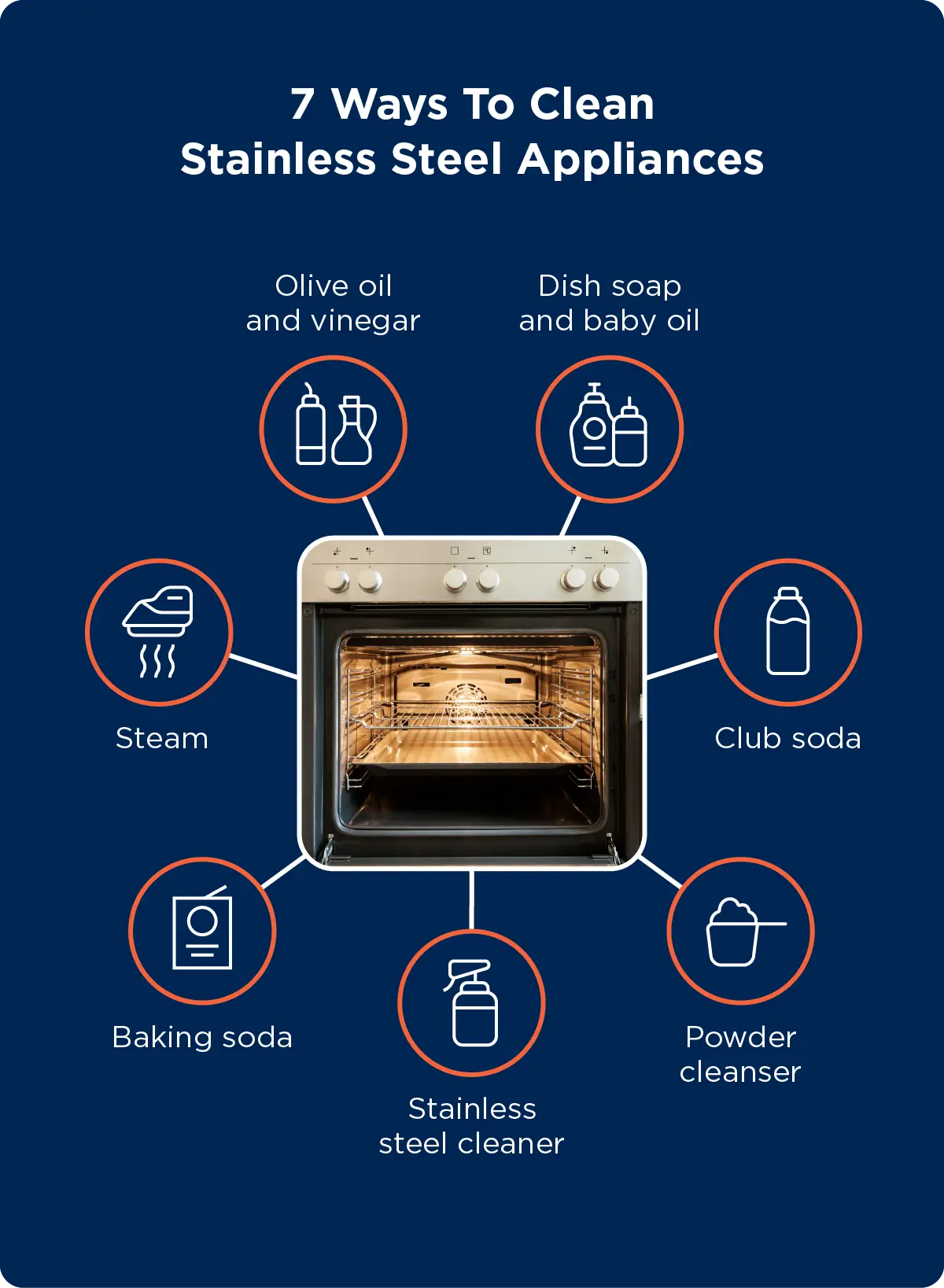
While home-remedy blogs often tout the benefits of vinegar or ammonia, professional maintenance standards advise against them. Vinegar is an acid. If left on the steel, even for a short time, it can dull the finish or cause discoloration. Ammonia, while a great degreaser, can react poorly with certain stainless steel alloys, leading to a hazy appearance that is difficult to buff out.
Establishing a Maintenance Routine for Optimal Longevity
Consistency is the secret to a professional-grade appearance. A reactive cleaning strategy—waiting until the appliance looks “dirty”—is far more labor-intensive than a proactive approach.
The Daily Wipe-Down
Implementing a “closing” routine for your kitchen ensures that grease does not have time to set or oxidize on the surface. At the end of each day, a quick wipe with a damp microfiber cloth followed by a dry buffing with a clean, soft cloth removes the daily accumulation of oils. This prevents the need for heavy-duty scrubbing later.
Weekly Deep Cleaning and Polishing
Once a week, perform a more thorough cleaning using a dedicated stainless steel cleaner. This serves two purposes: removing deep-seated contaminants and refreshing the protective barrier. By applying a product that adds a protective layer, you reduce the surface tension, making it harder for fingerprints and splashes to adhere during the following week.
Handling Hard Water and Mineral Deposits
If you live in an area with “hard water,” you may notice white, chalky spots even after cleaning. These are mineral deposits. If wiping with distilled water does not remove them, you may need a specialized non-abrasive cleaner designed for mineral removal. Avoid steel wool or heavy scrub brushes at all costs. If you need a bit more mechanical action, use a nylon-bristled brush or a plastic scouring pad, but test it on a hidden area of the appliance first to ensure it does not cause micro-scratches.
The Role of Tooling in Surface Care
The product you choose is only half of the equation; the “delivery system” or tool you use is equally important. Many stainless steel surfaces are ruined not by the cleaner, but by the applicator.
Microfiber vs. Paper Towels
Never use paper towels for polishing. Despite their perceived softness, paper towels are made of wood pulp and can contain microscopic, abrasive fibers that contribute to swirl marks over time. Furthermore, paper towels shed lint, which clings to the oily film of a freshly polished surface. High-grade microfiber cloths are the industry standard; they are lint-free, highly absorbent, and engineered to lift oils and debris from the microscopic grain of the steel.
Buffing for the Professional Finish
The final step of any cleaning process is the buffing stage. After cleaning with your chosen agent, take a clean, dry microfiber cloth and move in long, steady strokes with the grain. This step is where the appliance goes from “clean” to “pristine.” Buffing removes excess product and aligns the light-reflecting surface, providing that deep, mirror-like glow that signifies a well-maintained piece of equipment.
Safety and Storage
Professional cleaners are often flammable or chemically potent. Always store these products in a cool, dry place, and ensure they are clearly labeled. When cleaning appliances, ensure the surface is cool to the touch. Cleaning a hot appliance causes the cleaner to evaporate too quickly, which leads to streaking and uneven film distribution. Wait for the appliance to reach room temperature before applying any liquid treatments.
In summary, the secret to maintaining stainless steel appliances lies in respecting the material’s composition. By avoiding harsh abrasives and corrosive chemicals, identifying the grain of the steel, and utilizing high-quality microfiber tools, you can ensure your appliances maintain their aesthetic value for years. Whether in a commercial kitchen or a residential space, the transition from a messy, fingerprinted surface to a gleaming, professional-grade finish is simply a matter of technique and the right selection of cleaning agents.
aViewFromTheCave is a participant in the Amazon Services LLC Associates Program, an affiliate advertising program designed to provide a means for sites to earn advertising fees by advertising and linking to Amazon.com. Amazon, the Amazon logo, AmazonSupply, and the AmazonSupply logo are trademarks of Amazon.com, Inc. or its affiliates. As an Amazon Associate we earn affiliate commissions from qualifying purchases.