
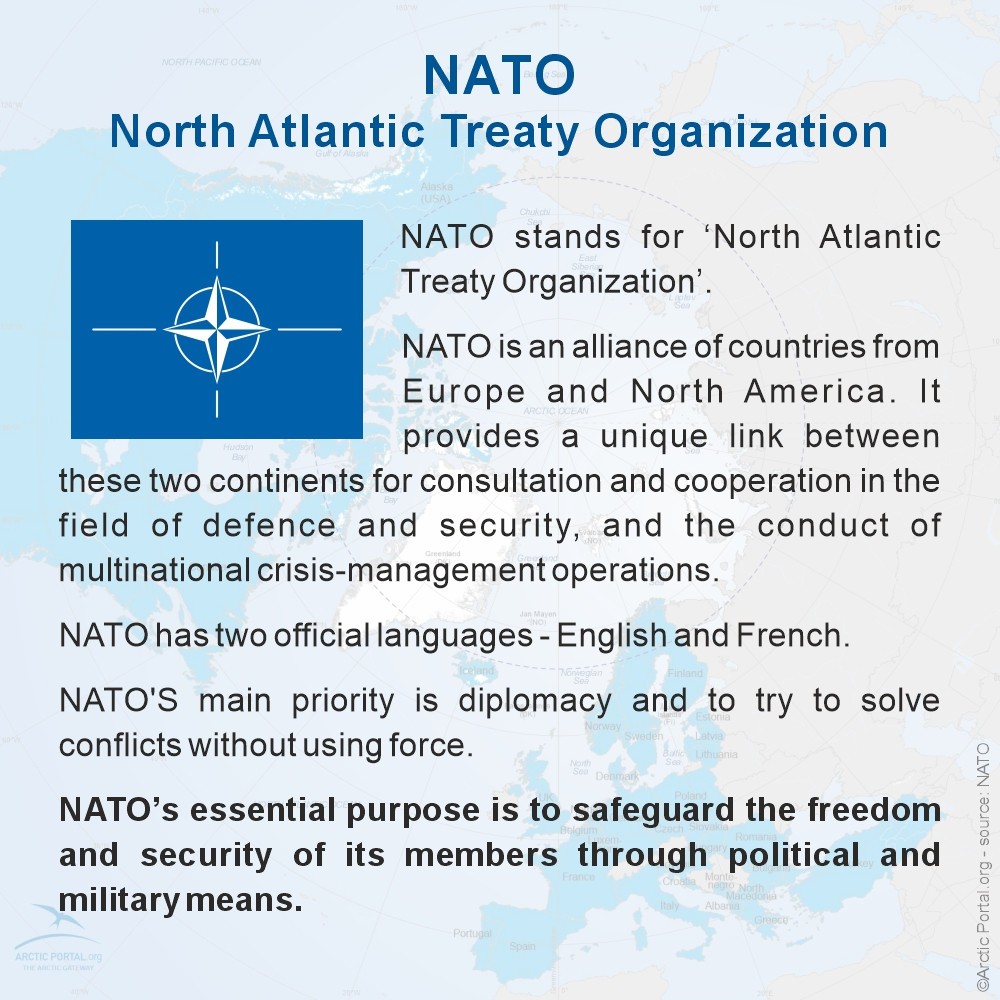
In the contemporary landscape of global affairs, the acronym NATO—the North Atlantic Treaty Organization—is most frequently discussed in the context of geopolitics and military strategy. However, for those within the spheres of digital defense, systems engineering, and global telecommunications, the question “What do you mean by NATO?” yields a significantly more technical answer. Beyond the treaty itself, NATO represents one of the world’s most complex frameworks for technological interoperability, cybersecurity standards, and collaborative innovation.
In the tech sector, NATO is a massive driver of software standardization and hardware integration. It is the entity that ensures a Finnish fighter jet can communicate seamlessly with a Turkish radar system and a US naval vessel. This article explores the technical dimensions of NATO, focusing on its role as a setter of global tech standards, a pioneer in cybersecurity, and a catalyst for emerging disruptive technologies.
The Architecture of Interoperability: NATO as a Tech Standard-Setter
When tech professionals speak about NATO, they are often referring to the STANAGs (Standardization Agreements). These are the technical blueprints that allow disparate systems developed by dozens of different countries to function as a single, cohesive network. Without these standards, the digital architecture of international defense would be a fragmented mess of incompatible protocols.
STANAGs: The “API” of Global Defense
In software development, an API (Application Programming Interface) allows different programs to talk to each other. In the military-tech world, STANAGs serve a similar purpose. These agreements cover everything from data link protocols (like Link 16) to the technical specifications for tactical radio frequencies. By adhering to these standards, tech manufacturers—ranging from aerospace giants to boutique software firms—ensure their products are “NATO compatible,” a designation that carries significant weight in the global tech market.
Software-Defined Defense and the Common Operating Environment
The shift from hardware-centric systems to software-defined environments is a major trend within NATO’s technical roadmap. The “Common Operating Environment” (COE) is a conceptual and technical framework that aims to create a unified software ecosystem. This allows for rapid deployment of updates across the entire alliance, much like a global operating system update. This push toward cloud-native architectures and containerization (using tools like Kubernetes) is currently transforming how NATO manages its digital assets.
Data Interoperability and Semantic Standards
It isn’t enough for two computers to exchange bits; they must understand the meaning of the data. NATO invests heavily in semantic interoperability—ensuring that a “target” identified by an AI-driven drone in one nation is categorized with the exact same metadata by a command center in another. This involves complex data modeling and the implementation of shared taxonomies that are foundational to modern data science.
The Digital Frontline: NATO’s Cybersecurity Framework
In the tech niche, NATO is increasingly viewed as a primary authority on cybersecurity and collective digital defense. With the formal recognition of “Cyberspace” as an operational domain in 2016, the alliance has pivoted its focus toward the protection of critical digital infrastructure and the development of advanced defensive software.
Article 5 in the Digital Age
One of the most significant technical and legal questions of the decade is how NATO’s Article 5 (collective defense) applies to cyberattacks. From a tech perspective, this has led to the development of the “Tallinn Manual,” a comprehensive guide on how international law applies to cyber warfare. Tech leaders look to NATO’s definitions of “significant cyberattacks” to understand the threshold of digital escalation and how to harden enterprise-level systems against state-sponsored threats.
The Cooperative Cyber Defence Centre of Excellence (CCDCOE)
Based in Estonia, the CCDCOE is the “brain trust” of NATO’s tech defense. It is famous for hosting Locked Shields, the world’s largest and most complex real-time cyber defense exercise. For cybersecurity professionals, this exercise is the gold standard for testing “Blue Teams” (defenders) against sophisticated “Red Teams” (attackers). The lessons learned here—ranging from zero-day vulnerability management to the protection of industrial control systems (SCADA)—trickle down into the broader tech industry, informing best practices for private sector digital security.
Rapid Reaction Teams and Malware Information Sharing
NATO operates Computer Incident Response Teams (CIRTs) that utilize advanced threat intelligence platforms. By facilitating the “Malware Information Sharing Platform” (MISP), NATO enables member states to exchange technical indicators of compromise (IoCs) in real-time. This automated sharing of threat data is a cornerstone of modern cybersecurity architecture, preventing the spread of polymorphic code and advanced persistent threats (APTs).
Driving Innovation: Emerging and Disruptive Technologies (EDTs)
When we ask “What do you mean by NATO?” in the context of future tech, we are talking about DIANA (Defence Innovation Accelerator for the North Atlantic) and the NATO Innovation Fund. NATO has recognized that the cutting edge of technology—Artificial Intelligence, Quantum Computing, and Biotechnology—is no longer being developed solely in government labs, but in the private tech startup ecosystem.
DIANA: The Tech Startup Bridge
DIANA is NATO’s answer to the rapid pace of commercial innovation. It acts as a tech accelerator, providing funding and mentorship to startups working on “dual-use” technologies—tools that have both civilian and defense applications. For a tech founder, “NATO” means a pathway to scale deep-tech solutions, whether they are working on high-capacity energy storage, secure satellite communications, or advanced sensors.
Artificial Intelligence and the Ethical Tech Stack
NATO is currently implementing its first-ever AI Strategy. This isn’t just about autonomous systems; it’s about the “Digital Transformation” of the entire alliance. The focus is on creating “Trustworthy AI” that adheres to principles of lawfulness, responsibility, and explainability. For AI developers, NATO’s guidelines provide a framework for building robust machine learning models that can operate in “denied environments” where cloud connectivity is unavailable.
Quantum-Resistant Cryptography
As quantum computing advances, current encryption standards are at risk. NATO is at the forefront of the transition to Post-Quantum Cryptography (PQC). By setting the pace for quantum-resistant standards, NATO is helping to define the next generation of secure communication protocols that will eventually become standard in the banking, healthcare, and telecommunications sectors.
Federated Cloud and Multi-Domain Operations (MDO)
The technical future of NATO lies in the concept of Multi-Domain Operations, which requires a seamless digital thread connecting space, air, land, sea, and cyber assets. At the heart of this vision is the “NATO Federated Cloud.”
The NATO Federated Cloud
This is a distributed computing environment that allows for the secure processing of massive datasets across different geographic locations and security classifications. By utilizing edge computing, NATO can process data closer to the source (such as a drone or a ground sensor), reducing latency and enabling real-time decision-making. For cloud architects, the NATO model represents the pinnacle of hybrid-cloud complexity, balancing extreme security with high availability.
Space-Based Assets and Satellite Internet
With the establishment of the NATO Space Centre, the alliance is increasingly focused on the tech of the “High Ground.” This includes the protection of GPS/GNSS signals and the integration of Low Earth Orbit (LEO) satellite constellations for resilient internet connectivity. The tech involved in “Space Domain Awareness” is a burgeoning field where NATO is a primary customer and standard-setter.
Big Data Analytics and Predictive Maintenance
The sheer volume of data generated by modern sensors is overwhelming. NATO is leveraging big data analytics not just for intelligence, but for the “Digital Twin” modeling of equipment. By creating digital replicas of physical assets, the alliance can use predictive algorithms to determine when a vehicle or system will fail before it actually does, a tech trend that is now a staple in high-end industrial IoT (Internet of Things).

Conclusion: NATO as a Global Tech Powerhouse
To ask “What do you mean by NATO?” is to inquire about the very backbone of modern international technical cooperation. While the public sees a political alliance, the tech professional sees a massive, distributed network defined by rigorous standards, cutting-edge cybersecurity, and a forward-leaning innovation agenda.
By establishing the STANAGs, NATO created a common language for global technology. Through the CCDCOE and Locked Shields, it redefined the parameters of digital defense. And through DIANA and the Innovation Fund, it is ensuring that the next generation of AI, Quantum, and Space technologies are developed within a framework of security and interoperability. In the 21st century, NATO is as much a software and standards organization as it is a treaty organization, serving as a critical pillar in the global technology ecosystem.
aViewFromTheCave is a participant in the Amazon Services LLC Associates Program, an affiliate advertising program designed to provide a means for sites to earn advertising fees by advertising and linking to Amazon.com. Amazon, the Amazon logo, AmazonSupply, and the AmazonSupply logo are trademarks of Amazon.com, Inc. or its affiliates. As an Amazon Associate we earn affiliate commissions from qualifying purchases.