
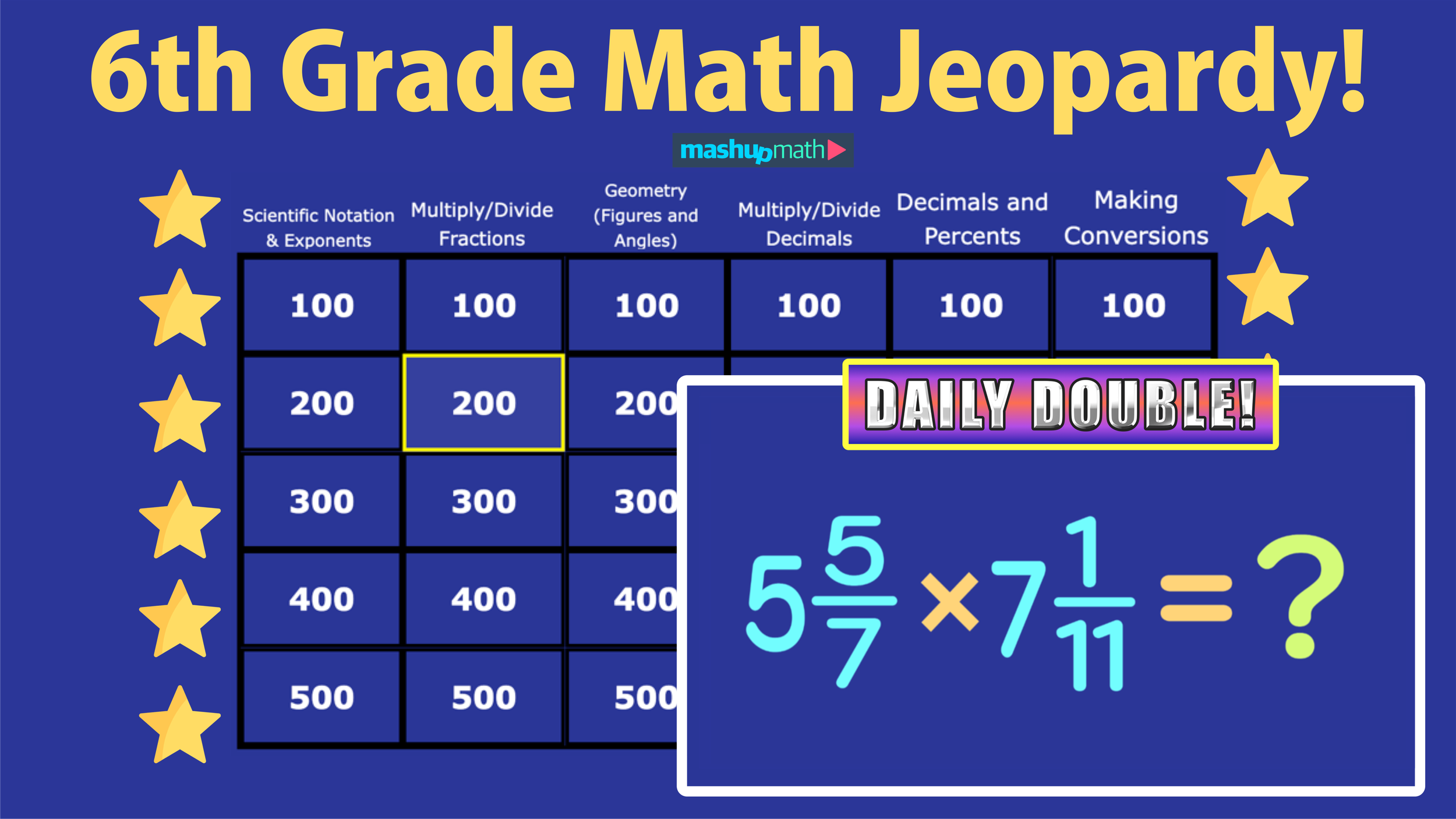
The transition into middle school represents a pivotal shift in a student’s academic journey, particularly regarding mathematical literacy. In the sixth grade, students move away from the basic arithmetic mastery of elementary school and step into the foundational architecture of algebraic thinking. For many students, this year is not just about learning new operations; it is about learning how to think numerically, analyze data, and apply logic to solve complex, multi-step problems. Understanding these shifts is essential for parents, educators, and students alike, as the concepts mastered this year serve as the bedrock for high school geometry, statistics, and advanced calculus.
The Shift to Algebraic Thinking and Ratios
The primary objective of 6th-grade mathematics is the transition from concrete calculation to abstract reasoning. While students have worked with numbers for years, they are now introduced to the concept of variables—the practice of using letters to represent unknown values. This is the official entry point into the world of algebra.
Understanding Ratios and Proportional Relationships
One of the most significant pillars of the 6th-grade curriculum is the study of ratios and rates. Students learn to express the relationship between two quantities, such as the ratio of red marbles to blue marbles in a jar. This concept is fundamental because it moves beyond simple addition and subtraction into the realm of multiplicative reasoning. Students learn to determine unit rates—a skill that is crucial for everything from calculating the price per ounce at a grocery store to determining travel speeds during a road trip.
The Power of Variables and Expressions
In addition to ratios, students begin working with algebraic expressions. They learn to translate word problems into mathematical sentences, using variables like “x” or “y” to represent unknowns. By evaluating expressions and understanding the order of operations, students develop the ability to handle equations. This stage is critical; if a student fails to grasp the logic behind an expression, they will struggle when equations become more complex in 7th and 8th grade.
Rational Numbers and the Number System
Throughout elementary school, children primarily focus on whole numbers, basic fractions, and decimals. In 6th grade, the scope expands to include the full spectrum of rational numbers, including the introduction of negative integers and the coordinate plane.
Mastering Negative Numbers
The introduction of negative numbers is often an eye-opening moment for 6th graders. They learn that numbers exist below zero and begin to visualize these values on a number line. This includes understanding the concept of opposites and absolute value—the distance a number is from zero. Applying these concepts to real-world scenarios, such as temperature, debt, or elevation, helps students see that math is not just a theoretical exercise but a way to quantify the physical world.
Operations with Multi-Digit Decimals and Fractions
While 6th graders continue to sharpen their skills with fractions and decimals, the expectation moves toward mastery. They are expected to divide multi-digit numbers, find the greatest common factor, and calculate the least common multiple. These operations are essential for simplifying expressions and solving complex arithmetic problems. Mastery here ensures that a student will not be tripped up by tedious calculations when they reach more advanced topics like slope-intercept form in algebra.
Geometry and Spatial Reasoning

Geometry in 6th grade is no longer about simply identifying shapes. It is about measurement, space, and the formulas that define the physical boundaries of objects. This section of the curriculum challenges students to think about how surface area and volume occupy space in three dimensions.
Area of Polygons
Students learn to derive formulas for the area of triangles, trapezoids, and other composite shapes. Rather than simply memorizing a formula, the curriculum encourages students to decompose complex shapes into smaller rectangles or triangles to calculate their area. This spatial decomposition is a vital skill that fosters higher-level spatial reasoning and logic.
Surface Area and Volume
The study of 3D objects begins with calculating the surface area and volume of rectangular prisms. By using “nets”—two-dimensional patterns that can be folded into three-dimensional shapes—students visualize how the faces of an object relate to one another. This hands-on approach to geometry ensures that students don’t just memorize formulas but understand the structural relationship between faces, edges, and vertices.
Statistical Variability and Data Analysis
The final major component of 6th-grade math is the introduction of statistics and probability. In an increasingly data-driven world, the ability to interpret information is a core competency. Students move away from simply calculating averages to understanding the distribution and spread of data.
Analyzing Data Sets
Students learn to use tools like histograms, box plots, and dot plots to represent data. They explore the concept of variability, looking at the “center” of a data set (mean, median, and mode) as well as the “spread” (interquartile range and mean absolute deviation). This teaches students to look at a collection of numbers and infer meaning from it. Are the numbers clustered closely together, or are there outliers pulling the data in a certain direction?
Understanding Statistical Questions
An important aspect of this curriculum is learning how to formulate a statistical question. Students learn the difference between a question that yields one specific answer (e.g., “How old is my teacher?”) and a statistical question that accounts for variability (e.g., “How old are the students in this school?”). This distinction is the foundation of scientific inquiry and empirical research. By recognizing how to frame questions, students become better equipped to handle the data-heavy environments of high school science and college-level social studies.
Building a Foundation for Future Success
The 6th-grade math curriculum is meticulously designed to create a bridge between the intuitive math of childhood and the rigorous, logic-based math of adulthood. The progression from arithmetic to algebra, the introduction of negative numbers, the application of geometric formulas, and the analysis of data sets all serve a singular purpose: to build a resilient mathematical mindset.
The Importance of Problem-Solving
Beyond the specific topics, 6th grade is a training ground for resilience. Mathematical concepts in this grade level are intentionally more challenging, requiring students to stick with a problem until they find the solution. Teachers often emphasize the “process” over the “answer,” encouraging students to show their work and explain their reasoning. This shift in classroom culture is perhaps more important than any specific formula. It teaches students that making mistakes is part of the learning process and that multiple pathways can often lead to the same correct result.
Preparing for the Rigors of Middle School
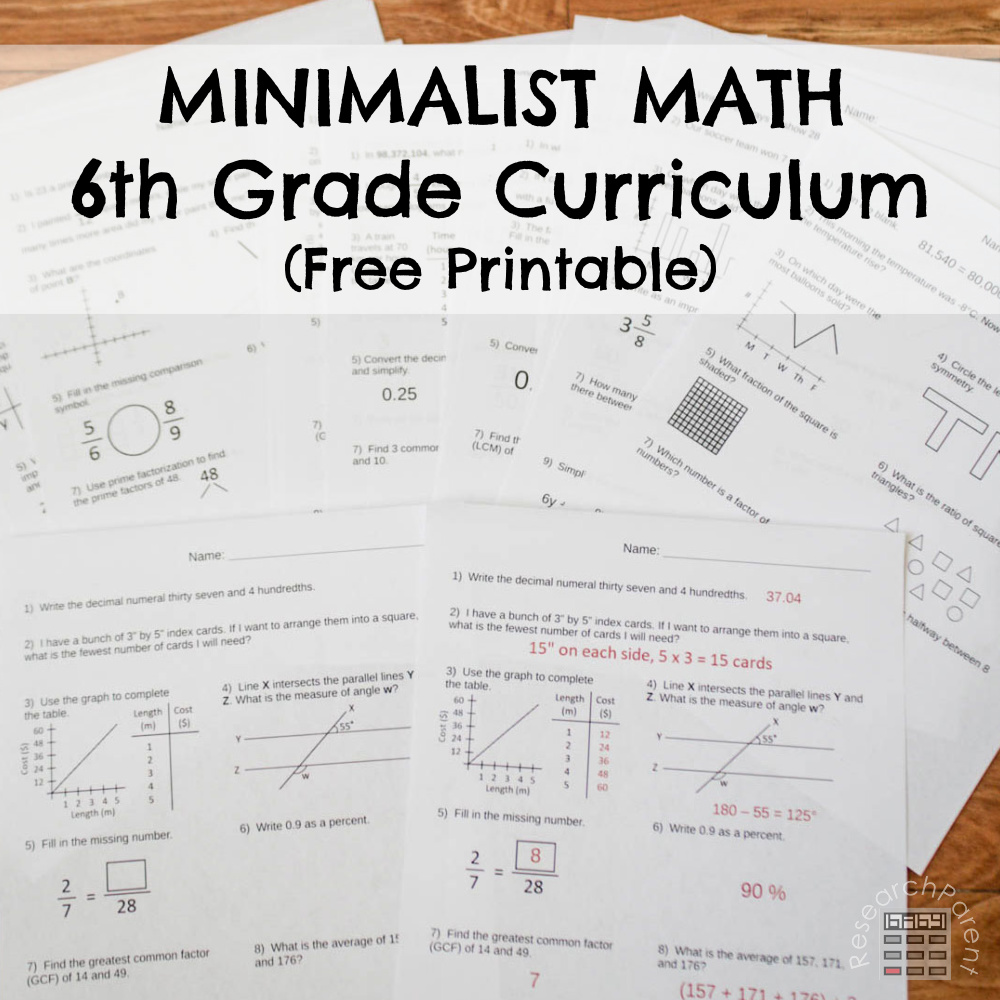
By the end of the year, a student who has mastered 6th-grade math is prepared for the rapid acceleration of 7th-grade pre-algebra. They possess the ability to manipulate numbers with fluency, represent real-world problems through variables, visualize geometric structures, and interpret data trends. These skills are not just for the classroom; they are essential life tools. Whether calculating interest rates, analyzing budgets, or understanding statistical reports in the news, the mathematical literacy gained in 6th grade provides the analytical framework necessary to navigate the complexities of the modern world.
In summary, what is learned in 6th grade math is far more than a list of topics. It is the beginning of a student’s identity as a logical thinker. By providing a structured environment where abstract thinking is encouraged and foundational skills are solidified, the 6th-grade math curriculum acts as the launchpad for all subsequent academic achievement in science, technology, engineering, and mathematics. Through the integration of these four main pillars—algebraic thinking, rational numbers, geometry, and statistics—students gain the confidence to approach any problem with the tools required to solve it.
aViewFromTheCave is a participant in the Amazon Services LLC Associates Program, an affiliate advertising program designed to provide a means for sites to earn advertising fees by advertising and linking to Amazon.com. Amazon, the Amazon logo, AmazonSupply, and the AmazonSupply logo are trademarks of Amazon.com, Inc. or its affiliates. As an Amazon Associate we earn affiliate commissions from qualifying purchases.