
In an increasingly digitized world, the internet serves as the primary gateway for information, commerce, communication, and entertainment. Behind every website, web application, and online service lies the meticulous work of web developers. These are the architects and engineers of the digital landscape, transforming abstract ideas into tangible, interactive experiences that shape how we live, work, and connect. Their role is far more extensive and nuanced than simply coding; it encompasses a broad spectrum of responsibilities, technical expertise, and continuous learning to keep pace with an ever-evolving technological frontier.
At its core, web development is the process of building and maintaining websites and web applications. This involves everything from designing the aesthetic layout and user interface (UI) to ensuring the robust functionality, performance, and security of the underlying systems. A web developer is a crucial link between a client’s vision and the end-user’s experience, translating business requirements and design concepts into a functional, accessible, and engaging digital product.

The Core Responsibilities of a Web Developer
The daily life of a web developer is a dynamic blend of problem-solving, creative execution, and technical implementation. Their responsibilities span the entire lifecycle of a digital product, ensuring it is not only operational but also optimized for user interaction and future scalability.
Translating Ideas into Interactive Experiences
One of the primary responsibilities of a web developer is to take conceptual ideas, wireframes, and design mock-ups and bring them to life. This involves understanding the client’s goals, the target audience, and the desired user flow. Developers must possess the ability to deconstruct complex requirements into smaller, manageable tasks, and then choose the appropriate technologies and methodologies to build a cohesive and functional system. They act as the bridge between design aesthetics and technical feasibility, often suggesting modifications or improvements to ensure a seamless user experience while adhering to technical constraints.
Building and Maintaining Websites
The foundational task of a web developer involves writing, testing, and deploying code. This is a multi-faceted process that includes structuring the content with HTML, styling it with CSS, and adding interactivity and dynamic features with JavaScript and various frameworks. Beyond the initial build, developers are continuously involved in maintaining these digital assets. This includes debugging issues, applying security patches, updating dependencies, and implementing new features as business needs evolve. Maintenance is not a secondary task; it’s a critical ongoing responsibility to ensure the longevity, security, and relevance of a web presence.
Ensuring Performance and Security
In today’s fast-paced digital environment, users expect websites to load instantly and function flawlessly. Web developers are keenly focused on optimizing website performance, which involves techniques such as code minification, image optimization, server-side rendering, and efficient database querying. Furthermore, with the increasing threat of cyber-attacks and data breaches, security is paramount. Developers implement secure coding practices, integrate authentication and authorization mechanisms, protect sensitive data, and stay informed about common vulnerabilities to safeguard user information and the integrity of the application.
Collaboration and Communication
Web development is rarely a solitary endeavor. Developers work within teams, collaborating with designers, project managers, quality assurance (QA) testers, and other developers. Effective communication is essential for understanding project requirements, articulating technical challenges, providing progress updates, and collaboratively troubleshooting issues. Version control systems like Git are indispensable tools for managing code changes, facilitating teamwork, and ensuring that multiple developers can work on the same project simultaneously without conflicts.
Diving Deeper: Specialized Roles in Web Development
The broad field of web development has naturally segmented into specialized roles, each focusing on distinct layers of a web application. While some developers strive for expertise across the board, many choose to specialize, becoming masters of their particular domain.
Front-End Development: The User’s Window
Front-end developers are concerned with the “client-side” of a website—everything a user sees and interacts with directly in their browser. Their primary goal is to create intuitive, responsive, and visually appealing user interfaces. This involves:
- Markup Languages: Structuring content using HTML (HyperText Markup Language).
- Styling: Applying visual presentation with CSS (Cascading Style Sheets) to control layouts, colors, fonts, and responsiveness across different devices.
- Interactivity: Implementing dynamic features and user interactions using JavaScript, often leveraging powerful frameworks and libraries like React, Angular, or Vue.js.
- User Experience (UX): Working closely with UX/UI designers to ensure the interface is not only aesthetically pleasing but also user-friendly and accessible to all.
Front-end developers breathe life into static designs, ensuring a smooth and engaging user journey.
Back-End Development: The Engine Room
Back-end developers focus on the “server-side” of a web application, which users don’t directly see but is crucial for functionality. They build and maintain the logic, databases, and server infrastructure that power the front-end. Their responsibilities include:
- Server-Side Logic: Developing the core application logic using languages like Python (with frameworks like Django/Flask), Ruby (Ruby on Rails), PHP (Laravel), Node.js (Express), or Java (Spring).
- Database Management: Designing, implementing, and managing databases (e.g., PostgreSQL, MySQL, MongoDB) to store and retrieve data efficiently.
- API Development: Creating Application Programming Interfaces (APIs) that allow the front-end to communicate with the back-end and external services.
- Authentication and Authorization: Implementing secure systems for user login, session management, and controlling access to specific resources.
Back-end developers ensure that data is processed correctly, applications run smoothly, and the entire system is secure and scalable.

Full-Stack Development: Bridging Both Worlds
Full-stack developers are proficient in both front-end and back-end technologies. They possess a comprehensive understanding of how all layers of a web application interact, allowing them to build complete applications from conception to deployment. While this versatility is highly valuable, it requires a broader and deeper technical knowledge base, and the challenge of staying updated with an expansive array of technologies. Full-stack developers are often ideal for smaller teams or startups where a single individual needs to oversee multiple aspects of development.
DevOps and Other Related Roles
Beyond these core specializations, web development intersects with several other critical roles. DevOps engineers, for instance, focus on streamlining the development and operations processes, automating deployments, and managing server infrastructure and cloud services (AWS, Azure, Google Cloud). Mobile app developers might build native or hybrid applications that integrate with web backends. The lines can blur, showcasing the interconnected nature of modern software development.
The Essential Skillset for Web Developers
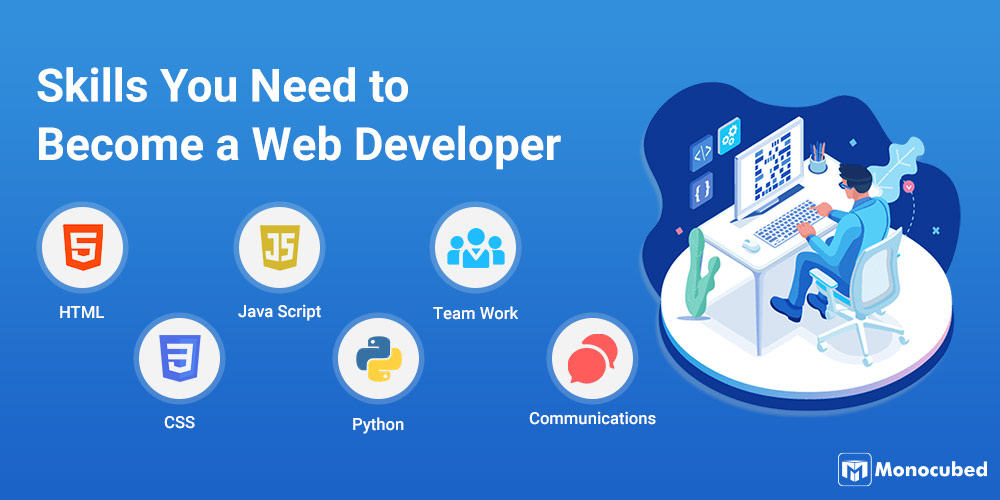
Becoming a successful web developer requires more than just knowing a few programming languages. It demands a blend of technical expertise, problem-solving abilities, and soft skills essential for navigating the complexities of the digital world.
Technical Proficiency: The Foundation
A strong grasp of programming languages (HTML, CSS, JavaScript, and at least one back-end language like Python or Node.js), along with their associated frameworks and libraries, is non-negotiable. Understanding data structures, algorithms, and object-oriented programming principles forms the bedrock of efficient code. Proficiency in version control systems (Git) for collaborative development, knowledge of databases (SQL/NoSQL), and familiarity with web protocols (HTTP/HTTPS) are also fundamental. The ability to debug code effectively and understand browser developer tools is equally vital for diagnosing and resolving issues.
Problem-Solving and Logical Thinking
Web development is inherently about solving problems. Whether it’s optimizing performance, fixing a bug, or implementing a complex new feature, developers constantly encounter challenges. Strong logical thinking skills allow them to break down intricate problems into manageable components, devise elegant solutions, and anticipate potential issues. This analytical mindset is crucial for writing clean, efficient, and maintainable code.
Continuous Learning and Adaptability
The technology landscape is in a perpetual state of flux. New languages, frameworks, tools, and best practices emerge with astonishing regularity. A truly effective web developer embraces continuous learning, dedicating time to explore new technologies, read documentation, participate in online communities, and experiment with emerging trends. Adaptability is key; what’s cutting-edge today might be legacy tomorrow. The ability to quickly learn and pivot to new tools is a defining characteristic of successful developers.
Attention to Detail and User Experience (UX)
While designers craft the overall look and feel, developers are responsible for the pixel-perfect implementation and responsiveness of the user interface. This requires meticulous attention to detail to ensure the final product matches the design specifications across various devices and screen sizes. Furthermore, an understanding of fundamental UX principles—such as intuitive navigation, accessibility standards, and fast load times—ensures that the technical implementation translates into a delightful and inclusive user experience.
The Impact and Future of Web Development
Web developers are not just building websites; they are constructing the infrastructure of our digital future. Their work has a profound impact on businesses, communities, and individuals worldwide.
Driving Digital Transformation
From powering global e-commerce platforms to enabling instantaneous communication through social media, web developers are instrumental in driving digital transformation across all sectors. They create the tools that allow businesses to reach customers globally, streamline operations, and innovate. They build the platforms for education, healthcare, entertainment, and government services, making these accessible to broader populations and fostering connectivity on an unprecedented scale.
Emerging Trends and Technologies
The future of web development is exciting and rapidly evolving. We are seeing increased integration of Artificial Intelligence (AI) and Machine Learning (ML) into web applications, enabling personalized experiences, smart assistants, and predictive analytics. Progressive Web Apps (PWAs) are blurring the lines between native mobile apps and websites, offering offline capabilities and push notifications. Serverless architectures are simplifying deployment and scaling, while WebAssembly is bringing high-performance computing to the browser. Web developers will be at the forefront of harnessing these technologies to create even more powerful and immersive digital experiences.
A Career Path with Endless Possibilities
The demand for skilled web developers remains consistently high, offering a dynamic and rewarding career path. The flexibility to work remotely, the constant opportunity for learning, and the ability to contribute to tangible products that impact millions make it an attractive profession. From entry-level positions to specialized architectural roles, web development offers a vast landscape of opportunities for growth and innovation.
In conclusion, web developers are the essential architects of our digital world. They blend technical expertise with creative problem-solving to build the interactive platforms that define modern life. From the foundational HTML and CSS to complex back-end systems and emerging AI integrations, their work is diverse, challenging, and profoundly impactful. As technology continues to advance, the role of the web developer will only grow in importance, continuing to shape how we interact with information and each other in the digital age.
aViewFromTheCave is a participant in the Amazon Services LLC Associates Program, an affiliate advertising program designed to provide a means for sites to earn advertising fees by advertising and linking to Amazon.com. Amazon, the Amazon logo, AmazonSupply, and the AmazonSupply logo are trademarks of Amazon.com, Inc. or its affiliates. As an Amazon Associate we earn affiliate commissions from qualifying purchases.