
In the vast lexicon of scientific notation, chemical formulas act as the shorthand language of the universe. When a chemist writes “H₂O” or “C₆H₁₂O₆,” they are not merely jotting down symbols; they are providing a precise, quantitative blueprint of molecular architecture. Central to this representation is the subscript—that diminutive number tucked to the lower right of an elemental symbol. While it may appear trivial in size, the subscript is the fundamental integer that defines the stoichiometry, structural integrity, and chemical identity of every substance in existence. Understanding what these numbers signify is the first step toward mastering the logic of chemistry.
The Atomic Accounting: Defining the Subscript
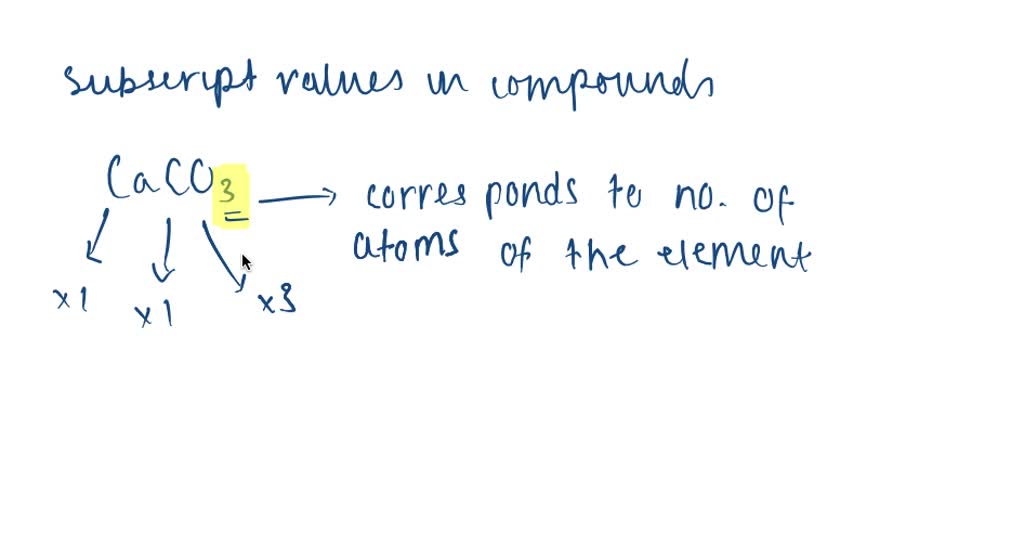
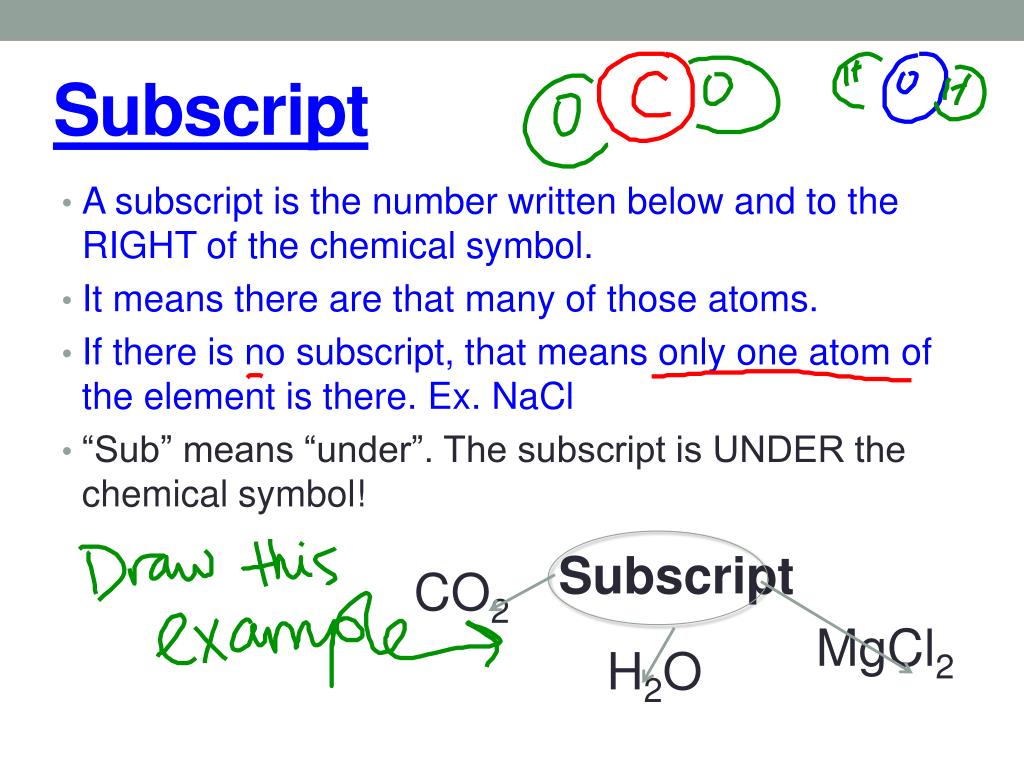
At its most basic level, a subscript indicates the number of atoms of the element immediately preceding it within a single molecule or formula unit. If no subscript is present—as is the case with the “O” in H₂O—it is implicitly understood to be a one. This numerical convention is the bedrock of chemical literacy.
The Role of Stoichiometry
Stoichiometry is the branch of chemistry concerned with the quantitative relationships between reactants and products in a chemical reaction. Subscripts serve as the constants in these calculations. Because atoms are neither created nor destroyed during standard chemical reactions (the Law of Conservation of Mass), the subscripts dictate the “atom balance.” When we write glucose as C₆H₁₂O₆, we are stating that every single unit of that sugar contains exactly six carbon atoms, twelve hydrogen atoms, and six oxygen atoms. Any deviation from these specific subscripts would result in an entirely different substance.
Distinguishing Molecular vs. Empirical Formulas
It is vital to distinguish between two types of formulas where subscripts perform different roles. A molecular formula, like hydrogen peroxide (H₂O₂), shows the exact number of atoms of each element in a molecule. Conversely, an empirical formula shows the simplest whole-number ratio of the elements. In ionic compounds like sodium chloride (NaCl), the subscript “1” is implied for both, indicating a 1:1 ratio within the crystal lattice. These subscripts do not represent a discrete molecule, but rather the repeating unit of the crystalline structure.
The Structural Implications of Subscripts
Beyond simple counting, subscripts provide essential clues regarding the spatial arrangement and bonding capacity of atoms. They serve as a roadmap for molecular geometry and valence shell electron pair repulsion (VSEPR) theory.
Valency and Bonding Patterns
The subscripts in a formula are largely determined by the valence electrons of the involved elements. Atoms bond to achieve stability—often by completing their octet. For example, aluminum oxide is written as Al₂O₃. This specific arrangement of subscripts is not arbitrary; it is the result of aluminum having three electrons to give and oxygen needing two to complete its shell. The subscripts reflect the “cross-over” rule, ensuring that the total charge of the compound remains neutral. By observing the subscripts, a scientist can reverse-engineer the ionic charges or the covalent bonding potential of the atoms involved.
Isomers and the Arrangement of Atoms
Perhaps the most intriguing aspect of subscripts is what they reveal about isomerism. Isomers are compounds that share the same molecular formula—meaning they have the exact same subscripts—but possess different structural arrangements. Consider dimethyl ether and ethanol; both share the molecular formula C₂H₆O. Despite having identical subscripts, their physical and chemical properties are vastly different because the atoms are connected in different sequences. In this context, subscripts tell us what is “in the bag,” but the structural formula explains how the items are packed.

The Language of Polyatomic Ions
Chemical formulas frequently include subscripts that apply to groups of atoms enclosed in parentheses, such as Ca(NO₃)₂. In this example, the subscript outside the parentheses serves as a multiplier for everything contained within them.
Distributing the Subscript
When a subscript sits outside a bracket, it acts similarly to a multiplier in an algebraic equation. In the formula for calcium nitrate, the “2” outside the parentheses indicates that there are two nitrate ions (NO₃⁻) for every one calcium ion. Mathematically, this means there are two nitrogen atoms and six oxygen atoms associated with the calcium. This notation is essential for keeping track of complex molecules and is frequently utilized in balancing complex chemical equations where polyatomic groups remain intact throughout the reaction.
Why This Matters in Synthesis
For those working in laboratory settings or industrial manufacturing, this notation is more than a formality. When calculating the mass of reagents needed for a reaction—a process known as determining molar mass—one must multiply the atomic mass of each element by its corresponding subscript. If a chemist misses a subscript—perhaps failing to distribute the multiplier outside a set of parentheses—the molar mass calculation will be incorrect. This leads to the wrong amount of reagents being used, which can result in failed experiments, wasted materials, or potentially hazardous side reactions.
Subscripts as Indicators of State and Complexity
While subscripts are most commonly associated with atomic counts, they also appear in broader scientific notations to designate physical states or specific isotopes.
Isotopes and Nuclear Notation
In nuclear chemistry, subscripts are used in a different capacity, often placed to the left of the elemental symbol to represent the atomic number (the number of protons). While this differs from the standard right-hand subscript used in molecular formulas, it highlights the flexibility of the notation. In the realm of compounds, however, we focus on the right-hand subscript as the indicator of the composition of matter.
Complexity in High-Level Chemistry
As we move into higher-level chemistry, such as polymer science or protein biology, subscripts take on a role of magnitude. In the formula for a polymer like polyethylene, (C₂H₄)ₙ, the subscript “n” represents a variable degree of polymerization, often numbering in the thousands. Here, the subscript is no longer a static integer but a representation of the molecular weight distribution of the material. This demonstrates that the concept of the subscript is scalable; it can represent a single atom, a specific ratio in a salt, or a massive, repeating unit in a synthetic chain.
Conclusion: The Precision of Notation
The subscript is a testament to the precision of the scientific method. It is a compact, elegant, and highly informative tool that allows researchers to communicate complex structural data with ease. By looking at a chemical formula and decoding its subscripts, we gain immediate insight into the identity, ratio, charge, and bonding nature of a substance.
Whether one is studying the simple water molecule or the intricate, folding proteins of the human body, the logic remains the same. Every subscript tells a story of balance—of atoms coming together in specific quantities to create the physical world as we know it. By mastering the interpretation of these small, powerful numbers, we move beyond merely seeing symbols on a page and begin to see the mechanical, quantitative, and beautiful reality of the atomic world. In the rigorous discipline of chemistry, there is no detail more significant than the humble subscript.
aViewFromTheCave is a participant in the Amazon Services LLC Associates Program, an affiliate advertising program designed to provide a means for sites to earn advertising fees by advertising and linking to Amazon.com. Amazon, the Amazon logo, AmazonSupply, and the AmazonSupply logo are trademarks of Amazon.com, Inc. or its affiliates. As an Amazon Associate we earn affiliate commissions from qualifying purchases.