
Decoding the Flight Path: An Essential Guide to Disc Golf Flight Numbers
Disc golf, a sport blending strategy, athleticism, and equipment precision, relies heavily on understanding the intricate properties of its primary tool: the disc. Unlike traditional frisbees, disc golf discs are engineered with specific flight characteristics, quantified by a set of four numbers prominently displayed on their surface. These “flight numbers” are a standardized system designed to predict how a disc will behave during flight, offering players a technical blueprint for selecting the right equipment for any given shot. Mastering the interpretation of these numbers is paramount for improving accuracy, distance, and overall performance on the course. They serve as a crucial interface between a player’s arm speed and the disc’s aerodynamic capabilities, transforming guesswork into informed decisions.
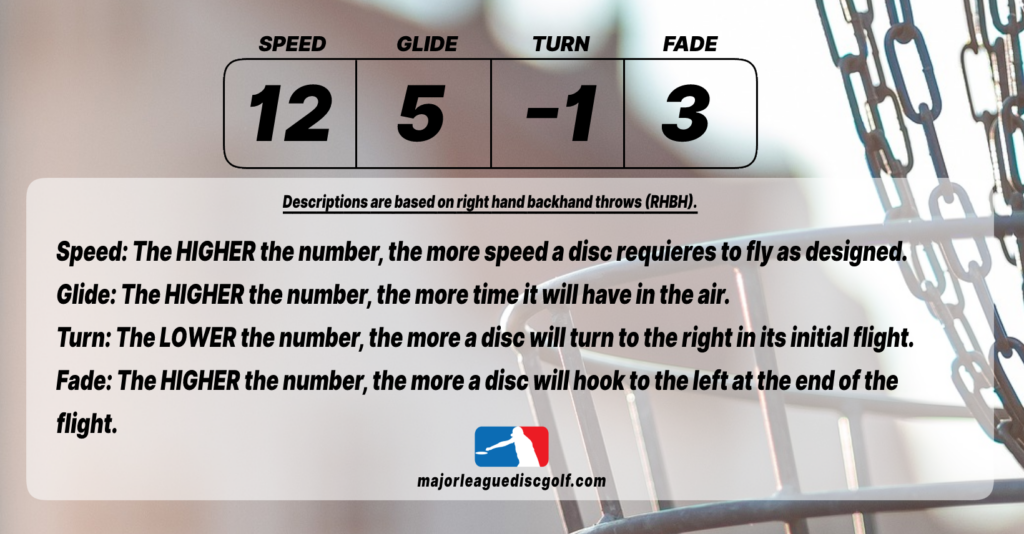
The four core flight numbers—Speed, Glide, Turn, and Fade—represent different phases and aspects of a disc’s trajectory. Each number typically ranges along a specific scale, indicating a spectrum of performance. By understanding what each digit signifies, players can effectively “program” their throw by selecting a disc whose flight profile aligns with their desired outcome, considering factors like wind, obstacles, and the target’s distance. For beginners, these numbers can seem daunting, but for seasoned players, they are indispensable metrics, guiding everything from casual rounds to competitive strategies.
Speed: The Engine of Distance
The first number in the sequence represents the disc’s Speed. This rating indicates how fast a disc needs to be thrown to achieve its intended flight path and maximize its potential distance. Speed numbers typically range from 1 to 14, or even higher for some manufacturers.
Understanding Speed Ratings (1-14+)
A higher speed number signifies a disc designed to cut through the air quickly, demanding greater power and arm speed from the player. These discs are generally narrower in profile with sharper edges, optimized for minimal air resistance at high velocities. Conversely, discs with lower speed ratings are designed to fly effectively at slower throwing speeds, making them more forgiving for players with less power or those seeking greater control over shorter distances.
When High Speed Matters
Discs with high speed ratings (e.g., 10-14+) are primarily drivers—distance drivers and some fairway drivers—intended for achieving maximum possible distance. They are the workhorses for experienced players with fast arm speeds, allowing them to cover vast expanses of the fairway. When thrown with sufficient power, these discs can maintain their initial velocity for longer, translating into impressive yardage. However, if a high-speed disc is not thrown fast enough, it will “hyzer out” prematurely, meaning it will fade sharply to the left (for a right-handed backhand thrower) without achieving its intended turn or glide, resulting in a significantly shorter and less predictable flight.
When Low Speed Excels
Lower speed discs (e.g., 1-7) include putters, mid-range discs, and some control-oriented fairway drivers. These discs are engineered for accuracy, control, and consistent flight paths over shorter to medium distances. Putters (speed 1-3) are designed for precision within the circle and short approaches, prioritizing a straight flight path. Mid-range discs (speed 4-6) offer a balance of control and moderate distance, excellent for shaping lines through tighter fairways. For beginners, starting with lower speed discs is often recommended as it allows them to develop proper form and understand disc flight dynamics before attempting to overpower higher-speed discs. They are also invaluable for experienced players in specific situations requiring finesse, such as approach shots, wooded courses, or headwinds where control outweighs raw distance.
Matching Speed to Arm Speed
The most crucial aspect of speed selection is matching the disc’s speed rating to your personal arm speed. An honest assessment of your throwing power is vital. Overpowering a low-speed disc can cause it to “turn over” excessively, resulting in an unpredictable flight. Conversely, under-powering a high-speed disc will prevent it from flexing into its intended flight path, leading to early fade. Finding the optimal speed balance ensures the disc performs as designed, providing the intended combination of turn, glide, and fade throughout its flight.
Glide: Sustaining the Airtime
The second number indicates the disc’s Glide, a measure of its ability to stay aloft or “float” in the air. Glide ratings typically range from 1 to 7.
The Role of Glide in Flight
Glide is influenced by the disc’s profile, particularly the dome and rim shape. A disc with high glide will tend to hold its altitude for a longer period, often appearing to “hover” as it travels down the fairway. This characteristic can be a significant asset for maximizing distance, especially for players who may not have elite arm speed but can generate good snap and spin. It also allows discs to navigate over obstacles more effectively without losing forward momentum too quickly.
High Glide Discs
Discs with high glide ratings (e.g., 5-7) are often favored by players looking to add extra distance to their throws without necessarily increasing their power. These discs are particularly effective in calm conditions or with a tailwind, where their ability to stay in the air can significantly extend their range. Many mid-range discs and certain distance drivers are designed with high glide to make them accessible and effective for a wider range of players. For beginners, high-glide discs can be very forgiving, helping them achieve respectable distances even with developing form.
Low Glide Discs
Conversely, discs with low glide ratings (e.g., 1-3) tend to “drop” out of the air more quickly. While this might sound undesirable, it serves crucial strategic purposes. Low-glide discs are invaluable in windy conditions, as their quicker descent makes them less susceptible to being carried off course by gusts. They are also excellent for controlled approach shots where a predictable landing is paramount, or for shots that need to get to the ground quickly to avoid going too far or hitting trees. Putters often have lower glide ratings to ensure they don’t sail past the basket.
Impact on Distance and Control
While high glide generally contributes to greater distance, it can sometimes come at the expense of pinpoint control, especially in adverse weather. A disc that wants to stay in the air longer can be harder to place precisely. Low-glide discs, while sacrificing some raw distance, offer superior control and predictability, making them essential tools for specific situations where accuracy is more important than maximum yardage. The choice between high and low glide often boils down to the specific demands of the shot and the prevailing environmental conditions.
Turn: Navigating the Initial Curve
The third number in the sequence describes the disc’s Turn, also known as high-speed turn. This rating indicates a disc’s tendency to drift to the right (for a right-handed backhand thrower) during the initial, fastest part of its flight. Turn ratings are typically represented as negative numbers, ranging from 0 to -5.
Inside-Out: Interpreting Turn Ratings (0 to -5)
A turn rating of 0 indicates a disc that resists turning to the right at high speed; it will fly relatively straight before its fade. A negative turn rating, such as -3 or -4, signifies a disc that is “understable,” meaning it has a strong tendency to turn right when thrown with significant power. The more negative the number, the more understable the disc. Conversely, discs with a turn rating of 0 or positive (though rare, some manufacturers might imply slight overstability through zero) are considered “overstable” in their initial flight phase, resisting the rightward turn.

Anhyzer and Hyzer Flips Explained
Understanding turn is crucial for executing specific shot shapes. An understable disc (high negative turn) can be thrown on a slight anhyzer angle (disc angled up to the right) and will hold that anhyzer line for a significant portion of its flight. More commonly, understable discs are used for “hyzer flip” shots. When an understable disc is thrown on a hyzer angle (disc angled up to the left) with enough speed, its high-speed turn will cause it to “flip up” to a flat or even slight anhyzer line before eventually fading back. This technique allows players to achieve long, straight flights or controlled right-turning shots that finish straight or with a gentle fade.
Discs for Right-Turning Shots (RHBH) and Hyzer Flips
Understable discs are invaluable for players who need to shape shots that move from left to right for a right-handed backhand thrower. This is particularly useful for navigating around obstacles or reaching baskets tucked to the right side of the fairway. They are also the go-to choice for rollers, where the disc lands on its edge and rolls along the ground, leveraging its understability to maintain the rolling angle. For players with lower arm speed, understable discs can mimic the flight path of more stable discs thrown by powerful players, helping them achieve greater distance.
The Utility of Understability
The utility of understability extends beyond just right-turning shots. It allows players to manipulate the disc’s flight path with greater precision, creating lines that might be impossible with stable or overstable discs. Mastering the use of understable discs adds versatility to a player’s arsenal, opening up new angles and approaches to various course layouts. It’s also important to note that as discs wear in over time, they generally become more understable, which is often referred to as “seasoning” a disc.
Fade: The Finish Line’s Predictability
The fourth and final number represents the disc’s Fade, or low-speed fade. This rating describes the disc’s tendency to hook or “fade” to the left (for a right-handed backhand thrower) as its speed decreases at the end of its flight. Fade ratings typically range from 0 to 5.
The Disc’s Final Move: Understanding Fade (0 to 5)
A fade rating of 0 indicates a disc that finishes very straight with minimal end-of-flight hook. A higher fade number, such as 3, 4, or 5, signifies a disc that is “overstable,” meaning it will reliably hook hard to the left as it slows down. The higher the number, the more pronounced and predictable the leftward finish. Fade is the most consistent aspect of a disc’s flight; it will almost always occur, regardless of how the disc was initially thrown, as long as it has enough airtime to decelerate.
Overstability and Predictable Hooks
Discs with high fade ratings are often referred to as “overstable” discs. Their primary characteristic is their strong and reliable fade, making them extremely predictable in their finish. This predictability is a significant advantage in various situations, such as navigating around obstacles, performing “spike hyzer” shots that drop vertically, or executing controlled skip shots. Overstable discs are also much less susceptible to the effects of headwinds, as their strong fade helps them resist being turned over to the right.
When to Use High Fade Discs
High-fade discs (e.g., fade 3-5) are essential tools for combating strong headwinds, executing precise hyzer shots that wrap around trees, or performing utility shots like flex lines (throwing on an anhyzer with an overstable disc to generate an S-curve). They are also excellent for controlling skip shots, where the disc lands at an angle and bounces forward and to the left, adding extra distance or navigating tight corners. For power throwers, these discs can be trusted to return to a stable flight path even after an initial high-speed turn, ensuring a consistent finish.
Minimizing Fade for Straight Shots
Conversely, discs with low fade ratings (e.g., fade 0-1) are designed to finish straighter, with minimal hook. These are ideal for tunnel shots, open fairways where a straight flight is desired, or approach shots where you want the disc to sit down softly without a strong skip. Many putters and some mid-range discs fall into this category, emphasizing a direct line to the target. Players aiming for a dead-straight flight throughout the disc’s trajectory will often seek out discs with low fade, or pair an understable disc’s turn with minimal fade for a balanced “flip to straight” flight.
Integrating the Numbers for Optimal Performance
Understanding each flight number individually is the first step; the true mastery comes from comprehending how they interact and influence a disc’s overall flight profile. The four numbers combine to paint a complete picture of a disc’s likely trajectory, allowing players to make strategic choices about their equipment.
Synergy of All Four Ratings
No single flight number tells the whole story. A disc with high speed and high glide might offer maximum distance, but its turn and fade ratings will determine its primary curve and finish. An understable disc (-4 turn) with a strong fade (3) will perform very differently from an equally understable disc with no fade (0). The former might fly right, then hard left, while the latter might turn right and hold that line or finish straight. Recognizing these combinations allows players to visualize the entire flight arc before the throw, making for more intelligent disc selection.
Building a Balanced Bag: Driver, Fairway, Mid-Range, Putter Selection
An effective disc golf bag isn’t just a collection of discs; it’s a strategically assembled toolkit. By understanding the numbers, players can build a balanced arsenal that covers a wide range of shot types, distances, and conditions. This includes selecting:
- Distance Drivers: High speed, varying turn and fade (e.g., 12/5/-1/3 for a stable workhorse, or 12/5/-4/1 for max distance S-curves).
- Fairway Drivers: Moderate speed, good control (e.g., 7/5/-1/2 for a versatile straight flyer).
- Mid-Range Discs: Lower speed, excellent control (e.g., 5/4/0/1 for a straight shot, or 4/5/-2/0 for a gentle turn).
- Putters: Lowest speed, high accuracy (e.g., 2/3/0/1 for a consistent finish).
A diverse set of discs, each with distinct flight number profiles, ensures a player is prepared for any scenario the course presents.
Adjusting for Conditions: Wind, Elevation, Course Layout
The flight numbers represent a disc’s behavior in ideal, calm conditions. However, real-world play often involves external factors:
- Wind: Headwinds effectively increase a disc’s speed, making it fly more understable (more turn, less fade). Tailwinds effectively decrease speed, making a disc fly more overstable (less turn, more fade). Crosswinds will push discs in the direction of the wind. Understanding this interaction helps players select more overstable discs into headwinds and more understable discs into tailwinds.
- Elevation: Throws at higher altitudes result in thinner air, which reduces lift and effectively makes discs fly more overstable. Conversely, throwing downhill requires considering increased speed and potential over-turning.
- Course Layout: Tight, wooded fairways demand precise, lower-speed, straight-flying discs (low turn, low fade). Open courses might call for high-speed, high-glide discs to maximize distance. Dogleg lefts will favor discs with strong fade; dogleg rights will favor understable discs that turn.
Beyond the Numbers: Plastic Types, Weight, and Wear
While the flight numbers are fundamental, they are not the only factors influencing a disc’s performance. The plastic type impacts grip, durability, and often the disc’s true stability (some premium plastics fly slightly more overstable initially). Disc weight also plays a role; heavier discs typically handle wind better and offer more stability, while lighter discs are easier to throw for slower arm speeds and can achieve more glide. Finally, wear and tear significantly alter flight characteristics. As discs hit trees and ground, they “break in,” gradually becoming more understable (more turn, less fade) than their printed numbers suggest. Experienced players often carry both new and worn versions of the same disc to leverage these different flight profiles.

The Iterative Process of Disc Selection
Ultimately, understanding the numbers on a disc golf disc is an ongoing, iterative process. It involves throwing discs, observing their flight, comparing it to the numbers, and making adjustments based on personal throwing style, course conditions, and desired shot outcomes. It’s a continuous learning curve that empowers disc golfers to make more informed choices about their equipment, leading to greater consistency, improved scores, and a deeper appreciation for the technical nuances of the sport. The numbers are not just arbitrary digits; they are a language spoken by discs, offering a direct conduit to unlocking their full potential.
aViewFromTheCave is a participant in the Amazon Services LLC Associates Program, an affiliate advertising program designed to provide a means for sites to earn advertising fees by advertising and linking to Amazon.com. Amazon, the Amazon logo, AmazonSupply, and the AmazonSupply logo are trademarks of Amazon.com, Inc. or its affiliates. As an Amazon Associate we earn affiliate commissions from qualifying purchases.