
In the expansive digital ecosystem of Minecraft, every item serves as a functional component within a larger system of survival, engineering, and alchemy. Among the myriad of drops available to players, the spider eye represents a unique intersection of risk and utility. While many items in the game have singular purposes, the spider eye is a versatile asset that functions across multiple gameplay layers, from basic nutrition—albeit risky—to complex chemical transformations.
Understanding what spider eyes do in Minecraft requires a technical appreciation of the game’s “Alchemy Engine” and its mob drop algorithms. This guide explores the diverse applications of the spider eye, its refined form as a fermented variant, and its indispensable role in high-level gameplay strategy.
The Technical Mechanics of the Spider Eye: Data, Drops, and Consumption
At its core, the spider eye is a mob drop categorized under “food and ingredients.” However, its utility is far more nuanced than a simple piece of meat or a block of wood. It is an item defined by its interactions with the player’s status effects and the game’s internal crafting logic.
Acquisition and Mob Drop Probability
Spider eyes are primarily obtained by defeating Spiders or Cave Spiders. From a technical standpoint, the drop rate is controlled by the game’s random number generator (RNG). A spider has a 1/3 (33.3%) chance of dropping an eye upon death when killed by a player or a tamed wolf.
For players looking to optimize their resource gathering, the “Looting” enchantment on a sword significantly modifies these variables. Each level of Looting increases the maximum number of potential drops, making it an essential tool for “technical players” who require high volumes of ingredients for automated brewing systems. Beyond spiders, these eyes can occasionally be found in loot chests within desert temples or obtained as drops from Witches, further integrating them into the game’s exploration rewards system.
Nutritional Value vs. Status Effects
While classified as food, the spider eye functions as a “poisonous consumable.” Eating a raw spider eye restores 2 hunger points (represented by one hunger bar) and 1.2 hunger saturation. However, the game’s code triggers a “Poison” status effect with a 100% probability upon consumption. This effect lasts for four seconds, dealing 4 points (2 hearts) of damage.
In the context of survival tech, eating a spider eye is rarely a primary choice. It is a “fail-safe” or a last-resort mechanic. However, for players studying the game’s mechanics, the spider eye serves as an excellent example of how Minecraft uses “debuffs” to balance resource availability. It is one of the few items that provides a negative feedback loop to the player, teaching the importance of item processing through the crafting system.
The Alchemy Engine: Brewing with Spider Eyes
The most significant technical application of the spider eye is found within the Brewing Stand. In Minecraft’s alchemical system, the spider eye acts as a primary “effect-modifier” or “base ingredient” for various potions.
The Potion of Poison
The most direct use of a spider eye in a brewing stand is the creation of the Potion of Poison. By adding a spider eye to an Awkward Potion (the standard base for most effects), the system outputs a liquid that applies the Poison debuff to whoever consumes it.
Technically, this represents a transformation of the spider eye’s inherent properties into a transferable, splashable format. When converted into a Splash Potion, this allows for tactical area-of-effect (AoE) damage, which is a staple in both high-level PvE (Player vs. Environment) and competitive PvP (Player vs. Player) scenarios.
Logic Gates in Crafting: The Fermented Spider Eye
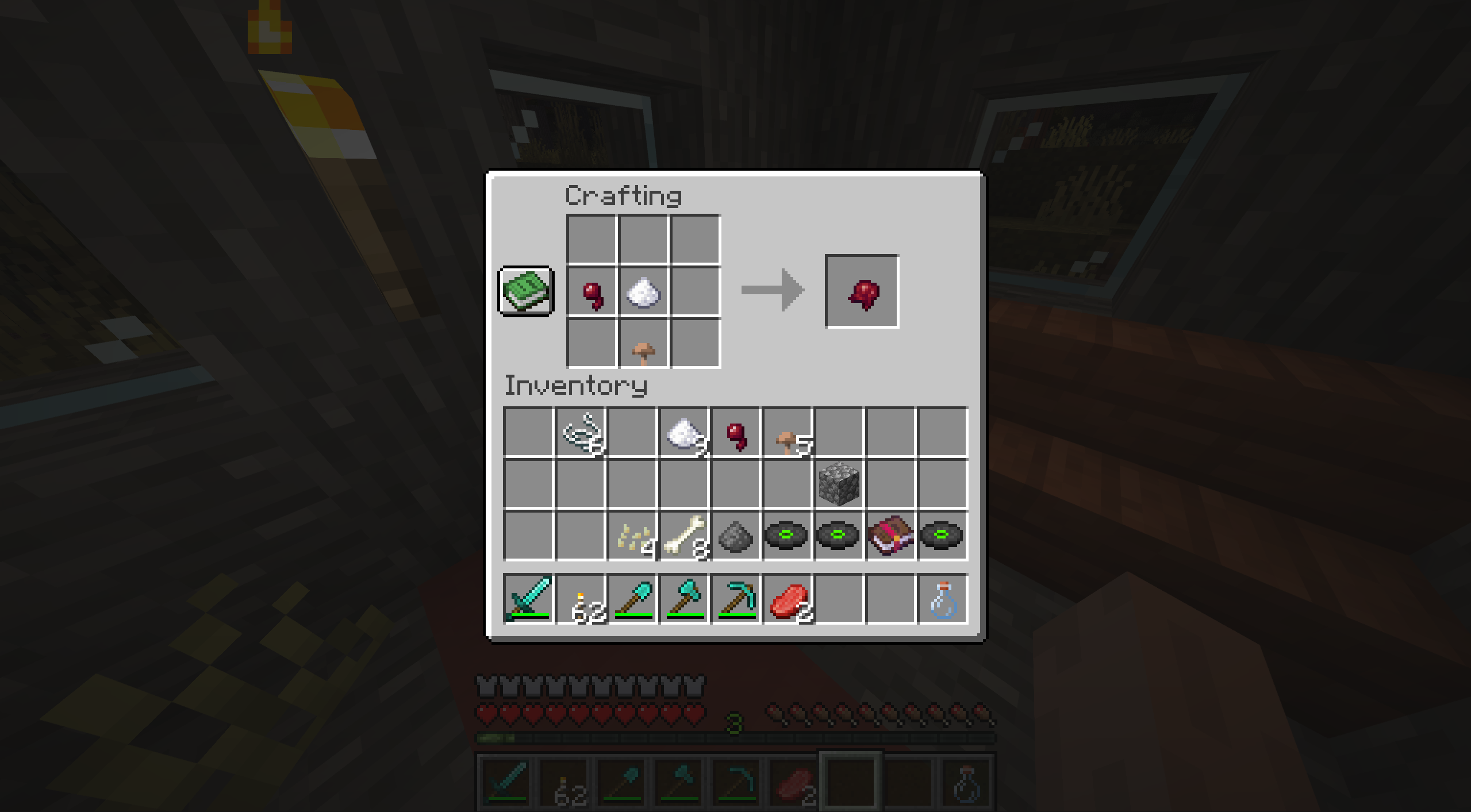
The real technical depth of this item is unlocked when it is combined with sugar and a brown mushroom to create a Fermented Spider Eye. This item does not function as food; instead, it acts as a “corruption” or “inversion” catalyst in the brewing stand.

In programming terms, the fermented spider eye acts like a “NOT” gate. It takes an existing potion effect and flips it to its opposite or a weakened state:
- Healing/Poison → Harming: It converts life-giving or over-time damage potions into immediate damage.
- Swiftness/Leaping → Slowness: It reverses movement buffs into movement debuffs.
- Night Vision → Invisibility: It flips the “ability to see” into “the inability to be seen.”
This recursive logic makes the spider eye one of the most mechanically complex items in the game’s software architecture, as its utility is defined by what it reacts with rather than just its own base properties.
Advanced Technical Applications: Curing and Combat
Beyond the brewing stand, the spider eye plays a critical role in the “Villager Mechanics” system, which is widely considered the most powerful technical exploit for resource management in Minecraft.
The Potion of Weakness and Zombie Villager Remediation
A Fermented Spider Eye is the core ingredient for the Potion of Weakness. This specific potion is the “software key” required to initiate the “curing” sequence for a Zombie Villager. When a player hits a Zombie Villager with a Splash Potion of Weakness and subsequently feeds them a Golden Apple, the game’s state machine begins a transformation process.
After several minutes, the Zombie Villager reverts to a standard Villager. This technical procedure is vital for players who wish to lower trading costs significantly. By “rehabilitating” a villager, the player earns a permanent discount on all trades, effectively hacking the game’s internal economy through the clever use of alchemical triggers.
Strategic Utility in Technical Play
In the realm of automated systems and mob grinders, spider eyes are often seen as a byproduct that must be sorted. Technical players build sophisticated redstone-powered sorting machines that use “item filters” to separate spider eyes from string.
While string is used for redstone components (tripwire hooks) and bows, the eyes are diverted into auto-brewing stations. These stations can be programmed to automatically replenish a player’s supply of Invisibility or Harming potions, showcasing how a simple mob drop can be integrated into a fully automated industrial digital complex.
The Role of Spider Eyes in the Minecraft Ecosystem
As Minecraft has evolved through various software updates (from the early Java editions to the modern Bedrock engine), the role of the spider eye has remained remarkably stable, yet its importance has grown as the game’s systems have become more interconnected.
Integration with Modern Gameplay
In newer versions of the game, the inclusion of “Advancements” (Java) or “Achievements” (Bedrock) has turned the use of spider eyes into technical milestones. For example, the “A Furious Cocktail” advancement requires the player to have every potion effect applied at once. This feat is impossible without a deep understanding of how spider eyes and fermented spider eyes interact to create the necessary variety of status effects.
Furthermore, the introduction of the “Suspicious Stew” mechanic—while not directly involving the spider eye—highlights the game’s design philosophy of “hidden properties” within items. The spider eye remains the quintessential example of this philosophy: an item that looks like a hazard but is actually a sophisticated tool for those who understand the game’s underlying logic.

Conclusion: More Than Just a Mob Drop
In summary, the question of “what do spider eyes do in Minecraft” reveals a complex layer of game design. They are not merely trophies of combat; they are essential inputs for the game’s chemical and economic systems.
From providing the raw data for the Poison effect to acting as a logical inverter in its fermented state, the spider eye is a bridge between the primal survival aspects of the game and its high-level technical engineering. Whether you are curing a village to optimize your resource trade-offs or brewing invisibility potions to navigate a treacherous server, the spider eye stands as a testament to the depth of Minecraft’s software-driven world. For the technical player, mastering the spider eye is not just about survival—it is about mastering the very mechanics that govern the digital realm.
aViewFromTheCave is a participant in the Amazon Services LLC Associates Program, an affiliate advertising program designed to provide a means for sites to earn advertising fees by advertising and linking to Amazon.com. Amazon, the Amazon logo, AmazonSupply, and the AmazonSupply logo are trademarks of Amazon.com, Inc. or its affiliates. As an Amazon Associate we earn affiliate commissions from qualifying purchases.