
The question “What do Jews look like?” is deceptively simple, yet it touches upon complex issues of identity, representation, and perception. In our increasingly digital world, these perceptions are not solely formed by direct human interaction but are heavily influenced by the information we consume and the algorithms that curate it. This article will explore how digital platforms, from search engines to social media, process and present information about Jewish people, and how this, in turn, shapes our understanding of what it means to “look Jewish.” We will delve into the technical underpinnings of image recognition, the biases inherent in training data, and the sophisticated AI tools that are increasingly tasked with categorizing and understanding human diversity.

The Algorithmic Gaze: How AI Perceives Jewish Identity
The way we visualize groups of people online is no longer solely the purview of human editors or photographers. Instead, sophisticated Artificial Intelligence (AI) systems are now integral to how images and information are processed, tagged, and ultimately displayed. Understanding how these algorithms operate is crucial to grasping the contemporary answer to “What do Jews look like?”
Image Recognition and Feature Extraction
At its core, AI-powered image recognition relies on complex algorithms designed to identify patterns and features within visual data. When an AI is presented with an image, it breaks it down into its constituent parts – pixels, colors, shapes, and textures. Through processes like convolutional neural networks (CNNs), these systems learn to identify hierarchical features, starting with simple edges and corners, and progressing to more complex elements like eyes, noses, and mouths.
When attempting to identify people belonging to a specific group, these algorithms are trained on vast datasets of labeled images. The goal is to associate certain visual characteristics – skin tone, hair texture, facial features, even attire – with a particular identity. For an AI to answer “What do Jews look like?”, it would have been trained on a dataset that implicitly or explicitly associates certain visual cues with Jewish individuals. This training data, however, is rarely neutral. It reflects the biases of the photographers, the annotators, and the societies in which the images were created and collected.
The Bias in Training Data: A Mirror to Society’s Prejudices
The fundamental challenge in algorithmic perception of any group, including Jewish people, lies in the inherent biases present in training data. If the datasets used to train AI image recognition systems are overrepresented by certain stereotypes or limited in their diversity, the AI will inevitably perpetuate and amplify these biases.
Historically, antisemitic propaganda has relied on caricatures and tropes to define what Jews “look like,” often emphasizing exaggerated physical features. If AI training data inadvertently includes a disproportionate number of images that align with these historical stereotypes, the AI might learn to associate these specific features with Jewish identity. This can lead to a narrow and inaccurate digital representation, reinforcing harmful prejudices rather than reflecting the true diversity of Jewish people worldwide.
Furthermore, the context of an image is often lost in algorithmic processing. A Star of David necklace, a kippah, or religious texts might be strong indicators of Jewish identity in a human context, but an AI might struggle to consistently interpret these elements without explicit training. Conversely, it might overemphasize non-specific features that have been erroneously linked to Jewish people in biased datasets. This lack of nuanced contextual understanding can lead to misidentification and the perpetuation of stereotypes.
AI Tools for Content Moderation and Information Dissemination
Beyond image recognition, AI plays a significant role in how information about Jewish people is disseminated and moderated online. AI-powered content moderation tools are deployed on social media platforms and search engines to flag or remove potentially harmful content, including hate speech and antisemitic tropes. The effectiveness of these tools, however, is directly tied to their ability to accurately identify such content.
If the AI is poorly trained or susceptible to misinterpreting context, it could mistakenly flag legitimate discussions about Jewish identity or history as problematic, or conversely, fail to identify genuinely harmful antisemitic material that mimics subtle, algorithmically undetected patterns. The development and refinement of these AI tools, therefore, have a direct impact on the online discourse surrounding Jewish communities, influencing not only what is seen but also how it is perceived.
Navigating the Digital Landscape: Search Engines and Visual Representation
Search engines are often the first port of call for anyone seeking information, including answers to questions like “What do Jews look like?”. The way these platforms present visual information is heavily influenced by AI and algorithmic processes, directly shaping public perception.
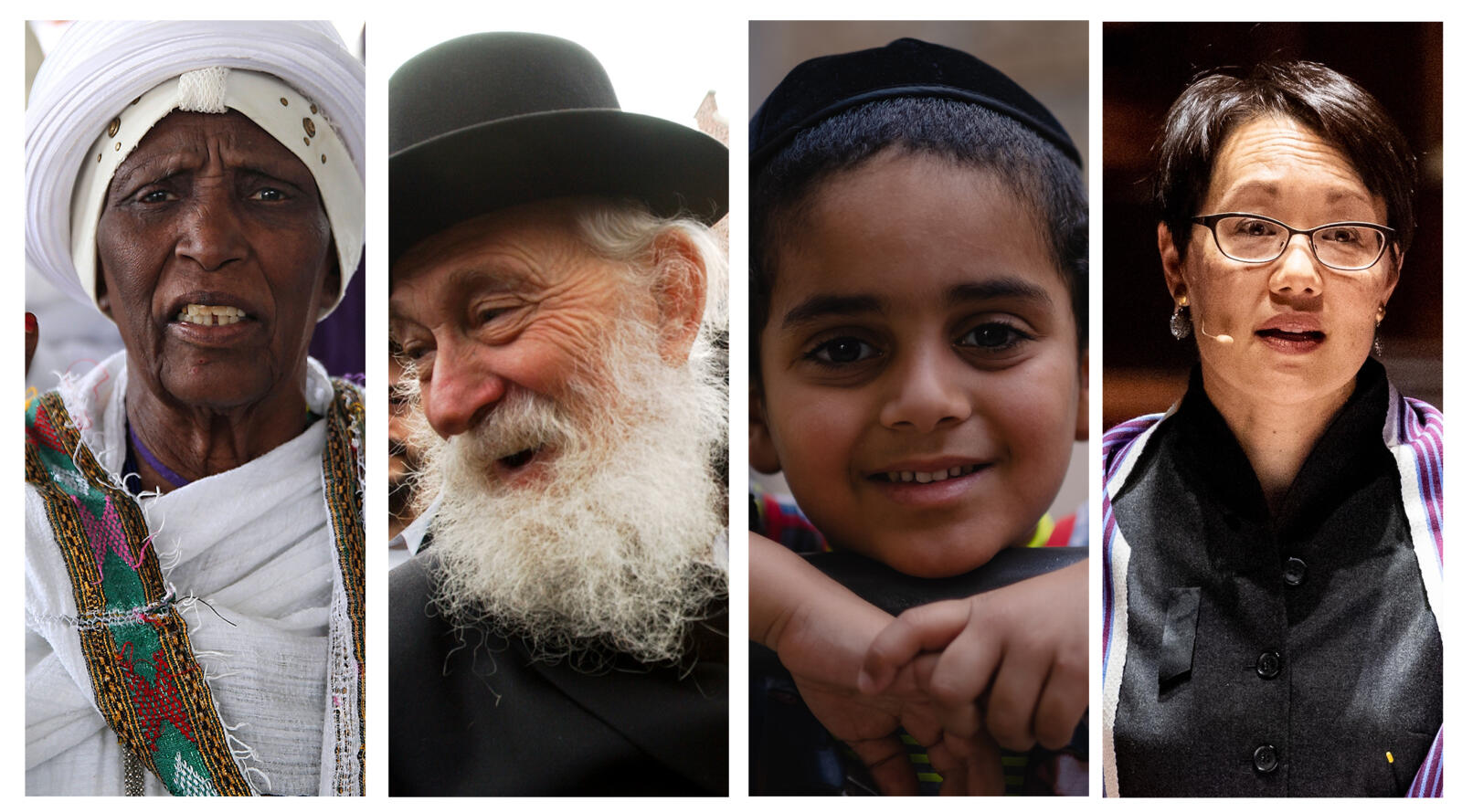
Search Engine Image Results: The Power of the Algorithm
When you type “What do Jews look like?” into a search engine, the images that appear are not randomly selected. They are the result of complex algorithms that analyze millions of web pages, images, and their associated metadata. These algorithms consider factors such as keyword relevance, image popularity, website authority, and user search history.
The danger here is that if the most popular or authoritative sources on the internet at any given time feature stereotypical or limited representations of Jewish people, the search engine algorithm will likely surface these images prominently. This creates a feedback loop: the algorithm surfaces biased content, which then drives more users to view that content, further reinforcing its prominence. Consequently, a user seeking an accurate understanding of Jewish diversity might be presented with a narrow and often inaccurate visual narrative.
The lack of diverse representation in mainstream media, historical visual archives, and even contemporary user-generated content can all contribute to this algorithmic bias. Search engines, in their quest to provide the “most relevant” results, can inadvertently amplify existing societal prejudices by prioritizing content that has gained traction, regardless of its accuracy or fairness.
The Role of Metadata and Tagging
The metadata and tags associated with images play a critical role in how search engines categorize and present them. Descriptive tags like “Jewish man,” “synagogue,” or “Klezmer music” help algorithms understand the content of an image. However, these tags are often applied by humans, and human biases can easily creep into the tagging process.
For example, an image of a person who happens to be Jewish might be tagged with generic descriptors like “person with dark hair” or “person in a suit.” Conversely, if an image features someone with a prominent nose and dark curly hair, and these features have been historically associated with antisemitic caricatures, the image might be inadvertently tagged with terms that reinforce those stereotypes, even if the individual’s Jewish identity is coincidental or irrelevant to the image’s primary subject.
The absence of rich, diverse, and contextually accurate metadata can lead to a fragmented and misleading digital understanding of any group. For Jewish people, this can mean that algorithmic representations are skewed towards specific historical or stereotypical portrayals, rather than showcasing the vast spectrum of appearances, cultures, and lived experiences within the global Jewish diaspora.
Beyond the Visual: The Broader Implications for Digital Identity and Inclusion
The question of “What do Jews look like?” extends beyond mere visual categorization. It touches upon the broader implications of how technology shapes our understanding of identity, promotes inclusivity, and combats misinformation.
The Digital Othering of Jewish Identity
When AI systems and algorithmic curation consistently present a narrow or stereotypical view of any group, it can contribute to a sense of “digital othering.” This means that the online representation of a group becomes distinct from and potentially misaligned with their lived reality, fostering a disconnect that can have tangible social consequences. For Jewish people, this can manifest as the perpetuation of antisemitic tropes in unexpected digital spaces, or the erasure of the diversity within Jewish communities.
The ease with which AI can generate or categorize images based on limited data can lead to the creation and dissemination of deepfakes or manipulated images designed to spread misinformation and hatred. A sophisticated AI could, in theory, generate an image of a person who “looks Jewish” based on stereotypical features, even if no such person exists or if the image is intended to malign the community. This highlights the critical need for robust AI ethics and responsible development practices that prioritize accuracy and fairness.

Promoting Accurate Representation and Combating Misinformation
Addressing the challenges of algorithmic bias in representing Jewish identity requires a multi-pronged approach. Technologically, it involves the development of more nuanced AI models that can understand context, recognize diversity, and resist the amplification of harmful stereotypes. This includes investing in diverse training data, developing bias detection and mitigation techniques, and promoting research into culturally sensitive AI.
Furthermore, there is a critical need for digital literacy. Educating users about how algorithms work, the potential for bias in online content, and the importance of critically evaluating information is paramount. Organizations and individuals involved in creating and curating online content have a responsibility to ensure accurate and representative portrayals. This includes actively tagging images with precise and diverse descriptors, promoting content from a wide range of Jewish voices and perspectives, and challenging stereotypical representations wherever they appear.
Ultimately, the question “What do Jews look like?” in the digital age is less about a fixed set of physical attributes and more about how technology interprets and presents human diversity. By understanding the underlying technological mechanisms, the inherent biases, and the broader societal implications, we can work towards a digital landscape that reflects the true richness and complexity of Jewish identity, fostering a more inclusive and informed online world.
aViewFromTheCave is a participant in the Amazon Services LLC Associates Program, an affiliate advertising program designed to provide a means for sites to earn advertising fees by advertising and linking to Amazon.com. Amazon, the Amazon logo, AmazonSupply, and the AmazonSupply logo are trademarks of Amazon.com, Inc. or its affiliates. As an Amazon Associate we earn affiliate commissions from qualifying purchases.