
For millennia, the question of what dreams “look like” was the exclusive domain of poets, analysts, and philosophers. We relied on the fragile bridge of language to describe the surreal, shifting landscapes of our REM cycles. However, we are entering a transformative era where the boundary between the internal mind and the external screen is dissolving. Through the convergence of high-resolution neuroimaging, Generative Artificial Intelligence (AI), and Brain-Computer Interfaces (BCIs), technology is beginning to provide a visual answer to one of humanity’s oldest mysteries.
The Intersection of Neuroscience and Artificial Intelligence
The quest to visualize dreams is no longer a matter of artistic interpretation; it is a data science challenge. At the heart of this movement is the synergy between neuroscience and deep learning. To understand what a dream looks like, researchers are first teaching computers to “see” what we see while we are awake, then applying those models to the sleeping brain.
Functional Magnetic Resonance Imaging (fMRI) and Data Mapping
The primary tool in this endeavor is functional Magnetic Resonance Imaging (fMRI). By measuring blood flow changes in the brain, fMRI provides a map of neural activity. In groundbreaking studies, participants are shown thousands of hours of video or images while their brain activity is recorded. This creates a massive dataset where specific patterns of neural firing are mapped to specific visual stimuli—colors, shapes, faces, and movement.
The technical hurdle has always been the “noise” in the data. The brain is an incredibly busy environment, and isolating the specific signals associated with visual imagery requires sophisticated filtering. Recent breakthroughs in algorithmic processing have allowed researchers to isolate the signals from the visual cortex with unprecedented precision, creating a “dictionary” of the brain’s visual language.
Neural Reconstruction: Turning Brain Waves into Pixels
Once the dictionary is established, the next step is reconstruction. Using Stable Diffusion and other latent diffusion models, AI can now take raw fMRI data from a dreaming subject and “translate” it into a synthetic image. Because the AI has learned the relationship between brain patterns and visual objects, it can generate a reconstruction of what the subject is likely seeing.
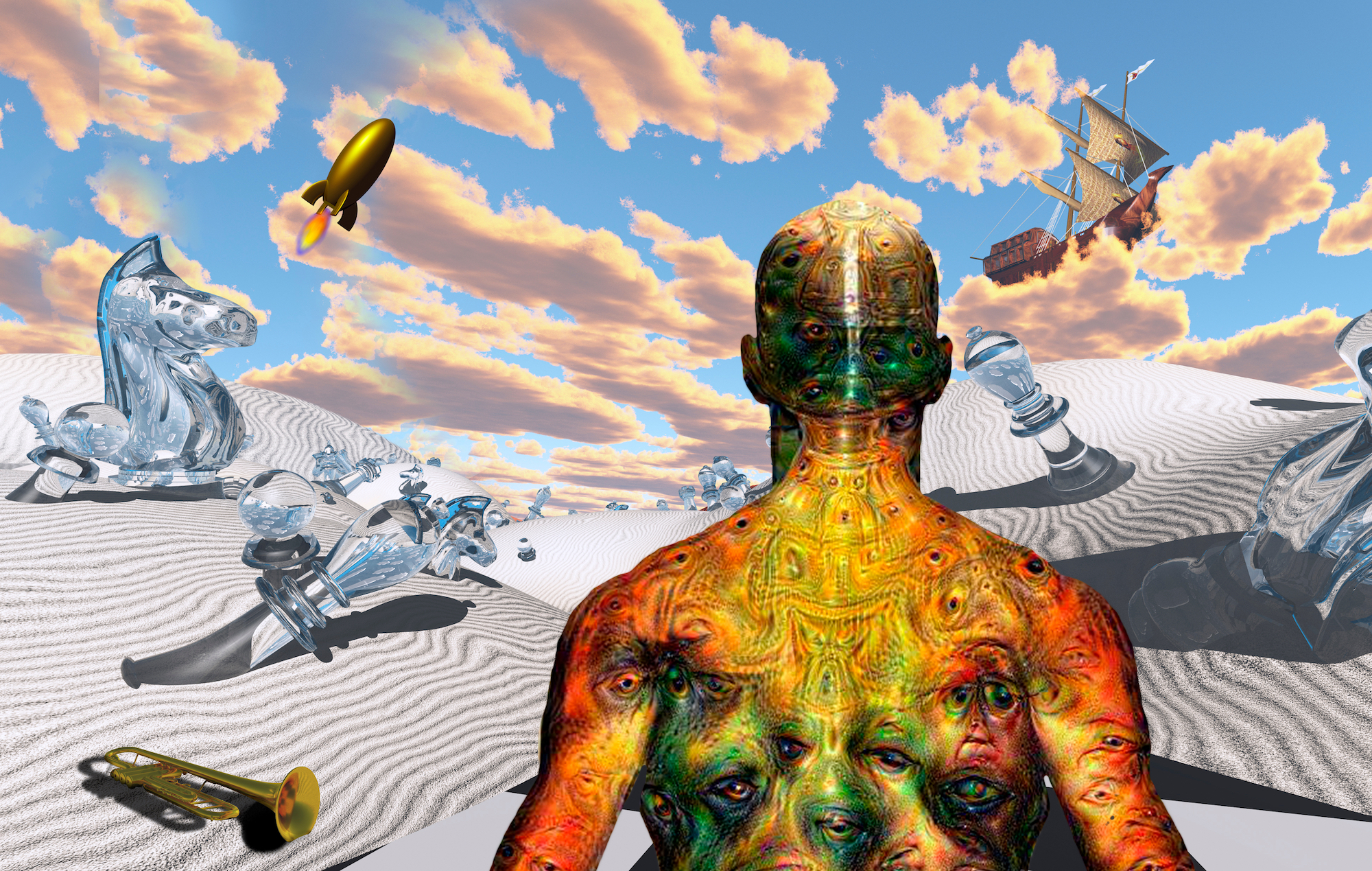
Current results are often impressionistic—shimmering shapes that morph into recognizable figures—but they are undeniably accurate in their essence. For the first time, tech has allowed us to produce a “low-resolution” photograph of a thought. These reconstructions suggest that dreams look remarkably like “latent space” in AI models: a fluid, non-linear progression of concepts where one object seamlessly bleeds into another.
Generative AI as a Mirror for the Subconscious
There is a profound irony in modern technology: the way Generative AI creates images is eerily similar to how the human brain appears to construct dreams. This similarity has led tech theorists to use AI as a primary model for understanding the visual texture of our subconscious.
Latent Space and the Architecture of Digital Dreams
In AI terms, “latent space” is a multidimensional mathematical space that represents all the possibilities of what an image could be based on its training data. When an AI generates an image, it is essentially navigating this space to find a specific point.
Dreams appear to function in a biological version of latent space. When we sleep, our brains are not tethered to the sensory input of the physical world. Instead, the visual cortex fires based on internal prompts—memories, emotions, and random neurological firings. The “look” of a dream, much like an AI-generated video, is characterized by a lack of physical constancy. Objects change shape when you look away, and the logic of the environment is fluid rather than fixed. This “morphing” quality is a direct result of the brain navigating its own latent database of experiences.
Why AI Art Feels “Dreamlike”: The Diffusion Model Connection
Many users of AI tools like Midjourney or DALL-E 3 have noted that the early stages of image generation look remarkably like the onset of a dream. Diffusion models work by starting with a field of random noise and gradually refining it into a recognizable image.
In the dreaming brain, we see a similar process. The brain takes the “noise” of random neural activity during REM sleep and attempts to impose order on it. The result is a visual experience that feels high-definition in the moment but reveals itself to be logically inconsistent upon waking. By studying the “hallucinations” of AI, tech developers are gaining insights into the visual artifacts of human cognition, suggesting that what dreams “look like” is a constant state of visual synthesis.

Brain-Computer Interfaces (BCIs) and the Future of Shared Realities
While fMRI is a bulky, laboratory-bound technology, the rise of Brain-Computer Interfaces (BCIs) promises a future where dream visualization could become more accessible. Companies like Neuralink, Kernel, and Synchron are developing hardware designed to bridge the gap between biological neurons and digital silicon.
Beyond Screens: Direct Neural Input and Output
The current generation of BCIs focuses primarily on medical applications, such as allowing paralyzed individuals to control cursors or robotic limbs. However, the roadmap for this technology includes “high-bandwidth” communication. If we can send signals from the brain to a computer to move a limb, we can theoretically send signals representing visual data.
The future of “looking at a dream” may not involve a screen at all. Instead, a BCI could record the visual data of a dream and save it to a digital format. Later, that data could be “replayed” back into the visual cortex of the same person or even another person. This would transform dreams from a private, fleeting experience into a shareable form of digital media.
Ethical Implications of Visualizing Private Thoughts
As we advance toward the ability to record and visualize dreams, the tech industry faces a reckoning regarding digital security and mental privacy. If our dreams can be converted into data, they can be hacked, tracked, or even used for targeted advertising.
The concept of “neuro-rights” is becoming a critical topic in digital security circles. Ensuring that a user’s “dream data” remains encrypted and under their sole control is perhaps the most significant challenge facing the next decade of wearable brain tech. What dreams look like is a fascinating scientific question, but who owns the right to see them is a vital societal one.
Practical Applications: From Therapy to Creative Revolution
The technology used to visualize dreams is not just a pursuit of curiosity; it has profound practical applications across software development, healthcare, and the creative arts.
Lucid Dreaming Apps and Sleep Tech
A new niche of “Sleep Tech” is emerging, focusing on lucid dreaming—the state where a sleeper becomes aware they are dreaming. Startups are developing wearable headbands that monitor EEG (electroencephalogram) patterns to detect when a user enters REM sleep. Once detected, the device provides subtle cues (light or sound) to “wake up” the mind while the body remains asleep.
Future iterations of these apps aim to include “dream seeding” software. By playing specific soundscapes or providing haptic feedback, these tools attempt to influence the visual content of a dream. This represents the first step toward “programming” our subconscious visual experiences.
Therapeutic Re-scripting of Nightmares
For individuals suffering from PTSD or chronic night terrors, the ability to visualize dreams through tech offers a therapeutic breakthrough. “Imagery Rehearsal Therapy” is a standard treatment where patients rewrite the endings of their nightmares.
With dream-visualization software, therapists could potentially see a digital approximation of a patient’s recurring nightmare. By identifying the visual triggers within the digital reconstruction, clinicians can develop more targeted interventions, helping the patient “re-script” the digital data in a way that reduces the emotional impact of the dream. This is a powerful example of how tech-driven visualization can lead to tangible mental health improvements.

Conclusion: The Impending Digitalization of the Human Imagination
We are standing at a historic threshold. For the first time in human history, the “black box” of the dreaming mind is being cracked open by the tools of the digital age. What do dreams look like? They look like the raw, unfiltered processing of a high-powered organic computer. They look like shifting gradients of data, navigated by emotion and memory.
As AI continues to evolve and BCIs become more sophisticated, the line between our digital lives and our dream lives will continue to blur. We are moving toward a world where the phrase “I’ll show you what I dreamed” is no longer a figure of speech, but a literal technical capability. While the journey from neural signal to high-definition video is still in its early stages, the trajectory is clear: the future of technology is not just about the world we build around us, but the world we discover within us.
aViewFromTheCave is a participant in the Amazon Services LLC Associates Program, an affiliate advertising program designed to provide a means for sites to earn advertising fees by advertising and linking to Amazon.com. Amazon, the Amazon logo, AmazonSupply, and the AmazonSupply logo are trademarks of Amazon.com, Inc. or its affiliates. As an Amazon Associate we earn affiliate commissions from qualifying purchases.