
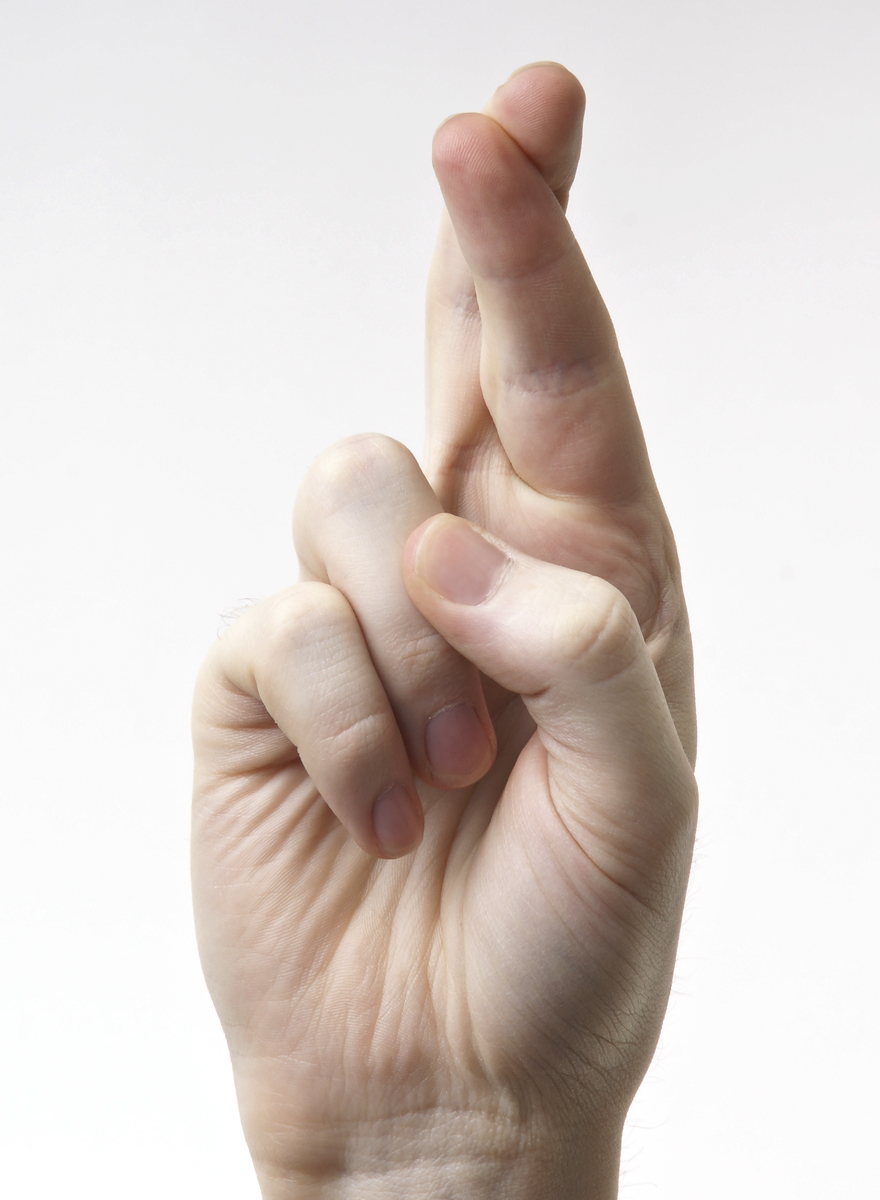
The simple act of crossing one’s fingers is a gesture that has transcended linguistic barriers and cultural divides, becoming a universally recognized symbol. While often associated with luck or hope, its origins and the nuanced meanings it conveys are far richer and more complex than a mere wish for good fortune. For brands and individuals navigating the intricate landscape of communication and perception, understanding the subtle power of such gestures is crucial. In the realm of branding, a gesture’s meaning isn’t just about the intention behind it, but also about how it’s perceived, its historical resonance, and its potential to forge emotional connections with an audience. This exploration delves into the multifaceted meaning of crossed fingers, examining its roots, its psychological underpinnings, and its strategic implications for personal and corporate branding.
The Ancient Roots of a Symbolic Gesture
The origins of crossing fingers as a symbol of luck or hope are not definitively known, but several theories offer compelling insights into its historical development. These theories, often rooted in ancient folklore and religious practices, illuminate the deep psychological and cultural strata from which this gesture draws its power, offering valuable lessons for brands seeking to tap into enduring human beliefs and aspirations.
Pagan Beliefs and the Power of the Cross
One prominent theory links the gesture to ancient pagan beliefs. In many early cultures, the cross was considered a powerful symbol, representing the connection between the earthly and the divine, or the merging of opposing forces. The act of crossing fingers could have been seen as a way to invoke these protective or benevolent powers, a physical manifestation of a plea or a shield against malevolent forces. For instance, some scholars suggest it originated from the practice of two people crossing their index fingers to signify their friendship and mutual support, a form of non-verbal solidarity that could ward off evil. This idea resonates with how brands today use symbols to represent unity, shared values, or protection for their customers. A brand that can tap into deep-seated, almost primal, notions of security and connection through its messaging or visual identity can forge a stronger, more enduring bond.
Christian Interpretations and Sacred Symbols
Another significant line of thought connects the gesture to Christianity. The cross, as the central symbol of Christian faith, holds immense spiritual significance. Early Christians, facing persecution, may have used the crossed fingers gesture as a discreet sign to identify one another and to invoke divine protection. The act could have symbolized the crucifixion, or simply a prayerful supplication to God. This association with faith, protection, and divine intervention imbues the gesture with a sense of deep solemnity and profound hope. Brands that align themselves with values of integrity, trustworthiness, and spiritual well-being might find resonance in evoking similar sentiments. The implication for branding is clear: by associating with universally recognized symbols of faith and hope, a brand can tap into a powerful emotional reservoir, fostering a sense of shared belief and commitment among its audience.
The Jester’s Plea and the Ambiguity of Hope
A more playful, yet equally insightful, origin story attributes the gesture to jesters or performers in medieval times. It’s suggested that jesters, who often held a precarious position, might have crossed their fingers to ward off bad luck or to express a hopeful wish for a good reception from their audience. This theory highlights the gesture’s association with vulnerability and the inherent uncertainty of outcomes. It speaks to the human desire to influence fate when direct control is limited. For brands, this translates to understanding that their audience often operates with a degree of uncertainty, whether it’s about financial decisions, personal growth, or simply making a purchase. A brand that acknowledges this uncertainty and offers a sense of reassurance, support, or even a touch of optimistic aspiration, can connect more authentically. The jester’s plea, in a modern context, could be the brand’s promise of a positive outcome or a mitigation of risk.
The Psychology of Hope and Uncertainty
Beyond its historical antecedents, the act of crossing fingers is deeply intertwined with human psychology, particularly our innate drive for hope and our struggle with uncertainty. This gesture serves as a tangible manifestation of our desire to influence outcomes beyond our direct control, a fundamental aspect of the human condition that brands can leverage to build empathy and connection.
The Cognitive Bias of Optimism

Humans are inherently optimistic, a phenomenon known as the optimism bias. We tend to overestimate the likelihood of positive events and underestimate the likelihood of negative ones. Crossing fingers can be seen as an externalization of this internal optimism, a physical act that reinforces our belief in a favorable outcome. It’s a ritualistic behavior that helps us feel a sense of agency, even when faced with situations where our actual control is minimal. For brands, understanding this psychological tendency is paramount. Marketing campaigns that tap into this optimism, by promising solutions, positive transformations, or aspirational futures, are often highly effective. A brand that can credibly position itself as a catalyst for positive outcomes, aligning with this natural human inclination towards hope, can foster strong loyalty.
The Power of Ritual and Control
In moments of anxiety or uncertainty, humans often turn to rituals. These predictable behaviors provide a sense of comfort and control, even if their efficacy is purely psychological. Crossing fingers is a prime example of such a ritual. It’s a simple, accessible action that allows individuals to engage with their environment and their desires in a tangible way. This ritualistic aspect can be powerful for brands seeking to create habitual engagement. Think of loyalty programs, personalized recommendations, or even the satisfying click of a “buy now” button – these are all small rituals that brands can cultivate. By understanding the psychological need for ritual and control, brands can design experiences and communications that foster a sense of comfort, reliability, and empowerment in their customers.
Social Reinforcement and Shared Beliefs
The widespread adoption and understanding of the crossed fingers gesture also point to its power as a form of social reinforcement. When we see others cross their fingers, or when we do it ourselves and observe positive outcomes, it reinforces the belief in its efficacy. This shared understanding creates a collective sense of hope and expectation. For brands, this social dimension is incredibly valuable. Word-of-mouth, testimonials, and user-generated content are all forms of social reinforcement. A brand that can cultivate a community of engaged customers who share positive experiences and beliefs becomes more resonant. The crossed fingers, in this light, becomes a symbol of collective aspiration and shared good fortune, a powerful sentiment that brands can harness by fostering strong communities and encouraging shared experiences.
Branding Implications: Harnessing the Power of Symbolic Gestures
In the competitive arena of branding, every element, from logo design to marketing slogans, is meticulously crafted to convey a specific message and evoke desired emotions. The seemingly simple gesture of crossed fingers, with its deep historical and psychological roots, offers a wealth of insights for brands looking to enhance their communication, build trust, and forge deeper connections with their target audiences.
Conveying Hope, Luck, and Aspiration
The most immediate association with crossed fingers is hope and luck. Brands that operate in sectors where aspiration, achievement, or overcoming challenges are key themes can effectively incorporate this sentiment. For example, a sports brand might use imagery or messaging that subtly evokes the crossed fingers to symbolize the athlete’s hope for victory or the fan’s wish for their team’s success. Similarly, a financial planning service could subtly hint at the gesture to convey a sense of hope for future prosperity and security. The key is not to literally depict the gesture, but to capture its essence – the optimistic outlook and the belief in a favorable outcome – in a way that aligns with the brand’s core promise. This can be achieved through tone of voice, visual cues, and narrative storytelling that emphasizes aspiration and positive anticipation.
Building Trust and Demonstrating Empathy
Beyond overt displays of luck, the crossed fingers gesture can also be a subtle indicator of sincerity and empathy, particularly when used in contexts of vulnerability or uncertainty. When a brand acknowledges the challenges or uncertainties its customers face and offers support or guidance, it can be seen as a form of shared hope. Imagine a customer service interaction where a representative expresses genuine concern and uses language that conveys a hope for a positive resolution – this mirrors the underlying sentiment of crossed fingers. For brands, this translates to demonstrating empathy in their communications. Acknowledging customer pain points, expressing understanding, and offering a commitment to finding solutions, even when outcomes are not guaranteed, can build profound trust. This is especially relevant for brands in sectors dealing with complex issues, health, or significant life changes, where genuine empathy and a shared sense of hope are highly valued.

The Nuance of “Fingers Crossed” in a Digital Age
In our increasingly digital world, how does a physical gesture like crossed fingers translate? The concept of “fingers crossed” has certainly made its way into online communication. Emojis like ” ” are ubiquitous, allowing for quick and universally understood expressions of hope. For brands, this offers a direct avenue for engagement. Using such emojis in social media posts, customer service chat bots, or even in marketing emails can inject a relatable and human element into digital interactions. However, the power lies in understanding the context. A brand using the crossed fingers emoji in a lighthearted or encouraging post will likely resonate well. Conversely, using it inappropriately in a serious or crisis communication scenario could undermine credibility. The strategic use of digital equivalents of symbolic gestures, like the crossed fingers emoji, allows brands to maintain a sense of personality and emotional connection in the digital space, reinforcing their brand identity through shared, nuanced communication.
In conclusion, the meaning of crossed fingers is far more profound than a simple superstition. It’s a gesture steeped in history, psychology, and culture, representing a fundamental human desire for hope, control, and positive outcomes. For brands, understanding and subtly integrating the essence of this gesture – whether through overt symbols, empathetic communication, or digital equivalents – can be a powerful tool for building deeper connections, fostering trust, and ultimately, shaping a more resonant and enduring brand identity. In a world often filled with uncertainty, the consistent, authentic projection of hope and a commitment to positive outcomes, much like the silent promise of crossed fingers, can be a brand’s most valuable asset.
aViewFromTheCave is a participant in the Amazon Services LLC Associates Program, an affiliate advertising program designed to provide a means for sites to earn advertising fees by advertising and linking to Amazon.com. Amazon, the Amazon logo, AmazonSupply, and the AmazonSupply logo are trademarks of Amazon.com, Inc. or its affiliates. As an Amazon Associate we earn affiliate commissions from qualifying purchases.