
In the intricate world of business finance and corporate law, terminology often dictates the flow of capital and the direction of enterprise strategy. One term that frequently appears in the minutes of board meetings, the halls of bankruptcy courts, and the bulletins of shareholder notices is “adjourned.” While the layman might understand “adjourned” simply as “ended,” its meaning in a financial and professional context is far more nuanced and carries significant weight regarding timing, legal obligation, and fiscal responsibility.
To adjourn a meeting or a session is to suspend the proceedings with the intention of resuming them at a later time or date. Unlike a termination or a dissolution, an adjournment implies that the business at hand is incomplete. In the realm of money—where time is a primary variable of value—the decision to adjourn can be a strategic maneuver, a regulatory necessity, or a financial lifeline.
The Procedural Significance of Adjournment in Corporate Meetings
For any corporation, the Annual General Meeting (AGM) or Extraordinary General Meeting (EGM) is the highest authority for decision-making. These meetings are where dividends are approved, directors are elected, and mergers are ratified. When a meeting is adjourned, the financial momentum of the company is momentarily paused, which can have ripple effects throughout the organization.
Quorum Failures and Mandatory Adjournments
In corporate governance, a “quorum” represents the minimum number of shares or members that must be present to make the proceedings of a meeting valid. If a quorum is not reached within a specified timeframe (often 30 minutes to an hour after the scheduled start), the meeting is typically adjourned by default.
From a financial perspective, a failed quorum is a costly administrative error. It requires the rescheduling of venues, the re-issuance of notices to shareholders, and the extension of legal counsel’s billable hours. More importantly, it delays critical financial resolutions, such as the authorization of new share issuances or the approval of audited financial statements, which can prevent a company from meeting its regulatory filing deadlines.
Tactical Adjournments in Hostile Takeovers and Mergers
Adjournment is not always an accidental byproduct of low attendance; it is frequently used as a tactical tool in high-stakes financial negotiations. During a hostile takeover bid or a contentious merger, the board of directors may realize mid-meeting that they do not have the necessary votes to pass or block a motion.
In such instances, a motion to adjourn the meeting for several days or weeks allows the board to engage in “proxy solicitation.” This involves reaching out to undecided shareholders to sway their votes. This period of adjournment is a high-pressure environment for investors and arbitrageurs, as the delay often leads to increased stock price volatility while the market speculates on the eventual outcome of the adjourned vote.
Adjournment in Financial Litigation and Debt Recovery
When a company or an individual enters the legal system due to insolvency, debt defaults, or contractual disputes, the term “adjourned” takes on a judicial character. In these settings, an adjournment can be the difference between a structured recovery and an immediate liquidation of assets.
Bankruptcy Proceedings and the Power of the “Adjourn”
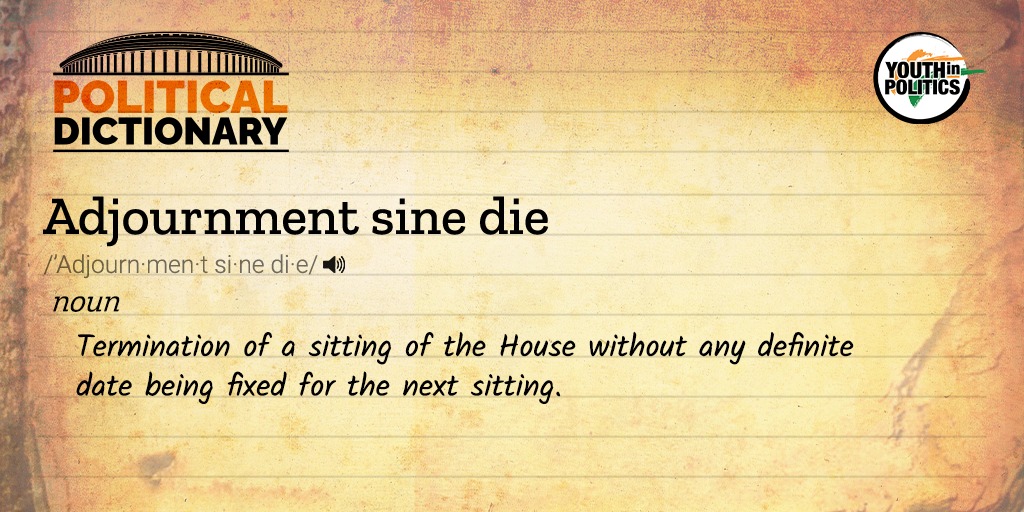
In bankruptcy courts, hearings regarding the restructuring of debt are frequently adjourned. A judge may adjourn a hearing “sine die” (without a specific date for resumption) or to a fixed date. For a debtor, an adjournment is often a hard-won reprieve. It provides additional time to secure “debtor-in-possession” (DIP) financing or to finalize a reorganization plan that satisfies creditors.
For creditors, however, a series of adjournments can be frustrating and financially draining. Every week a case is adjourned is another week where the “automatic stay” prevents them from seizing collateral or collecting payments, while interest and legal fees continue to mount.
Negotiating Terms During a Stay of Proceedings
Financial disputes often reach a stalemate where both parties recognize that a court-ordered judgment might be less favorable than a private settlement. In such scenarios, legal counsel may request that the court adjourn the trial to allow for mediation or out-of-court settlement discussions.
During this adjourned period, the financial analysts and forensic accountants work behind the scenes to value assets and determine settlement figures. The adjournment serves as a “cooling-off” period that can prevent the total destruction of a business’s value that often occurs during protracted, public litigation.

The Impact of Adjourned Shareholder Votes on Market Volatility
In the public markets, information is the primary driver of price. When a significant corporate action is “adjourned,” it introduces a period of uncertainty. Investors generally dislike uncertainty, and the market’s reaction to an adjournment can be swift and severe.
Investor Sentiment and the “Wait-and-See” Approach
When an equity-altering decision—such as a massive share buyback or a change in dividend policy—is adjourned, institutional investors often move into a “wait-and-see” posture. This can lead to a decrease in trading volume and a widening of the bid-ask spread.
The rationale behind the adjournment is scrutinized by analysts. If the adjournment is perceived as a sign of internal conflict or a lack of transparency, the company’s credit rating could be impacted. Conversely, if the adjournment is viewed as a responsible move to gather more information about a volatile market condition, it may be seen as a sign of prudent financial management.
Case Study: When a Delayed Vote Changed a Company’s Valuation
History is replete with examples where an adjourned meeting changed the financial destiny of a firm. Consider a scenario where a tech company is being acquired by a larger conglomerate. If the shareholder meeting to approve the deal is adjourned because of a last-minute antitrust investigation, the “deal premium” (the amount the stock trades above its intrinsic value) may evaporate.
During the weeks of adjournment, the acquiring company’s own financial health might fluctuate. If the acquirer’s stock price drops during the delay, the value of a stock-for-stock swap diminishes, potentially leading to the collapse of the deal entirely. In this context, “adjourned” is not just a pause; it is a period of high financial risk where the original terms of a deal can become obsolete.
Best Practices for Financial Managers Handling Meeting Suspensions
Given the financial and legal implications of an adjournment, business leaders and financial managers must handle these situations with a high degree of technical proficiency and transparency.
Compliance and Regulatory Notification Requirements
In many jurisdictions, the rules regarding the adjournment of corporate meetings are strictly governed by the “Articles of Association” or the “Bylaws,” as well as national corporate laws (such as the Companies Act in the UK or state-level laws in Delaware).
Financial managers must ensure that any adjournment is documented with precision. This includes recording the time of the adjournment, the reason for the delay, and the specific date, time, and location for the reconvened meeting. Failure to follow these protocols can result in the decisions made at the reconvened meeting being declared “ultra vires” (beyond legal power), which can lead to shareholder lawsuits and financial penalties.
Communicating Financial Uncertainty to Stakeholders
The most critical task during an adjournment is communication. Stakeholders—including lenders, employees, and shareholders—need to understand why the delay is occurring. A professional financial communication strategy should involve:
-
Transparency: Clearly stating whether the adjournment is due to procedural issues (like a quorum failure) or substantive issues (like a need for more time to review a financial proposal).
-
Timeline: Providing a definitive date for the resumption of business to minimize market speculation.
-
Impact Analysis: Reassuring creditors that the adjournment does not constitute a “technical default” on loan covenants.
By proactively managing the narrative, a company can ensure that an adjournment is seen as a controlled, strategic pause rather than a sign of operational chaos.

Conclusion: The Strategic Weight of a Simple Term
In the world of money and business finance, “adjourned” is far more than a procedural footnote. It is a term that encapsulates the tension between time and value. Whether it is used to save a company from insolvency, to secure a better deal for shareholders, or simply to ensure that a meeting is legally compliant, the act of adjourning is a fundamental component of corporate governance.
For the investor, understanding why a meeting was adjourned can provide deep insights into the internal health and stability of a company. For the business leader, knowing how to execute an adjournment correctly is an essential skill in protecting the firm’s legal and financial interests. Ultimately, while an adjournment represents a stop in the clock, the financial world never truly stops moving; it merely uses that time to recalibrate for the next session.
aViewFromTheCave is a participant in the Amazon Services LLC Associates Program, an affiliate advertising program designed to provide a means for sites to earn advertising fees by advertising and linking to Amazon.com. Amazon, the Amazon logo, AmazonSupply, and the AmazonSupply logo are trademarks of Amazon.com, Inc. or its affiliates. As an Amazon Associate we earn affiliate commissions from qualifying purchases.