
For decades, the concept of a “3D movie” was synonymous with cardboard glasses and gimmicky objects flying toward the viewer’s face. However, as display technology and digital rendering have advanced, the visual signature of 3D has transformed into a sophisticated layer of depth perception that mimics human biology. To understand what 3D movies look like today, one must look beyond the screen and into the complex interplay of hardware, software, and the physics of light.
Modern 3D cinema is less about “popping out” and more about “looking in.” It creates a visual experience defined by spatial volume, where the screen acts as a window into a three-dimensional world rather than a flat canvas.
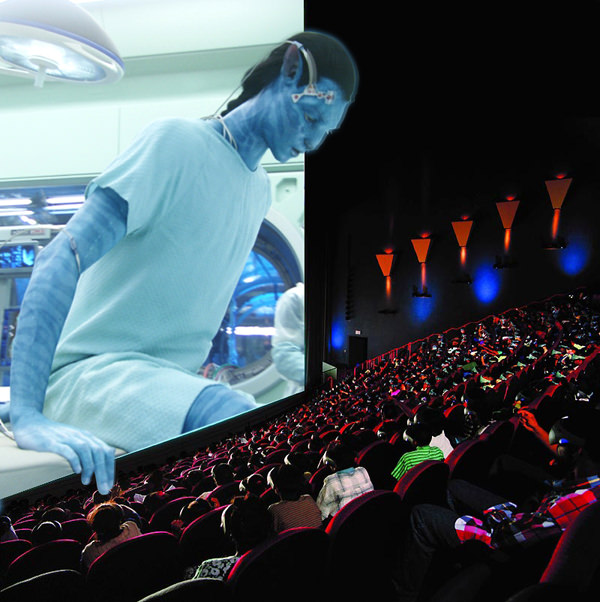
The Mechanics of Depth: How Stereoscopic Imaging Works
At its core, the “look” of a 3D movie is a digital illusion that leverages stereopsis—the process by which the human brain combines two slightly different images from each eye into a single 3D image. In the realm of technology, this is achieved through various delivery systems that ensure each eye sees only the perspective intended for it.
Polarization and Active Shutter Systems
In modern theaters, the most common visual experience is driven by circular polarization. Using a Silver Screen to preserve light polarity, two images are projected simultaneously. The passive glasses worn by the audience act as filters, allowing the left eye to see one perspective and the right eye to see the other. This results in a smooth, flicker-free image that feels naturally deep.
Conversely, some high-end home theater setups and older systems used “Active Shutter” technology. These glasses contain liquid crystal layers that physically “shut” at high speeds, synchronized with the TV’s refresh rate. Visually, active shutter 3D tends to look sharper and maintains higher resolution, but it can sometimes result in a “dimmer” image due to the rapid blinking of the lenses.
The Software Side: Depth Mapping and CGI Rendering
What 3D looks like is also determined by how it was filmed. Movies shot with native 3D rigs (two cameras side-by-side) look significantly more “organic” than those converted in post-production. Native 3D captures the natural fall-off of light and shadow across a physical space. In contrast, “3D Conversion” involves software engineers cutting out 2D elements and placing them on different “depth planes.” While modern AI-driven conversion is impressive, it can sometimes result in a “cardboard cutout” look where objects have depth but the objects themselves appear flat.
The Visual Aesthetic: Beyond the “Pop-Out” Effect
When people ask what 3D movies look like, they are often describing the aesthetic balance between “Negative Parallax” and “Positive Parallax.”
Depth Perception and Spatial Realism
Positive Parallax is the “window” effect. This is where the 3D depth exists behind the surface of the screen. In high-tech productions like Avatar: The Way of Water, the visual look is defined by an expansive sense of scale. You aren’t just watching a forest; you are looking through a window into a forest that extends miles back. This creates a sense of “spatial realism” where the viewer can better judge the distance between characters and their environment, making action sequences feel more coherent and less chaotic.
Negative Parallax, on the other hand, is when objects appear to float in front of the screen. While this was the hallmark of 1950s and 1980s 3D, modern directors use it sparingly. When it is used today, it looks like a subtle extension of the environment into the theater space—think of floating embers, snowflakes, or dust motes that seem to drift right past your nose.
The Challenges of Dimness and Color Saturation
One characteristic “look” of 3D movies—often a negative one—is a reduction in brightness. Because 3D glasses act as sunglasses, they filter out a significant portion of the light. To combat this, tech-forward theaters use high-lumen laser projectors. Without these, a 3D movie can look muddy or “grayed out.” Technologically, this has forced cinematographers to adjust their color grading, often boosting saturation and brightness in the “3D grade” of a film to ensure the final image looks as vibrant as the 2D version.

3D in the Modern Era: From Cinema Screens to Personal VR
The visual landscape of 3D is currently shifting away from the multiplex and toward personal hardware. The “look” of 3D on a headset is fundamentally different from that of a movie theater.
VR and AR: The Next Frontier of Depth
Devices like the Apple Vision Pro or the Meta Quest 3 have redefined what 3D movies look like by removing the “theater window” entirely. In a VR environment, 3D movies look “life-sized.” Because each eye is fed a dedicated 4K display, the “crosstalk” (ghosting) found in theaters is virtually eliminated. The result is an image with perfect clarity and an almost unsettling level of realism. The 3D effect in these headsets feels more like “being there” than “watching a movie,” as the depth is perfectly calibrated to the user’s interpupillary distance (IPD).
Glasses-Free 3D (Autostereoscopy)
We are also seeing the emergence of “glasses-free” 3D tech in laptops and tablets. Using lenticular lenses or eye-tracking cameras, these screens shift the pixels in real-time to match the viewer’s eye position. Visually, this looks like a holographic display. While the field of view is currently limited, the image looks incredibly sharp because there are no polarized filters between the eye and the light source.
Technical Barriers and Visual Artifacts
To truly understand the 3D look, one must also recognize its technical flaws. Even the most advanced systems can suffer from visual artifacts that break the illusion.
Crosstalk and Ghosting Explained
“Ghosting” occurs when the image meant for the left eye leaks into the right eye. Visually, this looks like a faint, double-edged blur around high-contrast objects (like a dark pole against a bright sky). This is often a hardware limitation of the projector or the screen material. In high-end tech environments, specialized software algorithms are used to “pre-compensate” for ghosting, effectively darkening the areas where leakage is likely to occur to keep the image crisp.
Frame Rates and Motion Smoothness
Traditional movies are shot at 24 frames per second (fps). However, in 3D, 24fps can look “stroboscopic” during fast camera pans, causing eye strain. This has led to the rise of High Frame Rate (HFR) 3D. When a 3D movie is shown at 48fps or 60fps, it looks hyper-real—almost like a high-end video game or a live broadcast. This smoothness helps the brain process the 3D depth more easily, though some viewers find the “soap opera effect” (the lack of cinematic motion blur) distracting.
The Future of 3D Rendering and AI Integration
The future “look” of 3D movies is being shaped by artificial intelligence and real-time rendering engines like Unreal Engine. These technologies are moving us toward a more dynamic form of 3D.
AI-Assisted Dimensionality
AI is now being used to analyze legacy 2D films and calculate depth maps with pixel-perfect accuracy. This means that older movies can be re-released in 3D with a look that rivals films shot today. The AI can identify textures—the curve of a face, the translucency of water—and assign varying degrees of depth that human rotoscoping might miss. This leads to a “softer,” more naturalistic 3D look that avoids the harsh edges of early digital conversions.

Light-Field Displays
The ultimate goal of 3D technology is the “light-field display.” Unlike current 3D which requires a specific perspective, light-field tech projects the entire volume of light into a space. Visually, this would look like a hologram that you can walk around. You wouldn’t need glasses, and the 3D effect would remain consistent regardless of your angle. While still in the experimental tech phase, this represents the final evolution of the 3D movie: an image that doesn’t just “look” 3D, but physically occupies 3D space.
In conclusion, what 3D movies look like is a moving target, dictated by the limitations and breakthroughs of current hardware. From the dimmed, polarized screens of the local cinema to the retina-searing clarity of modern VR headsets, 3D is a tech-driven pursuit of recreating the complexity of human vision. It is an aesthetic of volume, scale, and immersion that continues to refine itself with every leap in processing power and display science.
aViewFromTheCave is a participant in the Amazon Services LLC Associates Program, an affiliate advertising program designed to provide a means for sites to earn advertising fees by advertising and linking to Amazon.com. Amazon, the Amazon logo, AmazonSupply, and the AmazonSupply logo are trademarks of Amazon.com, Inc. or its affiliates. As an Amazon Associate we earn affiliate commissions from qualifying purchases.