
In the dynamic world of digital DJing, the ability to access vast music libraries instantly has always been a coveted feature. For years, the dream of seamlessly integrating a personal Spotify playlist into a professional DJ setup captivated many, offering the promise of endless tracks at one’s fingertips. However, the reality of “what DJ software works with Spotify” is a complex and evolving landscape, largely shaped by licensing agreements, technical limitations, and the fundamental differences between consumer streaming and professional music performance. This article delves into the current state of Spotify integration with DJ software, exploring why direct compatibility has become largely a thing of the past for professional setups and what alternatives DJs are embracing today.
The Evolving Landscape of Streaming Integration in DJ Software
The journey of streaming music into DJ booths has been marked by innovation, ambition, and significant hurdles. Initially, the idea of tapping into services like Spotify seemed like the ultimate convenience, but the complexities quickly became apparent.
The Promise vs. The Reality
When digital DJing began its ascendancy, fueled by laptops and dedicated controllers, the natural progression seemed to be integrating popular music streaming services. Spotify, with its immense catalog and user-friendly interface, was often at the forefront of this aspiration. Early attempts at integration, or even third-party workarounds, did exist, exciting many bedroom and mobile DJs. The promise was clear: instant access to virtually any song, eliminating the need for vast local music libraries or last-minute purchases.
However, the reality proved far more challenging. The fundamental issue lay in the licensing. Spotify’s terms of service, like most consumer streaming platforms, are designed for personal, private listening. Using these tracks for public performance, even if played by a DJ for an audience, falls outside these terms. This legal distinction became the primary barrier, preventing major DJ software developers from establishing robust, long-term partnerships with Spotify. Technical challenges, such as ensuring high-quality audio streams, reliable offline access, and the necessary metadata for DJing (like beat grids and key information), further complicated matters.
The Rise of DJ-Specific Streaming Services
Recognizing the unmet demand for streaming within professional DJ workflows, a new category of services emerged: those specifically licensed and designed for DJs. Platforms like Beatport LINK, Beatsource LINK, Tidal, and SoundCloud Go+ stepped in to fill the void. These services offer distinct advantages over consumer streaming platforms for DJs:
-
Proper Licensing: They secure the necessary rights from labels and artists for public performance, allowing DJs to legally use their catalogs in a professional setting.
-
Higher Audio Quality: Many offer lossless (FLAC, ALAC) or high-bitrate (320kbps AAC/MP3) audio options, crucial for sound quality in larger venues.
-
Offline Lockers: Crucially, these services often allow subscribers to download and store tracks offline within the DJ software itself, ensuring uninterrupted playback even without an internet connection – a non-negotiable for live performance.
-
DJ-Centric Metadata: They integrate better with DJ software, often providing more accurate BPM, key information, and allowing for the saving of cue points and loops directly to the streamed tracks.
This shift marked a pivotal moment, as the industry began to converge on solutions tailored for professional use rather than attempting to retrofit consumer services.
Spotify’s Current Stance on DJ Software Integration
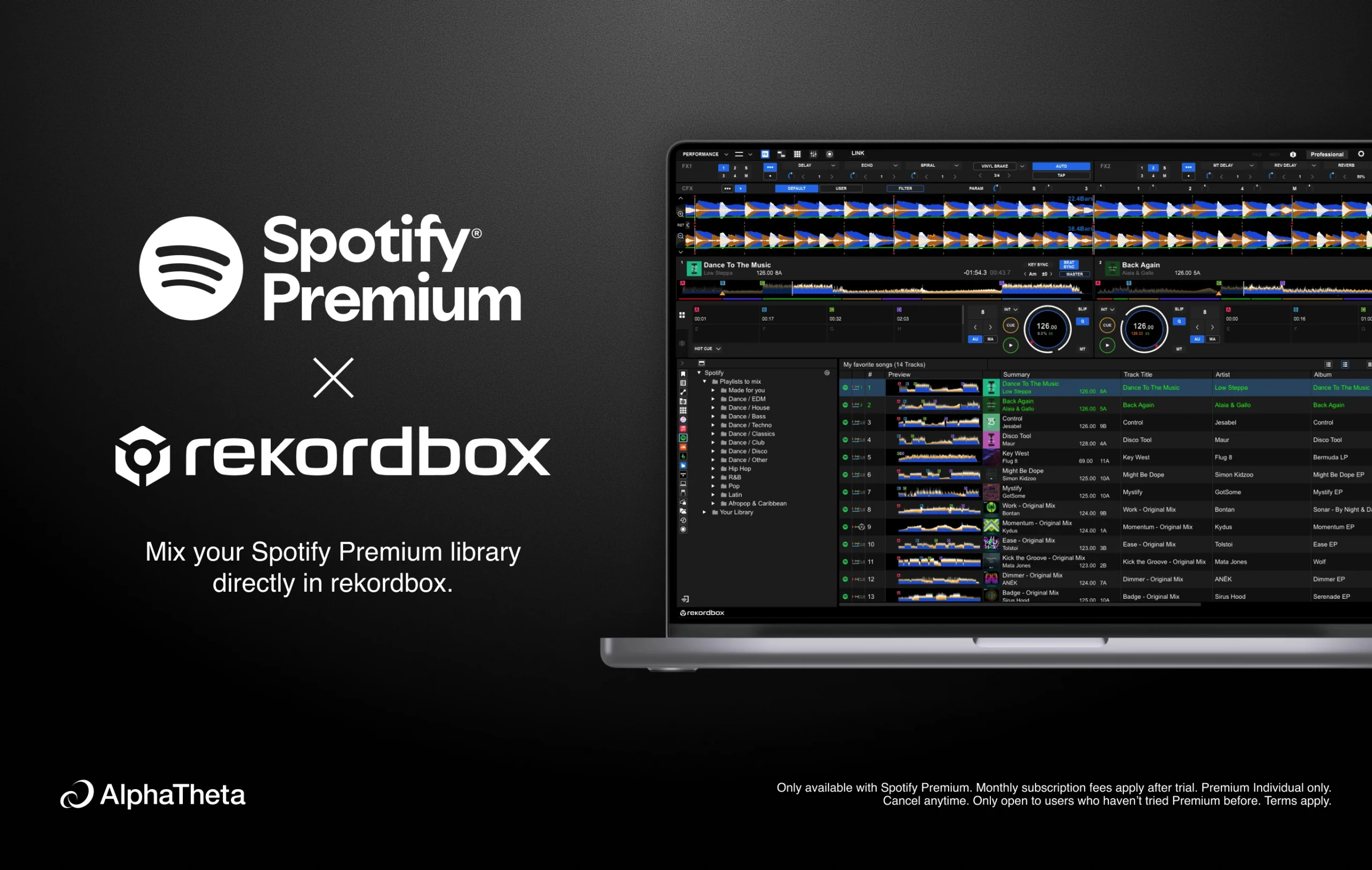
To be unequivocally clear: Spotify currently does not directly integrate with any major professional DJ software platforms. This includes industry standards like Serato DJ Pro, Rekordbox, Traktor Pro, Virtual DJ, and djay Pro AI.
Spotify officially discontinued its direct API access for DJ software in 2020. Their primary focus remains on personal music consumption and discovery, not on providing a platform for public DJ performances. Any claims or historical mentions of Spotify integration typically refer to discontinued features or niche, non-official workarounds that are neither supported nor compliant with their terms of service. For DJs seeking to stream music, the alternatives mentioned above are the designated and legally compliant options.
Major DJ Software Platforms and Their Current Streaming Integrations
Given Spotify’s absence, professional DJ software platforms have forged strong alliances with DJ-specific streaming services, offering powerful alternatives that meet the demanding needs of live performance.
Serato DJ Pro/Lite
Serato DJ, a cornerstone in the DJ community, offers robust integrations with several leading DJ-centric streaming platforms. Users can seamlessly browse, analyze, and mix tracks directly from:
-
Beatport LINK: Access to Beatport’s massive electronic music catalog, with options for various audio qualities and offline locker.
-
Beatsource LINK: Tailored for open-format DJs, offering a diverse range of hip-hop, R&B, pop, and more, also with offline capabilities.
-
Tidal: Known for its high-fidelity audio (HiFi and Master Quality Audio), appealing to DJs who prioritize sound quality.
-
SoundCloud Go+: Provides access to SoundCloud’s vast collection of established and emerging artists, including many exclusive remixes and edits.
These integrations allow DJs to leverage Serato’s powerful features – hot cues, loops, effects – with streamed content, making it a highly versatile platform.
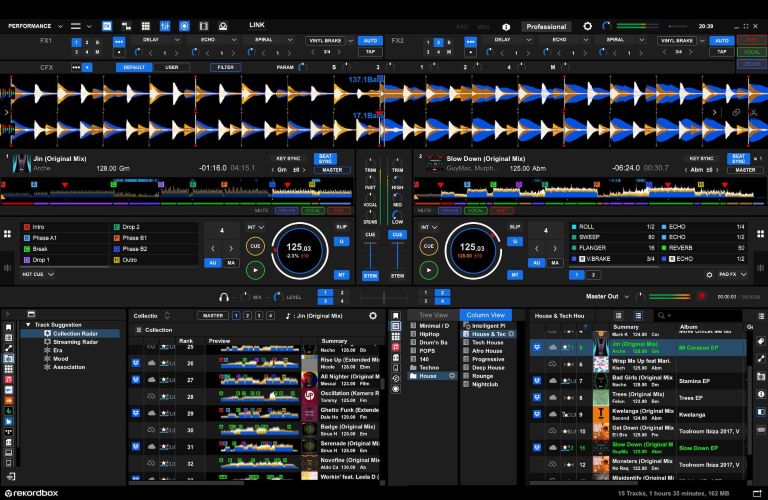
Rekordbox (Pioneer DJ)
Pioneer DJ’s Rekordbox, the ecosystem favored by many club DJs due to its tight integration with Pioneer’s ubiquitous hardware, also embraces streaming services. Its primary integrations include:
-
Beatport LINK: Essential for electronic music DJs, offering track management and offline storage within Rekordbox.
-
Beatsource LINK: Caters to open-format DJs, enabling them to prepare and perform with a diverse library.
Rekordbox emphasizes meticulous track preparation, and its streaming integrations allow DJs to analyze streamed tracks, set cue points, and build playlists just as they would with local files, ensuring a smooth transition to live performance.
Native Instruments Traktor Pro
Traktor Pro, known for its innovative effects and robust engine, has also adapted to the streaming era. While perhaps historically slower to adopt broad streaming integrations, it now offers:
-
Beatport LINK: A key integration for its user base, providing access to an extensive catalog for electronic music.
-
Beatsource LINK: Broadens Traktor’s appeal to open-format DJs, allowing them to tap into a wide array of genres.
Traktor’s emphasis on creative mixing and performance remains central, and these streaming services augment its capabilities, allowing DJs to experiment with a wider selection of tracks without prior download.
Virtual DJ
Virtual DJ stands out for its exceptionally broad compatibility, often integrating with more services than its competitors. It has a history of embracing new technologies quickly. While it previously had some form of Spotify integration, this is no longer active. Currently, Virtual DJ supports a comprehensive list of streaming platforms, including:
-
Beatport LINK & Beatsource LINK
-
Tidal
-
SoundCloud Go+
-
Deezer
-
And more, depending on regional availability and licensing.
Virtual DJ’s strength lies in its flexibility, making it a powerful tool for DJs who need access to diverse music sources and want to explore various streaming options within a single interface.
djay Pro AI (Algoriddim)
Algoriddim’s djay Pro AI, available across macOS, iOS, Windows, and Android, is renowned for its cutting-edge AI features (like Neural Mix, allowing real-time vocal/instrument isolation) and extensive streaming integrations. It provides access to:
-
Tidal: Leveraging its high-quality audio for a premium listening and mixing experience.
-
SoundCloud Go+: Great for discovering new music and independent artists.
-
Beatport LINK & Beatsource LINK: Essential for genre-specific access and offline capabilities.
djay Pro AI’s multi-platform availability and innovative features, combined with its robust streaming support, make it a compelling choice for modern DJs, especially those who appreciate mobile flexibility.
Mixxx (Open Source)
Mixxx is a powerful, free, and open-source DJ software. While it offers a professional feature set and robust hardware compatibility, its open-source nature means it generally relies on third-party integrations and local file management. Due to licensing complexities and the commercial nature of streaming services, Mixxx does not offer direct, official integrations with services like Spotify, Beatport LINK, or Tidal. Users typically manage and play their own local music files or utilize external tools for streaming to feed into Mixxx.
Why Spotify Integration is (Mostly) a Thing of the Past for Professional DJing
The absence of Spotify from professional DJ software isn’t arbitrary; it’s a calculated outcome driven by several critical factors fundamental to both the music industry and live performance.
Licensing and Rights Management
This is arguably the most significant barrier. Spotify, like Apple Music, Amazon Music, and most consumer-focused streaming platforms, operates under licenses that grant users permission for personal, non-commercial playback. When a DJ performs in a club, at a wedding, or any public event, this constitutes a public performance and often a commercial use of the music. These activities require different types of licenses, which Spotify does not possess or distribute for third-party DJ software.
Attempting to circumvent these licensing requirements not only puts the DJ at legal risk but also the venues and the software developers. DJ-specific streaming services, conversely, secure these public performance licenses, ensuring that DJs can legally and ethically play music from their catalogs in commercial settings.
Audio Quality Concerns
While Spotify Premium offers a respectable 320kbps Ogg Vorbis stream, this lossy format can sometimes fall short in the demanding environment of a large sound system. Professional DJs often prefer uncompressed (WAV, AIFF) or lossless compressed (FLAC, ALAC) audio files to ensure the highest possible fidelity, especially when pushing sound through powerful club systems. Even high-quality lossy formats like 320kbps MP3 or AAC are generally considered the minimum standard.
Consumer streaming services are optimized for convenience and broad accessibility, not necessarily the absolute pristine audio quality required for a critical live sound environment. DJ-specific services like Tidal (HiFi/MQA) and Beatport LINK (up to 256kbps AAC or higher) are often designed with better audio quality options in mind to meet these professional demands.
Offline Access and Reliability
Imagine a DJ set abruptly cutting out because of a dropped Wi-Fi signal or an overloaded cellular network. For a live performance, this scenario is catastrophic. Consumer streaming services primarily rely on a consistent internet connection, and while some offer limited offline playback for personal use, this functionality is rarely designed for the rigorous, instantaneous demands of a DJ performance.
Professional DJ software integrations with services like Beatport LINK and Tidal offer “offline locker” features. This means DJs can download and store tracks from these services directly within their DJ software before a gig, guaranteeing uninterrupted playback regardless of internet availability. This reliability is non-negotiable for professional DJs.
Feature Set and Metadata
DJ software isn’t just about playing music; it’s about manipulating it creatively. This requires rich metadata (accurate BPM, key), the ability to set cue points, loops, and grids, and often to manipulate track elements in real-time. Consumer streaming platforms, designed for passive listening, typically do not provide this level of granular data or control within their API for third-party applications.
DJ-specific streaming services are built to integrate deeply with DJ software, allowing for comprehensive track analysis, saving of performance data, and seamless interaction with the software’s advanced features, which is essential for professional mixing and track preparation.
Alternatives and Best Practices for Digital DJs
While Spotify may not be part of the professional DJ’s toolkit, the digital age offers an abundance of powerful and compliant alternatives.
Embrace DJ-Specific Streaming Services
For DJs who crave the convenience of vast, on-demand music libraries, the dedicated DJ streaming services are the answer.
-
Beatport LINK: Ideal for electronic music genres (House, Techno, Trance, Drum & Bass). Offers tiered subscriptions with offline lockers.
-
Beatsource LINK: Perfect for open-format, mobile, and wedding DJs covering genres like Hip-Hop, R&B, Pop, Latin, and more. Also includes offline access.
-
Tidal: Offers high-fidelity audio quality (HiFi and MQA) across a wide range of genres, appealing to audiophile DJs.
-
SoundCloud Go+: Great for accessing a vast catalog of independent artists, remixes, and exclusive tracks, particularly useful for exploring underground scenes.
These services offer flexibility, legality, and the features necessary for professional performance.
Curate a Local Music Library
Despite the rise of streaming, a robust local music library remains the gold standard for many professional DJs.
-
Reliability: You own the files, so no internet connection is needed, and no service outages will disrupt your set.
-
Control: Full control over audio quality, metadata, and file organization.
-
Longevity: Your music collection is an asset that grows with you, independent of streaming subscriptions.
Building a well-organized library of high-quality files ensures maximum peace of mind and creative freedom.
Legal Music Acquisition
DJs should always acquire music legally to support artists and maintain industry standards.
-
Online Music Stores: Beatport, Bandcamp, Traxsource, Juno Download, iTunes, and Amazon Music are excellent sources for purchasing individual tracks and albums.
-
Record Pools: Services like DJcity, BPM Supreme, and Live DJ Service offer curated selections of new releases, often with DJ-friendly edits and intros/outros, for a monthly subscription. These are designed specifically for professional DJs and come with public performance licenses.
Hybrid Approach
Many successful DJs adopt a hybrid approach: a core local library of their essential tracks, supplemented by a DJ-specific streaming service for requests, new discoveries, or filling gaps in their collection. This strategy combines the reliability of owned music with the flexibility of on-demand access.
In conclusion, while the dream of “Spotify for DJs” was once prevalent, the practicalities of licensing, audio quality, and performance reliability have led the industry in a different direction. Today’s professional DJs rely on a combination of legally acquired local music and purpose-built streaming services to power their sets, ensuring both legal compliance and an unparalleled performance experience.
aViewFromTheCave is a participant in the Amazon Services LLC Associates Program, an affiliate advertising program designed to provide a means for sites to earn advertising fees by advertising and linking to Amazon.com. Amazon, the Amazon logo, AmazonSupply, and the AmazonSupply logo are trademarks of Amazon.com, Inc. or its affiliates. As an Amazon Associate we earn affiliate commissions from qualifying purchases.