
Securing a position within the federal government is often considered a pinnacle of career stability and professional prestige. Whether you are aiming for a role in a civil agency, a high-level intelligence position, or a specialized contract role, the “gold standard” of entry is the federal background check. However, many candidates are surprised to learn that their technical skills or experience are not the primary hurdles; rather, it is their personal financial history that often dictates their eligibility.
In the realm of federal security clearances and public trust positions, your financial health is viewed as a direct reflection of your reliability, judgment, and vulnerability to external pressure. This article explores the specific financial factors that can disqualify you from a federal background check and provides a roadmap for maintaining the “financial fitness” required for public service.
The Intersection of Personal Finance and Federal Security Clearances
The federal government operates on a foundational principle: individuals entrusted with sensitive information or public resources must be beyond reproach. From a fiscal perspective, this means that your personal financial management is a primary metric used to determine your suitability for a role.
Why Your Wallet Matters to Uncle Sam
The primary concern of federal investigators regarding an applicant’s finances is the risk of coercion. History has shown that individuals under extreme financial pressure—such as those with crushing debt or unresolved tax liens—are statistically more susceptible to bribery, espionage, or fraudulent activity. If an individual is desperate for funds to satisfy creditors, they may be tempted to sell classified information or misuse government funds. Consequently, Guideline F (Financial Considerations) of the National Security Adjudicative Guidelines is the most frequently cited reason for the denial or revocation of security clearances.
The Concept of Financial Trustworthiness
Beyond the risk of bribery, your financial history serves as a window into your character. Consistent patterns of late payments, defaults, or living beyond one’s means suggest a lack of self-discipline or an inability to follow rules. In the eyes of an adjudicator, if a person cannot manage their own household budget, they may not be trusted to manage complex federal budgets or adhere to strict regulatory frameworks. Financial trustworthiness is not about how much money you have in the bank; it is about how responsibly you handle the obligations you have.
Major Financial Red Flags in the Federal Investigation Process
When a federal background check is initiated—typically through the SF-86 (for security clearances) or SF-85 (for non-sensitive positions)—investigators scrutinize credit reports, tax filings, and bank statements. Certain patterns and specific incidents act as major red flags that could lead to disqualification.
Excessive Debt and Unresolved Delinquencies
Having debt is not inherently disqualifying; after all, most Americans carry mortgages, student loans, or car notes. The issue arises when debt becomes “unresolved.” High debt-to-income ratios combined with a history of missed payments indicate financial instability. Specifically, accounts that have been sent to collections, “charged off” by creditors, or remain in a state of default are significant hurdles. Investigators look for a pattern of “financial irresponsibility,” where the individual has made little to no effort to rectify their debts despite having the means to do so.
Tax Non-Compliance and IRS Issues
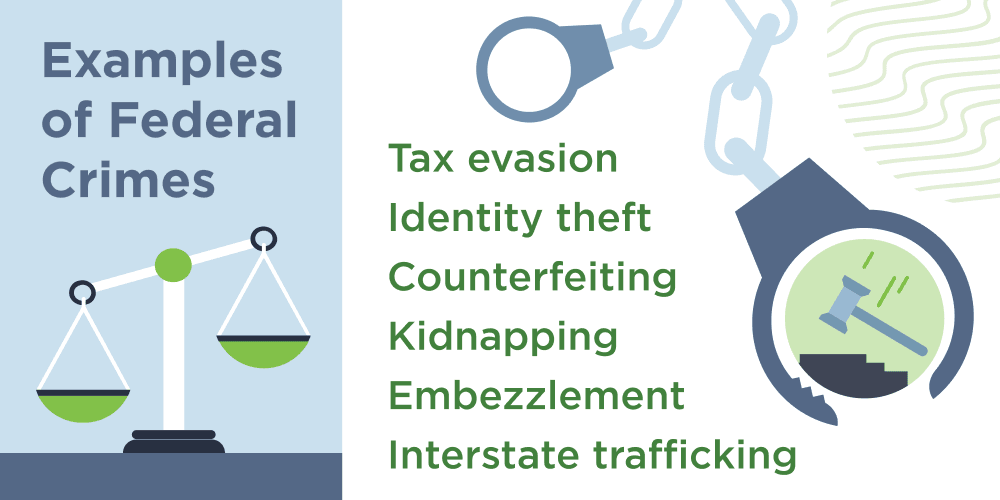
There is perhaps no greater financial disqualifier in a federal background check than a failure to comply with federal, state, or local tax laws. If you are applying to work for the government, failing to pay into the system that funds your salary is viewed as a massive conflict of interest and a breach of law. This includes:
- Failure to file tax returns on time.
- Unpaid back taxes without an established payment plan.
- Tax liens placed against your property.
- Intentional tax evasion or fraudulent filings.
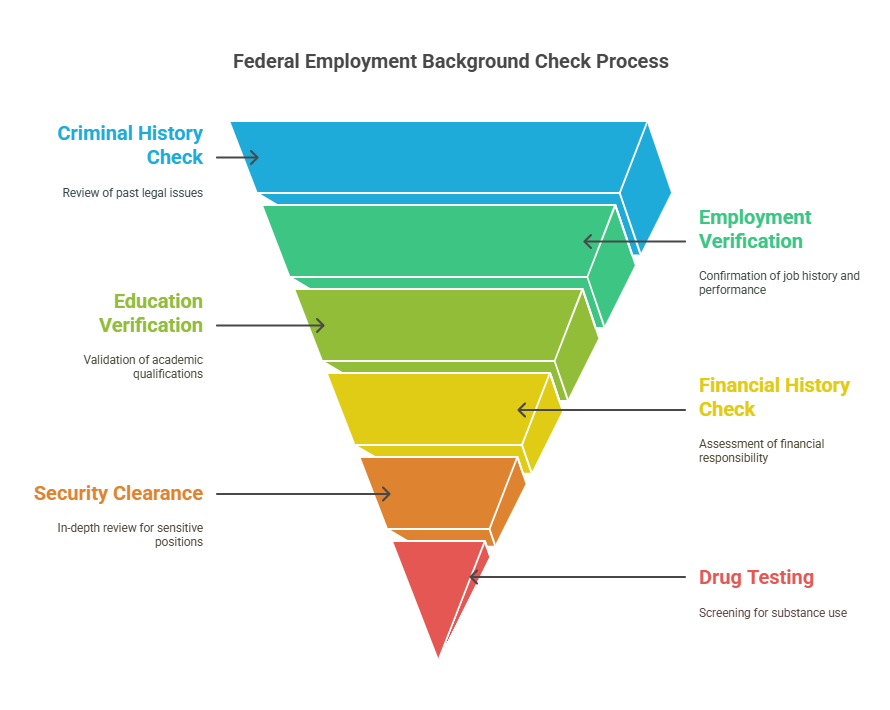
The IRS and the Office of Personnel Management (OPM) coordinate closely. A candidate who has neglected their tax obligations is often deemed “unsuitable” for federal service before the deeper background investigation even begins.
Gambling Addictions and Unexplained Wealth
Federal investigators are trained to look for outliers in an individual’s financial profile. A significant history of gambling—even if legal—can be a disqualifier if it has led to financial instability or suggests a compulsive behavior that compromises judgment. Conversely, “unexplained wealth” is equally scrutinized. If a candidate’s lifestyle far exceeds their reported income, it raises questions about illegal side hustles, money laundering, or undisclosed foreign influence. In the modern financial era, this also extends to large, anonymous transfers of cryptocurrency that cannot be traced to legitimate sources of income.
Navigating the Adjudication Process: Mitigating Financial Risks
If you have a history of financial trouble, it does not always result in an automatic “no.” The federal government utilizes the “Whole Person Concept” during adjudication, which allows for the mitigation of negative information if the candidate can prove they have taken corrective action.
Transparency and the “Whole Person” Concept
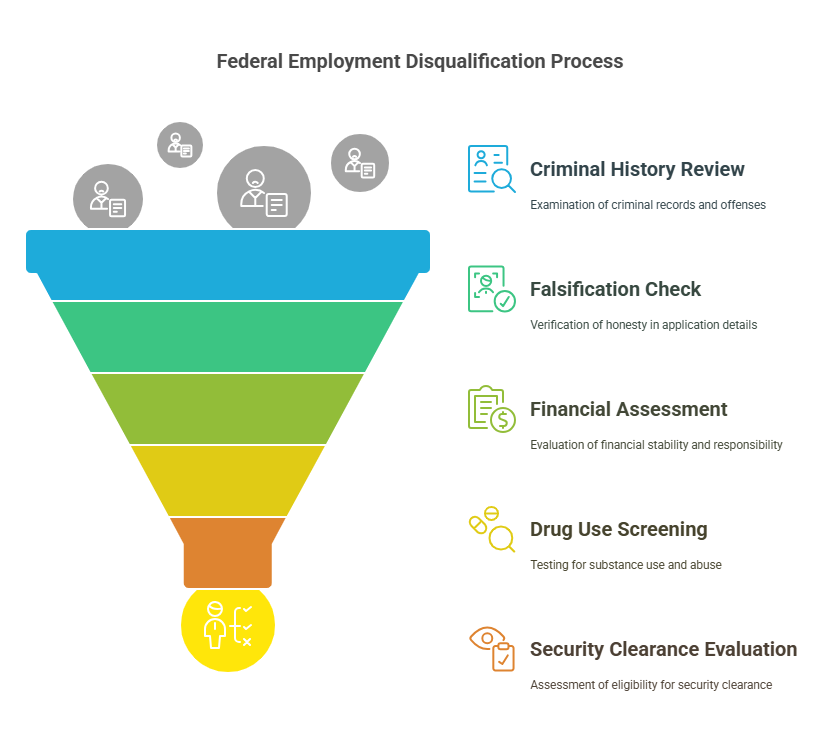
The fastest way to be disqualified is not the debt itself, but the attempt to hide it. Discrepancies between your SF-86 form and your credit report are viewed as “falsification,” which is an immediate character disqualifier. To mitigate financial red flags, you must be entirely transparent. Adjudicators look at the circumstances surrounding the financial trouble. Was the debt caused by an “act of God,” such as a medical emergency, a divorce, or an unexpected job loss? Or was it caused by reckless spending? If the cause was beyond your control and you have since taken steps to resolve it, you are much more likely to pass.
Documenting Proactive Financial Management
To overcome a history of poor credit or debt, you must provide documentation of a “good faith effort” to resolve the issues. This includes:
- Payment Plans: Evidence that you have entered into formal agreements with creditors or the IRS and have made consecutive on-time payments.
- Credit Counseling: Certificates of completion from reputable financial management or credit counseling services.
- Dispute Letters: Proof that you are actively challenging incorrect information on your credit report.
- Budgeting Plans: A clear explanation of how your financial situation has changed and why the previous issues are unlikely to recur.
In essence, the government wants to see that you have regained control over your financial life.
Long-Term Strategies for Maintaining Financial Eligibility
Maintaining eligibility for a federal background check is not a “one-and-done” event. Many federal roles require periodic reinvestigations or are subject to Continuous Vetting (CV). This means your financial life is under constant, automated scrutiny.
Credit Monitoring and Debt Consolidation
For those in or seeking federal service, active credit monitoring is an essential financial tool. Utilizing apps and services that provide real-time alerts for changes in your credit score or new delinquencies allows you to address issues before they become permanent marks on your record. Furthermore, if you are carrying high-interest consumer debt, debt consolidation into a manageable personal loan can improve your credit utilization ratio—a key metric in your credit score—and demonstrate to investigators that you are simplifying and organizing your financial obligations.
Building a Legacy of Fiscal Responsibility
Ultimately, the best way to ensure you are never disqualified is to build a lifestyle centered on fiscal responsibility. This involves:
- Emergency Funds: Maintaining a savings cushion (3–6 months of expenses) to prevent “circumstantial” debt during emergencies.
- Automated Tax Compliance: Ensuring that tax withholdings are correct and that filings are done early to avoid last-minute errors.
- Conservative Living: Avoiding the “lifestyle creep” that often accompanies government pay raises, thereby keeping your debt-to-income ratio low.
By viewing your personal finances through the lens of a “business asset,” you protect your career longevity. In the competitive landscape of federal employment, your financial reputation is just as important as your resume. Understanding what disqualifies you is the first step; taking proactive, professional control of your money is the second. Whether you are a seasoned contractor or a new applicant, remember: a clean balance sheet is often the key that unlocks the door to federal service.
aViewFromTheCave is a participant in the Amazon Services LLC Associates Program, an affiliate advertising program designed to provide a means for sites to earn advertising fees by advertising and linking to Amazon.com. Amazon, the Amazon logo, AmazonSupply, and the AmazonSupply logo are trademarks of Amazon.com, Inc. or its affiliates. As an Amazon Associate we earn affiliate commissions from qualifying purchases.