
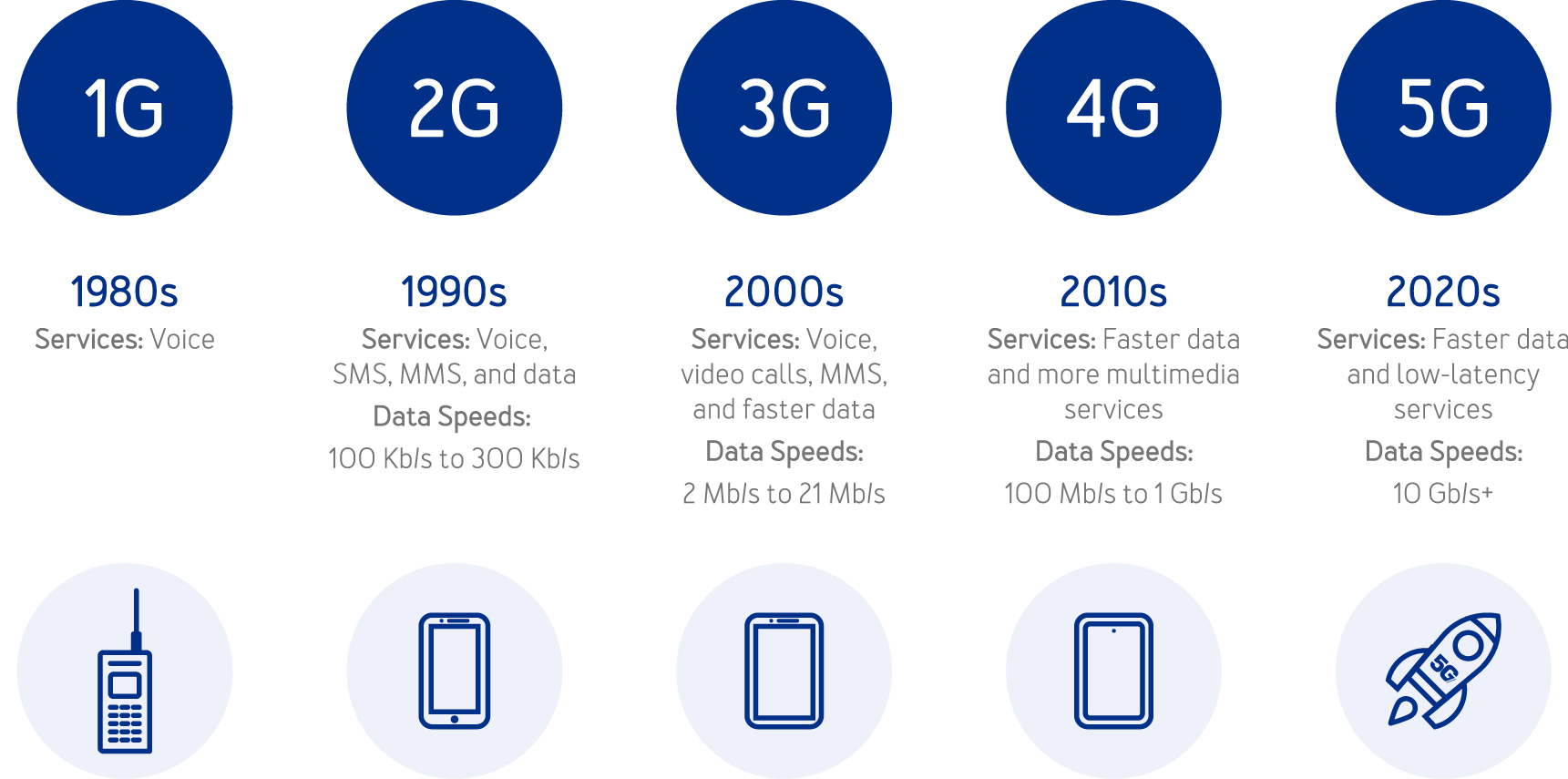
The advent of fifth-generation wireless technology, or 5G, represents a significant leap forward in mobile connectivity. Far more than just an incremental upgrade to existing cellular networks, 5G promises to revolutionize how we interact with technology, conduct business, and experience the digital world. Its implications extend across a vast spectrum of technological advancements, paving the way for innovations that were once confined to the realm of science fiction. Understanding what 5G means requires a deep dive into its core principles, its transformative capabilities, and the diverse applications it will enable.
The Technological Underpinnings of 5G
At its heart, 5G is a new global wireless standard designed to connect virtually everyone and everything together, including machines, objects, and devices. It is built upon a foundation of advanced technologies that collectively deliver unprecedented speeds, reduced latency, and increased capacity. These technological advancements are what empower 5G to deliver on its promises of a more connected and intelligent future.

Enhanced Mobile Broadband (eMBB)
One of the most immediate and noticeable benefits of 5G is its ability to deliver significantly faster download and upload speeds. This enhanced mobile broadband capability means that users can stream high-definition video without buffering, download large files in seconds, and experience a more responsive online experience for all their mobile applications. eMBB is achieved through a combination of factors, including the use of higher frequency spectrum bands, more efficient radio wave transmission, and advanced antenna technologies. The increased bandwidth allows for a greater volume of data to be transmitted simultaneously, leading to a more robust and fluid mobile internet experience. This is particularly crucial for data-intensive applications like virtual reality (VR) and augmented reality (AR), which require massive amounts of data to be processed and delivered in real-time.
Ultra-Reliable Low-Latency Communications (URLLC)
Beyond just speed, 5G introduces a new paradigm in network reliability and responsiveness. URLLC is a critical component of 5G, enabling near-instantaneous communication with extremely high reliability. Latency, the delay between sending a command and receiving a response, is drastically reduced in 5G networks, often to just a few milliseconds. This ultra-low latency is paramount for applications where even a slight delay can have significant consequences. For example, in autonomous driving, millisecond delays in communication between vehicles or with infrastructure could be the difference between an accident and a safe maneuver. Similarly, in remote surgery or industrial automation, precise and immediate control is essential for safe and effective operation. The enhanced reliability ensures that these critical communications are not interrupted, making 5G a foundational technology for mission-critical applications.
Massive Machine-Type Communications (mMTC)
The proliferation of the Internet of Things (IoT) is a defining trend of the 21st century, and 5G is the catalyst that will truly unlock its potential. mMTC is designed to support an enormous number of connected devices simultaneously, far exceeding the capabilities of previous generations of wireless technology. This allows for the seamless integration of billions of sensors, smart devices, and machines into a single, interconnected network. From smart cities that optimize traffic flow and energy consumption to smart homes that manage appliances and security, mMTC will be the backbone of a truly connected world. This massive connectivity will enable the collection and analysis of vast amounts of data, leading to greater efficiency, automation, and insights across numerous industries and aspects of daily life.
Transformative Capabilities and Applications of 5G
The technological advancements of 5G translate into a wide array of transformative capabilities that will reshape industries and enhance our daily lives. These capabilities are not merely theoretical; they are already beginning to manifest in pilot projects and early deployments, hinting at the profound impact 5G will have in the coming years.
The Future of Mobility: Autonomous Vehicles and Smart Transportation
The realization of fully autonomous vehicles hinges on robust and responsive communication. 5G’s ultra-low latency and high reliability are essential for vehicle-to-vehicle (V2V) and vehicle-to-infrastructure (V2I) communication. This allows cars to “talk” to each other, sharing information about their speed, direction, and potential hazards, and to communicate with traffic lights, road sensors, and other smart infrastructure. This interconnectedness will not only improve safety by reducing accidents but also optimize traffic flow, reduce congestion, and enable more efficient public transportation systems. Imagine cities where traffic lights adjust dynamically to real-time traffic conditions, or where your car can communicate with the parking infrastructure to find an open spot before you even arrive.
Revolutionizing Healthcare: Remote Surgery and Telemedicine

The implications of 5G for healthcare are profound. The high bandwidth and low latency of 5G networks enable sophisticated telemedicine applications, allowing doctors to consult with patients remotely, diagnose conditions using high-resolution imaging, and even monitor vital signs in real-time. More remarkably, URLLC opens the door to remote surgery. Surgeons could potentially operate on patients miles away, controlling robotic surgical instruments with precision and immediacy. This could bring specialized medical care to underserved rural areas and provide access to leading surgeons for patients worldwide. Furthermore, 5G will facilitate the seamless transmission of massive medical imaging files, enabling faster diagnoses and improved collaboration among medical professionals.
Enhancing Industrial Automation and the Smart Factory
The Fourth Industrial Revolution, or Industry 4.0, is deeply intertwined with the capabilities of 5G. In smart factories, 5G will enable highly automated and flexible production lines. Robots and machines can communicate wirelessly with each other and with central control systems with minimal delay, allowing for real-time adjustments and optimizations. This enables more efficient manufacturing processes, predictive maintenance (where machines can alert to potential issues before they cause downtime), and the creation of highly customized products on demand. The massive connectivity of mMTC will allow for the deployment of countless sensors throughout the factory floor, providing granular data on every aspect of production, from environmental conditions to the performance of individual components.
Immersive Entertainment and Gaming Experiences
For consumers, 5G promises to unlock a new era of entertainment. The enhanced mobile broadband will support richer, more immersive experiences in mobile gaming, virtual reality, and augmented reality. Gamers will experience near-zero lag, allowing for seamless multiplayer interactions and more responsive gameplay. AR applications, such as overlaying digital information onto the real world or enabling virtual try-ons for clothing, will become more fluid and realistic. Live events, like concerts and sports matches, could offer enhanced viewing options, allowing users to switch perspectives or access real-time statistics and replays through AR. The sheer volume of data that 5G can handle will also pave the way for ultra-high-definition streaming and interactive content that was previously impossible on mobile devices.
The Broader Impact and Future Outlook of 5G
The transformative power of 5G extends beyond specific applications; it represents a fundamental shift in our technological infrastructure, with far-reaching societal and economic implications. Understanding this broader impact is crucial to appreciating the full scope of what 5G means.
Driving Innovation and Economic Growth
5G is not just an upgrade to existing technologies; it is an enabler of entirely new industries and business models. By providing a robust and versatile platform for connectivity, 5G will spur innovation across a multitude of sectors. This includes the development of new AI-powered applications, advanced robotics, and sophisticated data analytics platforms. The increased efficiency and productivity enabled by 5G will contribute to economic growth, creating new jobs and opportunities in areas such as network deployment, software development, and data management. Companies that can effectively leverage 5G capabilities will gain a competitive advantage, driving market disruption and fostering a more dynamic economy.
The Evolution of Smart Cities and Connected Communities
The concept of a “smart city” becomes a tangible reality with 5G. By enabling massive IoT deployments and real-time data analysis, 5G will allow cities to optimize their operations in ways never before possible. This includes intelligent traffic management systems that reduce congestion and emissions, smart grids that efficiently manage energy consumption, enhanced public safety through real-time monitoring and rapid response, and more efficient waste management. Beyond infrastructure, 5G can also improve the quality of life for citizens through enhanced access to education, healthcare, and public services. Connected communities will be more resilient, sustainable, and responsive to the needs of their residents.
Addressing Challenges and Ensuring Equitable Access
While the potential of 5G is immense, its successful deployment and widespread adoption will also present challenges. Ensuring equitable access to 5G services across all communities, regardless of socio-economic status or geographic location, is a critical concern. Bridging the digital divide will require strategic investment and thoughtful policy. Furthermore, the increased connectivity brought about by 5G raises important questions about data privacy, cybersecurity, and the ethical implications of widespread surveillance and data collection. Robust security measures and clear regulatory frameworks will be essential to foster trust and ensure that 5G technologies are developed and deployed responsibly.
Conclusion: A New Era of Connectivity
In conclusion, “what dies 5G mean” is a question that delves into the very fabric of our technological future. It signifies a paradigm shift in how we connect, communicate, and interact with the world around us. From the fundamental technological advancements of enhanced mobile broadband, ultra-reliable low-latency communications, and massive machine-type communications, to the transformative applications in mobility, healthcare, industry, and entertainment, 5G is poised to redefine what is possible. It is the foundational technology that will empower innovation, drive economic growth, and usher in a new era of connectivity, making our world smarter, more efficient, and more interconnected than ever before. The journey of 5G is just beginning, and its full impact will continue to unfold in the years to come.
aViewFromTheCave is a participant in the Amazon Services LLC Associates Program, an affiliate advertising program designed to provide a means for sites to earn advertising fees by advertising and linking to Amazon.com. Amazon, the Amazon logo, AmazonSupply, and the AmazonSupply logo are trademarks of Amazon.com, Inc. or its affiliates. As an Amazon Associate we earn affiliate commissions from qualifying purchases.