
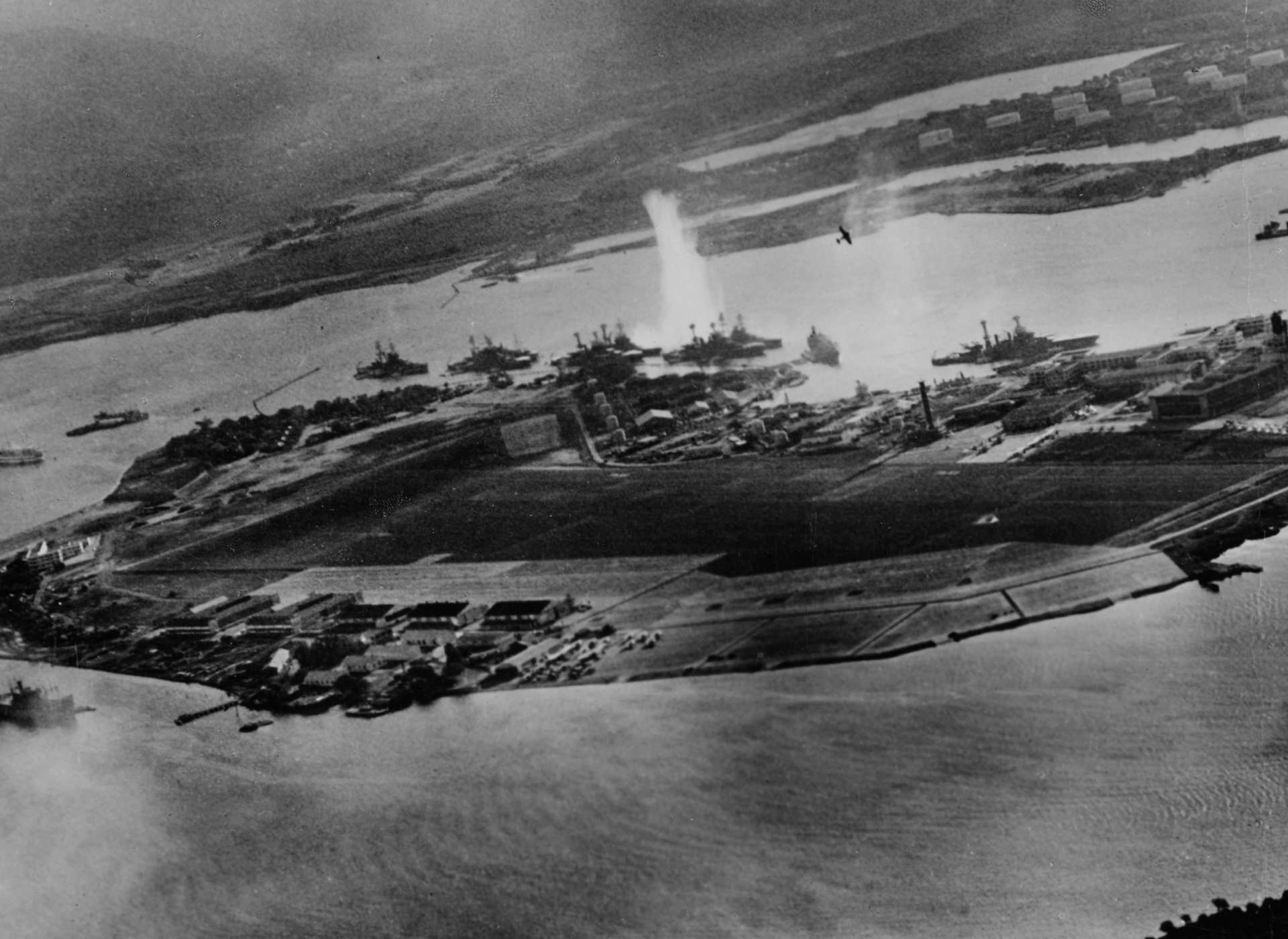
The attack on Pearl Harbor on December 7, 1941, was a watershed moment in American history, a sudden and brutal catalyst that shattered the nation’s isolationist stance and plunged it headlong into the Second World War. Beyond the immediate human cost and strategic shock, the aftermath of this devastating assault saw an unparalleled mobilization of American economic might. The United States, previously a reluctant participant in global conflicts, transformed into the “arsenal of democracy,” leveraging its vast industrial capacity and financial resources to wage a war on multiple fronts. This dramatic shift was not merely a matter of military strategy; it was a profound economic undertaking, requiring unprecedented investment, strategic resource allocation, and a fundamental reimagining of national priorities. Understanding what the US did after Pearl Harbor necessitates a deep dive into the financial and industrial transformation that defined the American war effort.

The Economic Engine of War: Mobilizing a Nation’s Finances
The declaration of war on December 8, 1941, triggered an immediate and massive reorientation of the American economy. The objective was clear: to outproduce, out-innovate, and ultimately outlast the Axis powers. This required a scale of financial commitment and a strategic redirection of capital that was unprecedented in American history. The government became the primary driver of economic activity, its demands for war materials and personnel necessitating a complete overhaul of production pipelines and financial instruments.
Funding the War Effort: A Monumental Financial Undertaking
The sheer cost of fighting a global war was staggering. The United States employed a multi-pronged approach to finance its military operations, ranging from direct taxation to the issuance of war bonds. The federal budget ballooned, with defense spending consuming an ever-larger percentage of the Gross Domestic Product. This involved not only funding the production of vast quantities of armaments, aircraft, ships, and vehicles but also supporting the personnel engaged in these efforts, as well as the military personnel fighting overseas.
- Taxation as a Revenue Stream: To help fund the war, the U.S. government significantly increased tax rates. The Revenue Act of 1942 dramatically expanded the income tax base, bringing millions of new taxpayers into the system. Corporate taxes were also raised. This was a deliberate policy choice to spread the financial burden of the war across the population and to curb inflation by reducing disposable income. While unpopular, it was deemed a necessary measure to ensure the financial stability of the war effort.
- War Bonds: Citizen Investment in Victory: Perhaps the most iconic method of war financing was the sale of war bonds. These were essentially loans made by citizens to the government, offering a modest interest rate and the promise of repayment after the war. Campaigns were launched with patriotic fervor, encouraging individuals, families, and businesses to invest their savings in the war effort. Celebrities, public figures, and even children participated in these drives, fostering a sense of collective responsibility and shared sacrifice. The “Buy War Bonds” slogan became ubiquitous, a constant reminder of the individual’s role in supporting the troops and achieving victory. This not only provided essential funding but also served as a powerful propaganda tool, reinforcing national unity and commitment.
The Reconstruction Finance Corporation (RFC) and Industrial Conversion
While taxation and war bonds provided the crucial capital, the Reconstruction Finance Corporation (RFC) played a pivotal role in retooling American industry for war production. Established earlier, its mandate was expanded significantly in the wake of Pearl Harbor. The RFC was instrumental in providing loans and financial guarantees to private companies willing to convert their manufacturing facilities from civilian goods to military production. This was a massive undertaking, involving everything from automobile manufacturers building tanks and aircraft to textile mills producing uniforms and parachutes.
- Financing the Arsenal: The RFC essentially acted as a financial facilitator for industrial transformation. It would lend money to companies to build new factories, purchase specialized machinery, and hire and train workers for war-related industries. This significantly de-risked the conversion process for private enterprise, encouraging rapid and widespread adaptation. Without this financial backing, the speed and scale of American war production would have been severely hampered.
- Strategic Investment in Key Industries: The RFC’s investments were not haphazard; they were strategically directed towards industries deemed critical for the war effort. This included sectors involved in producing aircraft, shipbuilding, steel, aluminum, and synthetic rubber. The corporation’s ability to assess industrial needs and deploy capital rapidly made it an indispensable component of the mobilization strategy.
The Transformation of American Industry: From Consumer Goods to War Machines
The financial mobilization directly fueled an equally profound transformation of American industry. The nation’s factories, once dedicated to producing cars, appliances, and consumer goods, were reconfigured with astonishing speed to churn out the tools of war. This industrial metamorphosis was a testament to American ingenuity, its vast resources, and the sheer will to fight.
From Assembly Lines to Armaments: The Conversion of Manufacturing

The iconic image of American industrial might during WWII is the mass production of war materiel. Automobile manufacturers, for example, became leading producers of tanks and aircraft engines. Aircraft manufacturers expanded their operations exponentially, producing thousands of bombers, fighters, and transport planes. The shipbuilding industry, which had been in decline, roared back to life, constructing an endless stream of warships, cargo vessels, and landing craft.
- The Automobile Industry’s Pivotal Role: Companies like Ford, General Motors, and Chrysler, which had once been synonymous with civilian transportation, became giants of war production. Ford’s Willow Run plant, for instance, became famous for its mass production of the B-24 Liberator bomber. These companies leveraged their expertise in mass production and assembly line techniques to create military hardware at an unprecedented rate.
- The Rise of New Industries and Technologies: The war also spurred the development and expansion of entirely new industries and technologies. The demand for advanced materials led to significant investment in aluminum and magnesium production. The need for reliable communication and navigation systems fueled advancements in electronics. The development of synthetic rubber, essential for tires and other components, became a critical strategic imperative due to disruptions in natural rubber supply chains.
The Role of Government Contracts and Production Targets
The federal government, through agencies like the War Production Board, played a crucial role in orchestrating this industrial output. They set ambitious production targets, allocated raw materials, and ensured that factories were running at full capacity. The concept of “war production quotas” became a driving force, pushing industries to ever-higher levels of efficiency and output.
- The War Production Board (WPB): Established in January 1942, the WPB was responsible for converting civilian industries to war production and for allocating scarce resources. It had the authority to prioritize certain industries and to ration essential materials, ensuring that the needs of the military were met above all else. The WPB was a powerful centralized planning body that exerted significant influence over the entire American economy.
- Setting Ambitious Goals: The WPB, in collaboration with military leaders, set incredibly ambitious production goals. President Roosevelt famously called for the production of 50,000 aircraft per year, a target that seemed almost unimaginable at the time. However, through immense effort and governmental oversight, American industry not only met but often exceeded these targets, earning the nation the moniker “arsenal of democracy.”
Resource Allocation and Management: The Strategic Deployment of Scarce Assets
The immense demands of war production meant that raw materials and skilled labor became incredibly scarce. The efficient allocation and management of these resources were therefore paramount to the success of the American war effort. This involved sophisticated planning, rationing, and the development of innovative solutions to overcome supply chain challenges.
Rationing and Conservation: Ensuring Essential Supplies
To support the war effort, the government implemented widespread rationing of essential goods. Commodities like gasoline, sugar, coffee, meat, and rubber became subject to strict limits. This was a necessary measure to ensure that sufficient quantities of these materials were available for military use and to prevent hoarding and price gouging.
- The Office of Price Administration (OPA): The OPA was responsible for implementing and enforcing rationing programs. Citizens were issued ration books, which they had to use to purchase limited quantities of rationed goods. This system, while often inconvenient, was crucial in ensuring that the nation’s resources were distributed fairly and effectively.
- Community Efforts and “Victory Gardens”: Beyond government rationing, there were widespread community-led conservation efforts. Citizens were encouraged to collect scrap metal, rubber, and paper for recycling. The concept of “Victory Gardens” became popular, with families encouraged to grow their own food to alleviate pressure on commercial food supplies. These initiatives fostered a sense of shared sacrifice and national purpose.
Innovation in Material Procurement and Substitution
The disruptions caused by the war, particularly the loss of access to raw materials from Southeast Asia, necessitated significant innovation in material procurement and the development of substitutes. The reliance on imported rubber, for instance, led to a massive government-funded effort to develop synthetic rubber production.
- The Manhattan Project (and its broader implications): While the Manhattan Project is famously known for its atomic bomb development, its massive scale and resource demands also highlight the government’s ability to marshal vast financial and scientific resources towards a singular, critical objective. This ability to invest heavily in research and development, even for the most esoteric and complex projects, was a hallmark of the wartime economy.
- Developing Synthetic Alternatives: The search for substitutes extended beyond rubber. New methods for producing aluminum, a critical metal for aircraft construction, were developed and scaled up. Research into new alloys and materials became a priority. This constant drive for innovation in materials science was fundamental to maintaining and increasing the pace of war production.
In conclusion, the United States’ response to the attack on Pearl Harbor was a monumental undertaking that went far beyond military action. It represented an unprecedented economic mobilization, a strategic redirection of financial resources, and a profound transformation of the nation’s industrial landscape. The financing of the war through taxation and war bonds, the conversion of factories through government backing, and the efficient management of scarce resources all contributed to America’s eventual victory. The period after Pearl Harbor stands as a powerful testament to the capacity of a nation to leverage its economic might and industrial prowess when faced with an existential threat, reshaping its financial and productive capabilities to meet the demands of global conflict.
aViewFromTheCave is a participant in the Amazon Services LLC Associates Program, an affiliate advertising program designed to provide a means for sites to earn advertising fees by advertising and linking to Amazon.com. Amazon, the Amazon logo, AmazonSupply, and the AmazonSupply logo are trademarks of Amazon.com, Inc. or its affiliates. As an Amazon Associate we earn affiliate commissions from qualifying purchases.