
The Songhai Empire, a colossal West African power that flourished from the 15th to the 16th centuries, was a central player in the trans-Saharan trade network. While often remembered for its military might and vast territorial expanse, its true economic engine lay in the intricate web of trade it orchestrated. Understanding what the Songhai Empire traded offers a fascinating glimpse into the sophisticated economic strategies, the flow of goods across continents, and the technologies that facilitated this remarkable exchange. This exploration delves into the core commodities that fueled Songhai’s prosperity, examining how these trade routes were managed and the broader implications for the empire’s rise and influence, all viewed through the lens of modern economic principles.
The Pillars of Songhai’s Trade: Commodities that Shaped an Empire
The Songhai Empire’s wealth and influence were intrinsically linked to the lucrative commodities it controlled and traded. These weren’t just basic raw materials; they represented vital resources for distant civilizations and were highly sought after in the global marketplace of the time. The empire acted as a conduit, channeling these precious goods across vast distances, primarily through the arduous but profitable trans-Saharan routes.
Gold: The Glittering Heart of West African Commerce
Undoubtedly, gold was the most significant commodity that flowed from the Songhai Empire. The empire controlled the rich goldfields of the Upper Niger and Senegal rivers, regions that had been producing gold for centuries. This precious metal was not just a symbol of wealth; it was the primary medium of exchange and the ultimate driver of Songhai’s economic power.
The Genesis of Gold: The gold extracted in Songhai was predominantly alluvial, meaning it was found in riverbeds and sand deposits. Prospectors would pan for these fine particles, a labor-intensive but ultimately rewarding process. The sheer abundance of gold in these regions made it a consistent and reliable export.
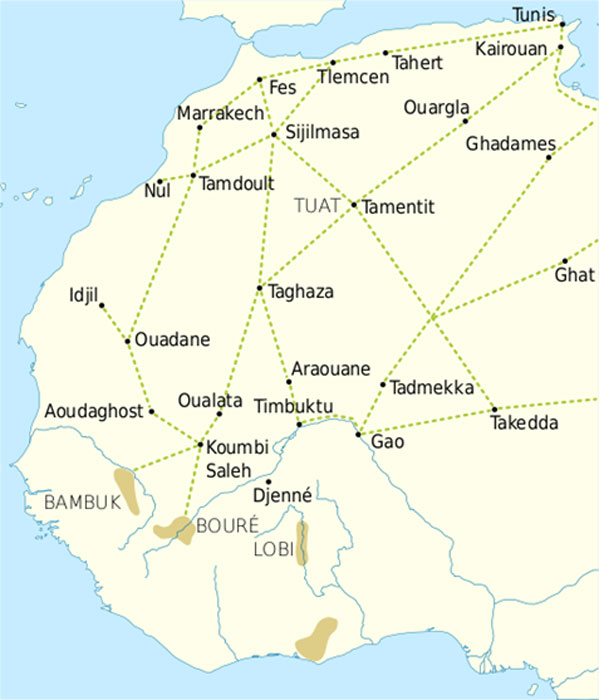
The Trans-Saharan Route: A Golden Artery: The gold from Songhai was transported north across the Sahara Desert in camel caravans. Cities like Timbuktu, Djenné, and Gao served as crucial entrepôts, where gold was collected, weighed, and prepared for its journey. Merchants from North Africa and beyond would then arrive to exchange goods for this highly coveted metal.
Global Demand and Songhai’s Leverage: The demand for gold in North Africa and even Europe was immense. It was used for coinage, jewelry, and as a store of value. Songhai’s control over these gold sources gave it significant leverage in its trading relationships. It could dictate terms, influence prices, and ensure a steady flow of goods in return. This dominance in the gold trade was a cornerstone of the empire’s prosperity and its ability to fund its vast administrative and military apparatus.
Salt: The “White Gold” of the Sahara
While gold represented outward wealth, salt was equally crucial, acting as a vital commodity for survival and an essential trade good for the Songhai Empire. The Sahara Desert, a harsh and arid environment, lacked natural salt deposits. Therefore, salt became a highly valuable commodity, often referred to as “white gold.”
Sources of Salt: The primary sources of salt for the Songhai Empire were the desert salt mines of Taghaza and Taoudenni. These mines, located in the heart of the Sahara, were incredibly rich in salt deposits. The extraction process was brutal, often undertaken by enslaved laborers, highlighting the human cost of this essential trade.
Salt’s Essential Role: Salt was indispensable for human and animal sustenance. It helped preserve food, making it possible to store provisions for long journeys and periods of scarcity. In the hot climate, salt was also crucial for replenishing electrolytes lost through sweat.
Trade Dynamics: An Equal and Opposite Force: The trade in salt was intrinsically linked to the gold trade. Caravans heading south to Songhai would carry salt from the Sahara. They would then depart north carrying Songhai’s gold. This exchange was not merely transactional; it represented a vital symbiotic relationship where two essential commodities, gold and salt, balanced each other and facilitated continuous economic activity. The Songhai rulers understood this balance and often levied taxes on both commodities, further enriching the empire.
Other Valued Commodities: Beyond Gold and Salt
While gold and salt were the undisputed titans of Songhai’s trade, the empire also facilitated the exchange of a diverse array of other valuable goods, contributing to its economic vibrancy and its role as a hub of regional commerce.
Slaves: A Tragic but Pervasent Trade
The slave trade was an unfortunate but significant component of Songhai’s economy, as it was for many pre-modern societies. Slaves were acquired through warfare, raids, and as a form of punishment or debt repayment. They were then traded northwards across the Sahara.
The Destination of Enslaved People: Enslaved individuals from Songhai were primarily destined for North Africa and the Middle East. They were utilized for labor in agriculture, domestic service, and as soldiers. While a grim aspect of history, acknowledging the slave trade is crucial for a complete understanding of the Songhai economy.
Ivory and Other Animal Products
The vast savannas and forests bordering the Songhai Empire provided a rich source of ivory. Elephant tusks were highly prized in North Africa and beyond for their use in decorative arts, jewelry, and as a material for luxury goods.
Beyond Ivory: Other animal products, such as animal hides, leather goods, and perhaps even exotic animal skins, likely contributed to the trade. These items, while not as economically dominant as gold or salt, added to the diversity of Songhai’s exports and its ability to cater to a wider range of market demands.
Textiles and Manufactured Goods
While Songhai was primarily an exporter of raw materials, it also participated in the trade of manufactured goods, often as an intermediary. Local artisans produced textiles, pottery, and metalwork, some of which would have been traded within the empire and to neighboring regions.
Imported Goods: Songhai also imported manufactured goods, such as textiles from North Africa, horses, and weapons. These imports not only met the demands of the Songhai elite but also fueled further internal production and trade as local artisans sought to emulate or improve upon imported designs and technologies.
Managing the Flow: Technology, Infrastructure, and Governance
The success of the Songhai Empire’s trade was not solely dependent on its natural resources; it was also a testament to its sophisticated management of trade routes, its adoption of relevant technologies, and its effective governance. These elements worked in concert to ensure the smooth and profitable flow of goods.
The Backbone of Trade: Camel Caravans and Desert Navigation

The trans-Saharan trade was a monumental undertaking, made possible by the camel. These hardy animals were perfectly adapted to the harsh desert environment, capable of carrying heavy loads over long distances with minimal water.
Camel Caravans as Mobile Infrastructure: Camel caravans were not just modes of transport; they were essentially mobile trading posts. Merchants, guides, and escorts would travel together, providing security and sharing resources. The organization and discipline of these caravans were paramount for survival and success.
Navigation and Logistics: Navigating the vast and featureless Sahara required specialized knowledge. Songhai merchants and guides were skilled in celestial navigation, understanding star patterns to chart their course. They also possessed intricate knowledge of oases, water sources, and safe routes. This logistical expertise was a critical “technology” that underpinned the entire trade network.
The Rise of Trade Cities: Hubs of Exchange and Innovation
Songhai’s strategic location facilitated the development of thriving trade cities that became centers of commerce, culture, and learning. These cities were not merely marketplaces; they were complex urban ecosystems that supported the empire’s economic endeavors.
Timbuktu: The Jewel of the Desert: Timbuktu, perhaps the most renowned Songhai city, was a vital nexus for trans-Saharan trade. It served as a central point for the exchange of gold, salt, slaves, and other commodities. Its mosques and universities also made it a renowned center of Islamic scholarship, attracting scholars from across the Muslim world. This intellectual capital, in turn, fostered innovations in finance, record-keeping, and trade practices.
Djenné and Gao: Other Crucial Nodes: Djenné, situated on the Bani River, was a vital trading center, particularly for agricultural products and handcrafted goods. Gao, the imperial capital, controlled key riverine trade routes along the Niger River. These cities, with their bustling markets and sophisticated administration, were the engines of Songhai’s economic prosperity.
Governance and Taxation: Fueling the Imperial Machine
The Songhai rulers understood the economic importance of trade and implemented policies to foster and control it. A well-organized administrative system was crucial for maintaining order, ensuring security, and extracting revenue.
Taxation as a Revenue Stream: A significant portion of Songhai’s revenue was derived from taxes levied on trade goods passing through the empire. Taxes were collected on exports like gold and imports like salt and manufactured goods. This generated substantial wealth for the imperial treasury, which was used to fund the army, public works, and the salaries of officials.
Legal Frameworks and Contract Enforcement: While not codified in the modern sense, Songhai likely had established legal frameworks and customs that governed trade transactions. The presence of respected Islamic scholars and judges in cities like Timbuktu suggests a sophisticated understanding of contract law and dispute resolution, essential for building trust among merchants and facilitating long-term trading relationships.
Security and Stability: Maintaining peace and security along the trade routes was paramount. The Songhai military played a vital role in protecting caravans from raiders and ensuring the stability of the empire. This security allowed merchants to operate with a greater degree of confidence, encouraging investment and trade.
The Economic Legacy: Echoes of Songhai’s Trade in Modern Finance and Brand Building
The economic activities of the Songhai Empire, though ancient, offer surprising parallels and valuable lessons for contemporary economic concepts, particularly in areas like brand building, financial management, and the strategic leveraging of resources.
Building a “Brand” of Empire: Reputation and Trust in Global Trade
In today’s world, brand building is crucial for success. While the Songhai Empire didn’t have logos or marketing campaigns in the modern sense, its rulers were adept at building a “brand” of empire that inspired trust and facilitated trade.
Reputation as a Currency: The Songhai Empire cultivated a reputation for stability, security, and reliability. Merchants knew that goods passing through Songhai were relatively safe, and that contracts would generally be honored. This reputation, built over generations, was a powerful intangible asset, much like brand equity in modern business. A strong reputation reduced transaction costs and encouraged long-term partnerships.
The Power of “Case Studies” in Trade: The success of previous trade voyages and the prosperity of Songhai merchants served as powerful “case studies” for others. Stories of successful gold merchants and the vast riches of Timbuktu would have incentivized new traders and entrepreneurs to engage with the Songhai network. This dissemination of success stories is a form of informal marketing and brand reinforcement.
Corporate Identity and Imperial Branding: The symbols of Songhai’s power – its vast armies, its magnificent cities, and the visible wealth generated by trade – all contributed to a strong “corporate identity” of the empire. This identity projected an image of strength and prosperity, making it an attractive partner for trade and diplomacy.
Financial Sophistication: Managing Wealth and Investment
The Songhai Empire’s management of its vast wealth hints at a level of financial sophistication that resonates with modern financial principles.
Investment in Infrastructure: The Songhai rulers understood the importance of investing in trade-supporting infrastructure. They maintained roads, supported the development of port cities, and ensured the security of trade routes. This can be seen as an early form of public investment in economic growth, analogous to modern infrastructure development projects.
Diversification of Wealth: While gold was the primary export, the empire’s involvement in trading salt, slaves, ivory, and manufactured goods suggests an awareness of diversifying economic activity. This reduces reliance on a single commodity and creates a more resilient economic system.
The Role of “Financial Tools”: While not possessing modern financial instruments, the empire utilized the existing economic “tools” of its time effectively. The camel caravan itself was a complex logistical and financial undertaking, requiring careful planning, resource allocation, and risk management. The development of sophisticated marketplaces in cities like Timbuktu acted as early forms of financial hubs where wealth could be exchanged and reinvested.

“Side Hustles” and Entrepreneurship: The Merchant Class of Songhai
The Songhai Empire fostered a vibrant merchant class, many of whom engaged in what we might today consider entrepreneurial ventures or “side hustles” that contributed significantly to the empire’s wealth.
Independent Traders and Entrepreneurs: Beyond the direct control of the empire, individual merchants and small groups of traders operated their own ventures. They would source goods, organize their own caravans, and navigate the risks of trade to generate personal wealth. These entrepreneurial activities were the lifeblood of the Songhai economy.
Reinvestment and Growth: The profits generated by these merchants were often reinvested in further trade, in expanding their businesses, or in acquiring land and property. This cycle of reinvestment fueled economic growth within the empire and created opportunities for further entrepreneurship.
The Songhai Empire, therefore, was more than just a powerful military force; it was a sophisticated economic entity. Its understanding of commodity value, its mastery of logistical challenges, and its ability to foster a secure trading environment laid the groundwork for centuries of prosperity. The lessons learned from its trade practices continue to offer valuable insights into the enduring principles of commerce, reputation, and economic development that are still relevant today.
aViewFromTheCave is a participant in the Amazon Services LLC Associates Program, an affiliate advertising program designed to provide a means for sites to earn advertising fees by advertising and linking to Amazon.com. Amazon, the Amazon logo, AmazonSupply, and the AmazonSupply logo are trademarks of Amazon.com, Inc. or its affiliates. As an Amazon Associate we earn affiliate commissions from qualifying purchases.