
The ancient Egyptians’ fascination with death and what lay beyond it was not merely a morbid curiosity; it was a fundamental pillar of their civilization, shaping their art, architecture, religion, and daily lives. For millennia, they meticulously prepared for the transition from mortality to eternity, developing a complex and deeply spiritual understanding of the afterlife. This belief system was not monolithic, evolving over time and influenced by various philosophical and religious currents, but a core set of convictions persisted, revolving around the preservation of the soul, the journey through the underworld, and the ultimate judgment that determined eternal destiny.
The Journey of the Soul: Preservation and Transformation
At the heart of Egyptian belief was the concept of the soul, which was understood to be comprised of several interconnected parts. The most significant of these were the Ka and the Ba. The Ka, often translated as “life force” or “spirit double,” was believed to be created at birth and to continue to exist after death, requiring sustenance and a physical dwelling. This need for the Ka‘s survival was the primary driver behind the elaborate mummification process. By preserving the physical body, Egyptians believed they were providing a stable vessel for the Ka to inhabit in the afterlife.
Mummification: The Art of Eternal Preservation
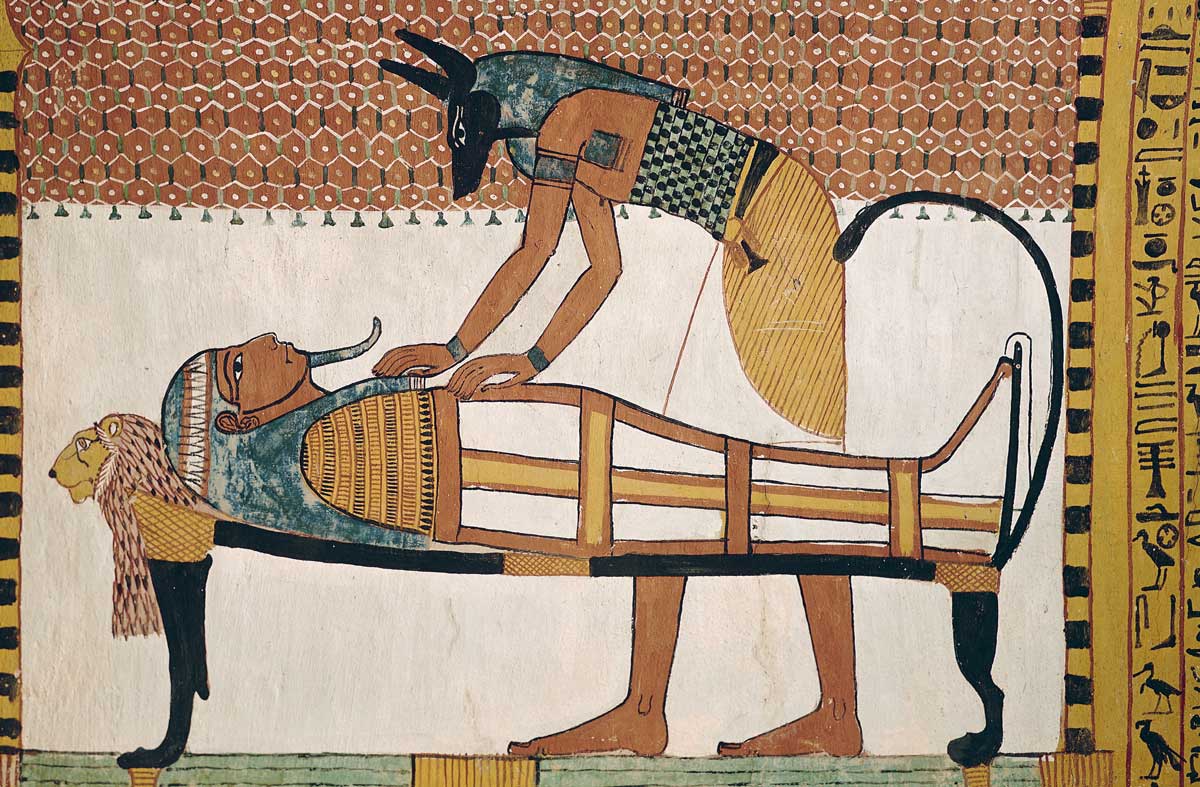
The process of mummification was a sophisticated and lengthy ritual, taking approximately seventy days to complete. It involved the removal of internal organs, except for the heart (considered the seat of intellect and emotion), which was carefully preserved and often placed back within the body or within amulets. The body was then dehydrated using natron, a natural salt, to prevent decomposition. Finally, it was anointed with oils and resins, wrapped in hundreds of yards of linen bandages, and adorned with protective amulets and charms. This painstaking effort was not simply about preventing decay; it was a sacred act designed to ensure the physical integrity necessary for the deceased’s continued existence. The elaborate tomb furnishings, from furniture to food and drink, were also intended to cater to the Ka‘s needs in the afterlife, mirroring the provisions available in earthly life.
The Ba: The Mobile Aspect of the Soul
Alongside the Ka, the Ba represented the individual personality and consciousness, often depicted as a human-headed bird. The Ba was thought to be able to leave the tomb during the day, travel to the world of the living, and interact with the earthly realm, before returning to the mummified body at night. This duality of the soul – the stationary Ka tied to the physical form and the mobile Ba free to roam – highlights the Egyptian desire for a continued connection with both the corporeal and spiritual aspects of existence. The tomb was therefore not just a resting place, but a transitional space, a home for the Ka and a point of departure and return for the Ba.
Navigating the Duat: Trials and Tribulations
The Egyptians envisioned the afterlife, specifically the underworld known as the Duat, as a dangerous and challenging realm that the deceased had to navigate to reach a state of eternal peace. This journey was fraught with perils, guarded by fearsome deities, demons, and obstacles. The deceased, often depicted in funerary texts as a pharaoh or a noble, relied on their knowledge of spells, passwords, and divine favor to overcome these challenges.

Funerary Texts: Guides to the Netherworld
The most crucial tools for the deceased’s journey were the funerary texts. These sacred writings, inscribed on tomb walls, sarcophagi, papyrus scrolls, and even coffins, served as guidebooks to the afterlife. Prominent examples include the Pyramid Texts (Old Kingdom), Coffin Texts (Middle Kingdom), and the Book of the Dead (New Kingdom). These texts contained hymns, prayers, magical spells, and detailed descriptions of the dangers and pathways within the Duat. By memorizing and reciting these passages, the deceased hoped to gain the protection of benevolent deities and to outsmart malevolent forces. The Book of the Dead, in particular, was a personalized collection of spells, often written on papyrus and placed within the tomb, intended to equip the individual with the knowledge needed for their specific journey.
The Role of Gods and Demons
The Duat was populated by a pantheon of gods and terrifying demons. Deities like Osiris, the god of the afterlife and resurrection, played a pivotal role, offering judgment and ultimately granting eternal life to the worthy. Anubis, the jackal-headed god of mummification and the afterlife, guided souls through the underworld. Conversely, serpents, monstrous creatures, and treacherous beings represented the dangers that the deceased had to confront. The spells and incantations in the funerary texts were designed to appease these entities, to beg for passage, or to ward off their attacks. The journey was thus a cosmic drama, played out in the spiritual realm, with the deceased as the protagonist.
The Verdict of Osiris: The Weighing of the Heart
The ultimate goal of the perilous journey through the Duat was to face the final judgment before Osiris and his tribunal. This pivotal moment, known as the “Weighing of the Heart,” determined whether the deceased was deemed worthy of eternal life or condemned to oblivion. It was a profound ritual that underscored the Egyptian emphasis on morality and ethical conduct in earthly life.
The Scales of Ma’at: Truth and Justice
The Weighing of the Heart ceremony was presided over by Osiris, with Thoth, the god of wisdom and writing, recording the proceedings, and Ammit, a terrifying hybrid creature, waiting to devour the heart of the unworthy. The deceased’s heart was placed on one side of a set of scales, while on the other side was the Feather of Ma’at, representing truth, justice, and cosmic order. The deceased would then recite the “Negative Confession,” a declaration of sins they had not committed, effectively testifying to their virtuous life. If the heart was lighter than or equal to the feather, it signified a life lived in accordance with Ma’at, and the deceased was declared “true of voice” (maa-kheru), thereby granted passage to the Field of Reeds.

The Field of Reeds: Paradise and Eternal Life
The Field of Reeds (Aaru) was the Egyptian conception of paradise, a lush and fertile land mirroring the most idealized version of Egypt itself. It was a place of perpetual sunshine, abundant harvests, and eternal peace, where the deceased could continue to live a life of ease and fulfillment, reunited with their loved ones and enjoying the fruits of their labor, often engaging in agricultural pursuits. This utopian vision was the ultimate reward for a life lived justly and the successful navigation of the afterlife’s trials. For those whose hearts were heavier than the feather of Ma’at, their hearts were devoured by Ammit, and their existence was utterly annihilated, a fate far worse than simple death. This stark dichotomy between eternal bliss and complete non-existence served as a powerful motivator for Egyptians to lead righteous lives, understanding that their actions in this world had direct and profound consequences for their eternal destiny.
aViewFromTheCave is a participant in the Amazon Services LLC Associates Program, an affiliate advertising program designed to provide a means for sites to earn advertising fees by advertising and linking to Amazon.com. Amazon, the Amazon logo, AmazonSupply, and the AmazonSupply logo are trademarks of Amazon.com, Inc. or its affiliates. As an Amazon Associate we earn affiliate commissions from qualifying purchases.