
For decades, our collective vision of the Tyrannosaurus rex was shaped by Hollywood animatronics and static museum skeletons. We saw a cold-blooded, upright lizard with dragging tails and scaly, crocodile-like skin. However, as we move deeper into the 21st century, the question of what the T-Rex actually looked like is no longer being answered by artists alone, but by data scientists, software engineers, and bio-informaticians.
The transition from “best guess” artistry to high-fidelity digital reconstruction represents one of the most significant triumphs of modern technology. Through the lens of cutting-edge tech—ranging from machine learning algorithms to high-resolution CT scanning and biomechanical simulation—the “King of the Tyrant Lizards” is undergoing a digital metamorphosis. Here is how technology is stripping away the myths and rendering the most accurate image of a prehistoric icon we have ever had.

The Digital Renaissance: Photogrammetry and 3D Laser Scanning
The foundation of any visual reconstruction begins with the bones. In the past, creating a model of a T-Rex involved physical casts that were cumbersome and often invasive to the original fossils. Today, the process begins with photogrammetry and LiDAR (Light Detection and Ranging).
High-Fidelity Fossil Digitization
Modern paleontologists use structured light scanners to capture the surface geometry of fossils down to the micrometer. This process creates a “digital twin” of the bone. By using software to stitch thousands of high-resolution photographs together, researchers can identify minute textures on the bone surface where ligaments and muscles once attached. This technological precision allows for “Muscle Scar Analysis,” where software maps the density and direction of muscle fibers based on the digital topography of the fossil.
Virtual Assembly and Deformity Correction
Fossils are rarely found in perfect condition; millions of years of geological pressure often crush or warp the bones. Using CAD (Computer-Aided Design) software, tech specialists can perform “virtual retro-deformation.” This involves using algorithms to calculate the original, symmetrical shape of a bone before it was compressed by the earth. By digitally correcting these distortions, we can establish the true skeletal framework of the T-Rex, providing a far more accurate “chassis” for the rest of the reconstruction.
Machine Learning and the Mystery of Integumentary Patterns
Perhaps the most debated aspect of the T-Rex’s appearance is its skin. Did it have scales, feathers, or a combination of both? This is where Artificial Intelligence (AI) and Machine Learning (ML) have become indispensable tools.
Neural Networks and Biological Proxies
To determine the likely appearance of T-Rex skin, researchers utilize neural networks trained on the biological data of extant species (animals currently living). By inputting data points from birds (the closest living relatives of dinosaurs) and crocodilians, ML models can predict the likelihood of certain traits. These algorithms analyze phylogenetic brackets—looking at the evolutionary “neighbors” of the T-Rex—to determine where feathers might have been physiologically beneficial or where scales were necessary for thermoregulation.
Digital Melanosome Analysis
Technology has even allowed us to glimpse the potential colors of the T-Rex. Using Scanning Electron Microscopy (SEM), scientists examine fossilized imprints for “melanosomes”—tiny cellular organelles that contain pigment. High-speed computing is then used to compare the shape and arrangement of these fossilized melanosomes against a massive database of modern animal pigments. While we may not yet have a definitive color palette for the T-Rex, this tech-driven approach suggests a move away from the “monochrome grey” of the past toward more complex, camouflaged, or even vibrant patterns.
Bio-Informatics and the Internal Architecture
What the T-Rex looked like on the outside was dictated entirely by what was happening on the inside. Modern medical technology, repurposed for paleontology, has revolutionized our understanding of the T-Rex’s soft tissue and sensory organs.

Industrial CT Scanning and Neuroanatomy
By placing T-Rex skulls into industrial-sized CT scanners—the same technology used in aerospace engineering to check for microscopic cracks in turbine blades—researchers can map the internal cavities of the dinosaur’s head. This data is then processed through 3D rendering software to create an “endocast” of the brain.
From a tech perspective, this is fascinating because it allows us to visualize the size of the olfactory bulbs (scent) and the cochlea (hearing). We now know, through digital reconstruction, that T-Rex had a massive brain region dedicated to smell and could hear low-frequency sounds. This affects the “look” of the animal; it wasn’t a mindless monster but a creature with forward-facing eyes (providing depth perception superior to a modern hawk) and a sophisticated sensory array that informed its posture and movements.
Finite Element Analysis (FEA)
To understand the “bulk” of the T-Rex, engineers use Finite Element Analysis—a computational tool originally designed to test the structural integrity of bridges and aircraft. By applying FEA to a digital T-Rex model, scientists can simulate the stresses of biting and locomotion. This tech reveals how much muscle was required to support the jaw and neck. The result? A T-Rex that looks much more massive and robust than the “shrink-wrapped” versions seen in older media. The technology proves that a T-Rex with thin, sunken cheeks would have been physically incapable of delivering its legendary 12,000-pound bite force.
Biomechanical Simulations: Bringing the Model to Life
A static image only tells half the story. To truly know what T-Rex looked like, we must see how it moved. Digital physics engines and biomechanical simulations provide the answer.
Evolutionary Robotics
Researchers use a technique called “evolutionary robotics” to simulate the gait of a T-Rex. They create a digital model with a defined skeletal structure and muscle mass, then set it in a virtual environment governed by the laws of physics (gravity, friction, bone strength). An AI “driver” then attempts to move the model. Through millions of iterations—a process known as reinforcement learning—the AI discovers the most efficient way for a multi-ton biped to walk without breaking its own bones.
The Death of the Tail-Dragger
These simulations have definitively changed the “look” of the T-Rex’s silhouette. Years of data processing have shown that the T-Rex must have held its tail horizontally to act as a counterbalance for its heavy head. If the T-Rex looked like the upright, tail-dragging creature of the 1950s, the simulations show it would have suffered catastrophic spinal failure. Thus, technology has literally realigned the posture of the most famous predator in history.
The Future of the T-Rex: VR, AR, and Real-Time Rendering
As we look toward the future, the question of what the T-Rex looked like will move from the laboratory to the hands of the public through immersive technology.
Virtual and Augmented Reality (VR/AR)
With the rise of powerful GPU (Graphics Processing Unit) technology, we can now render hyper-realistic T-Rex models in real-time. AR applications allow users to place a scientifically accurate, full-scale T-Rex in their own living room via a smartphone. These models are not just static “skins”; they are powered by the same biomechanical data mentioned earlier, meaning their movements and “breathing” patterns are based on the latest tech-driven theories.
The “Living” Digital Fossil
We are approaching an era where “Digital Paleontology” will allow for a continuous update of the T-Rex’s appearance. As new data is fed into the cloud—perhaps a new skin impression found in Montana or a revised proteomic study—the global digital model of the T-Rex can be updated instantly. In this sense, the T-Rex is no longer an extinct animal, but a “living” digital asset that evolves as our technology improves.
Conclusion: A Masterpiece of Data and Design
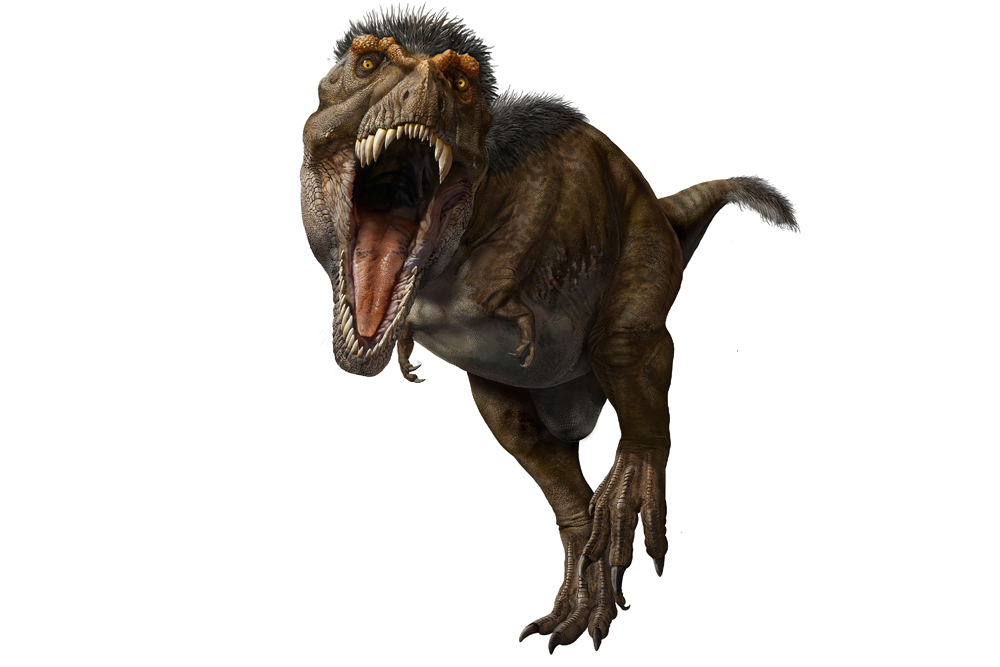
So, what did the T-Rex actually look like? Thanks to a suite of advanced technologies, we know it was a bulky, horizontal, and incredibly sophisticated apex predator. It was a creature whose form was dictated by the brutal efficiency of physics and biology, now revealed through the precision of bits and bytes.
The journey to visualize the T-Rex is a testament to how technology can bridge the gap across 66 million years. By combining the raw data of the past with the processing power of the present, we are finally seeing the T-Rex not as a monster of myth, but as a masterpiece of natural engineering. The “look” of the T-Rex is no longer a matter of artistic license; it is a high-resolution, data-driven reality that continues to sharpen with every advancement in our technological arsenal.
aViewFromTheCave is a participant in the Amazon Services LLC Associates Program, an affiliate advertising program designed to provide a means for sites to earn advertising fees by advertising and linking to Amazon.com. Amazon, the Amazon logo, AmazonSupply, and the AmazonSupply logo are trademarks of Amazon.com, Inc. or its affiliates. As an Amazon Associate we earn affiliate commissions from qualifying purchases.