
In the annals of scientific discovery, few figures loom as large as Robert Koch. Often hailed as one of the founders of modern bacteriology, his groundbreaking work in the late 19th century wasn’t merely about identifying invisible killers; it was about pioneering a revolutionary suite of technologies, methodologies, and diagnostic tools that irrevocably transformed medicine, public health, and our understanding of infectious diseases. While we might not typically associate Koch with the “Tech” category in the modern sense of software or AI, his contributions represent monumental technological leaps, establishing the very engineering principles and diagnostic platforms upon which much of contemporary biotechnology and medical science is built. Koch essentially engineered the foundational toolkit for microbial investigation, turning a nascent field into a rigorous, evidence-based science.

Engineering the Unseen: Pioneering Diagnostic Technologies and Tools
Before Robert Koch, the world of microorganisms was largely a murky, ill-defined realm, glimpsed but rarely understood. Scientists knew that tiny life forms existed, but linking them definitively to specific diseases was a monumental challenge. Koch approached this problem with an engineer’s mindset, focusing on developing the precise technologies needed to observe, isolate, and identify these pathogens.
The Microscope as a Diagnostic Engine: Visualizing the Invisible
The microscope, though invented centuries prior, became a powerful diagnostic engine in Koch’s hands. He refined its use, transforming it from a mere observational curiosity into a crucial tool for identifying the causative agents of disease. His tireless experimentation with different staining techniques—a form of early chemical engineering for biological samples—was pivotal. Early microscopes, even advanced ones, struggled to differentiate between various bacterial species, which often appeared as colorless specks. Koch’s innovations in staining, particularly his development of methods for staining bacteria in tissue sections, allowed him to selectively highlight specific microorganisms. This technological breakthrough was akin to developing specialized filters for a camera, revealing details previously obscured and enabling the clear visualization of pathogens like the tubercle bacillus. This wasn’t just observation; it was the development of a visual diagnostic technology that allowed for the precise identification of disease-causing agents, a critical step that had eluded others.
From Observation to Identification: Crafting Specificity
Koch’s work with anthrax in the 1870s perfectly illustrates his technological approach. He didn’t just see the anthrax bacilli; he meticulously documented their life cycle, their sporulation, and their presence in diseased animals. This systematic approach, driven by enhanced microscopic observation techniques, provided the first definitive proof that a specific microorganism caused a specific disease. This rigorous, evidence-based identification process, enabled by his improved microscopic and staining technologies, laid the groundwork for all future microbial diagnostics. It moved microbiology beyond mere speculation, providing concrete visual evidence and setting a new standard for scientific proof.
Innovating Lab Protocols: Engineering Microbial Culture Systems
One of Koch’s most profound technological contributions was his revolutionization of microbial culture methods. Before Koch, growing bacteria in the lab was a messy, often unproductive affair, yielding mixed cultures that made isolating and studying individual species nearly impossible. Koch recognized that to truly understand pathogens, he needed to engineer a reliable system for growing them in pure form.
The Solid Medium Breakthrough: The Petri Dish Ecosystem
Koch’s innovation of using solid culture media was a game-changer. Initially experimenting with slices of potato and then gelatin, he eventually championed nutrient agar – a solidified jelly-like substance derived from seaweed. This wasn’t a trivial change; it was a fundamental shift in laboratory tooling and process engineering. By spreading diluted samples of bacteria across the surface of a solid medium, individual cells could grow into distinct, visible colonies, each originating from a single bacterium. This simple yet brilliant technological advancement allowed for the isolation of pure cultures, a prerequisite for accurately studying individual microbial species and verifying their pathogenic role.
The development of the Petri dish by his assistant Julius Petri was a direct offshoot of this need. This iconic, simple piece of laboratory hardware provided an ideal, sterile environment for growing bacteria on solid media, preventing contamination and facilitating systematic study. Together, solid media and Petri dishes formed a complete technological system for microbial cultivation, enabling reproducible results and standardized laboratory practices worldwide. This was an engineering feat that laid the physical and methodological groundwork for all future microbiological research.
Aseptic Techniques and Controlled Environments: Standardizing Lab Processes
Accompanying his new culture media and dishes, Koch also developed and popularized rigorous aseptic techniques. Sterilizing glassware, flaming loops, and maintaining sterile environments were not merely good laboratory practices; they were critical process technologies designed to prevent contamination and ensure the purity of cultures. These standardized protocols were essential for the reliable operation of his new culture system, ensuring that observed results were truly attributable to the isolated microorganisms and not to environmental contaminants. These meticulous methods became universal laboratory standards, akin to standardized operating procedures in modern manufacturing, ensuring consistency and reliability across scientific investigations.

The Koch’s Postulates Algorithm: A Methodological Framework
Perhaps Koch’s most enduring technological legacy is not a piece of hardware or a chemical stain, but a conceptual algorithm or protocol for establishing the causal link between a specific microorganism and a specific disease. Known as Koch’s Postulates, these four criteria provided a rigorous, step-by-step methodology for proving pathogenicity.
A Protocol for Causation: Linking Microbes to Disease
Koch’s Postulates can be summarized as follows:
- The microorganism must be found in abundance in all organisms suffering from the disease but should not be found in healthy organisms. (A diagnostic observation technology.)
- The microorganism must be isolated from a diseased organism and grown in pure culture. (Enabled by his culture engineering.)
- The cultured microorganism should cause disease when introduced into a healthy organism. (A validation and experimental replication technology.)
- The microorganism must be reisolated from the inoculated, diseased experimental host and identified as being identical to the original specific causative agent. (A re-verification and confirmation technology.)
These postulates, far from being mere theoretical constructs, served as a foundational scientific method technology – a systematic workflow for demonstrating microbial etiology. They provided a reproducible, verifiable framework that transformed the investigation of infectious diseases from speculative correlation to definitive causation. This algorithmic approach enabled scientists globally to reliably identify new pathogens, standardizing the process of discovery and validation.
Impact on Medical Diagnostics and Public Health Analytics
The impact of Koch’s Postulates was profound, extending directly into modern medical diagnostics and public health analytics. They provided the logical blueprint for identifying pathogens, leading to the development of specific diagnostic tests and informing public health interventions. When a new infectious disease emerges today, the underlying investigative approach often mirrors the logic of Koch’s Postulates, even if the tools and technologies (e.g., PCR, genomic sequencing) are vastly more advanced. The postulates effectively set the initial design parameters for all future epidemiological and diagnostic investigations, acting as the first software protocol for identifying microbial threats.
Beyond Tuberculosis: Expanding the Technological Frontier of Infectious Disease Research
Koch’s technological ingenuity wasn’t limited to a single disease. His methods and postulates proved universally applicable, driving discoveries across the spectrum of infectious diseases.
Cholera and Anthrax: Applying New Tools to New Threats
Before his work on tuberculosis, Koch demonstrated the efficacy of his methods by proving the bacterial cause of anthrax, a devastating disease in livestock and occasionally humans. Later, during an expedition to Egypt and India, he famously isolated Vibrio cholerae, the bacterium responsible for cholera. In each instance, he applied his developed technological toolkit—advanced microscopy, specialized staining, pure culture techniques, and the logical framework of his postulates—to uncover the specific etiology of these widespread and deadly diseases. This demonstrated the versatility and robustness of his technological innovations, showing that his methods were not disease-specific but represented a universal approach to microbiological investigation.
Legacy in Vaccine Development and Antimicrobial Discovery Tech
Koch’s work directly paved the way for the development of vaccines and, much later, antimicrobial drugs. By isolating pure cultures and understanding the specific pathogens, scientists could then focus on developing targeted interventions. His methods enabled researchers to grow pathogens in sufficient quantities to study their virulence factors, test potential treatments, and develop attenuated strains for vaccination. The entire field of pharmaceutical technology aimed at combating infectious diseases owes a foundational debt to Koch’s engineered systems for pathogen identification and cultivation. His work was the genesis point for much of modern biomedical technology, from diagnostic kits to drug screening platforms.
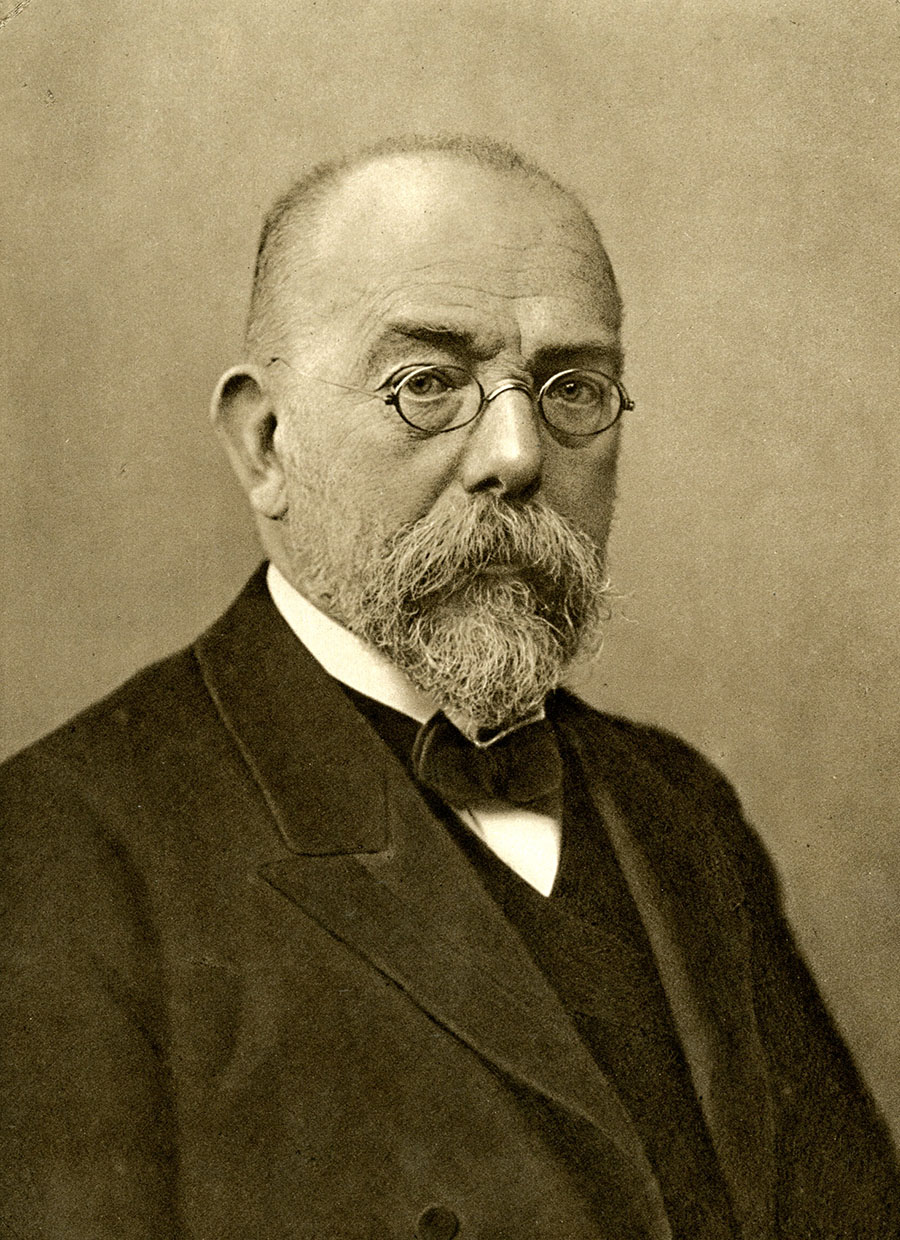
The Enduring Tech Legacy of Robert Koch
Robert Koch’s contributions transcend the simple identification of bacteria. He was an architect of scientific methodology, an inventor of crucial laboratory tools, and a pioneer of diagnostic technologies. He engineered a robust, reproducible system for understanding the microscopic world, a system that fundamentally shifted medicine from empirical observation to evidence-based science.
His innovations — from precise staining techniques to solid culture media, from the Petri dish to the intellectual framework of Koch’s Postulates — collectively represent a suite of interconnected technologies that empowered generations of scientists. These are not merely historical footnotes; they are the foundational operating system and hardware platform of modern microbiology and infectious disease research. Every time a specific pathogen is identified, a pure culture is grown, or a diagnostic test is performed, the echo of Robert Koch’s technological ingenuity resonates. His work illustrates that “Tech” is not solely about silicon chips and algorithms but about any innovation that extends human capability, solves complex problems, and engineers a better understanding of the world around us. In this light, Robert Koch was undoubtedly one of history’s most impactful technological innovators.
aViewFromTheCave is a participant in the Amazon Services LLC Associates Program, an affiliate advertising program designed to provide a means for sites to earn advertising fees by advertising and linking to Amazon.com. Amazon, the Amazon logo, AmazonSupply, and the AmazonSupply logo are trademarks of Amazon.com, Inc. or its affiliates. As an Amazon Associate we earn affiliate commissions from qualifying purchases.