
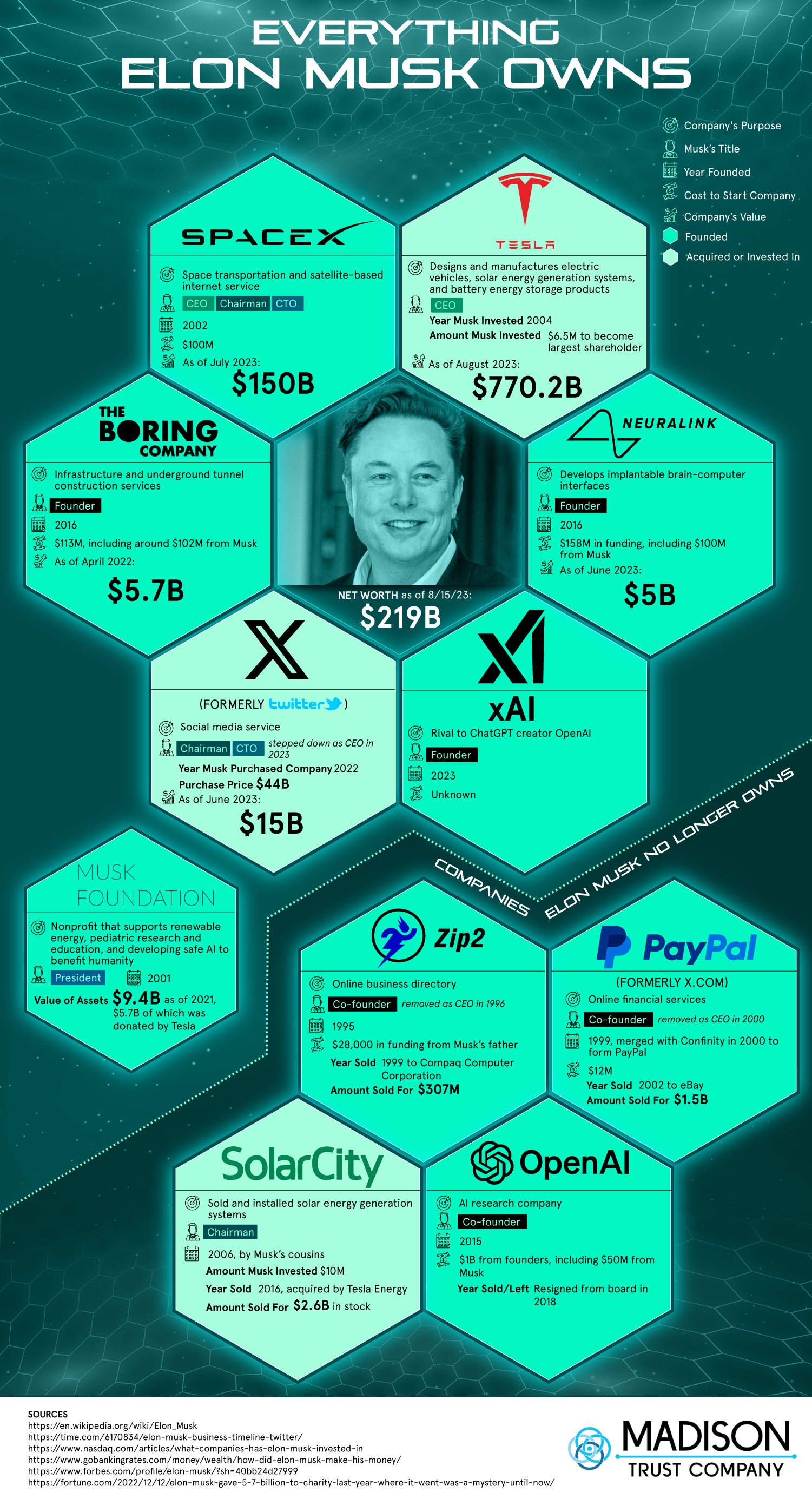
Elon Musk, a name synonymous with audacious vision and relentless execution, has fundamentally reshaped multiple industries through a portfolio of groundbreaking technological ventures. From electric vehicles to reusable rockets and ambitious neural interfaces, his companies have consistently pushed the boundaries of what’s possible, challenging conventional wisdom and accelerating humanity’s progress in critical areas. The question “what did Elon Musk make” extends far beyond mere products; it encompasses entire ecosystems of innovation, new engineering paradigms, and a future-forward philosophy that continues to inspire and provoke. At its core, Musk’s legacy in the technological sphere is defined by his commitment to solving humanity’s grand challenges through radical engineering and disruptive innovation.
Revolutionizing Transportation: Tesla and the Electric Vehicle Era
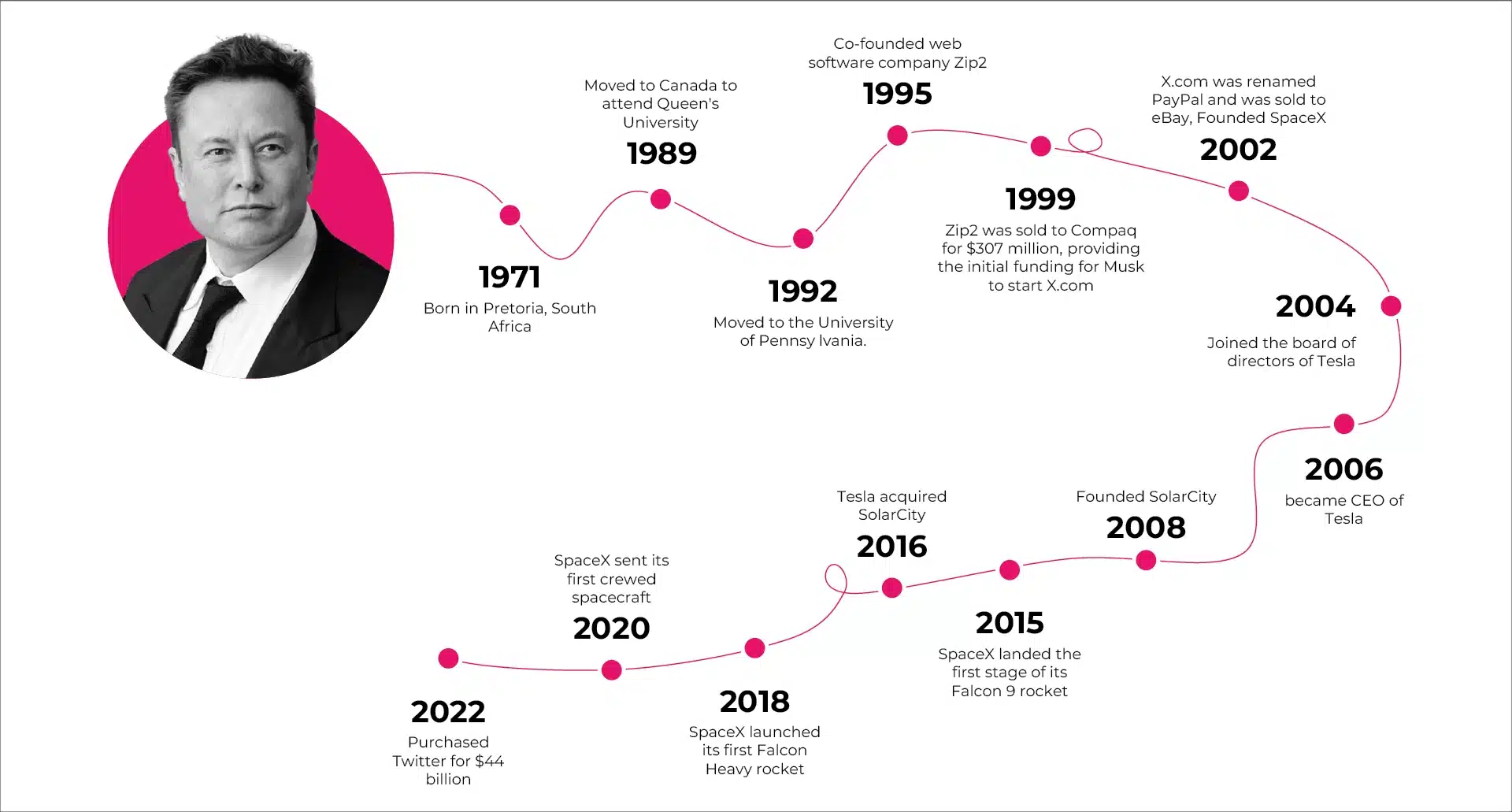
Perhaps Musk’s most widely recognized contribution to technology is his leadership at Tesla, Inc., a company that transformed the automotive industry from a slow-moving, combustion-engine dominated landscape into a dynamic frontier of electric mobility and advanced software. Tesla didn’t just make electric cars; it made electric cars desirable, high-performance, and technologically superior, forcing legacy automakers to accelerate their own EV initiatives.
Pioneering Electric Powertrains and Battery Technology
Tesla’s initial impact stemmed from its audacious bet on electric vehicles at a time when they were largely considered impractical, slow, and range-limited. Early models like the Roadster, followed by the Model S, demonstrated that EVs could outperform gasoline cars in acceleration, handling, and sophisticated user experience. Central to this achievement was Tesla’s relentless focus on battery technology. Unlike competitors who often adapted existing battery cells, Tesla invested heavily in optimizing cylindrical lithium-ion cells for automotive use, developing sophisticated battery management systems (BMS) that maximized range, longevity, and safety. The development of its own battery chemistry and eventual move towards vertically integrated battery production with projects like the 4680 cell initiative underscores a commitment to controlling the core technology that powers its vehicles. This vertical integration extends to electric motors, power electronics, and charging infrastructure, ensuring a cohesive and high-performance system. The Supercharger network, designed, built, and operated by Tesla, was a critical technological enabler, addressing range anxiety and demonstrating a holistic approach to EV adoption that no other automaker initially matched.
Autonomous Driving and the Future of Mobility
Beyond electrification, Tesla has been a frontrunner in developing autonomous driving technology. Through its Autopilot and Full Self-Driving (FSD) software suites, Tesla has continuously pushed the boundaries of vehicle autonomy, leveraging a vast fleet of production vehicles as data collectors. The company’s strategy relies heavily on a vision-only approach, utilizing an array of cameras around the car to perceive the environment, eschewing expensive lidar sensors common in many rival autonomous driving systems. This choice is a significant technological gamble, requiring highly advanced neural networks and artificial intelligence to process visual data and make driving decisions in real-time. The continuous over-the-air (OTA) software updates pioneered by Tesla mean that vehicles improve their capabilities and gain new features long after they leave the factory, transforming the car from a static piece of hardware into an evolving technological platform. This iterative development model, common in software, was revolutionary for the automotive industry and has set a new standard for vehicle capabilities and user experience.
The Gigafactory Ecosystem and Scalable Production
Musk recognized early that to make electric vehicles truly mainstream, production capacity needed to scale dramatically, and supply chains needed to be revolutionized. The concept of the “Gigafactory” was born out of this necessity – massive, vertically integrated factories designed to produce batteries, powertrains, and complete vehicles under one roof, often powered by renewable energy. These factories are not just manufacturing plants; they are technological marvels, employing advanced robotics, automation, and sophisticated data analytics to optimize every step of the production process. The Gigafactories in Nevada, Texas, Berlin, and Shanghai represent a new paradigm in manufacturing, aiming for unprecedented levels of efficiency, cost reduction, and environmental sustainability, all critical components in accelerating the world’s transition to sustainable energy.
Conquering Space: SpaceX and the Reusable Rocket Paradigm
Where Tesla revolutionized terrestrial transport, SpaceX has single-handedly transformed the space industry, an arena long dominated by government agencies and established aerospace contractors. Musk founded SpaceX with the ambitious goal of making humanity a multi-planetary species, starting with drastically reducing the cost of space travel.
Lowering Launch Costs with Reusability
The cornerstone of SpaceX’s technological breakthrough is its pioneering work in reusable rocket technology. For decades, rockets were treated as expendable vehicles, with expensive components discarded after each launch. Musk challenged this fundamental assumption, investing heavily in developing rockets capable of vertical take-off and vertical landing (VTVL). The Falcon 9, particularly its Block 5 variant, perfected the art of first-stage booster recovery, landing them precisely on autonomous drone ships or land-based pads. This technological feat, initially met with skepticism, has now become routine, drastically cutting launch costs and enabling a higher frequency of missions. The Starship/Super Heavy system, currently under development, represents the next evolutionary leap, designed to be fully and rapidly reusable, capable of transporting massive payloads and hundreds of people to Earth orbit, the Moon, and eventually Mars, at a fraction of historical costs.
Starlink: Global Satellite Internet Constellation
Beyond traditional rocket launches, SpaceX has deployed Starlink, an ambitious satellite internet constellation designed to provide high-speed, low-latency broadband internet access globally, particularly to underserved rural areas. This involves launching thousands of small, mass-produced satellites into low Earth orbit (LEO). The technological challenges are immense: developing compact, powerful satellites capable of communicating with ground terminals, managing a complex orbital mesh network to avoid collisions, and ensuring high bandwidth and reliability. Starlink represents a significant shift in satellite internet technology, moving away from a few large, geostationary satellites to a vast, interconnected network of smaller, smarter spacecraft, leveraging advanced phased-array antenna technology both in space and on the ground.
The Mars Mission and Interplanetary Travel
At the heart of SpaceX’s long-term vision is the audacious goal of enabling human exploration and colonization of Mars. This isn’t just a dream; it’s an engineering roadmap. Every technological development at SpaceX, from reusable Falcon 9 boosters to Starship, is designed with this ultimate objective in mind. The Starship system, with its immense payload capacity and in-orbit refueling capabilities, is engineered to transport humans and cargo to Mars, enable the establishment of a self-sustaining Martian colony, and eventually return. This requires breakthroughs in life support systems, radiation shielding, propulsion efficiency for deep-space travel, and the ability to manufacture resources on other planets – a truly multi-faceted technological endeavor aimed at securing humanity’s long-term survival.
Beyond Earth and Road: Diverse Technological Ventures
Musk’s technological footprint extends beyond just cars and rockets, encompassing a diverse array of companies aiming to tackle other fundamental challenges.
Neuralink: Merging Brain and Machine
Neuralink represents one of Musk’s most futuristic and potentially transformative ventures: developing ultra-high bandwidth brain-machine interfaces (BMIs). The core technology involves implanting tiny threads, containing thousands of electrodes, into the brain to read and stimulate neural activity. The immediate goal is therapeutic – to help individuals with severe neurological conditions regain functions like communication and mobility. However, the long-term vision is to create a symbiotic relationship between humans and artificial intelligence, enhancing human capabilities and potentially preventing humanity from being left behind by superintelligent AI. This involves groundbreaking work in miniaturized electronics, biocompatible materials, robotic surgery for precision implantation, and sophisticated algorithms for decoding and encoding neural signals.
The Boring Company: Rethinking Urban Transit
Addressing urban congestion, The Boring Company aims to revolutionize inner-city transportation through a network of underground tunnels. The core technological innovation here is significantly reducing the cost and speed of tunneling. Traditional tunneling is slow and expensive. The Boring Company is developing next-generation tunnel boring machines (TBMs) that are faster, smaller, and more automated, capable of simultaneous excavation and tunnel reinforcement. The proposed “Loop” system envisions electric autonomous vehicles (or specialized shuttles) transporting passengers through these tunnels at high speeds, offering an alternative to surface-level traffic. It’s a pragmatic application of advanced engineering to a seemingly mundane problem, with profound implications for urban planning and mobility.
SolarCity (now Tesla Energy): Sustainable Power Solutions
While often less highlighted than Tesla cars or SpaceX rockets, SolarCity, acquired by Tesla and rebranded as Tesla Energy, was Musk’s early foray into sustainable energy production. The company aimed to accelerate the world’s transition to a sustainable energy economy by making solar power more accessible and integrated. Technologically, this involved developing efficient solar panels, integrated solar roofs (where the solar cells are part of the roof tiles themselves), and powerful energy storage solutions like the Powerwall and Powerpack. These battery systems allow homes and businesses to store solar energy, making renewable energy more reliable and dispatchable, thereby reducing reliance on fossil fuels and strengthening grid resilience. Tesla Energy represents the critical “generation and storage” leg of Musk’s broader sustainable energy vision, complementing the “consumption” aspect embodied by Tesla vehicles.
Musk’s Approach to Innovation: A Technological Visionary’s Blueprint
Elon Musk’s prolific creation of disruptive technologies is not accidental; it stems from a distinctive and often radical approach to problem-solving and innovation.
First Principles Thinking and Rapid Iteration
A hallmark of Musk’s methodology is “first principles thinking.” Instead of reasoning by analogy (“what has worked before?”), he breaks down problems to their fundamental truths, questioning every assumption, and then rebuilding solutions from the ground up. This approach led to the radical ideas of reusable rockets and mass-market electric vehicles when conventional wisdom deemed them impractical or impossible. Coupled with this is an intense focus on rapid iteration and aggressive prototyping. SpaceX’s frequent Starship test flights, often ending in explosions, are a testament to a “fail fast, learn faster” philosophy, where real-world data and immediate feedback drive continuous technological improvement at an unprecedented pace for complex hardware.
Vertical Integration and Supply Chain Mastery
Another key aspect of Musk’s technological strategy is a strong preference for vertical integration. Rather than relying heavily on external suppliers for critical components, his companies often design and manufacture key technologies in-house. This gives them greater control over quality, intellectual property, costs, and the pace of innovation. From Tesla’s battery cells and autonomous driving chips to SpaceX’s rocket engines and Starlink satellites, this deep involvement in the entire product stack allows for seamless integration and optimization of complex systems, ultimately leading to superior technological performance and faster development cycles.
Balancing Ambition with Engineering Reality
While often portrayed as a dreamer, Musk is fundamentally an engineer. His visions, however grand, are always underpinned by a deep understanding of physics, materials science, and systems engineering. He demands that his teams push the boundaries of current engineering reality but within the constraints of what is physically and economically feasible. This balance between ambitious goals and rigorous technical execution is crucial. He sets seemingly impossible deadlines and targets, which often get missed, but the constant striving for those targets forces technological advancements that would otherwise be considered unachievable. This relentless pursuit of the technically improbable is what defines the profound technological “things” Elon Musk has made, and continues to make, for the world.
aViewFromTheCave is a participant in the Amazon Services LLC Associates Program, an affiliate advertising program designed to provide a means for sites to earn advertising fees by advertising and linking to Amazon.com. Amazon, the Amazon logo, AmazonSupply, and the AmazonSupply logo are trademarks of Amazon.com, Inc. or its affiliates. As an Amazon Associate we earn affiliate commissions from qualifying purchases.