
For centuries, the question of what Earth looked like in the distant past was the exclusive domain of geologists and paleontologists who pieced together physical evidence from rock strata and fossil records. Today, however, the answer to “what did Earth look like” is being rewritten by the technology sector. Through high-performance computing, generative artificial intelligence, and sophisticated geospatial software, we are no longer limited to static drawings or imagination. We are now entering an era of high-fidelity digital reconstruction that allows us to visualize our planet’s evolution with unprecedented accuracy.
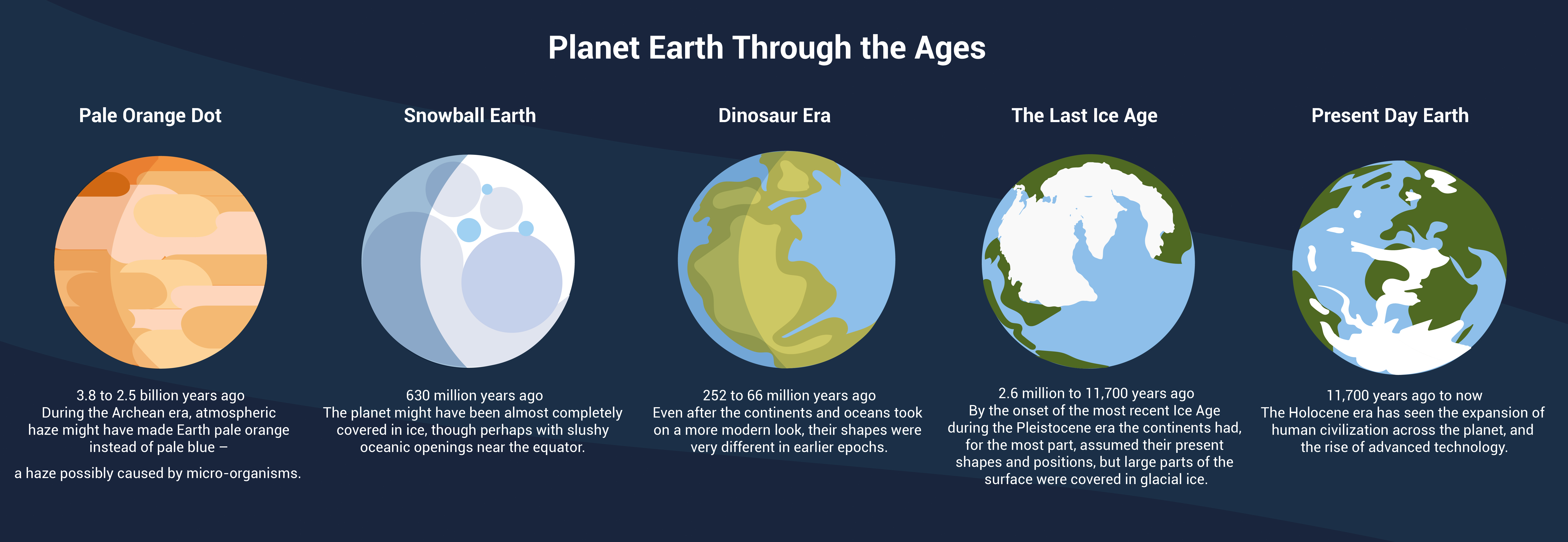
In this deep dive, we explore the tech stack behind planetary visualization, from the tectonic modeling software used by researchers to the AI-driven rendering engines that bring prehistoric landscapes to life.
1. The Digital Time Machine: Paleogeographic Software and Tectonic Modeling
The foundation of any visual reconstruction of the Earth begins with tectonic movement. Understanding where the continents were positioned millions of years ago is a massive data challenge that requires specialized software.
GPlates and the Mechanics of Continental Drift
At the forefront of this tech niche is GPlates, an open-source desktop software for the interactive visualization of plate tectonics. Unlike traditional mapping tools, GPlates allows users to manipulate plate-tectonic reconstructions and raster data through geological time.
For tech enthusiasts, GPlates is a marvel of data integration. It uses a “total reconstruction pole” system to calculate the motion of plates relative to one another. By inputting paleomagnetic data and seafloor spreading records, the software can render the assembly and breakup of supercontinents like Pangea or Rodinia. This isn’t just a visual exercise; the software provides the skeletal structure upon which all other environmental data—such as ocean currents and climate zones—is layered.
Integrating GIS for Topographical Accuracy
Geographic Information Systems (GIS) play a crucial role in refining what the surface of the “old” Earth actually looked like. By using tools like ArcGIS or QGIS, researchers can overlay geological surveys onto tectonic models. This allows for the digital carving of ancient mountain ranges and the mapping of long-vanished inland seas. The integration of high-resolution digital elevation models (DEMs) into these time-shifted maps is what transforms a flat map into a 3D landscape that mimics the physical reality of the era.
2. AI and Machine Learning: Filling the Gaps in Earth’s History
While tectonic software tells us where the land was, it doesn’t necessarily tell us what it looked like in terms of color, vegetation, or atmospheric clarity. This is where Artificial Intelligence (AI) and Machine Learning (ML) are currently disrupting the field.
Neural Networks and Climate Pattern Simulation
One of the most difficult aspects of visualizing the ancient Earth is predicting weather patterns and biome distribution. Modern tech firms are now using Neural Networks to run complex climate simulations. By feeding an AI model the atmospheric CO2 levels, solar luminosity, and continental positions of a specific period (such as the Cretaceous), the model can predict rainfall patterns and temperature gradients.
These AI-driven simulations inform the “visual skin” of the planet. If the model predicts a high-moisture tropical zone in what is now the Sahara, the visualization software knows to render dense ferns and rainforests rather than sand dunes. This data-driven approach removes much of the artistic guesswork that previously plagued historical reconstructions.
Generative AI and High-Resolution Paleo-Rendering
We are seeing a surge in the use of Generative Adversarial Networks (GANs) to create photorealistic textures for ancient Earth models. By training AI on millions of satellite images of modern-day diverse ecosystems—ranging from the Amazonian basins to the Arctic tundras—the AI can “hallucinate” high-resolution textures onto low-poly geological models.
When a researcher identifies a region as a “semi-arid volcanic plateau” from 250 million years ago, Generative AI can populate that area with realistic basalt flows, ash-covered flora, and atmospheric haze that matches the chemical composition of the time. This results in a “visual” that feels less like a CGI movie and more like a 4K drone shot from the past.

3. Remote Sensing and LiDAR: Uncovering the Earth’s Hidden Layers
To know what Earth looked like, we often have to look through what it looks like now. Technology in remote sensing has advanced to the point where we can “strip away” modern layers to see the historical structures beneath.
LiDAR: Piercing the Veil of Time
LiDAR (Light Detection and Ranging) has revolutionized our understanding of Earth’s recent geological and anthropological past. By firing millions of laser pulses from aircraft or satellites, LiDAR can map the ground surface with centimeter-level precision, ignoring the dense canopy of forests or jungles.
This tech has been instrumental in showing us what the Earth looked like during the rise of civilizations. In the Amazon and Central America, LiDAR has revealed massive, terraformed landscapes, irrigation systems, and urban sprawls that were previously invisible. For those interested in the “Tech” of visualization, LiDAR represents the bridge between raw data and visual storytelling, providing the “wireframe” of the planet’s modified surface.
Hyperspectral Imaging and Surface Composition
Satellites equipped with hyperspectral sensors go beyond the visible light spectrum to identify the chemical composition of the Earth’s surface. By analyzing how different minerals reflect light, tech platforms can create maps of mineral deposits and soil types. When applied to exposed ancient rock layers (stratigraphy), this technology allows digital artists and scientists to color-grade ancient landscapes with extreme accuracy. If a specific region was rich in iron-oxide during the Permian, the digital reconstruction will reflect those deep ochre and red hues based on spectral data rather than aesthetic choice.
4. Virtual Reality and the “Digital Twin” of the Planet
The final stage of visualizing “what Earth looked like” is the delivery mechanism. We are moving away from 2D screens and toward immersive environments that allow users to walk through time.
The Role of Digital Twins in Geospatial Visualization
In the tech world, a “Digital Twin” is a virtual representation of an object or system that updates from real-time data. Developers are now applying this concept to the entire planet. Using engines like Unreal Engine 5 and NVIDIA Omniverse, tech teams are building digital twins of Earth at various stages of its history.
These platforms utilize “Nanite” geometry and “Lumen” lighting to create environments where every leaf, rock, and drop of water reacts to light exactly as it would in the real world. This allows a user to put on a VR headset and experience the “look” of the Earth during the Devonian period, complete with accurate atmospheric scattering and water refraction.
Immersive Educational Apps and Tutorials
The accessibility of this tech is also expanding. Apps like Google Earth VR have set the stage, but newer, niche startups are focusing on “Deep Time” browsers. These apps use WebGL and cloud computing to stream massive geological datasets to consumer-grade hardware.
For developers interested in this niche, the challenge lies in Optimization. Rendering an entire planet’s worth of data requires sophisticated Level of Detail (LOD) algorithms and “foveated rendering” in VR to ensure that the user sees a seamless, high-fidelity world without crashing their hardware. These tutorials and dev-logs are becoming a staple in the tech community, showcasing how to handle planetary-scale assets in real-time engines.

The Future of Earth Visualization: Real-Time Procedural History
As we look forward, the tech used to answer “what did Earth look like” will become even more automated. We are approaching a point where Procedural Generation—the same technology used to create infinite universes in games like No Man’s Sky—will be applied to Earth’s history.
Imagine a software interface where a user can slide a “time bar” from 4 billion years ago to the present day. As the slider moves, the software procedurally generates the plate movements, the climate shifts, the evolution of flora, and the changing colors of the sky in real-time. This isn’t just a visual tool; it is a synthesis of every piece of tech we have developed: AI, GIS, Tectonic Modeling, and High-End Rendering.
The question of what Earth looked like is no longer a mystery to be solved by artists with paintbrushes. It is a digital puzzle being solved by developers with code, GPUs, and vast arrays of geological data. We are finally building a mirror that reflects not just who we are today, but every version of the home we’ve inhabited for eons. Through this tech, the past is no longer a foreign country; it is a high-definition destination.
aViewFromTheCave is a participant in the Amazon Services LLC Associates Program, an affiliate advertising program designed to provide a means for sites to earn advertising fees by advertising and linking to Amazon.com. Amazon, the Amazon logo, AmazonSupply, and the AmazonSupply logo are trademarks of Amazon.com, Inc. or its affiliates. As an Amazon Associate we earn affiliate commissions from qualifying purchases.