
Darwin’s “Tech” Revolution: A Paradigm Shift in Biological Understanding
The name Charles Darwin is inextricably linked to the theory of evolution by natural selection, a concept that fundamentally reshaped our understanding of life on Earth. While his work predates the modern technological landscape, the impact of Darwin’s discoveries can be viewed through a distinctly “tech” lens. His rigorous methodology, the development of a unifying theoretical framework, and the subsequent explosion of scientific inquiry it fostered are akin to the technological advancements that drive innovation today. Darwin, in essence, developed a powerful new “operating system” for biology, one that allowed for the prediction, classification, and understanding of biological diversity in ways previously unimaginable.
The “Hardware” of Observation: Accumulating Empirical Data
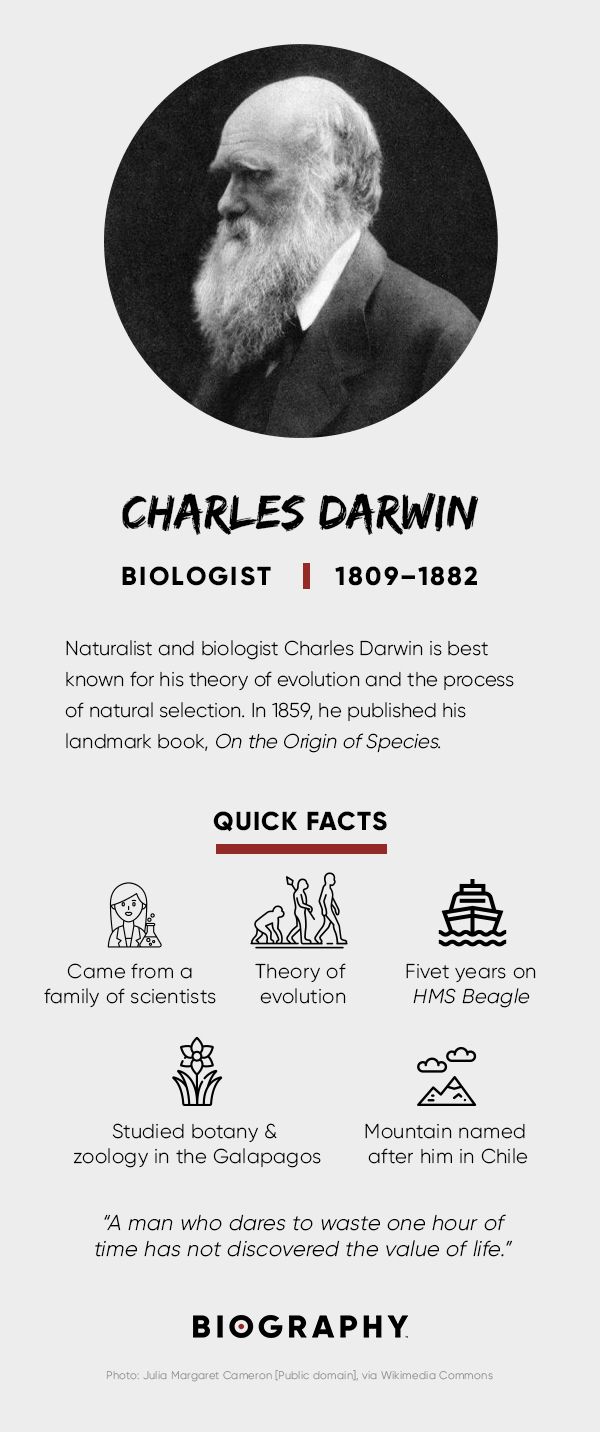
Darwin’s groundbreaking work, most notably published in “On the Origin of Species,” was built upon a foundation of meticulous and extensive observation. His five-year voyage on HMS Beagle (1831-1836) was a prolonged period of data collection, akin to a scientist in the digital age deploying vast sensor networks. He wasn’t merely collecting specimens; he was meticulously documenting their variations, their geographical distributions, and the geological formations of the regions he visited. This was the biological equivalent of gathering terabytes of raw data, identifying patterns, and seeking underlying algorithms that explained the observed phenomena.
The Beagle’s Voyage: A Mobile Data-Gathering Platform
The HMS Beagle itself served as a remarkably effective mobile platform for Darwin’s research. Its purpose was cartographic, but for Darwin, it was a vessel of discovery. He disembarked at numerous ports, undertaking extensive land expeditions. His notebooks, filled with detailed sketches and written observations, were the equivalent of sophisticated data logs. He meticulously recorded everything from the anatomical features of finches on the Galápagos Islands to the geological strata of South America. This systematic accumulation of empirical evidence was crucial, laying the groundwork for the grand theoretical edifice he would later construct. His approach highlighted the importance of robust data collection, a principle that remains central to all scientific and technological endeavors.
Comparative Anatomy and Fossil Records: Uncovering Evolutionary Algorithms
Darwin’s observations extended beyond living organisms. He studied fossil records, noting the presence of extinct creatures that bore resemblances to existing species. This comparative approach, analyzing the “code” embedded within the structures of different organisms and their ancient ancestors, allowed him to infer relationships and evolutionary pathways. This is analogous to reverse-engineering software or analyzing historical data logs to understand the evolution of a digital system. He recognized that variations within species were not random but were the raw material upon which environmental pressures acted.
The “Software” of Natural Selection: A Predictive Model for Life
Darwin’s genius lay not just in observation, but in synthesizing this vast amount of data into a coherent and predictive theoretical framework. Natural selection, the core mechanism he proposed, acts as a powerful algorithm that explains the diversity and adaptation of life. It’s a concept that, much like a sophisticated piece of software, provides a logical explanation for complex phenomena and allows for predictions about future outcomes.
The Struggle for Existence: Environmental Input and Filtering

Darwin observed that in nature, there is a constant “struggle for existence.” Resources are limited, and individuals within a population compete for survival and reproduction. This can be understood as an environmental input or a set of constraints that the biological system must operate within. Those organisms with traits that make them better suited to their environment are more likely to survive and pass on those advantageous traits to their offspring. This filtering process, driven by environmental pressures, is a key component of the natural selection algorithm.
Inheritance of Traits: The Genetic Code (Pre-DNA Discovery)
While Darwin did not understand the mechanisms of genetics (the discovery of DNA came much later), he correctly inferred that traits were heritable. He observed that offspring tend to resemble their parents, suggesting a form of “information transfer.” This is akin to understanding that a program’s functionality is passed down through code. The variations that arose within a population were then subjected to the selection pressures, and those variations that proved beneficial were more likely to be propagated, leading to gradual changes over generations. This is the essence of how evolutionary “updates” occur.
Adaptation and Speciation: Evolutionary Updates and Diversification
The cumulative effect of natural selection over vast periods leads to adaptation, where organisms become increasingly well-suited to their environments. This process can also lead to speciation, the formation of new species. This is analogous to how software can be updated and forked, leading to different versions optimized for different tasks or platforms. Darwin’s theory provided a mechanism for the branching tree of life, explaining the astonishing diversity of organisms we see today. His theory was a predictive model; it explained not only what had happened but also what was likely to happen under different environmental conditions.
The “Impact” and “Legacy” of Darwin’s Tech: A Continuous Iteration of Knowledge
Darwin’s work was not a static discovery; it was the launch of a continuous process of scientific exploration and refinement. Like the release of a groundbreaking piece of technology, it spurred further innovation and development across numerous fields. His theory provided a framework for new research, allowing scientists to ask more precise questions and develop new tools and methodologies to answer them.
The Rise of Evolutionary Biology: A New Field of “Software Development”
“On the Origin of Species” effectively launched the field of evolutionary biology as we know it. It provided a unifying narrative that connected disparate biological observations. This led to a surge in research across genetics, paleontology, developmental biology, and ecology. Each of these fields can be seen as developing specialized “modules” or “applications” that build upon Darwin’s foundational “operating system.” The development of molecular biology and genetics in the 20th century provided the precise mechanisms for the inheritance Darwin observed, akin to discovering the underlying code and hardware that makes a software program function.
Modern Evolutionary Synthesis: Debugging and Optimizing the Code
The 20th century saw the rise of the Modern Evolutionary Synthesis, which integrated Darwin’s ideas with Mendelian genetics. This was a crucial “debugging” and “optimization” phase for evolutionary theory, solidifying its predictive power and explanatory scope. Scientists were able to identify specific genes responsible for heritable traits and understand how mutations (errors in the “code”) could introduce new variations that natural selection could act upon. This synthesis provided a more robust and detailed understanding of the evolutionary process.

Bioinformatics and Computational Biology: The “AI” of Modern Evolutionary Study
Today, Darwin’s legacy is profoundly evident in the fields of bioinformatics and computational biology. These disciplines use advanced computational tools and algorithms to analyze vast biological datasets, build evolutionary models, and even simulate evolutionary processes. This is the cutting edge of biological “tech,” where Darwin’s fundamental principles are being explored and applied with unprecedented power. From sequencing entire genomes to predicting protein structures, the tools and methodologies of modern biology are direct descendants of the conceptual revolution initiated by Darwin. His work, though centuries old, continues to inspire the development of new ways to understand and interact with the biological world, proving that the most impactful “technologies” are often the ones that fundamentally change how we perceive reality.
aViewFromTheCave is a participant in the Amazon Services LLC Associates Program, an affiliate advertising program designed to provide a means for sites to earn advertising fees by advertising and linking to Amazon.com. Amazon, the Amazon logo, AmazonSupply, and the AmazonSupply logo are trademarks of Amazon.com, Inc. or its affiliates. As an Amazon Associate we earn affiliate commissions from qualifying purchases.