
When we ask the question, “What did Alexander Hamilton look like?” most of us immediately reach for our wallets. His face is perhaps one of the most widely circulated images in the history of global finance, immortalized on the United States ten-dollar bill. However, for the modern investor, student of personal finance, or business professional, Hamilton’s appearance is more than just a historical curiosity; it is a carefully constructed symbol of fiscal authority, institutional stability, and the very birth of the American capitalist system.
To understand what Alexander Hamilton looked like is to understand the visual branding of the U.S. Treasury and the psychological foundation of the American dollar. Hamilton was not just a politician; he was the first great financial engineer of the Western world. His image—sharp, focused, and intensely professional—was a deliberate tool used to instill confidence in a young nation’s volatile economy.
The Face of the Ten-Dollar Bill: Decoding a Financial Icon

The most prevalent answer to what Hamilton looked like comes from the 1805 portrait by John Trumbull. This painting serves as the primary source for the engraving on the $10 bill. In this depiction, Hamilton appears as a man of refined intelligence and unwavering resolve. But why does this specific image matter to the world of money?
The Trumbull Portrait and Financial Authority
The Trumbull portrait captures Hamilton in a way that suggests both movement and stability. His eyes are directed slightly off-camera, looking toward a future he was actively building. For investors, this image represents “forward-looking” strategy. In the late 18th century, Hamilton had to convince a skeptical public and a wary international community that the United States was a safe place to park capital. His physical “look”—groomed, wearing the high-collared fashion of the era, and maintaining a dignified posture—was essential in projecting an aura of creditworthiness.
Symbolism in Currency Design
On the modern ten-dollar bill, Hamilton is the only non-president (alongside Benjamin Franklin on the $100 bill) to grace a high-circulation note. His presence there is a testament to his role as the founder of the nation’s financial system. When we look at the engraving today, we see a man who represents the “Hamiltonian” view of economy: centralized banking, a strong federal credit system, and an industrial-focused marketplace. The sharp lines of his jaw and the intensity of his gaze serve as a visual metaphor for the rigorous fiscal discipline he advocated.
The “Hamilton Look”: Establishing the Aesthetic of Institutional Stability
Beyond the canvas and the currency, eyewitness accounts from the 1790s provide a more granular look at Hamilton’s physical presence. He was often described as being of small stature but possessing a “commanding” energy. In the world of business and finance, this is a classic study in personal branding. Hamilton knew that to manage the nation’s debt, he had to look like a man who was meticulously organized.
The Professionalism of the First Secretary of the Treasury
Hamilton was known for his “brisk” manner. He was rarely seen disheveled. In an era where the American economy was essentially a “start-up,” Hamilton was its first CEO. He favored clean lines and military-influenced tailoring, which reminded observers of his service as George Washington’s right-hand man. This “military-meets-merchant” aesthetic was vital. It suggested that the Treasury was run with the precision of an army, a trait that gave early bondholders the confidence they needed to invest in the newly formed federal government.
Physicality and Market Confidence
In the late 1700s, there were no digital dashboards to check the health of the economy. Instead, the “market” was often a reflection of the people leading it. Hamilton’s physical vitality—his quick stride and rapid speech—was often equated with the health of the U.S. economy. When Hamilton looked healthy and determined, the markets felt secure. This early form of “personality-driven” finance remains relevant today; we see it in how the markets react to the physical presence and tone of Federal Reserve Chairs or prominent CEOs during earnings calls.

The Visual Evolution of Credit and National Debt
To understand Hamilton’s look, one must also look at the “paper” he created. Hamilton was a master of the visual language of finance. He understood that for money to have value, it had to look valuable.
The Architecture of the First Bank of the United States
While not a portrait of the man himself, the architecture Hamilton inspired for the First Bank of the United States in Philadelphia reflected his personal aesthetic: Classical, sturdy, and imposing. Hamilton’s “look” was translated into marble and stone. He wanted the institutions of money to look like they had existed for a thousand years, even if they were only a few months old. This was a strategic move to mask the inherent risks of a new currency.
From Revolutionary to Banker
Early portraits of Hamilton as a young soldier show a man with a softer, almost poetic face. However, as he transitioned into the role of the architect of American finance, his “look” hardened. The stress of managing the national debt and the constant political battles with Thomas Jefferson took a physical toll, yet he maintained a public image of “fiscal stoicism.” For the modern side-hustler or entrepreneur, Hamilton’s evolution is a lesson in adapting one’s image to match the scale of their financial ambitions.
Why Hamilton’s Image Matters to Modern Investors
In the 21st century, Alexander Hamilton has undergone a cultural “rebranding” thanks to musical theater and digital media. However, his original “look” as the face of the $10 bill remains a cornerstone of how we perceive the value of the U.S. dollar.
The “Hamilton Effect” on Financial Literacy
Since the resurgence of Hamilton’s popularity, there has been a measurable increase in interest regarding his financial policies. His face has become a gateway for many young people to learn about the “Sinking Fund,” the “Report on Manufactures,” and the basics of central banking. When people ask what he looked like, they are often led down a rabbit hole of how he structured the American economy. This “visual hook” is a powerful tool in financial education.
Digital Currency and the Future of the Hamilton Face
As we move toward a more digital economy, with the rise of FinTech and cryptocurrencies, the physical “look” of Hamilton on paper money faces an uncertain future. Yet, even in a cashless society, the Hamiltonian “brand”—one of rigorous accounting and federal oversight—remains the standard. Whether his face appears on a cotton-fiber bill or a digital wallet icon, the “look” of Hamilton will always be synonymous with the integrity of the American financial system.
Conclusion: The Lasting Image of Wealth and Order
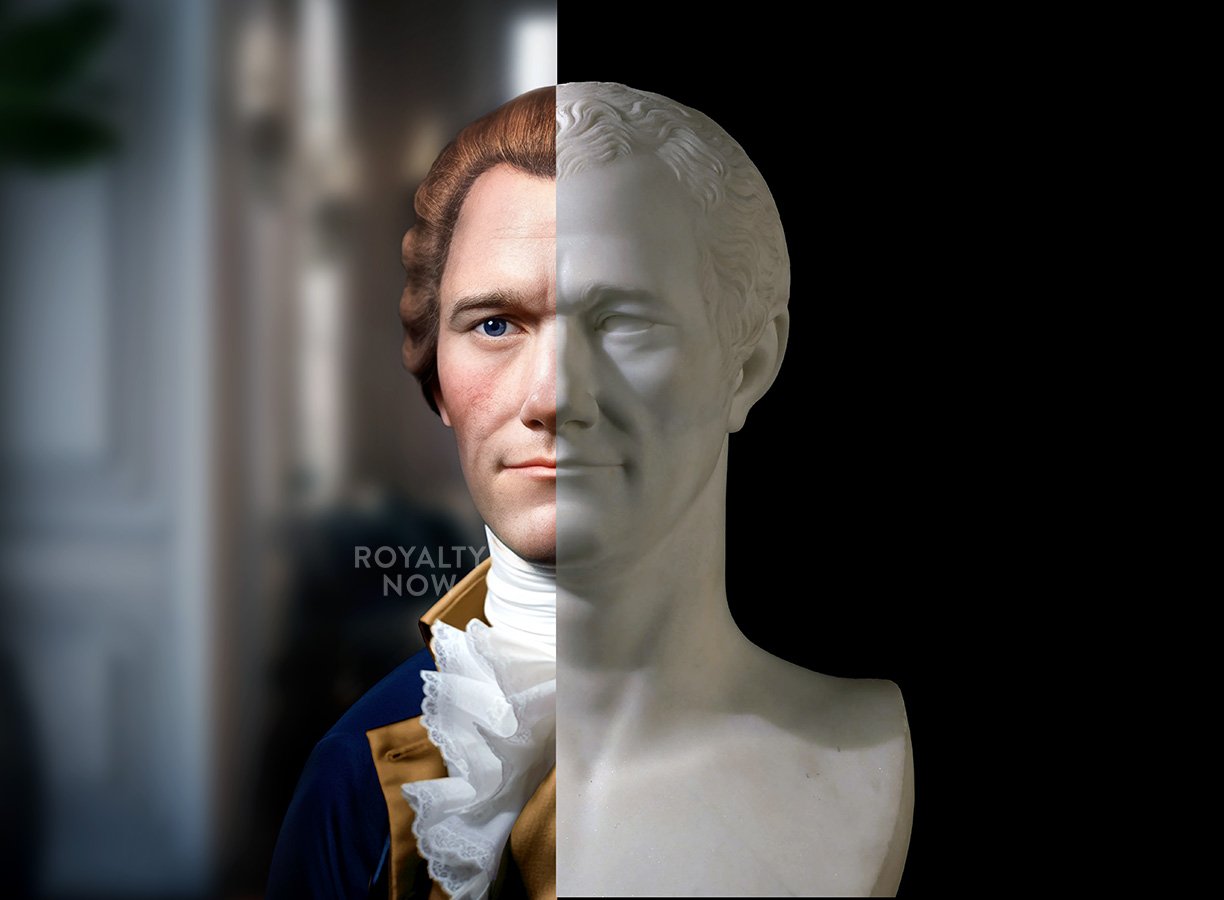
So, what did Alexander Hamilton look like? He was a man of medium height, fair skin, and reddish-brown hair, but more importantly, he looked like stability. He looked like the definitive answer to a bankrupt nation’s prayers. He looked like the inventor of the modern American financial professional.
By maintaining a meticulous public image and ensuring his portrait projected intelligence and authority, Hamilton successfully branded the United States as a global financial power before it had even paid off its first debts. For anyone today looking to build a brand, manage a portfolio, or understand the psychology of money, Alexander Hamilton’s face remains the ultimate case study. He didn’t just look like a Founding Father; he looked like the very concept of “Capital” itself. His image reminds us that in the world of money, perception is often as valuable as the gold in the vault.
aViewFromTheCave is a participant in the Amazon Services LLC Associates Program, an affiliate advertising program designed to provide a means for sites to earn advertising fees by advertising and linking to Amazon.com. Amazon, the Amazon logo, AmazonSupply, and the AmazonSupply logo are trademarks of Amazon.com, Inc. or its affiliates. As an Amazon Associate we earn affiliate commissions from qualifying purchases.