
In the realm of modern technology, the periodic table is no longer just a wall chart in a science classroom; it is a master directory for material science, semiconductor engineering, and quantum computing. When we ask what determines the chemical properties of an element, we are essentially asking for the source code of the physical world. For developers, engineers, and tech innovators, understanding these properties is the first step in building faster processors, more efficient batteries, and advanced superconductors.
The chemical behavior of an element—how it bonds, its reactivity, and its conductivity—is dictated by its atomic structure, specifically the arrangement of its electrons. Today, cutting-edge technology allows us to simulate, manipulate, and predict these properties with unprecedented precision.
The Electronic Architecture: Software for the Physical World
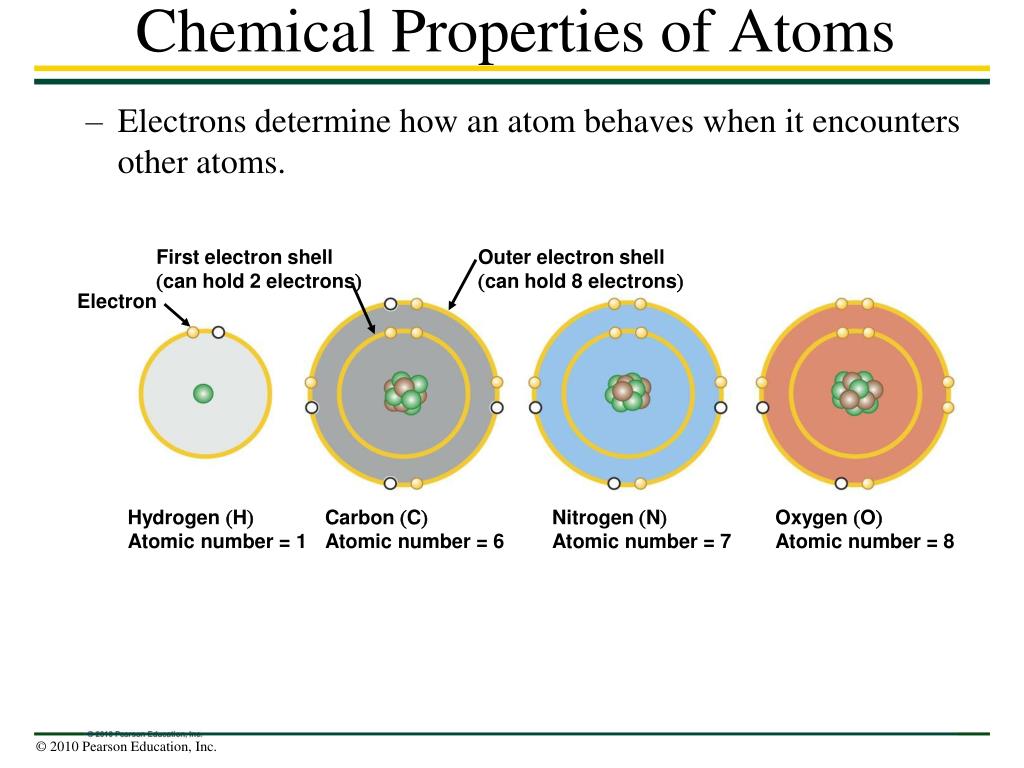
At the most fundamental level, the chemical properties of an element are determined by its electronic configuration. In the tech world, we can view these electrons as the “binary code” that tells an atom how to interact with its environment.
The Role of Valence Electrons
The outermost shell of an atom, known as the valence shell, is the primary driver of chemical reactivity. Technology relies heavily on this specific property. For instance, the reason silicon is the backbone of the “Silicon Valley” tech revolution is due to its four valence electrons. This specific configuration allows silicon to form stable covalent bonds with four other atoms, creating a crystalline lattice that can be precisely “doped” to control electrical conductivity.
From a software simulation perspective, valence electrons are the variables that determine the “output” of a chemical reaction. When tech companies develop new polymers for hardware casings or electrolytes for lithium-ion batteries, they use computational chemistry to model how these valence electrons will behave under stress, heat, or electrical load.
Electronegativity and Atomic Radius
Beyond the count of electrons, two other factors play a critical role: electronegativity (the tendency of an atom to attract electrons) and atomic radius. In the production of high-end displays, such as OLEDs, the technological challenge is to find elements with specific electronegativity values that allow for efficient electron transport. Tech-driven research into the “lanthanide contraction”—a phenomenon involving the atomic radius of rare-earth elements—has been vital in shrinking the size of high-performance magnets used in hard drives and electric vehicle motors.
AI and Machine Learning: Predicting Chemical Properties
Historically, identifying the properties of an element required physical experimentation. However, the integration of Artificial Intelligence (AI) and Machine Learning (ML) has shifted this paradigm. We are now in an era where “In Silico” discovery determines the chemical utility of elements before they are ever touched in a lab.
Generative Design in Materials Science
AI models are now being trained on vast datasets of known chemical interactions. By understanding the underlying physics of what determines chemical properties—proton count, electron affinity, and ionization energy—these models can predict the properties of theoretical alloys. This “Generative Design” is used in aerospace technology to create elements that are lighter than aluminum but stronger than titanium.
The tech industry uses deep learning architectures, such as Graph Neural Networks (GNNs), to represent molecules as mathematical graphs. By doing so, AI can predict the toxicity, stability, and thermal conductivity of a substance based solely on its elemental composition. This drastically accelerates the R&D cycle for new hardware components.
High-Throughput Screening (HTS)
High-throughput screening is a technological process that uses robotics and data processing to conduct thousands of chemical tests simultaneously. By leveraging cloud computing to analyze the results, researchers can identify which elements provide the best “chemical signature” for specific tech applications, such as the catalysts needed for hydrogen fuel cells. This intersection of data science and chemistry is what allows us to push the boundaries of Moore’s Law.
Quantum Computing: Simulating the Unsimulatable
While classical computers are excellent at many things, they struggle to perfectly simulate the behavior of atoms. This is because chemical properties are governed by quantum mechanics. To truly understand and utilize what determines these properties, the tech industry is turning to quantum computing.

Overcoming the “Exact Solution” Barrier
In classical computing, calculating the exact energy state of a complex molecule is exponentially difficult. However, quantum computers use qubits, which can exist in multiple states simultaneously, mirroring the behavior of electrons themselves. Companies like IBM, Google, and Honeywell are developing quantum algorithms specifically designed to simulate molecular bonding.
By solving the Schrödinger equation for larger systems, quantum tech will allow us to determine the chemical properties of elements with 100% accuracy. This has massive implications for “Green Tech,” specifically in discovering new catalysts for nitrogen fixation or carbon capture—processes that currently require massive amounts of energy because our current understanding of element properties is limited by classical simulation constraints.
The Future of Superconductors
One of the “holy grails” of technology is the room-temperature superconductor. The search for this material is entirely a quest to manipulate the chemical properties of elements to allow electrons to flow without resistance. Quantum simulation technology is currently the only pathway to understanding how the electron-phonon coupling in certain elements can be harnessed to achieve this, potentially revolutionizing power grids and high-speed transit.
Hardware Evolution: From Silicon to Gallium Nitride
The practical application of chemical properties is most visible in the evolution of hardware. As we reach the physical limits of silicon, the tech industry is looking toward other elements whose properties offer better performance for modern needs.
The Rise of Wide-Bandgap Semiconductors
For decades, silicon’s property of having a 1.1 eV bandgap was sufficient. However, as we move toward 5G technology and rapid-charging electric vehicles, we need elements that can handle higher voltages and temperatures. This has led to the rise of Gallium Nitride (GaN) and Silicon Carbide (SiC).
The chemical properties of Gallium and Nitrogen, when combined, create a “wide bandgap.” This allows electrons to jump between states more efficiently at higher frequencies. The tech industry has pivoted to these elements because their chemical properties allow for smaller, cooler-running power adapters and more powerful radio-frequency transmitters.
Rare Earth Elements in Modern Gadgets
The “Tech” in our pockets—smartphones—is a testament to the specific properties of the periodic table. The neodymium in your speakers, the terbium in your screen’s colors, and the lithium in your battery are chosen because of their unique electron configurations. The technological challenge of the next decade is not just finding these elements, but using “Tech” to find ways to recycle them or substitute them with more abundant elements that possess similar chemical properties.
Digital Security and the Chemical Identity
While it may seem disconnected, digital security and the chemical properties of elements are becoming increasingly intertwined through the concept of “Physical Unclonable Functions” (PUFs).
Chemical Fingerprinting for Hardware
Every microchip has microscopic variations based on the chemical properties of the materials used during the lithography process. Tech security firms are now using these atomic-level “imperfections”—determined by the chemical behavior of the dopants in the silicon—to create unique cryptographic keys. Because the exact arrangement of atoms is determined by the chaotic nature of chemical bonding, it is virtually impossible to clone, providing a new layer of hardware-based digital security.
Molecular Data Storage
As we run out of physical space for data centers, the tech industry is researching DNA and molecular data storage. This technology relies on the chemical properties of nucleotides (elements like Nitrogen, Carbon, and Phosphorus) to encode binary information. By leveraging the bonding properties of these elements, we can theoretically store all the world’s data in a few grams of biological material, a feat of engineering that requires a deep technological grasp of chemical synthesis.

Conclusion: The Convergence of Tech and Atoms
What determines the chemical properties of an element is a question of physics, but how we use those properties is the story of technology. From the valence electrons that enable our transistors to the AI models that predict the materials of the future, our digital world is built upon the atomic foundations of the physical world.
As we move forward, the line between “Tech” and “Chemistry” will continue to blur. We are no longer passive observers of the periodic table; we are its architects. Through computational power, quantum simulations, and advanced hardware engineering, we are rewriting the rules of what elements can do, turning the fundamental properties of matter into the building blocks of the next technological revolution.
aViewFromTheCave is a participant in the Amazon Services LLC Associates Program, an affiliate advertising program designed to provide a means for sites to earn advertising fees by advertising and linking to Amazon.com. Amazon, the Amazon logo, AmazonSupply, and the AmazonSupply logo are trademarks of Amazon.com, Inc. or its affiliates. As an Amazon Associate we earn affiliate commissions from qualifying purchases.