
The very essence of matter, from the smallest electronic gadget to the grandest marketing campaign, is built upon atoms. And at the heart of understanding any element lies its atomic mass – a value that dictates its behavior, its interactions, and ultimately, its utility. But what exactly is this fundamental property? While the term “atomic mass” might conjure images of complex scientific equations, its determination is rooted in the very building blocks of the universe: protons, neutrons, and electrons. This exploration will delve into the core principles that define atomic mass, drawing parallels to the foundational elements of technology, branding, and finance that shape our modern world.

The Atomic Nucleus: The Core of Mass
At the heart of every atom lies its nucleus, a dense and incredibly small region containing two types of subatomic particles: protons and neutrons. It is within this nucleus that the vast majority of an atom’s mass resides. Understanding the composition of the nucleus is the first crucial step in comprehending what determines atomic mass.
Protons: The Identity Carriers
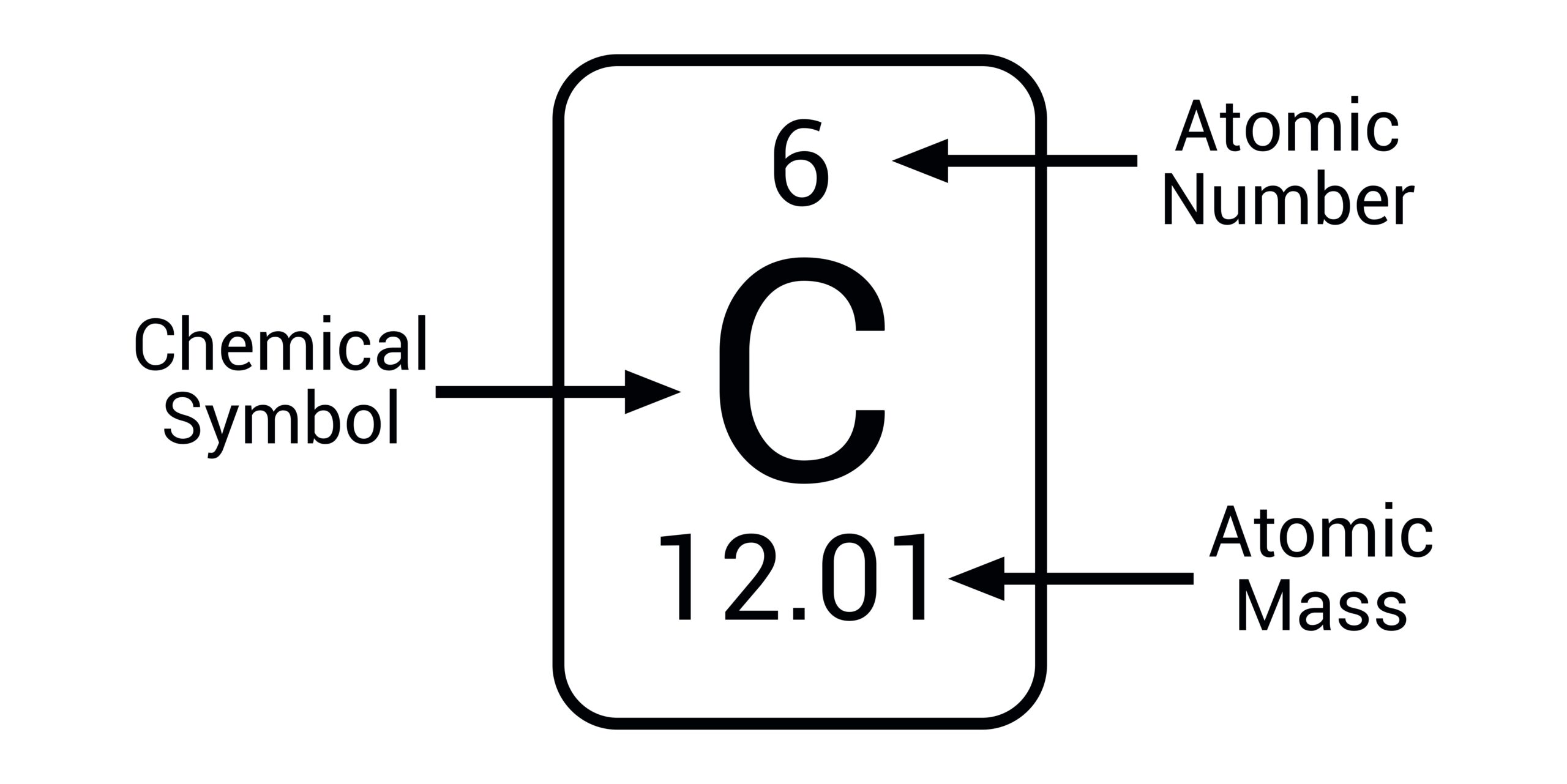
Protons are positively charged particles found within the atomic nucleus. Their defining characteristic is that the number of protons in an atom’s nucleus dictates which element it is. This is known as the atomic number. For instance, every atom with one proton is hydrogen, every atom with two protons is helium, and so on. This fundamental count is unchangeable for a given element and serves as its unique identifier, much like a brand’s core logo or its unmistakable name defines its identity in the marketplace. A company’s brand identity is its atomic number – it’s what fundamentally distinguishes it from all others.
Crucially, protons contribute significantly to an atom’s mass. Each proton has a mass of approximately one atomic mass unit (amu). Therefore, the more protons an atom has, the greater its inherent mass. This direct correlation between proton count and mass is a cornerstone principle.
Neutrons: The Mass Multipliers and Stability Keepers
Neutrons are electrically neutral particles also residing in the atomic nucleus. While they don’t possess a charge, they are heavyweights in the atomic realm, each contributing approximately one atomic mass unit (amu) to the atom’s total mass, very similar to protons. The number of neutrons in an atom’s nucleus is not fixed for a given element; atoms of the same element can have different numbers of neutrons. These variations are known as isotopes.
This concept of isotopes mirrors the idea of different product variations or service tiers within a brand. A company might offer a basic model of a gadget and a premium version with enhanced features. Both are fundamentally the same product (the element), but the added features (neutrons) increase its overall value and functionality (mass). Similarly, different isotopes of an element exhibit the same chemical properties because they have the same number of protons, but their slightly different masses can lead to subtle differences in physical properties, and crucially, in nuclear stability.
The combination of protons and neutrons in the nucleus is what defines the mass number of an atom. The mass number is simply the sum of the protons and neutrons. For example, a common isotope of carbon has 6 protons and 6 neutrons, giving it a mass number of 12. Another isotope, carbon-14, has 6 protons and 8 neutrons, resulting in a mass number of 14. This variation in neutron count directly impacts the atomic mass.
The Role of Electrons: A Mass of Nuance
Electrons are negatively charged particles that orbit the nucleus in specific energy levels or shells. While they are essential for an atom’s chemical behavior and interactions, their mass is significantly smaller than that of protons and neutrons. An electron’s mass is roughly 1/1836th of the mass of a proton.
In the context of determining an atom’s total mass, the contribution of electrons is often considered negligible. For most practical purposes, when we speak of atomic mass, we are primarily concerned with the mass of the protons and neutrons in the nucleus. However, in highly precise scientific measurements, the mass of electrons can be accounted for. This is akin to considering transaction fees in personal finance; while small individually, over time and in aggregate, they can influence the overall financial outcome. Similarly, while electrons contribute a tiny fraction, their presence is vital for understanding atomic stability and chemical bonding.
Atomic Mass vs. Atomic Weight: A Crucial Distinction
It’s important to differentiate between “atomic mass” and “atomic weight,” as these terms are often used interchangeably but have distinct meanings.
Atomic Mass: The Mass of a Single Atom

Atomic mass refers to the mass of a single atom of a specific isotope. It is typically expressed in atomic mass units (amu). For example, the atomic mass of a carbon-12 atom is precisely 12 amu by definition. This is a very specific value for a particular isotopic form.
Atomic Weight: The Weighted Average of Isotopes
Atomic weight, on the other hand, is the weighted average of the atomic masses of all the naturally occurring isotopes of an element. This average takes into account the relative abundance of each isotope. When you look at a periodic table, the number listed for each element is its atomic weight, not its atomic mass.
This concept is analogous to calculating the average profitability of a diversified investment portfolio. A portfolio might contain stocks with varying levels of risk and return. The overall portfolio’s “weight” or average return is determined by the performance of each individual stock and its proportion within the portfolio. Similarly, the atomic weight of an element is a weighted average based on how common each isotope is in nature.
For example, chlorine exists in nature as two main isotopes: chlorine-35 and chlorine-37. Chlorine-35 is more abundant (approximately 75.77%), while chlorine-37 is less abundant (approximately 24.23%). The atomic weight of chlorine is therefore a weighted average, closer to 35 than 37, which is why it’s listed as approximately 35.45 on the periodic table. This nuanced average is crucial for chemical calculations and understanding the behavior of elements in bulk.
The Significance of Atomic Mass in Technology, Branding, and Finance
The principles that govern atomic mass have surprisingly profound parallels to the foundational elements that drive innovation in technology, shape successful brands, and underpin sound financial practices.
Technology: The Building Blocks of Innovation
In the realm of technology, understanding fundamental properties is paramount. The atomic mass of elements directly influences their applications in various technological fields.
- Materials Science and Engineering: The atomic mass of elements dictates the density, strength, and conductivity of materials. For instance, the choice of elements in alloys for aircraft or in semiconductors for microprocessors is heavily influenced by their atomic masses and resulting material properties. Lightweight yet strong materials are crucial for energy efficiency, similar to how optimizing code for faster execution reduces power consumption in devices.
- Nuclear Technology: The mass number and nuclear stability, which are directly related to the number of protons and neutrons, are central to nuclear power generation and medical imaging. The precise atomic masses of isotopes are used in calculations for nuclear reactions.
- Electronics: The size and efficiency of electronic components are often limited by the atomic structure of the materials used. Advances in nanotechnology are, at their core, about manipulating matter at the atomic and molecular level, where atomic mass plays a critical role in determining the behavior of these ultra-small structures.
Branding: The Core Identity and its Evolution
While not a direct physical property, the concept of a “core” and its “variations” in atomic mass finds resonance in branding.
- Brand Identity as Atomic Number: A brand’s core identity – its mission, values, and fundamental promise – is akin to the atomic number. This is what defines the brand and differentiates it. A strong brand has a clear, unchanging core.
- Product Lines and Brand Extensions as Isotopes: A brand’s various product lines or service offerings can be seen as isotopes. They share the same core brand identity (atomic number) but differ in their features, pricing, or target audience (number of neutrons). A successful brand strategically develops these variations to cater to different market segments, much like isotopes can have different physical properties.
- Brand Equity as Weighted Average: The overall perception and value of a brand (brand equity) can be thought of as a weighted average, similar to atomic weight. It’s influenced by the success and reception of all its products and marketing efforts, with more prominent or successful ventures carrying more “weight” in shaping overall perception.
Finance: The Foundation of Value and Growth
In the world of finance, understanding the underlying components and their weighted averages is fundamental to making informed decisions.
- Asset Allocation as Isotope Abundance: In personal finance and investing, the “element” might be your investment portfolio. Different asset classes (stocks, bonds, real estate) can be viewed as isotopes. Their relative abundance in your portfolio (similar to isotope abundance) determines the overall risk and return profile. A balanced portfolio diversifies across these “isotopes” to achieve desired outcomes.
- Compound Interest and Growth: The principle of compound interest, where earnings generate further earnings, can be loosely related to how the mass of a nucleus grows with each added proton and neutron. Small additions, compounded over time, lead to significant growth.
- Valuation of Companies: The valuation of a company is not just based on its current profits but also on its underlying assets, its market position, and its future potential – a weighted average of various factors, not unlike the calculation of atomic weight. Understanding the core assets (protons) and their synergistic growth (neutrons) is crucial for determining true value.
Conclusion: The Universal Principle of Composition
From the subatomic particles that form the basis of all matter to the strategic decisions that drive technological advancement, brand success, and financial prosperity, the principle of composition and weighted averages is a universal constant. The atomic mass, determined by the number of protons and neutrons within an atom’s nucleus, is not just a scientific curiosity. It is a fundamental property that underpins our understanding of the physical world and offers insightful parallels to the complex systems we build and navigate in our modern lives. By understanding what determines atomic mass, we gain a deeper appreciation for the intricate workings of the universe and the foundational principles that govern our technological, brand, and financial endeavors.
aViewFromTheCave is a participant in the Amazon Services LLC Associates Program, an affiliate advertising program designed to provide a means for sites to earn advertising fees by advertising and linking to Amazon.com. Amazon, the Amazon logo, AmazonSupply, and the AmazonSupply logo are trademarks of Amazon.com, Inc. or its affiliates. As an Amazon Associate we earn affiliate commissions from qualifying purchases.