
Securing a mortgage is often the largest financial commitment an individual or family will make, and the interest rate attached to that loan can significantly impact its total cost over decades. Understanding “what determines mortgage rates” is not merely an academic exercise; it’s a critical component of savvy financial planning, homeownership, and even economic literacy. Mortgage rates are complex, influenced by a delicate interplay of global economic forces, central bank policies, financial market dynamics, and individual borrower characteristics. They are not static figures but rather a constantly shifting landscape reflecting underlying economic health, inflation expectations, and risk perceptions.
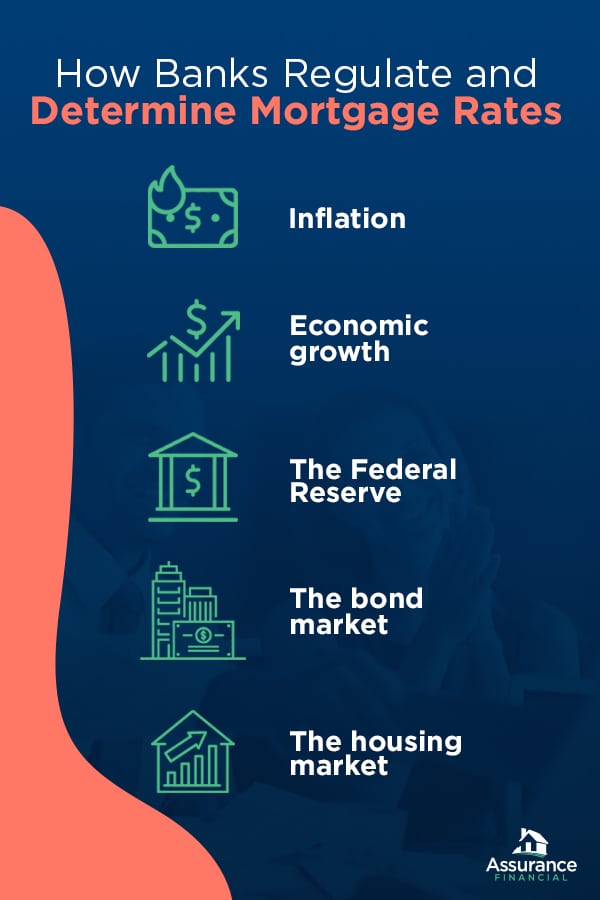
This article delves into the multifaceted factors that drive mortgage rates, offering a professional, insightful, and engaging exploration for anyone looking to navigate the housing market more effectively. From the overarching macroeconomic trends to the granular details of your personal financial profile, we will break down the key determinants, empowering you with the knowledge to make informed decisions about your most significant investment.
1. The Macroeconomic Landscape: Forces Beyond Your Control
Mortgage rates do not exist in a vacuum. They are deeply intertwined with broader economic conditions and the actions of powerful financial institutions. These forces often dictate the baseline from which individual lenders price their offerings, representing factors that borrowers largely cannot influence but must understand.
1.1. The Federal Reserve’s Influence: Monetary Policy and Interest Rates
Perhaps the most prominent driver of interest rates, including mortgage rates, is the U.S. Federal Reserve’s monetary policy. While the Fed does not directly set mortgage rates, its actions profoundly impact the cost of borrowing across the economy. The Federal Open Market Committee (FOMC) targets the federal funds rate, an overnight lending rate between banks. Changes to this rate signal the Fed’s stance on inflation and economic growth. When the Fed raises the federal funds rate, it generally makes borrowing more expensive for banks, which then passes those increased costs on to consumers in the form of higher interest rates on various loans, including mortgages. Conversely, a cut in the federal funds rate tends to lower borrowing costs.
Beyond the federal funds rate, the Fed also employs quantitative easing (QE) and quantitative tightening (QT). During QE, the Fed buys vast amounts of Treasury bonds and mortgage-backed securities (MBS) to inject liquidity into the financial system and suppress long-term rates. When it engages in QT, it allows its bond holdings to mature without reinvesting, effectively reducing liquidity and putting upward pressure on long-term rates. The market’s expectation of the Fed’s future actions often moves rates even before a formal announcement, highlighting the psychological aspect of market pricing.
1.2. Inflation Expectations: Erosion of Purchasing Power
Inflation is the rate at which the general level of prices for goods and services is rising, and subsequently, purchasing power is falling. Lenders factor inflation expectations heavily into mortgage rates. If lenders anticipate higher inflation in the future, they will demand higher interest rates today to compensate for the erosion of their future returns. Think of it this way: a dollar repaid in the future will be worth less if inflation is high, so lenders need a higher nominal interest rate to achieve the same real (inflation-adjusted) return. Historically, periods of high inflation have correlated with higher mortgage rates, as investors require greater compensation for lending money over long periods.
Conversely, if inflation expectations are low, lenders may be content with lower rates. The market closely watches economic indicators like the Consumer Price Index (CPI) and the Personal Consumption Expenditures (PCE) price index, along with inflation-indexed securities like Treasury Inflation-Protected Securities (TIPS), to gauge these expectations.
1.3. Economic Growth and Stability: Supply and Demand for Money
The overall health and trajectory of the economy play a significant role. A robust economy, characterized by strong job growth and rising consumer confidence, often leads to increased demand for housing and, consequently, increased demand for mortgages. This heightened demand can, to a certain extent, put upward pressure on rates. Moreover, in a strong economy, there might be more competing investment opportunities that offer attractive returns, making lenders demand higher rates for mortgages to stay competitive.
Conversely, during periods of economic slowdown or recession, demand for mortgages may wane, and interest rates might be lowered to stimulate borrowing and investment. Economic stability also reduces the perceived risk for lenders, potentially leading to more favorable rates. Geopolitical events, global economic crises, and domestic policy uncertainty can all contribute to economic instability, which often translates into volatile or rising rates as lenders price in greater risk.
1.4. The Bond Market: A Bellwether for Long-Term Rates
While the federal funds rate influences short-term rates, mortgage rates are more closely tied to the long-term bond market, particularly the yield on the 10-year Treasury note. This is because mortgages are long-term loans, typically spanning 15 or 30 years, and their pricing tends to correlate with other long-term investment vehicles. The 10-year Treasury yield is often seen as a benchmark for long-term borrowing costs.
When the yield on the 10-year Treasury rises, mortgage rates generally follow suit, albeit with some lag. This correlation exists because investors have a choice between investing in relatively safe Treasury bonds or mortgage-backed securities (MBS). If Treasury yields go up, MBS must offer a higher yield to attract investors, which means higher mortgage rates for borrowers. Factors like investor sentiment, supply and demand for bonds, and global capital flows all influence Treasury yields and, by extension, mortgage rates.
2. Lender-Specific Factors and Risk Assessment
While macroeconomic forces set the broad framework, individual lenders then apply their own risk assessments and business models to determine the specific rate offered to a borrower. This is where your personal financial profile becomes paramount.
2.1. Your Creditworthiness: The Foundation of Trust
Your credit score is arguably the most significant individual factor influencing your mortgage rate. Lenders use credit scores (like FICO scores) to assess your likelihood of repaying the loan. A higher credit score (typically above 740-760 for the best rates) indicates a lower risk borrower, translating into a lower interest rate. Conversely, a lower credit score signals higher risk, leading to higher rates to compensate the lender for that increased risk of default. Building and maintaining excellent credit through timely payments and responsible debt management is crucial long before applying for a mortgage.
2.2. Loan-to-Value (LTV) Ratio: Equity as a Risk Mitigator
The Loan-to-Value (LTV) ratio is the ratio of the loan amount to the appraised value of the property. For example, if you borrow $200,000 for a home appraised at $250,000, your LTV is 80% ($200,000 / $250,000). A lower LTV (meaning a larger down payment) generally results in a lower interest rate because the lender has more equity in the property as collateral. If a borrower defaults, a lower LTV means the lender is less likely to lose money if they have to foreclose and sell the property. Lenders typically offer the best rates to borrowers with LTVs of 80% or less. Higher LTVs often require private mortgage insurance (PMI) and can come with higher rates.
2.3. Debt-to-Income (DTI) Ratio: Your Capacity to Repay
Your Debt-to-Income (DTI) ratio is a key measure of your ability to manage monthly payments and repay debt. It’s calculated by dividing your total monthly debt payments (including the prospective mortgage payment) by your gross monthly income. Lenders assess both your front-end DTI (housing expenses only) and your back-end DTI (all monthly debt payments). A lower DTI ratio indicates less financial strain and a greater capacity to make mortgage payments, making you a less risky borrower and potentially qualifying you for better rates. Generally, a back-end DTI of 36% or lower is preferred for conventional loans, though some programs allow for higher ratios under specific circumstances.
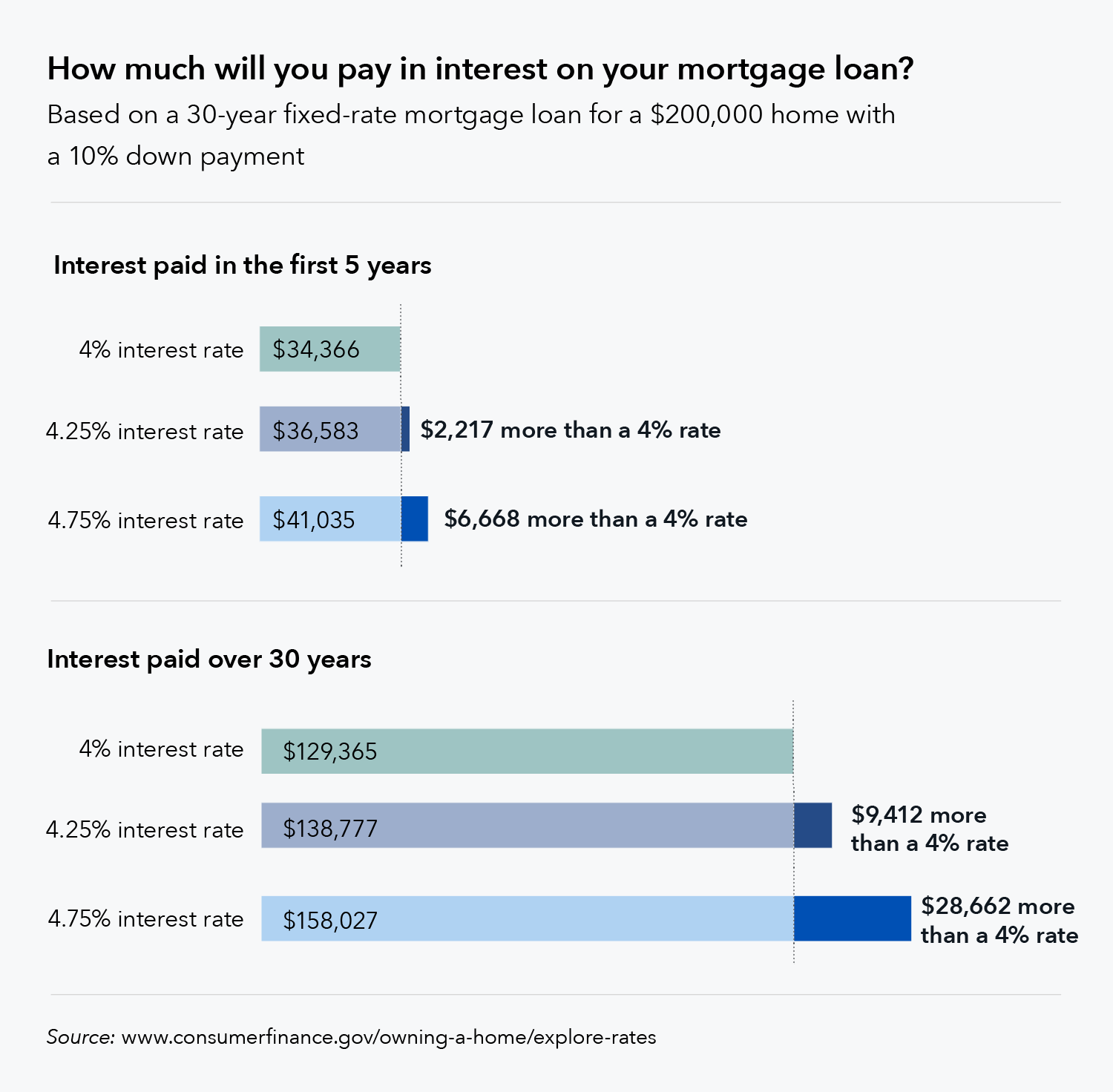
2.4. Loan Product Choice: Fixed vs. Adjustable, Points vs. No-Points
The type of mortgage product you choose also impacts the rate.
- Fixed-Rate Mortgages: These offer a consistent interest rate for the entire life of the loan. While they provide payment stability, their initial rates are often slightly higher than initial adjustable rates.
- Adjustable-Rate Mortgages (ARMs): These loans have an initial fixed-rate period (e.g., 5, 7, or 10 years), after which the rate adjusts periodically based on a predetermined index. ARMs typically start with lower interest rates than fixed-rate mortgages, making them attractive for borrowers planning to move or refinance before the adjustment period. However, they carry the risk of future payment increases.
- Points: Mortgage points, or discount points, are fees paid to the lender at closing in exchange for a lower interest rate. One point typically equals 1% of the loan amount. Paying points can reduce your interest rate over the life of the loan, but it increases your upfront closing costs. Borrowers must analyze the break-even point to determine if paying points is financially advantageous based on how long they plan to stay in the home.
3. Market Dynamics and Competition
Beyond individual financial profiles, the competitive landscape among lenders and the broader capital markets also influence the rates offered to consumers.
3.1. Supply and Demand for Mortgage-Backed Securities (MBS)
The vast majority of residential mortgages in the U.S. are pooled together and sold as mortgage-backed securities (MBS) to investors in the secondary market. These investors include pension funds, insurance companies, and even foreign governments. The demand for MBS directly impacts mortgage rates. High demand for MBS, perhaps due to their perceived safety or attractive yields compared to other investments, drives down the yields investors require, which translates to lower mortgage rates for borrowers. Conversely, low demand for MBS pushes yields higher, leading to increased mortgage rates. The efficient functioning of this secondary market is crucial for keeping mortgage funds available and affordable.
3.2. Lender Competition: The Drive for Market Share
The mortgage market is highly competitive. Numerous banks, credit unions, and independent mortgage brokers vie for borrowers’ business. This competition can sometimes lead lenders to offer slightly lower rates or waive certain fees to attract customers and gain market share, even when macroeconomic conditions might suggest higher rates. Borrowers who shop around and compare offers from multiple lenders are often able to secure better terms due to this competitive environment. The transparency provided by online mortgage rate aggregators has further intensified this competition.
3.3. Loan Origination Costs and Profit Margins
Lenders have operational costs associated with originating a mortgage, including underwriting, processing, and administrative expenses. They also need to maintain a profit margin to remain viable businesses. These costs and desired margins are baked into the interest rates and fees they charge. While competition helps temper these, a certain base level of charges is necessary for lenders to operate. Economic factors can also influence a lender’s cost of capital, which in turn affects the rates they can offer.
4. Understanding Rate Lock and Timing Your Move
Given the constant flux of mortgage rates, understanding how to lock in your rate and the importance of timing is crucial for borrowers.
4.1. The Volatility of Daily Rate Changes
Mortgage rates can change multiple times a day, influenced by new economic data releases, global events, and movements in the bond market. A positive jobs report, a shift in Federal Reserve commentary, or even an international crisis can cause rates to move up or down rapidly. This volatility means that the rate you see quoted one morning might be different by the afternoon, and significantly different by the next week.
4.2. Strategies for Locking in Your Rate
Once you’ve received a loan offer you’re satisfied with, a “rate lock” protects you from rate increases between the time you apply and the time you close on your loan. This lock guarantees your interest rate for a specific period, typically 30 to 60 days. Lenders usually offer various lock periods, with longer locks sometimes incurring a slightly higher rate or a small fee due to the increased risk for the lender. It’s generally advisable to lock your rate when you have a good sense of your closing timeline and are comfortable with the current market rate, especially during periods of expected rate increases.
5. Navigating the Mortgage Market: Tips for Borrowers
Armed with an understanding of what determines mortgage rates, borrowers can take proactive steps to position themselves for the most favorable terms.
5.1. Improve Your Financial Profile
Before even applying for a mortgage, focus on optimizing the factors within your control. This includes improving your credit score by paying bills on time and reducing outstanding debt, accumulating a substantial down payment to achieve a lower LTV, and managing your debt-to-income ratio by reducing other monthly obligations or increasing your income. These steps directly address the risk factors lenders evaluate and can significantly reduce your interest rate.
5.2. Shop Around for the Best Rates
Never settle for the first quote you receive. Compare offers from at least three to five different lenders – including large banks, local credit unions, and online mortgage brokers. Each lender has different pricing models, overhead costs, and risk appetites, which can lead to variations in rates and fees. Ensure you compare “apples to apples” by looking at the annual percentage rate (APR), which includes fees, not just the nominal interest rate.

5.3. Consider Different Loan Products
Evaluate whether a fixed-rate or adjustable-rate mortgage best suits your financial goals and risk tolerance. If you plan to stay in your home for many years, a fixed-rate mortgage offers stability. If you anticipate moving or refinancing within a few years, an ARM with a lower initial rate might be more appropriate. Discuss the pros and cons of each with your financial advisor or mortgage professional. Also, explore government-backed loans (FHA, VA, USDA) if you qualify, as they can sometimes offer more flexible terms or lower down payments.
In conclusion, mortgage rates are a dynamic reflection of economic health, monetary policy, market sentiment, and individual creditworthiness. By understanding these intricate relationships, borrowers can demystify the process, make more strategic financial decisions, and ultimately secure a mortgage that aligns with their long-term financial well-being. Keeping an eye on these determinants is not just about saving money; it’s about making a sound, informed investment in your future.
aViewFromTheCave is a participant in the Amazon Services LLC Associates Program, an affiliate advertising program designed to provide a means for sites to earn advertising fees by advertising and linking to Amazon.com. Amazon, the Amazon logo, AmazonSupply, and the AmazonSupply logo are trademarks of Amazon.com, Inc. or its affiliates. As an Amazon Associate we earn affiliate commissions from qualifying purchases.