
For active investors, financial professionals, and even casual observers of the global economy, understanding the operating schedule of stock markets is more than just a matter of convenience; it’s a critical component of informed decision-making and risk management. The rhythm of the stock market, characterized by its daily opening and closing bells, is occasionally interrupted by scheduled holidays and, less frequently, by unforeseen circumstances. These closures, whether anticipated or sudden, have significant implications for trading strategies, investment planning, and the broader financial ecosystem. Delving into the specific days the stock market is closed provides crucial insights into market mechanics, settlement processes, and the measures taken to maintain market integrity and investor confidence.
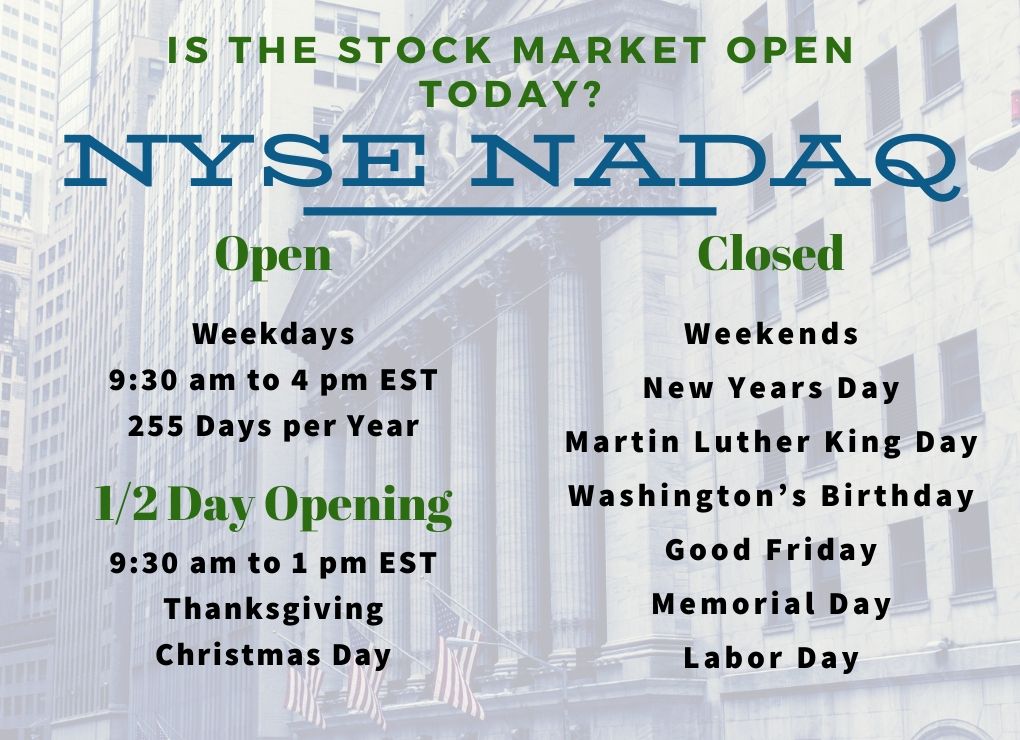
The primary US stock exchanges, the New York Stock Exchange (NYSE) and the Nasdaq Stock Market, adhere to a shared holiday schedule, largely mirroring federal holidays. However, the logic behind these closures extends beyond mere tradition, touching upon the complex interplay of banking holidays, regulatory requirements, and the fundamental need to ensure fair and orderly market operations. Knowing these days allows investors to pre-plan trades, manage liquidity, and avoid unexpected delays in transaction settlements, all vital aspects of sound financial stewardship.
Understanding the Rationale Behind Market Closures
The decision to close stock markets on certain days is not arbitrary; it’s rooted in a combination of practical, historical, and regulatory considerations designed to maintain the stability and efficiency of the financial system. These closures are an integral part of the market’s operational framework, impacting everything from trading algorithms to the daily routines of countless financial professionals.
The Role of Public Holidays and Bank Schedules
The most common reason for stock market closures aligns with public holidays, particularly those recognized at the federal level in the United States. This synchronicity is not accidental. The financial market infrastructure, especially the mechanisms for clearing and settling trades, is deeply intertwined with the banking system. When banks are closed, the essential back-office functions that facilitate the transfer of funds and securities between buyers and sellers are severely curtailed or entirely halted. Without these banking operations, the seamless execution and settlement of trades become problematic, risking significant operational bottlenecks and potential market disruption.
For example, on federal holidays like New Year’s Day, Independence Day, Thanksgiving, or Christmas, banks are generally closed. Consequently, the Federal Reserve’s payment systems, which are crucial for large-value interbank transfers, are also shut down. This cascade effect means that even if exchanges were technically open for trading, the underlying infrastructure needed to finalize those trades would be unavailable. Therefore, closing the stock market on these days prevents a backlog of unsettled trades, reduces counterparty risk, and ensures that all market participants have equal access to banking services when they are available. It’s a practical measure to maintain an orderly flow of capital and minimize systemic risk.
Ensuring Orderly Market Operations and Investor Protection
Beyond the logistical challenges posed by bank holidays, market closures also serve broader objectives related to market integrity and investor protection. Firstly, by consolidating non-trading days, exchanges aim to provide periods of respite, allowing market participants to step away from the relentless pace of daily trading. This can help prevent burnout and provide time for reflection and strategic planning without the immediate pressure of fluctuating prices.
Secondly, scheduled closures can help mitigate volatility. Trading volume often thins out significantly on days immediately preceding or following major holidays. Thinly traded markets can be more susceptible to outsized price movements due to a lack of liquidity, potentially leading to exaggerated swings based on limited trading activity. By closing the market, exchanges prevent these potentially volatile, low-liquidity trading sessions that might not accurately reflect true market sentiment and could disproportionately impact certain investors.
Finally, closures contribute to regulatory oversight. They provide opportunities for exchanges and regulatory bodies to perform necessary system maintenance, conduct operational reviews, and implement updates without disrupting live trading. This proactive approach helps ensure that market systems are robust, secure, and prepared to handle the demands of daily trading, ultimately safeguarding investor interests by fostering a reliable trading environment.
Navigating the Annual Calendar of US Stock Market Holidays
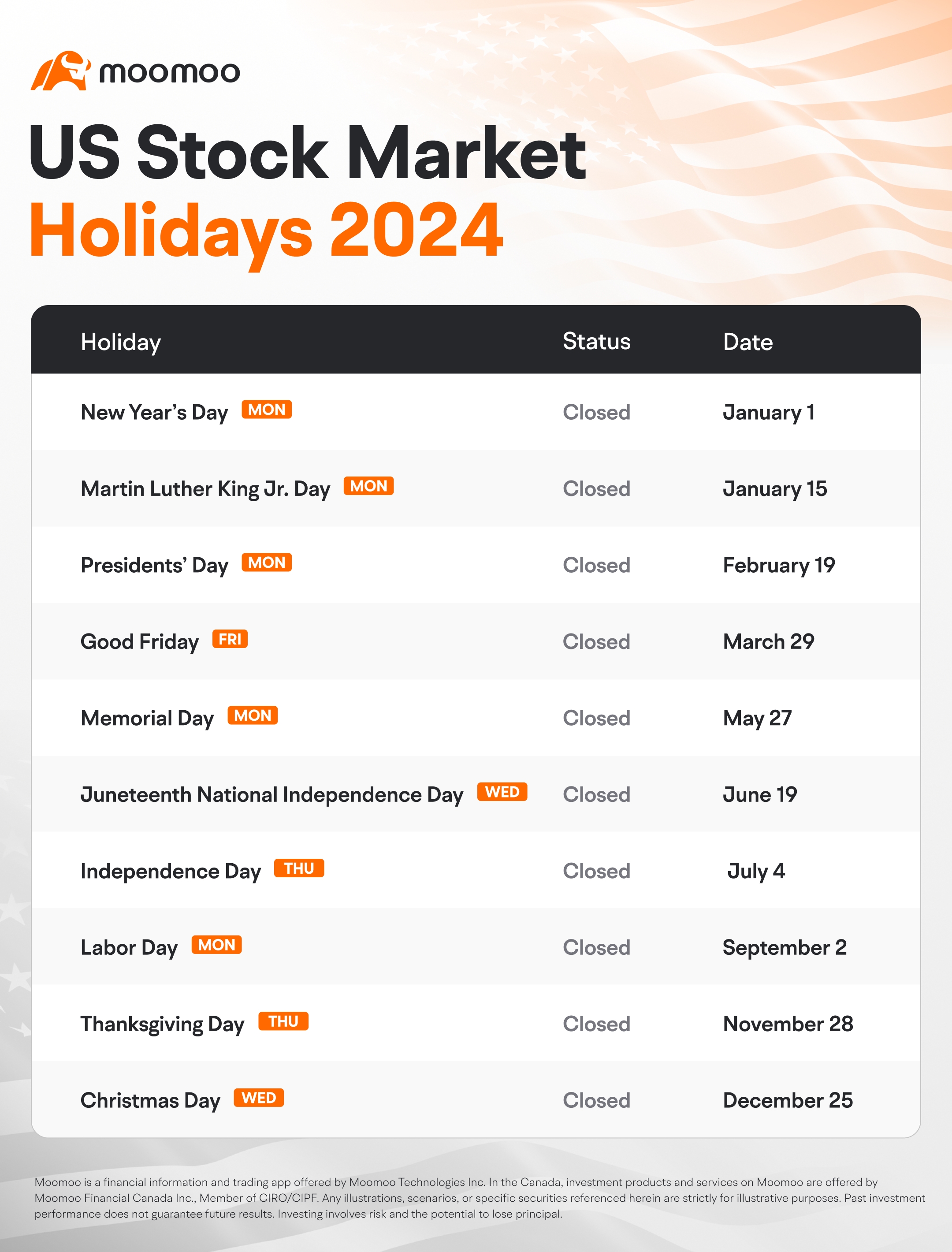
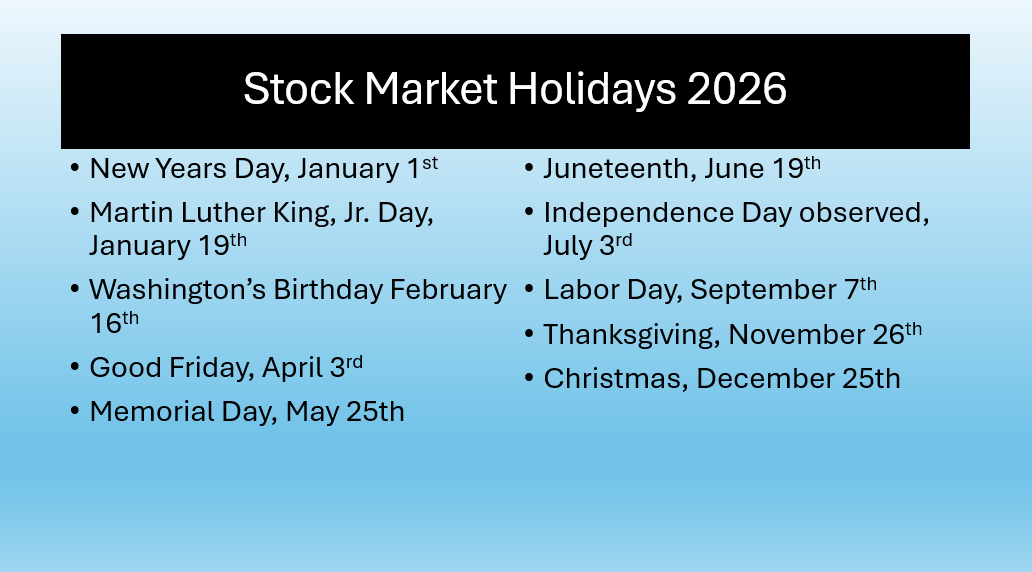
The annual calendar of US stock market holidays is largely predictable, though certain holidays shift dates year-to-year. Investors need to be aware of these fixed and variable closures to manage their portfolios effectively and ensure their financial plans align with market availability.
Fixed-Date Federal Holidays Affecting Trading
Several US federal holidays fall on the same calendar date each year, making their market impact straightforward to predict. These include:
- New Year’s Day (January 1st): Kicking off the year with a market closure.
- Juneteenth National Independence Day (June 19th): A more recent addition to the federal holiday calendar, first observed by the stock market in 2022.
- Independence Day (July 4th): Celebrating the nation’s birth with a trading halt.
- Veterans Day (November 11th): Interestingly, the stock market does not close for Veterans Day, despite it being a federal holiday. This is an important distinction, as many banks do close, but the underlying payment systems required for market operations remain functional.
- Christmas Day (December 25th): The market closes to observe this major holiday.
If any of these fixed-date holidays fall on a weekend, the market typically observes the holiday on the nearest weekday – usually the preceding Friday if it falls on a Saturday, or the following Monday if it falls on a Sunday. This “weekend rule” ensures that a trading day is consistently removed in observance of the holiday.
Moving Holidays and Their Market Impact
Other federal holidays observed by the stock market do not fall on a fixed date but instead occur on a specific day of the week within a given month. These include:
- Martin Luther King, Jr. Day (Third Monday in January): Honoring the civil rights leader.
- Presidents’ Day / Washington’s Birthday (Third Monday in February): Observing the birthdays of past presidents.
- Good Friday (Friday before Easter Sunday): While not a federal holiday, it is a significant holiday observed by the stock market due to its alignment with banking holidays, particularly in New York. Its date varies annually as it is tied to the lunar calendar.
- Memorial Day (Last Monday in May): Commemorating fallen service members.
- Labor Day (First Monday in September): Celebrating the American worker.
- Columbus Day (Second Monday in October): Similar to Veterans Day, the stock market does not close for Columbus Day, even though it is a federal holiday. This further highlights the specific criteria used by exchanges for determining closures.
- Thanksgiving Day (Fourth Thursday in November): A significant holiday closure, typically followed by an early closure on the subsequent Friday.
The variability of these dates necessitates checking official exchange calendars annually. Ignoring these can lead to missed trading opportunities or delayed execution of critical financial transactions.
Early Closures: Half-Day Trading Before Holidays
In addition to full-day closures, the stock market also observes several early closures, typically on days immediately preceding or following major holidays. These “half-days” usually see trading conclude at 1:00 PM ET, rather than the standard 4:00 PM ET. The most prominent early closure is on the day after Thanksgiving (Black Friday). Other potential early closures can occur on Christmas Eve if it falls on a weekday, or on the day before Independence Day if July 4th falls midweek. These early closures allow market participants to begin their holiday celebrations or travel plans sooner, while still offering a reduced trading session for those who need it. However, they are often characterized by thinner trading volumes and can sometimes exhibit increased volatility due to reduced liquidity.
Beyond Scheduled Holidays: Unexpected Market Interruptions
While most market closures are predictable, the financial world is not immune to unforeseen events that can lead to sudden, unscheduled halts in trading. These unexpected interruptions, though rare, can have profound effects on investor confidence and market stability, necessitating swift and decisive action from exchange operators and regulators.
Severe Weather and Natural Disasters
Extreme weather events or natural disasters can physically impede market operations and the ability of personnel to reach trading floors or data centers. Historically, the NYSE and Nasdaq have closed due to events like hurricanes or severe blizzards. For instance, Hurricane Sandy in 2012 forced a two-day closure of US stock markets, marking the first weather-related multi-day closure in decades. Such closures are primarily for the safety of personnel, but also to ensure the integrity of physical infrastructure and the availability of essential utility services that support market operations. In an increasingly digital world, while remote work can mitigate some risks, power outages, internet disruptions, and the need for data center access can still necessitate a broad market closure, especially if a region-wide disaster affects critical financial hubs.
National Days of Mourning and Significant Events
In rare instances, stock markets may close to observe national days of mourning or in response to events of profound national significance. Such decisions are typically made at the highest levels, often involving presidential proclamations or concerted efforts by exchange leadership. Examples include the market closure following the attacks of September 11, 2001, which saw the markets remain closed for four trading days, and closures in observance of the funerals of prominent national figures, such as former presidents. These closures are symbolic, allowing the nation to collectively mourn or reflect without the distraction of market activity, and can also serve to stabilize markets during periods of extreme national uncertainty or grief.
Technical Glitches and Operational Halts
While less common for full-day closures, technical glitches or operational issues can lead to temporary trading halts across an entire exchange or for specific securities. These can range from software bugs, network failures, or issues with order matching systems. Such incidents are usually resolved quickly, leading to a temporary pause in trading rather than a full-day closure. However, in extreme cases where system integrity is compromised or a critical, widespread technical failure occurs, a longer or broader halt could be necessary. Exchanges invest heavily in redundant systems and robust cybersecurity measures to minimize the risk of such disruptions, as they can severely erode investor trust and cause significant financial losses. High-profile incidents, even brief ones, are subject to intense scrutiny and investigation, underscoring the critical importance of reliable technology in modern financial markets.
Implications for Investors and Financial Planning
Market closures, whether scheduled or unexpected, carry significant implications for investors. Understanding these impacts is crucial for effective financial planning, especially for those involved in active trading or managing time-sensitive transactions.
Impact on Trading Strategies and Order Execution
For day traders and short-term investors, market closures directly translate to lost trading days. This can disrupt momentum strategies, arbitrage opportunities, and the ability to react to immediate news or economic data. Orders placed on a day the market is closed will not be executed until the next open trading day. This means that market orders could be filled at a significantly different price than anticipated if substantial news or events occur overnight or during the extended closure. Limit orders, while offering price protection, still face the risk of not being filled if the market gaps past the specified price when it reopens. Investors must therefore adjust their strategies, perhaps closing out positions before a long holiday weekend or setting stop-loss orders with wider ranges to account for potential overnight volatility.
Furthermore, options and futures contracts often have expiry dates that may align with market holidays. Investors holding expiring contracts need to be particularly aware of when the underlying market is closed, as it can affect their ability to exercise or roll over positions. The settlement cycle for derivatives can also be impacted, requiring careful planning to avoid margin calls or forced liquidations.
Settlement Cycles and Fund Availability
One of the most significant yet often overlooked impacts of market closures relates to trade settlement cycles and fund availability. In the US equity market, the standard settlement cycle is T+2, meaning a trade executed on Monday settles two business days later, on Wednesday. If a market holiday falls on Tuesday, the settlement would be pushed back to Thursday. This delay can affect the availability of funds from sold securities for reinvestment or withdrawal.
For individuals relying on funds from stock sales for other financial obligations, such as bill payments or property closings, it’s vital to account for these extended settlement periods. Similarly, for investors looking to fund new purchases, deposits made into brokerage accounts may take longer to clear if banks are closed during the process. Cash management strategies must consider these delays to prevent liquidity issues or missed opportunities. The interconnectedness of banking holidays and market settlement processes underscores why these closures are so critical for maintaining financial stability.
The Global Perspective: When Other Markets Are Open
While the US market is closed, global markets may remain open. This creates a disconnect where news and economic events can continue to unfold and impact asset prices in other regions, potentially influencing the opening of the US market when it resumes trading. A major announcement in Europe or Asia, or a significant fluctuation in a commodity market, could lead to a “gap” opening in the US stock market, meaning prices might open significantly higher or lower than where they closed, without any trading activity in between.
Investors with diversified international portfolios or those involved in global macro strategies need to monitor foreign markets even when their domestic market is closed. This provides context and early indications of potential market movements, allowing for better preparation when trading resumes. Financial instruments like exchange-traded funds (ETFs) that track international indices or commodities can still be affected by global events, even if their US-listed shares are not trading.
Strategies for Staying Informed and Mitigating Risk
Navigating the complexities of market closures requires a proactive approach. By employing specific strategies, investors can stay informed, adjust their plans, and mitigate potential risks.
Leveraging Official Exchange Calendars and Financial News
The most direct way to stay informed about market closures is to consult the official websites of the major stock exchanges (NYSE and Nasdaq) and reputable financial news outlets. Both exchanges publish their holiday schedules well in advance, often a year or more out. These calendars clearly list full-day and early closures. Leading financial news providers, such as The Wall Street Journal, Bloomberg, Reuters, and CNBC, regularly report on upcoming market holidays and any unexpected closures. Subscribing to their newsletters or setting up news alerts can ensure timely notifications. Additionally, many brokerage platforms integrate market holiday calendars directly into their dashboards, providing a convenient reference point for their clients.
Adjusting Automated Trades and Investment Plans
Automated trading strategies, including robo-advisors and algorithmic trading systems, often operate without direct human intervention. It is crucial for users of these systems to understand how they handle market closures. Some systems may automatically pause or adjust their logic, while others might attempt to execute orders that will then be queued for the next trading day. Investors should review the settings and documentation for their automated systems to confirm their behavior during non-trading periods. Similarly, for long-term investment plans, such as dollar-cost averaging into mutual funds or ETFs, it’s important to recognize that purchases scheduled on market holidays will be processed on the next available trading day, potentially at a different price. Adjusting deposit schedules or trade frequencies around holidays can help maintain the integrity of these long-term strategies.
Diversification and Long-Term Investing Mindset
Perhaps the most effective strategy for mitigating the impact of market closures is to adopt a diversified portfolio and maintain a long-term investing mindset. Short-term market fluctuations or missed trading days due to closures tend to have a diminished impact on a well-diversified portfolio held for many years. Long-term investors are generally less concerned with day-to-day market movements and more focused on the overarching growth trajectory of their investments.
Diversification across different asset classes, industries, and geographical regions can also cushion the blow of market closures. If the US market is closed, other international markets might still be open, and alternative assets (like real estate or certain commodities that trade differently) might not be directly affected. This broader perspective helps to smooth out returns and reduce dependence on any single market’s operating schedule. Ultimately, understanding when the market is closed is about informed planning, not panic. It’s another facet of financial literacy that empowers investors to make more robust and resilient decisions in their pursuit of financial goals.
aViewFromTheCave is a participant in the Amazon Services LLC Associates Program, an affiliate advertising program designed to provide a means for sites to earn advertising fees by advertising and linking to Amazon.com. Amazon, the Amazon logo, AmazonSupply, and the AmazonSupply logo are trademarks of Amazon.com, Inc. or its affiliates. As an Amazon Associate we earn affiliate commissions from qualifying purchases.