
For both seasoned investors and newcomers, understanding the operational schedule of the stock market is fundamental. It’s not merely about knowing when you can trade, but also about appreciating the implications of when you cannot. Market closures, whether for weekends, federal holidays, or unexpected events, profoundly impact trading strategies, settlement times, and access to capital. This guide delves into the specifics of stock market closures, primarily focusing on the major U.S. exchanges, and provides insights into how savvy investors navigate these periods to protect and grow their wealth.
Understanding Stock Market Holidays and Their Significance
The stock market, despite its high-tech veneer, operates within a structured schedule designed to ensure fairness, efficiency, and stability. While it might seem counterintuitive for a global, digitized financial system to take breaks, these pauses are crucial for several reasons.
The Rationale Behind Closures
Stock market closures are not arbitrary; they serve multiple vital functions. Primarily, they align with national federal holidays, allowing market participants, including brokers, traders, and support staff, to observe these significant dates. This synchronization fosters a consistent operating environment across the financial sector. Beyond national observance, closures provide essential downtime for market infrastructure maintenance, system upgrades, and regulatory adjustments, ensuring the integrity and security of trading platforms. They also allow market makers and specialists to manage order books and settle transactions without the pressure of live trading, contributing to overall market stability. Without these breaks, the intense, 24/7 nature of financial markets could lead to burnout, errors, and systemic vulnerabilities.
Key Differences: US vs. International Markets
While this article primarily focuses on U.S. stock market closures, it’s crucial to acknowledge that schedules vary significantly across global exchanges. Each country’s stock market operates according to its national holidays and regulatory framework. For instance, European markets will observe their respective national holidays, Asian markets theirs, and so on. An investor with a globally diversified portfolio must be aware of these disparate schedules, as a holiday in one region can still influence the opening and closing prices of related assets in an open market elsewhere. This interconnectedness means that even when the NYSE or NASDAQ is closed, global events can still be unfolding, potentially impacting U.S. markets upon reopening.
Navigating the U.S. Stock Market Calendar
The U.S. stock market adheres to a well-defined calendar, primarily influenced by federal holidays. Knowing these dates in advance is essential for planning trades, managing portfolios, and anticipating market behavior. The two major U.S. stock exchanges, the New York Stock Exchange (NYSE) and the NASDAQ, typically follow the same holiday schedule.
Federal Holidays That Close the Market
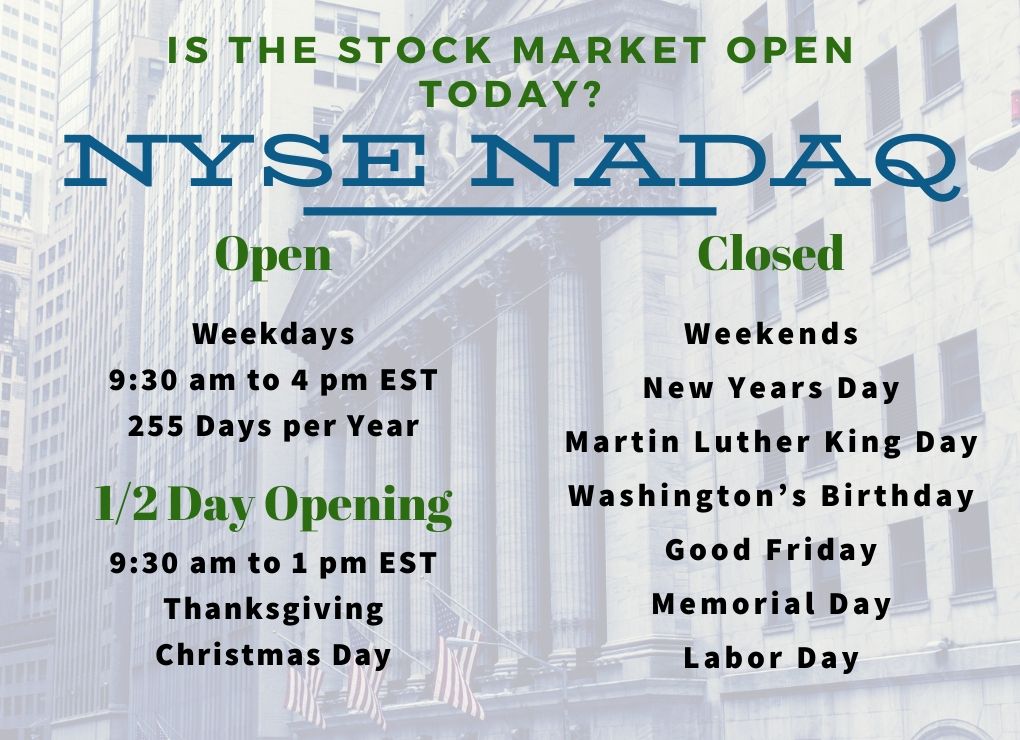
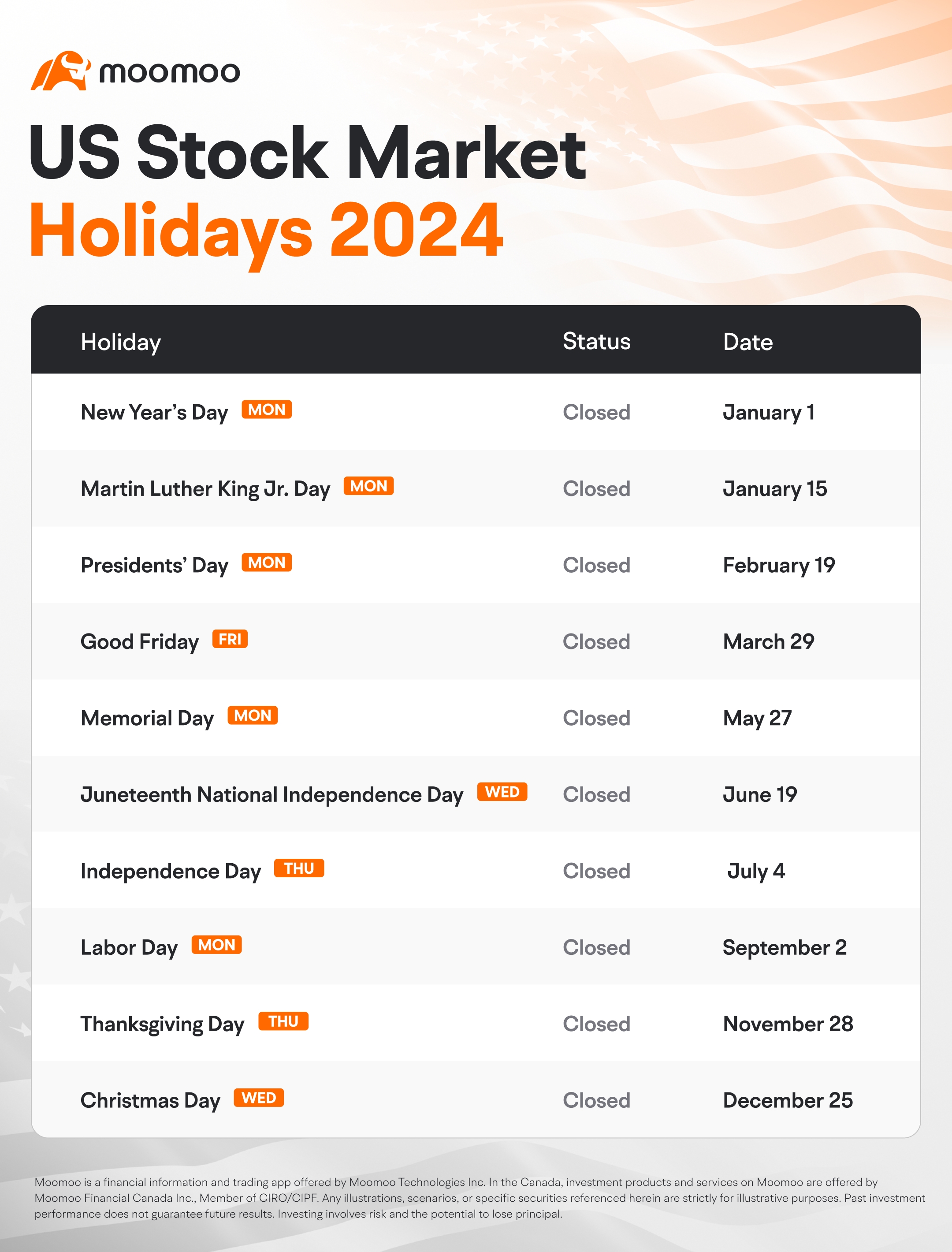
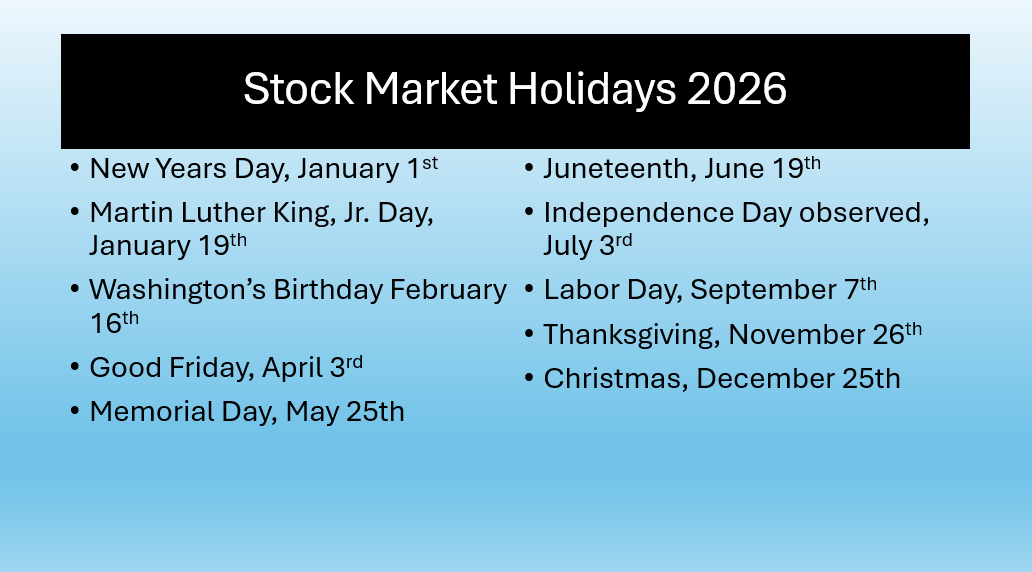
The following federal holidays generally result in a full closure of the U.S. stock market:
- New Year’s Day: January 1st (If January 1st falls on a Saturday, the market may close on the preceding Friday; if it falls on a Sunday, the market may close on the following Monday).
- Martin Luther King, Jr. Day: The third Monday in January.
- Washington’s Birthday (Presidents’ Day): The third Monday in February.
- Good Friday: The Friday before Easter Sunday (This is not a federal holiday but is traditionally observed by the stock market).
- Memorial Day: The last Monday in May.
- Juneteenth National Independence Day: June 19th (If June 19th falls on a Saturday or Sunday, the market may observe it on the preceding Friday or following Monday).
- Independence Day: July 4th (Similar rules apply for weekend observance).
- Labor Day: The first Monday in September.
- Thanksgiving Day: The fourth Thursday in November.
- Christmas Day: December 25th (Similar rules apply for weekend observance).
It’s important to note that while some federal holidays like Columbus Day and Veterans Day are observed by banks and government offices, the U.S. stock market typically remains open for these days. This distinction highlights that market holidays are specific to the operational needs and traditions of the exchanges themselves, rather than a universal observance of all federal holidays.
Early Closures and Special Circumstances
Beyond full-day closures, the stock market also observes several half-days or early closures. The most common of these is the day after Thanksgiving, often referred to as “Black Friday,” when the market closes early in the afternoon (e.g., 1:00 p.m. ET). There can also be early closures on days leading up to certain holidays, particularly Christmas Eve if it falls on a weekday.
Occasionally, unforeseen events such as severe weather, national emergencies, or significant technical issues can lead to unscheduled closures or delayed openings. While rare, these events underscore the importance of staying informed through official market announcements and financial news outlets. Investors should always refer to the official calendars published by the NYSE and NASDAQ for the most accurate and up-to-date information on market operating hours.
Weekend Closures: The Standard Operating Procedure
Perhaps the most consistent and universally understood market closure is the weekend. U.S. stock exchanges are closed on Saturdays and Sundays, meaning trading activity ceases from market close on Friday afternoon until market open on Monday morning (typically 9:30 a.m. ET). This provides a regular, predictable pause in trading, allowing participants to reset, analyze, and prepare for the week ahead. While this might seem obvious, the impact of these two-day breaks on news cycles, global market movements, and investor sentiment can be significant, often leading to “gap up” or “gap down” openings on Monday mornings based on weekend developments.
Impact of Market Closures on Investors
For active traders and long-term investors alike, market closures are not just calendar dates; they are periods that demand careful consideration and strategic adjustments. Ignoring these closures can lead to missed opportunities or unexpected portfolio fluctuations.
Trading Implications: When You Can’t Buy or Sell
The most direct impact of a market closure is the inability to execute trades. During these periods, buy and sell orders cannot be placed or filled on the primary exchanges. This means investors cannot react immediately to breaking news, economic reports, or company-specific announcements that occur while the market is closed. For day traders or those employing highly time-sensitive strategies, this can be particularly challenging, as they lose the ability to enter or exit positions until the market reopens. Long-term investors, while less impacted by immediate price fluctuations, still need to factor these closures into their decision-making, especially if they anticipate significant events coinciding with a holiday.
Settlement Periods and Fund Availability
Market closures also affect settlement periods. When you sell shares, the proceeds are not immediately available for withdrawal. Typically, stock trades settle on a T+2 basis, meaning the transaction is finalized two business days after the trade date. If a market holiday falls within this T+2 period, the settlement will be delayed by an additional day. For example, a stock sold on a Wednesday before a Friday holiday would settle on the following Tuesday, not Monday. This delay can impact an investor’s liquidity, especially if they are planning to re-invest funds or need cash by a specific deadline. Awareness of settlement cycles around holidays is crucial for cash flow management.
Planning Ahead: Strategy Adjustments for Long-Term vs. Short-Term Investors
Both short-term traders and long-term investors benefit from proactive planning around market holidays. Short-term traders might choose to reduce their positions or close out speculative trades before a long weekend to mitigate “weekend risk” – the uncertainty of how news or global events will impact stock prices before the next opening. They might also adjust their stop-loss orders or take-profit targets.
Long-term investors, while not typically focused on daily price swings, should still consider holiday periods. These breaks offer an excellent opportunity to review portfolio allocations, rebalance assets, and research potential new investments without the distraction of live market data. They can also use this time to reflect on their overall financial goals and ensure their investment strategy remains aligned. Additionally, they should be aware of any dividends or corporate actions scheduled to occur around a market closure, as the payment or ex-date might be adjusted.
Economic Data Releases During Off-Hours
Crucially, economic data, company earnings reports, and global news do not pause for market holidays. Significant announcements that could sway market sentiment are often released during these off-hours. When the market reopens, it can react sharply to this pent-up news, leading to increased volatility and potentially large price gaps. Investors should monitor financial news channels and economic calendars even during market closures to stay abreast of developments that could influence their holdings. Being informed can help anticipate market movements upon reopening and adjust strategies accordingly.
Beyond Equity Markets: Other Financial Instruments
While the focus is often on the major stock exchanges, it’s important to remember that the broader financial landscape includes a variety of instruments, each with its own operational schedule. Not all markets observe the same holidays as the NYSE or NASDAQ.
Bond Market Closures
The bond market, which includes U.S. Treasury securities, corporate bonds, and municipal bonds, often follows a slightly different holiday schedule than the equity markets. For instance, bond markets typically close for federal holidays like Veterans Day and Columbus Day, which the stock market observes as regular trading days. This difference stems from the bond market’s closer ties to government operations and banking systems. Investors dealing in bonds need to consult specific bond market calendars, such as those published by the Securities Industry and Financial Markets Association (SIFMA), to understand their unique operating hours.
Commodity and Futures Markets
Commodity markets (e.g., for oil, gold, agricultural products) and futures markets (which trade contracts for future delivery of commodities, currencies, or indices) generally operate with extended hours, often nearing 24/5 availability. While they may observe some major holidays with closures or reduced hours, their schedules are often more flexible than equity markets. This is due to the global nature of these commodities and the need for continuous trading to reflect international supply and demand. Traders in these markets need to consult the specific exchange (e.g., CME Group) for their precise holiday schedules, as they can vary even within this category.
Forex Market
The foreign exchange (Forex) market, where currencies are traded, is renowned for its near 24-hour, five-day-a-week operation. Because it’s a decentralized, over-the-counter (OTC) market involving participants from financial centers across the globe (Sydney, Tokyo, London, New York), there’s almost always a major financial hub open for trading. Consequently, the Forex market is largely unaffected by individual national holidays, though liquidity might be lower during such times. It essentially closes only for the weekend. This continuous operation makes it a unique beast among financial markets.
Cryptocurrency Markets
Cryptocurrency markets stand out as truly 24/7, 365-day markets. Given their decentralized and digital nature, there are no “bank holidays” or scheduled closures. Trading platforms for cryptocurrencies like Bitcoin and Ethereum remain open around the clock, every day of the year. This perpetual accessibility offers unparalleled flexibility but also demands constant vigilance from investors, as significant price movements can occur at any time, including weekends and traditional holidays.
Strategies for Smart Investing Around Market Holidays
Understanding when markets are closed is just the first step. The more crucial aspect is developing strategies to make these periods work for, rather than against, your investment goals.
Monitoring News and Global Markets
Even when your local stock market is closed, the world keeps turning. International markets remain open, and global economic and political developments continue to unfold. Savvy investors use market holidays to catch up on news, analyze trends in open global markets, and consider how these might influence their domestic portfolio upon reopening. This proactive monitoring helps in anticipating potential market reactions and formulating a strategy for the next trading day.
Utilizing After-Hours and Pre-Market Trading
While primary exchanges are closed on holidays, some brokerage platforms offer after-hours and pre-market trading sessions on regular trading days. These extended hours allow investors to place trades outside of standard market hours, often in response to earnings reports or news. However, it’s important to note that after-hours and pre-market trading typically involve lower liquidity and wider bid-ask spreads, which can lead to increased volatility and potentially less favorable execution prices. While not available on actual holiday closures, understanding these options for regular trading days can be useful.
Automating Investments and Portfolio Rebalancing
Market closures provide an excellent opportunity to review and potentially automate elements of your investment strategy. Setting up recurring investments (e.g., dollar-cost averaging into an ETF or mutual fund) ensures that your money continues to work for you regardless of daily market movements or holidays. Similarly, holiday periods are ideal for assessing your portfolio’s asset allocation and initiating any necessary rebalancing. This can be done by planning trades for the next open market day, ensuring your portfolio remains aligned with your risk tolerance and financial objectives.
The Importance of a Long-Term Perspective
Ultimately, for most investors, particularly those focused on long-term wealth accumulation, market holidays are minor speed bumps in a multi-year journey. While short-term traders must be highly reactive, long-term investors can view these closures as planned pauses. They offer a chance to step back from the daily grind, avoid emotional trading decisions, and reinforce a disciplined, strategic approach. The fundamental drivers of long-term investment success – consistent saving, diversified portfolios, and patience – remain unaffected by a few days of market closure. Use these days to reflect, learn, and strengthen your commitment to your financial future.
aViewFromTheCave is a participant in the Amazon Services LLC Associates Program, an affiliate advertising program designed to provide a means for sites to earn advertising fees by advertising and linking to Amazon.com. Amazon, the Amazon logo, AmazonSupply, and the AmazonSupply logo are trademarks of Amazon.com, Inc. or its affiliates. As an Amazon Associate we earn affiliate commissions from qualifying purchases.