
In the realm of personal finance, travel often represents one of the most significant discretionary expenses. Whether you are a digital nomad managing a lean startup budget or a family planning an annual vacation, the cost of airfare can fluctuate with a volatility that rivals the stock market. For those committed to financial optimization, understanding the mechanics of airline pricing is not just a hobby—it is a necessary skill for capital preservation.
The quest to find the “cheapest day” to fly has evolved from travel industry lore into a data-driven science. While the internet is rife with outdated anecdotes about clearing your browser cookies or booking at midnight on a Tuesday, modern financial analysis reveals a more nuanced picture. To truly minimize your travel overhead, you must distinguish between the day you purchase the ticket and the day the plane actually leaves the tarmac.

The Financial Mechanics of Booking: Sunday vs. Tuesday
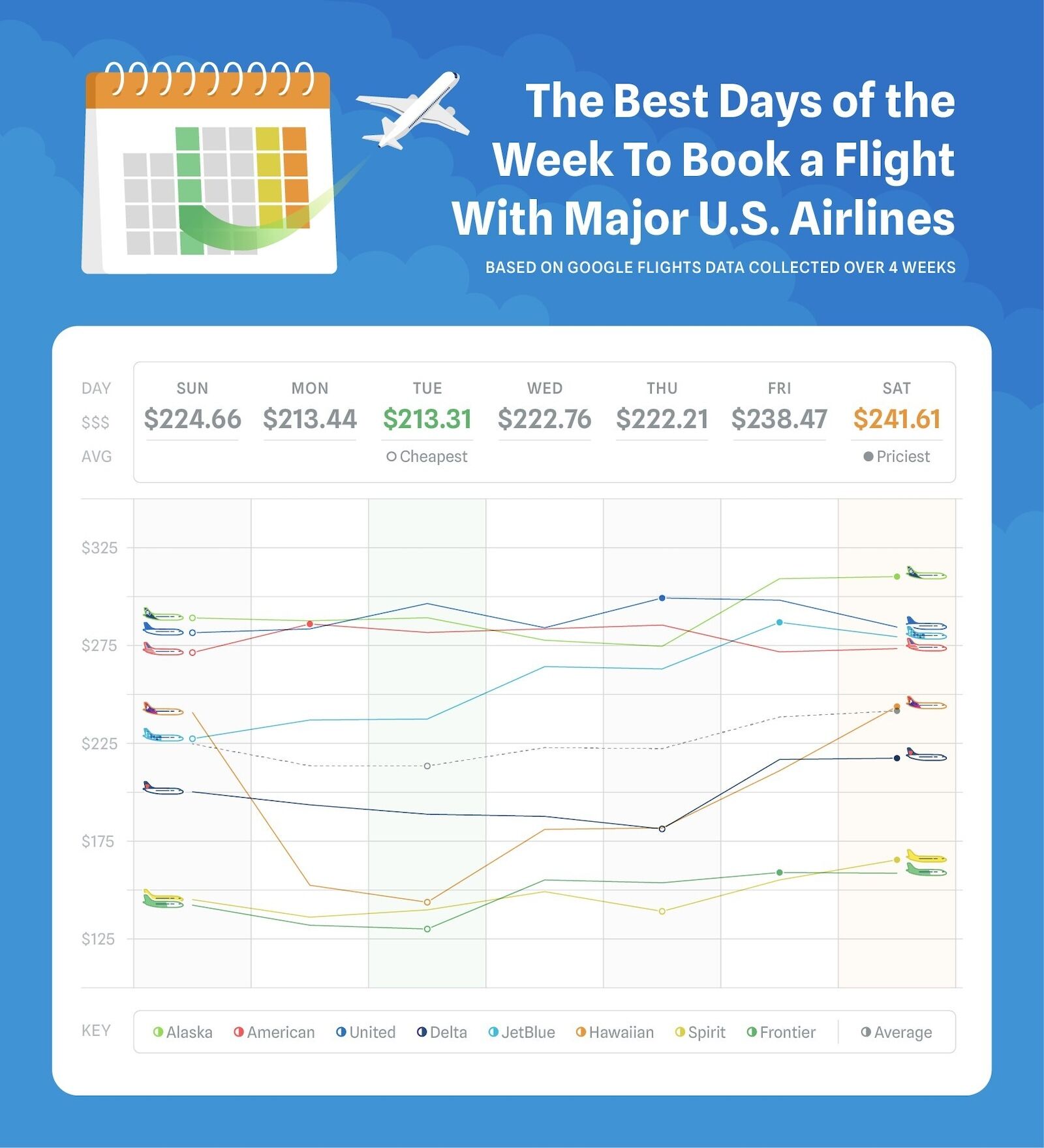
For years, the conventional wisdom dictated that Tuesday at 3:00 PM was the golden hour for booking flights. This myth originated in an era when airline executives manually updated their weekly fares. Today, however, sophisticated AI-driven revenue management systems adjust prices in real-time based on demand, global events, and competitor pricing.
The Sunday Booking Advantage
Recent longitudinal studies of global flight data suggest that Sunday has emerged as the most cost-effective day to book a flight. From a personal finance perspective, booking on a Sunday can save travelers between 5% and 15% on domestic flights and nearly 10% on international routes. The logic behind this shift is rooted in the behavior of corporate travel departments. Corporate bookers, who are less price-sensitive and operate on company accounts, typically make their purchases during the workweek (Monday through Friday). When the weekend arrives and business demand dips, airlines often adjust their algorithms to attract leisure travelers who are more likely to be price-conscious and shopping from home.
Moving Beyond the “Tuesday Myth”
While Tuesday is no longer the undisputed champion of booking days, it remains a relevant benchmark for domestic travel. Because many sales are launched late Monday or early Tuesday, mid-week can still offer competitive pricing if you are monitoring a specific route. However, relying solely on a specific day of the week for booking is a sub-optimal financial strategy. A more robust approach involves using price tracking tools that monitor volatility and provide a “buy” or “wait” recommendation based on historical trends rather than just the calendar day.
Strategic Departure Days: The Mid-Week Discount
While the day you book impacts your bottom line, the day you actually fly has a far more dramatic effect on your travel budget. In the world of airline economics, the “business travel cycle” dictates the cost of seats. Business travelers—whose tickets are often paid for by corporations—typically fly out on Monday mornings and return on Thursday evenings or Friday afternoons. This creates high demand and higher price points during those windows.
Tuesdays and Wednesdays: The Financial Sweet Spot
If you are looking to maximize your ROI on travel spending, Tuesday and Wednesday are consistently the cheapest days to fly. Because these days fall in the middle of the workweek, they see the lowest demand from both business travelers and weekend vacationers. By shifting your itinerary to depart on a Wednesday instead of a Friday, you can often reduce your fare by 20% to 30%. For a family of four, this single shift in scheduling can result in thousands of dollars in savings, which can then be diverted into a high-yield savings account or an investment portfolio.
The Weekend Premium: Friday and Sunday
Conversely, Friday and Sunday are the most expensive days to fly. Sunday, in particular, is the highest-demand day for leisure travelers returning home to prepare for the workweek. From a financial planning perspective, flying on these days is an expensive convenience. If your schedule allows for even a 24-hour shift—returning on a Monday or a Saturday instead of a Sunday—the savings are often substantial enough to cover an extra night of accommodation or a high-end dining experience, effectively increasing the value of your trip without increasing the total cost.
Macro-Financial Strategies for Airfare Optimization

Understanding the cheapest day to fly is only one component of a broader financial strategy for travel. To truly master the cost of airfare, one must look at the “time-value” of booking and the integration of travel expenses into a broader personal finance framework.
The Optimal Booking Window
Timing your purchase is a balancing act between liquidity and price protection. Booking too early (more than six months out) means your capital is tied up in a non-liquid asset that may decrease in value. Booking too late (less than 21 days out) subjects you to the “procrastination tax” imposed by airlines on last-minute travelers.
For domestic travel, the “Goldilocks window” is typically between 28 and 60 days before departure. During this period, airlines have a clear sense of their remaining inventory and begin to lower prices to fill the cabin. For international travel, the window expands to 3 to 6 months. Adhering to these windows ensures that you are purchasing when the supply-demand curve is in the consumer’s favor.
Leveraging Sinking Funds and Points Hacking
A professional approach to travel finance involves the use of “sinking funds.” Rather than putting a high-cost flight on a credit card and accruing interest—which negates any savings found by booking on a Wednesday—savvy travelers set aside a fixed amount each month into a dedicated travel fund.
Furthermore, the integration of travel-reward credit cards can transform necessary spending into future flights. By strategically using cards that offer 3x or 5x points on travel or groceries, you are essentially creating a self-rebate system. When you combine a flight booked on a Wednesday (the cheapest day) with points earned through disciplined spending, the net cost of travel can drop to near zero. This is the pinnacle of personal finance efficiency: leveraging the system to minimize out-of-pocket expenses while maintaining a high quality of life.
The Hidden Costs of “Cheap” Flights
In any financial analysis, it is vital to look beyond the “sticker price.” A flight that appears cheap because it departs on a Tuesday might carry hidden costs that erode its perceived value.
Ancillary Fees and Overhead
Budget carriers often offer remarkably low base fares on mid-week flights to maintain high load factors. However, these airlines often unbundle their services. When you factor in fees for carry-on luggage, seat selection, and even printing a boarding pass, the “cheap” Tuesday flight may end up costing more than a standard fare on a legacy carrier. From a business finance perspective, always calculate the “All-In Cost” of the flight before making a decision.
Opportunity Cost of Time
Financial intelligence also requires an understanding of opportunity cost. If flying on a Wednesday requires you to take two extra days of unpaid leave or reduces your productivity during a high-value work week, the $200 you saved on airfare might actually cost you $1,000 in lost income. The goal of financial travel optimization is not always to find the lowest absolute price, but to find the lowest price that aligns with your earning potential and time constraints.
Conclusion: Developing a Systematic Approach
Saving money on airfare is not about luck or secret “hacks”; it is about understanding market dynamics and exercising disciplined timing. By shifting your booking habits toward Sundays and your travel days toward the middle of the week, you align your spending with the periods of lowest demand.
When integrated into a broader personal finance strategy—utilizing price tracking, adhering to optimal booking windows, and accounting for ancillary fees—you can significantly reduce your annual travel expenditures. This liberated capital can then be redirected toward long-term wealth building, proving that where and when you fly is as much a financial decision as how you invest or save. In the end, the “cheapest” day to fly is the day that offers the best balance between price, convenience, and your overall financial health.
aViewFromTheCave is a participant in the Amazon Services LLC Associates Program, an affiliate advertising program designed to provide a means for sites to earn advertising fees by advertising and linking to Amazon.com. Amazon, the Amazon logo, AmazonSupply, and the AmazonSupply logo are trademarks of Amazon.com, Inc. or its affiliates. As an Amazon Associate we earn affiliate commissions from qualifying purchases.