
In the complex ecosystem of travel planning, the quest for the cheapest flights often feels like navigating a labyrinth. Among the myriad factors influencing airfare – from booking windows and airline competition to destination popularity and seasonality – one question consistently arises: “What day of the week is cheapest to fly?” This seemingly simple query holds significant implications for personal finance, offering a crucial lever for individuals and families aiming to stretch their travel budgets further. Understanding the ebb and flow of flight prices throughout the week is not merely about finding a deal; it’s about adopting a strategic approach to travel that aligns with broader financial prudence.
This article delves into the dynamics of airline pricing, dissecting the patterns that dictate daily fare fluctuations. We’ll explore the science behind why certain days offer better value, identify the notorious peak pricing periods, and equip you with a holistic set of strategies to integrate flight savings into your overall personal finance plan. By demystifying these patterns, travelers can transform what once felt like a gamble into a calculated and cost-effective endeavor.
Decoding Airline Pricing Dynamics: The Science Behind Flight Costs
Airline pricing is a sophisticated ballet of algorithms, market research, and behavioral economics, far removed from arbitrary decisions. Carriers employ highly advanced revenue management systems designed to optimize every seat on every flight, ensuring maximum profitability. To uncover the cheapest days to fly, it’s essential to first grasp the underlying principles that govern these dynamic pricing models.
The Fundamental Supply and Demand Equation
At its core, airline pricing adheres to the classic economic principle of supply and demand. When demand for a particular flight or route is high, prices naturally surge. Conversely, lower demand translates into more competitive fares as airlines strive to fill seats. This principle manifests differently across the week, heavily influenced by traveler demographics and their respective schedules. Leisure travelers, often constrained by workweeks and school calendars, tend to fly on weekends. Business travelers, aiming for Monday morning meetings, will often depart on Sunday evenings, returning by Friday afternoon. This fundamental split drives much of the weekday pricing variations.
Business vs. Leisure Traveler Behavior
Airlines segment their customer base to extract maximum value. Business travelers, whose tickets are typically paid for by their employers, are generally less price-sensitive and prioritize convenience and schedule adherence. They are the primary drivers of demand on peak business travel days (Sundays, Mondays, and Fridays). Leisure travelers, on the other hand, are highly price-sensitive and often have more flexibility. They are actively seeking the lowest possible fares and are more willing to adjust their travel dates to save money. Airlines strategically price flights to capitalize on the higher willingness to pay of business travelers during their peak times, while offering incentives to leisure travelers during off-peak windows. This segmentation is crucial in understanding why midweek flights tend to be cheaper.
The Role of Revenue Management Systems
Modern airlines utilize sophisticated revenue management systems (RMS) that continuously analyze vast amounts of data. This data includes historical booking patterns, competitor pricing, local events, weather forecasts, and even current seat availability. These systems dynamically adjust prices in real-time, sometimes multiple times within a single day. They anticipate demand, predict optimal pricing points, and employ complex algorithms to manage inventory. For example, if a flight is selling quickly, the RMS will raise prices. If it’s selling slowly, prices might drop to stimulate demand. This constant adjustment means that the “cheapest day” isn’t always static; it’s a moving target influenced by a multitude of interconnected variables, making real-time monitoring and flexibility key for budget-conscious travelers.
The Sweet Spot: Identifying the Cheapest Days to Depart
While there are many variables, consistent patterns emerge when analyzing flight data, revealing predictable “sweet spots” for securing lower airfares. Pinpointing these days can significantly reduce your travel expenses, freeing up funds for other aspects of your trip or even enabling more frequent travel.
The Midweek Advantage: Tuesdays and Wednesdays Reign Supreme
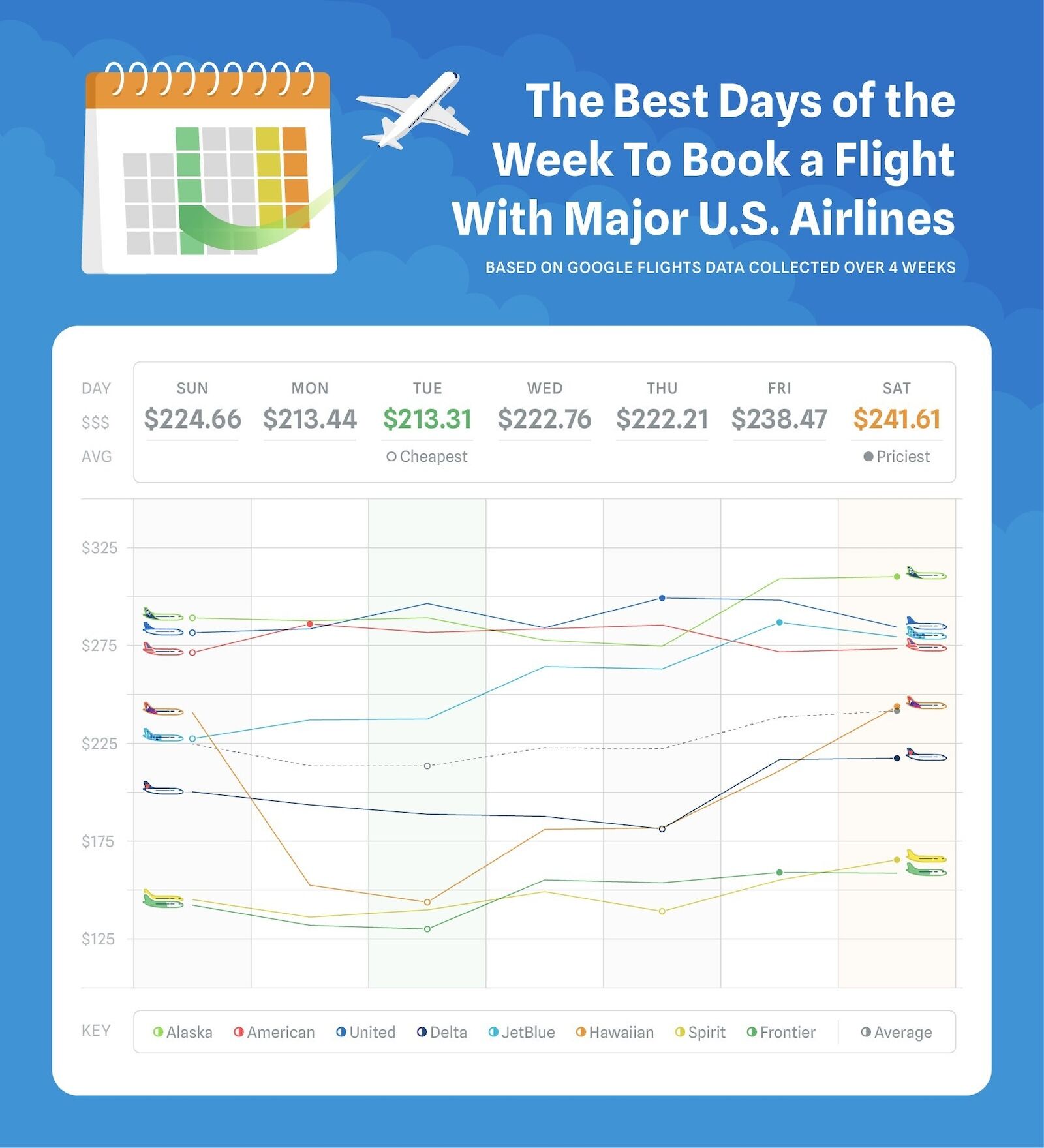
Historically, and consistently backed by travel data, Tuesdays and Wednesdays frequently emerge as the cheapest days to fly. The logic here is straightforward: these are the days with the lowest demand from both business and leisure travelers. Business travelers are typically settled into their workweek by Tuesday and Wednesday, having departed on Sunday or Monday. Leisure travelers, if they have the flexibility, often avoid these days to maximize their weekend travel. With fewer passengers vying for seats, airlines tend to lower fares to fill their planes. This midweek lull offers a golden opportunity for those with adaptable schedules to capitalize on reduced prices. Flying out on a Tuesday and returning on a Tuesday or Wednesday can often yield the greatest savings.
Saturdays: An Unexpected Contender for Domestic Routes
While midweek offers the best overall value, Saturdays can sometimes surprise travelers with competitive fares, especially for domestic routes. This phenomenon is often attributed to the nature of business travel. Business travelers rarely fly on Saturdays, meaning these flights are primarily filled with leisure passengers. Some airlines structure their fares with a “Saturday night stay-over” rule, designed to differentiate between business and leisure travelers. If a flight requires you to stay over a Saturday night, it’s often priced lower, as this typically excludes most business trips. For those planning a longer leisure trip, departing on a Saturday can sometimes be cheaper than a Sunday, though it’s less consistent than the midweek advantage.
Early Mornings and Late Nights: Timing Your Departure
Beyond the day of the week, the time of day also plays a significant role in pricing. Flights departing very early in the morning (e.g., 5-7 AM) or late at night (e.g., after 9 PM) are often cheaper. These inconvenient times are less desirable for most travelers, leading to lower demand. While requiring an early start or a late arrival, choosing these slots can translate into substantial savings. Consider if the financial benefit outweighs the minor inconvenience, especially for shorter flights or when you have flexible accommodation plans.
Avoiding Peak Pricing: The Most Expensive Days and Why
Just as there are optimal times to fly, there are also periods when airfares predictably skyrocket. Understanding these peak pricing days and the reasons behind them is crucial for proactive budget management and for making informed decisions to avoid unnecessary expenses.
Fridays and Sundays: The Leisure Travel Premium
Unsurprisingly, Fridays and Sundays are almost universally the most expensive days to fly. This is primarily due to the convergence of both business and leisure travel demand. Fridays mark the end of the workweek for many, making it a popular day for business travelers to return home and for leisure travelers to start their weekend getaways. Sundays are equally popular, serving as the primary return day for weekend trips and the commencement day for many business trips starting on Monday. This concentrated demand allows airlines to command premium prices, as a significant portion of travelers have limited flexibility on these days. Avoiding these days, if at all possible, is one of the most straightforward ways to save on airfare.

The Impact of Holidays and Special Events
Beyond the weekly cycle, major holidays and special events act as superchargers for airfare prices. Periods like Thanksgiving, Christmas, New Year’s, Spring Break, and major sporting events or festivals can see flight costs escalate dramatically, regardless of the day of the week. Demand during these times is extraordinarily high, and airlines fully capitalize on it. If travel during these periods is unavoidable, booking significantly in advance (often 3-6 months or even more for international trips) becomes paramount, though prices will still be elevated compared to off-peak periods. Financial planning for holiday travel requires a much earlier and more aggressive approach to budgeting and booking.
Understanding Peak Travel Seasons
Similar to holidays, specific seasons can drive up prices across the board. The summer months (June-August) are generally more expensive due to family vacations, while shoulder seasons (spring and fall) often offer a better balance of good weather and lower fares. Understanding the peak travel season for your desired destination is critical. For instance, flying to Europe in July will almost certainly be pricier than flying in October. Integrating this seasonal awareness into your financial planning allows for more realistic budgeting and helps identify optimal times to travel without breaking the bank.
Beyond the Day: Comprehensive Strategies for Maximizing Flight Savings
While knowing the cheapest day to fly is a powerful tool, it’s just one piece of a larger financial puzzle. True mastery of flight savings involves a multi-faceted approach, combining strategic planning with smart utilization of available resources.
The Power of Flexible Dates and Destinations
The single most impactful strategy for saving money on flights is flexibility. If your travel dates are malleable, you unlock the ability to target those cheaper midweek flights and avoid peak pricing. Many flight search engines offer “flexible date” options (e.g., +/- 3 days) or even “cheapest month” views, allowing you to visually identify the lowest fares across a broader timeframe. Similarly, being flexible with your destination can yield significant savings. If you’re open to different locations, you can often find fantastic deals to places that are currently less in demand or are served by multiple competitive airlines. This flexibility transforms travel from a rigid expense into a more adaptable investment.
Leveraging Price Comparison Tools and Alerts
In today’s digital age, numerous online tools are designed to empower budget travelers. Websites like Google Flights, Skyscanner, Kayak, and Expedia allow you to compare prices across multiple airlines and online travel agencies (OTAs) simultaneously. Beyond simple comparison, many of these platforms offer price alert features. By setting up an alert for a specific route and date range, you’ll receive notifications when fares drop, allowing you to snatch up deals as soon as they appear. This passive monitoring eliminates the need for constant manual checking and is an invaluable asset for strategic financial planning around travel.
The Optimal Booking Window: A Balancing Act
While the “cheapest day to fly” refers to the day of departure, the “cheapest day to book” is also a factor. General wisdom suggests that booking too early (e.g., 6-12 months out) can be expensive as airlines haven’t yet released their full range of discounted fares. Booking too late (within a few weeks of departure) is almost always pricey as last-minute demand is typically inelastic. The “sweet spot” for booking domestic flights is often cited as 1-3 months in advance, and for international flights, 2-8 months out. However, this is a general guideline. Monitoring prices with alerts is a more dynamic and effective strategy than rigidly adhering to a specific window, as prices constantly fluctuate.
Considering Alternative Airports and Stopovers
Sometimes, flying into or out of a smaller, less congested airport near your primary destination can result in significantly lower fares. For example, instead of flying directly into London Heathrow, checking flights into London Gatwick or Stansted might save you hundreds, even after factoring in ground transportation costs. Similarly, opting for flights with stopovers (connecting flights) rather than direct flights can often be cheaper, especially for long-haul international travel. While requiring more travel time, the financial savings can be substantial, making it a worthwhile consideration for budget-conscious travelers.
The Incognito Mode Myth vs. Reality
A popular belief among travelers is that airlines and OTAs track your search history via cookies and inflate prices on subsequent searches. While it’s true that dynamic pricing exists, and cookies are used for various purposes, the impact of incognito mode on individual flight prices for a single user’s search is largely a myth. Airlines adjust prices based on overall demand, inventory, and a multitude of other factors, not typically on whether an individual user has searched for a flight multiple times. Clearing your browser’s cache and cookies, or using incognito mode, might clear some personalized ads, but it’s unlikely to reveal a dramatically different, cheaper fare. Focus your energy on flexibility and price alerts rather than browser settings.
Integrating Flight Savings into Your Personal Finance Strategy
For the financially astute individual, travel is not just an expense; it can be a valuable experience that enriches life. By applying smart financial principles to flight booking, travel can become an affordable and regular part of a well-managed budget, rather than an occasional, expensive splurge.
Travel as an Investment: Maximizing Value
Viewing travel not merely as a cost but as an investment in personal growth, education, and well-being reframes its financial consideration. By strategically saving on flights, you’re not just cutting costs; you’re maximizing the return on this investment. The money saved on airfare can be reallocated to enhance the travel experience itself – perhaps a better hotel, unique local experiences, or even extending the trip duration. This thoughtful allocation of resources exemplifies sound financial planning, ensuring every dollar spent contributes to a higher quality of life and experience.
Budgeting for Travel: Beyond the Airfare
While flights often represent a significant portion of travel costs, a comprehensive personal finance strategy for travel must extend beyond airfare. Always factor in accommodation, ground transportation, food, activities, travel insurance, and an emergency fund. By securing cheaper flights, you create more breathing room in other categories of your travel budget. This holistic budgeting approach prevents unforeseen expenses from derailing your financial goals and allows for a more relaxed and enjoyable trip. Utilizing tools like travel budget spreadsheets or apps can help track and manage these expenses effectively.

Long-Term Financial Planning Through Smart Travel Habits
Adopting smart flight booking habits is a cornerstone of long-term financial planning for travel. By consistently seeking out the cheapest days, leveraging alerts, and maintaining flexibility, you cultivate a financial discipline that extends beyond just one trip. This proactive approach allows you to forecast travel expenses more accurately, integrate them into your annual budget, and even save specifically for future adventures. Ultimately, understanding “what day of the week is cheapest to fly” is a powerful piece of knowledge that, when combined with broader financial wisdom, can transform your travel dreams into achievable realities, contributing positively to your overall financial well-being.
aViewFromTheCave is a participant in the Amazon Services LLC Associates Program, an affiliate advertising program designed to provide a means for sites to earn advertising fees by advertising and linking to Amazon.com. Amazon, the Amazon logo, AmazonSupply, and the AmazonSupply logo are trademarks of Amazon.com, Inc. or its affiliates. As an Amazon Associate we earn affiliate commissions from qualifying purchases.