
The question “what day is shortest day of the year” immediately points towards a fascinating astronomical event that impacts our perception of daylight and marks a significant turning point in the Earth’s annual cycle. This shortest day, known as the Winter Solstice, is not merely a calendar date but a complex interplay of celestial mechanics and our planet’s axial tilt. Understanding its nuances offers a deeper appreciation for the rhythms of nature and its influence on various aspects of human life, from agriculture to cultural traditions. This article delves into the science behind the Winter Solstice, its precise timing, and its broader implications, all within the domain of scientific understanding and natural phenomena.

The Astronomical Significance of the Winter Solstice
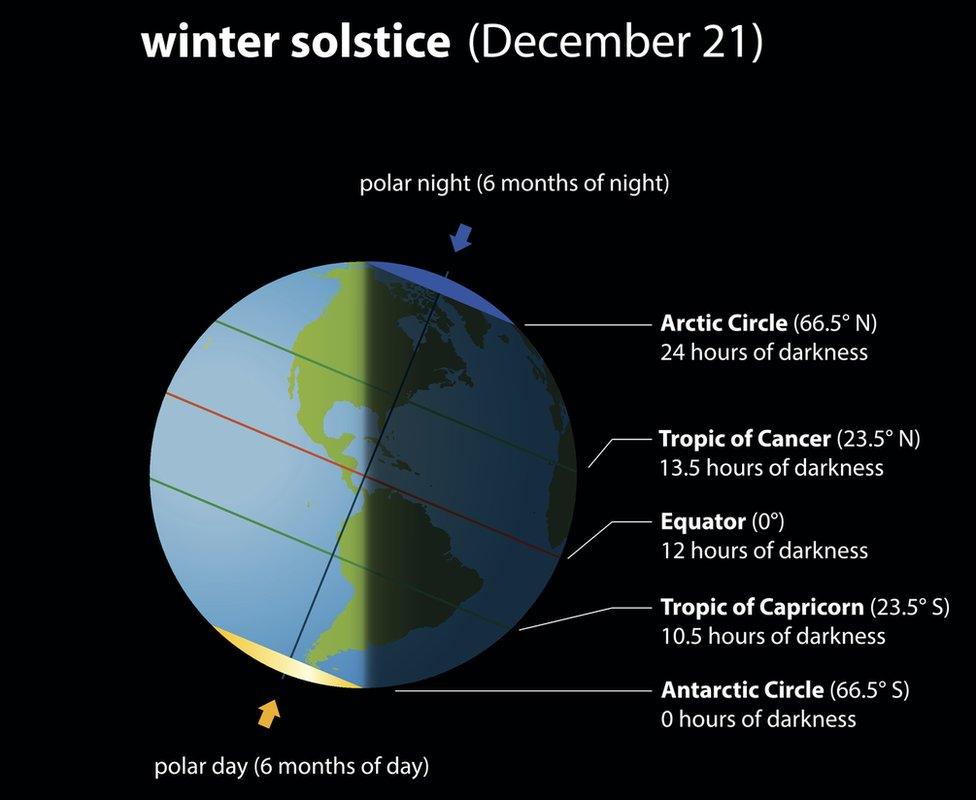
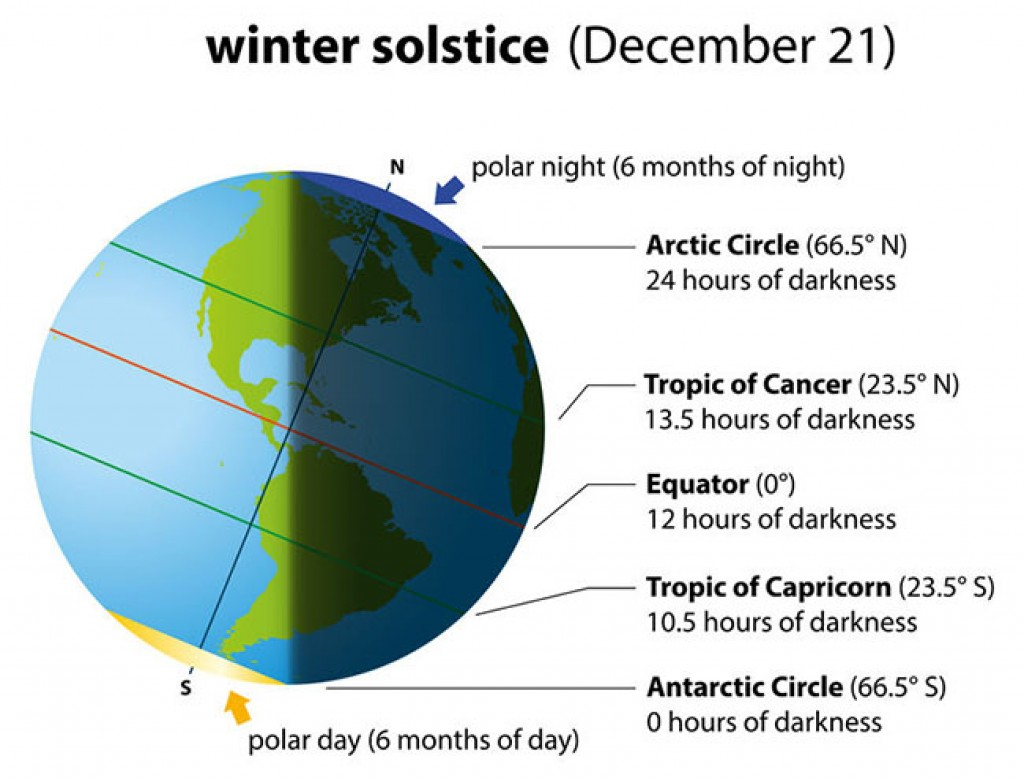
The Winter Solstice is a pivotal moment in Earth’s orbit around the Sun. It’s defined by the Sun reaching its southernmost declination in the sky, a phenomenon directly caused by the tilt of Earth’s axis. This tilt, approximately 23.5 degrees, is what gives us our seasons. As Earth orbits the Sun, different hemispheres are tilted towards or away from the Sun at various times of the year. The Winter Solstice in the Northern Hemisphere occurs when the North Pole is tilted furthest away from the Sun, resulting in the shortest period of daylight and the longest night of the year. Conversely, the Summer Solstice in the Northern Hemisphere marks the longest day when the North Pole is tilted most directly towards the Sun.
Earth’s Axial Tilt: The Driver of Seasons
The Earth’s axial tilt is a constant, remaining fixed in space as our planet journeys around the Sun. It’s this unwavering inclination that causes the Sun’s apparent position in the sky to change throughout the year. Imagine a spinning top tilted on its axis. As it moves in a circle, different parts of its surface are illuminated by a light source. Similarly, Earth’s tilt means that during its orbit, either the Northern Hemisphere or the Southern Hemisphere receives more direct sunlight.
When the Northern Hemisphere is tilted away from the Sun, the Sun’s rays strike this hemisphere at a more oblique angle, spreading the Sun’s energy over a larger area and reducing its intensity. This leads to colder temperatures and shorter days. This is precisely what happens during the Winter Solstice for the Northern Hemisphere. For the Southern Hemisphere, this same celestial configuration means they are experiencing their Summer Solstice, with the longest day and most direct sunlight.
The Sun’s Apparent Path: Declination and the Solstice
Astronomically, the solstice is defined by the Sun’s declination. Declination is the celestial equivalent of latitude, measured in degrees north or south of the celestial equator. The celestial equator is the projection of Earth’s equator onto the celestial sphere. On the Winter Solstice in the Northern Hemisphere, the Sun’s declination reaches its most southerly point, approximately -23.5 degrees. This is the point where the Sun appears to be directly overhead at the Tropic of Capricorn.
During the days leading up to the solstice, the Sun’s declination steadily decreases. On the solstice itself, its declination stops its southward movement and begins to move northward. This apparent “standing still” of the Sun in its north-south progression is the origin of the word “solstice,” derived from the Latin “sol” (Sun) and “sistere” (to stand still). After the solstice, the days gradually begin to lengthen in the Northern Hemisphere, and the Sun’s declination starts to increase.
Pinpointing the Date and Time of the Winter Solstice
The Winter Solstice, while marking the shortest day, doesn’t always fall on the exact same calendar date each year. It typically occurs on December 21st or December 22nd in the Northern Hemisphere. This slight variation is due to the fact that Earth’s orbital period, a year, is not an exact integer number of days. The Gregorian calendar, which we use, accounts for this with leap years, but there’s still a small discrepancy that causes the solstice date to shift slightly.
The Role of Earth’s Orbital Period and Leap Years
An Earth year is approximately 365.2422 days. Our calendar year is 365 days, with an extra day added every four years (leap year) to compensate for the approximately 0.2422 of a day. This system, while remarkably accurate, still introduces slight variations. The exact moment of the solstice is determined by the Earth’s position in its orbit, which is a continuous process. Therefore, the solstice can fall on either December 21st or 22nd, depending on where that precise orbital moment falls within our calendar.
The timing of the solstice is also important for astronomical observations and calculations. For instance, it’s a key reference point for tracking the movement of celestial bodies and for understanding seasonal changes in various disciplines. The precise moment is often expressed in Coordinated Universal Time (UTC) to ensure global consistency.
The December Solstice vs. the June Solstice
It’s crucial to distinguish between the solstices in different hemispheres. When we refer to the “Winter Solstice” in common parlance, we are usually referring to the Northern Hemisphere’s shortest day. However, for observers in the Southern Hemisphere, the same astronomical event, occurring around December 21st or 22nd, marks their Summer Solstice – the longest day of their year.
Conversely, the Northern Hemisphere’s Summer Solstice, occurring around June 20th or 21st, is the Southern Hemisphere’s Winter Solstice. This highlights how the Earth’s axial tilt dictates opposite seasonal experiences in the two hemispheres. Understanding this duality is fundamental to comprehending global climate patterns and astronomical phenomena.
Beyond Astronomy: Cultural and Biological Impacts of the Shortest Day
The Winter Solstice has resonated with human cultures for millennia, influencing traditions, celebrations, and even agricultural practices. Its arrival signifies the turning point towards longer days and the eventual return of spring, a concept deeply embedded in human history and mythology. The profound darkness of the longest night often inspires introspection, reflection, and a sense of hope for renewal.
Ancient Traditions and Celebrations
Many ancient civilizations observed the Winter Solstice with festivals and rituals. The Roman festival of Saturnalia, held in mid-December, was a period of feasting, gift-giving, and general merriment, coinciding with the shortest days. The ancient Egyptians celebrated the solstice as the rebirth of the sun god Ra. In Scandinavia, the festival of Yule, which marked the winter solstice, was celebrated with bonfires, feasts, and the bringing of a Yule log into the home, symbolizing the return of light and warmth. These traditions underscore the universal human response to the changing lengths of day and night, and the symbolic significance of light overcoming darkness.
The significance of light during the darkest time of the year is a recurring theme. Many solstice celebrations incorporate light sources, such as candles, torches, and bonfires, to symbolize the returning sun and the promise of brighter days ahead. This powerful symbolism has persisted through centuries, finding expression in modern holiday traditions as well.
The Biological Clock and Seasonal Changes
The changing length of daylight has a profound impact on the biological world, including humans. Our internal biological clocks, known as circadian rhythms, are influenced by light and darkness. Shorter days and longer nights can affect hormone production, mood, and energy levels. This is why some people experience “winter blues” or Seasonal Affective Disorder (SAD) during the darker months.
For the natural world, the Winter Solstice is a critical cue for seasonal changes. Plants respond to the decreasing daylight by entering dormancy, conserving energy for the colder months and preparing for new growth in the spring. Animals’ behavior is also affected, with many undergoing physiological changes, altering their mating patterns, or migrating to warmer climates in anticipation of the winter. The solstice, therefore, represents not just a shift in daylight hours but a fundamental trigger for ecological cycles and the rhythm of life on Earth.
The Receding Darkness: The Dawn of Longer Days
The Winter Solstice is not an endpoint but a turning point. While it marks the shortest day of the year, it simultaneously signals the beginning of the gradual return of increasing daylight. This shift, however subtle at first, carries a profound psychological and symbolic weight, representing hope, renewal, and the promise of spring.
The Gradual Increase in Daylight
Following the Winter Solstice, the days begin to lengthen incrementally. The amount of extra daylight gained each day is small, typically only a minute or two initially. However, this steady progression is a clear indication that winter is progressing and spring is on its way. This gradual increase in sunlight is crucial for agricultural planning, as farmers and gardeners can begin to anticipate the growing season and the return of warmer weather.
The scientific observation of this gradual increase in daylight has been a fundamental aspect of astronomy and calendrical systems for centuries. It allows for the prediction of seasons and the planning of activities that are dependent on sunlight and temperature.
A Symbol of Hope and Renewal
Throughout history, the Winter Solstice has been imbued with symbolic meaning, representing the triumph of light over darkness, life over dormancy, and the promise of rebirth. The longest night is often seen as a time for introspection and reflection, while the subsequent lengthening of days brings a sense of optimism and anticipation for what is to come. This symbolic resonance has made the solstice a significant cultural and spiritual marker for many societies, a reminder of the cyclical nature of life and the enduring power of renewal.
In conclusion, the question “what day is shortest day of the year” leads us to the Winter Solstice, a scientifically defined astronomical event driven by Earth’s axial tilt. This day, typically falling on December 21st or 22nd in the Northern Hemisphere, is not just a matter of hours of daylight but a profound marker of seasonal change, influencing everything from cultural traditions to biological rhythms. It stands as a testament to the intricate dance of our planet and its star, offering a predictable and comforting rhythm to the passage of time.
aViewFromTheCave is a participant in the Amazon Services LLC Associates Program, an affiliate advertising program designed to provide a means for sites to earn advertising fees by advertising and linking to Amazon.com. Amazon, the Amazon logo, AmazonSupply, and the AmazonSupply logo are trademarks of Amazon.com, Inc. or its affiliates. As an Amazon Associate we earn affiliate commissions from qualifying purchases.