
In the realm of personal finance and corporate budgeting, travel often represents one of the most significant variable expenses. For the savvy traveler or the business owner looking to optimize their bottom line, understanding the intricacies of airline pricing is not merely about convenience—it is a matter of strategic financial management. United Airlines, as one of the world’s “Big Three” carriers, utilizes some of the most sophisticated dynamic pricing models in the industry. To answer the question of which day United flights are the cheapest, one must look beyond urban legends and dive into the data-driven world of yield management and consumer behavior.

The Economics of Airline Pricing: Why United’s Rates Fluctuate
To master the art of booking cheap United flights, it is essential to understand the underlying economic principles that drive ticket prices. United does not set prices based on a flat rate; instead, they employ a practice known as yield management. This is a variable pricing strategy, based on anticipating and influencing consumer behavior in order to maximize revenue from a fixed, time-limited resource—in this case, an airplane seat.
Understanding Yield Management Systems
Yield management systems are designed to ensure that United sells the right seat to the right customer at the right time. The system categorizes seats into different “fare buckets.” For every flight, there are several price points for the same cabin. As the lower-priced buckets are filled by early birds and budget-conscious travelers, the price automatically jumps to the next bucket. From a financial planning perspective, this means that the “cheapest” day is often dictated by the volume of transactions occurring globally at that moment.
The Role of Dynamic Pricing Algorithms
United’s algorithms process millions of data points daily, including historical demand, competitor pricing, fuel costs, and even local events at the destination. These algorithms are programmed to recognize patterns. For instance, if a specific route from Chicago to London is seeing a spike in searches, the price may tick upward. Conversely, if a Tuesday afternoon flight to Denver remains 60% empty two weeks before departure, the algorithm may trigger a “fare sale” to stimulate cash flow. Understanding that these prices are reactive allows a traveler to time their purchase when the algorithm perceives a lull in demand.
Pinpointing the Best Days to Book and Fly
While the digital landscape has made pricing more volatile, several consistent patterns emerge when analyzing United’s weekly fare distributions. It is important to distinguish between the day you book the flight and the day you actually board the aircraft, as both have distinct financial implications.
The Mid-Week Advantage: Tuesdays and Wednesdays
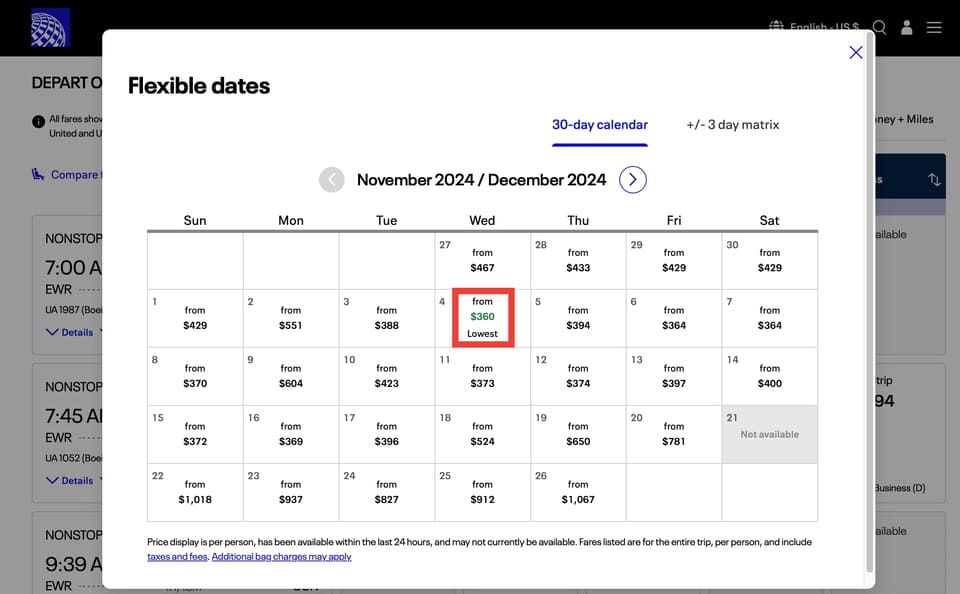
Historically, Tuesday and Wednesday have remained the most cost-effective days to fly on United Airlines. The logic is rooted in the “missing” demographics: business travelers typically fly out on Monday mornings and return on Thursday or Friday, while leisure travelers often prefer long weekends starting on Friday. This leaves a vacuum of demand in the middle of the workweek.
For a household or a small business, shifting a departure date from a Sunday to a Tuesday can often result in a 20% to 40% reduction in total cost. In a personal finance context, these savings are equivalent to an immediate return on investment (ROI) for the simple effort of schedule flexibility.
Avoiding the Weekend Premium
Conversely, Friday and Sunday are statistically the most expensive days to fly. For United, these are high-utilization days where they can charge a premium because the demand is inelastic—people have to be home for work on Monday or want to maximize their vacation time. From a budgeting standpoint, if you must fly on these days, you are essentially paying a “convenience tax.” If your goal is wealth preservation, avoiding these peak windows is the most straightforward way to reduce your annual travel spend.
The Myth of the “Tuesday Booking” Window
There was a time when the consensus was that booking on a Tuesday at midnight would yield the lowest fares. While there is still some truth to this—as United often loads new sales on Monday nights—the advent of AI-driven pricing has made this less of a hard rule. Today, the “cheapest day to book” is less about the day of the week and more about the lead time. However, many financial analysts still observe that mid-week bookings avoid the surge in leisure-shopper traffic that occurs on Saturdays and Sundays, which can occasionally drive up prices in real-time.
Strategic Financial Tools to Lower Travel Costs
In the modern financial ecosystem, simply paying cash for a United flight is rarely the most efficient use of capital. By integrating specific financial tools and loyalty structures, travelers can significantly lower their effective cost per mile.
Leveraging United MileagePlus for Maximum ROI
The United MileagePlus program is a powerful financial tool for those who understand how to calculate “cents per mile” (CPM). When considering a flight, a savvy financier will compare the cash price to the mileage cost. If a flight costs $600 or 40,000 miles, the value is 1.5 cents per mile. If the cash price spikes to $1,200 due to a holiday but the mileage cost remains 40,000, the value jumps to 3 cents per mile.
Using miles on “expensive” days (like Sundays) while paying cash on “cheap” days (like Tuesdays) is a form of arbitrage that maximizes the value of your loyalty assets.
Credit Card Optimization and Travel Rewards
For many, the cheapest United flight is the one paid for with points earned through strategic credit card spending. Co-branded United cards or flexible currency cards (like those from Chase Ultimate Rewards) allow users to earn 2x to 5x points on everyday business and personal expenses. When these points are transferred to United or used to book through a travel portal, the out-of-pocket cost of the flight can drop to zero, excluding taxes and fees. This is a critical component of a comprehensive “side hustle” or cash-flow management strategy.
Utilizing Price Tracking Technology
Tools such as Google Flights and Hopper act as financial advisors for your travel. By setting price alerts for United routes, you can let technology monitor the “fare buckets” for you. These tools provide a historical price graph, letting you know if the current price is “low,” “typical,” or “high” based on the last twelve months of data. In financial terms, this is technical analysis for travel—buying the “dip” in the airfare market.
Advanced Budgeting: Hidden Tactics for United Fares
Beyond selecting the right day, there are structural ways to navigate United’s pricing to find hidden value. These require a deeper level of engagement with the booking process but can lead to substantial financial savings.
The “Goldilocks” Booking Window
Timing your purchase is a balancing act of risk and reward. Booking too early (more than six months out) means you miss out on potential sales, as United hasn’t yet felt the pressure to fill the plane. Booking too late (less than 21 days out) subjects you to “close-in” pricing aimed at desperate business travelers. For domestic United flights, the financial “sweet spot” is typically 1 to 3 months before departure. For international routes, that window expands to 2 to 8 months.
Multi-City Routes and Open-Jaw Logistics
Sometimes the cheapest way to fly United isn’t a simple round trip. “Open-jaw” tickets—where you fly into one city and out of another—can sometimes be priced lower than standard itineraries if certain segments are under-utilized. Furthermore, United’s “Excursionist Perk” allows MileagePlus members to add a free segment to certain international itineraries. From a value-based perspective, getting three flights for the price of two is an exceptional way to maximize a travel budget.
Integrating Travel Savings into Your Long-Term Financial Plan
Viewing airfare through the lens of personal finance changes the way one approaches the booking process. It is no longer an impulsive purchase but a planned expenditure that impacts other financial goals.
Sinking Funds for Annual Travel
Rather than being surprised by a $1,500 United flight during the holidays, proactive budgeters use “sinking funds.” By calculating your expected annual travel costs and dividing by twelve, you can set aside a fixed amount each month in a high-yield savings account. When the “cheap Tuesday” fare finally appears, the capital is already allocated, allowing you to strike immediately without disrupting your cash flow or leaning on high-interest credit card debt.

Comparing Costs vs. Value in Business Travel
For those traveling for business, the “cheapest” flight isn’t always the one with the lowest price tag. One must consider the opportunity cost of time. A $300 United flight with two layovers that takes ten hours may be financially inferior to a $500 direct flight that takes three hours, especially if the traveler’s billable rate is significant. A true financial analysis of United flights incorporates the value of time and the potential for productivity.
Ultimately, finding the cheapest day for a United flight is a multi-dimensional puzzle. While Tuesday and Wednesday are the statistical winners for departure dates, the real savings come from a combination of timing, technology, and financial literacy. By treating airfare as a market to be analyzed rather than a static cost to be accepted, you can ensure that your travel remains an investment in your life and business rather than a drain on your wealth.
aViewFromTheCave is a participant in the Amazon Services LLC Associates Program, an affiliate advertising program designed to provide a means for sites to earn advertising fees by advertising and linking to Amazon.com. Amazon, the Amazon logo, AmazonSupply, and the AmazonSupply logo are trademarks of Amazon.com, Inc. or its affiliates. As an Amazon Associate we earn affiliate commissions from qualifying purchases.