
The cryptocurrency market has evolved from a niche experimental playground for cryptographers into a sophisticated multi-trillion-dollar asset class. For the modern investor, the question of what cryptos to invest in is no longer about chasing the next viral meme coin; it is about identifying projects with sustainable utility, institutional backing, and the potential to reshape global financial infrastructure. As the landscape matures, the distinction between speculative bubbles and foundational technology has become clearer, allowing for a more calculated approach to portfolio construction.
Navigating this space requires a shift in perspective. Instead of viewing cryptocurrency as a monolithic entity, investors must categorize assets based on their specific use cases: store of value, smart contract platforms, decentralized finance (DeFi) protocols, and emerging sectors like Real-World Assets (RWA) and Artificial Intelligence (AI). By diversifying across these verticals, an investor can capture growth while mitigating the inherent volatility of the digital asset market.
The Core Holdings: Established Assets and Institutional Adoption
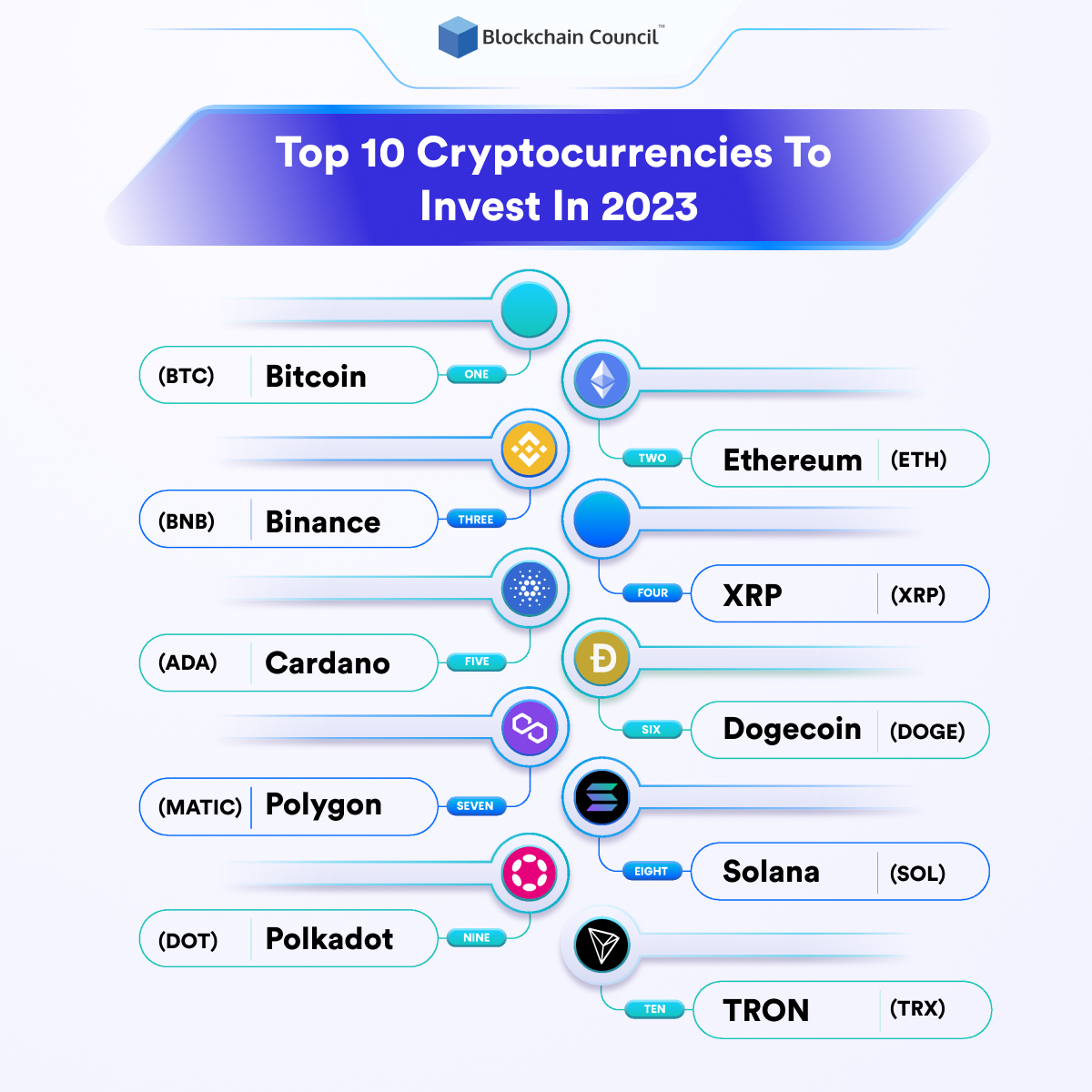
Every robust cryptocurrency portfolio should be anchored by “Blue-Chip” assets. These are the projects that have survived multiple bear markets, possess the highest liquidity, and have gained significant institutional acceptance. For most investors, these two assets serve as the benchmark for the rest of the market.
Bitcoin: The Digital Gold Standard
Bitcoin remains the undisputed leader of the cryptocurrency market. Its primary value proposition—a decentralized, censorship-resistant, and mathematically scarce store of value—has been reinforced by the approval of Spot Bitcoin ETFs in major global markets. This institutional bridge has allowed pension funds, family offices, and retail investors to gain exposure to Bitcoin within a regulated framework.
Investing in Bitcoin is often viewed as a hedge against currency debasement and macroeconomic instability. With a hard cap of 21 million coins, its deflationary nature stands in stark contrast to the inflationary policies of central banks. For a long-term investor, Bitcoin is the “anchor” asset, typically representing the largest portion of a conservative crypto allocation due to its lower relative volatility and proven resilience.
Ethereum: The Smart Contract Powerhouse
If Bitcoin is digital gold, Ethereum is the global decentralized computer. As the first blockchain to introduce smart contracts, Ethereum has become the foundational layer for the majority of the decentralized economy, including DeFi, Non-Fungible Tokens (NFTs), and enterprise blockchain solutions.
The transition to Proof of Stake (PoS) has made Ethereum significantly more energy-efficient and introduced “staking yield,” allowing holders to earn a percentage return for securing the network. Furthermore, Ethereum’s “burn mechanism” removes a portion of transaction fees from the supply, creating a path toward becoming a deflationary asset during periods of high network activity. Its dominant developer ecosystem and high liquidity make it a mandatory consideration for those looking to invest in the future of programmable money.
The Infrastructure Play: Layer 1 Competitors and Scaling Solutions
While Ethereum holds the first-mover advantage, the demand for faster and cheaper transactions has birthed a competitive landscape of “Layer 1” (L1) blockchains and “Layer 2” (L2) scaling solutions. These projects aim to solve the blockchain trilemma: achieving security, decentralization, and scalability simultaneously.
Solana and the Monolithic Advantage
Solana has emerged as the primary competitor to Ethereum’s dominance. By utilizing a unique consensus mechanism known as Proof of History (PoH), Solana can process thousands of transactions per second at a fraction of a cent. Its “monolithic” architecture—meaning it handles execution and settlement on a single layer—contrasts with Ethereum’s “modular” approach.
For investors, Solana represents a high-growth bet on user adoption. Its ecosystem has seen a surge in decentralized physical infrastructure (DePIN) and retail-friendly applications. While it has faced historical challenges with network stability, its recent performance and growing developer mindshare have solidified its position as a top-tier investment candidate for those seeking exposure to high-throughput blockchain technology.
Layer 2 Ecosystems: Optimism, Arbitrum, and Base
Rather than replacing Ethereum, Layer 2 solutions scale it. They “roll up” thousands of transactions and settle them on the Ethereum mainnet, providing users with the security of Ethereum and the speed of a faster network.
Investing in Layer 2 tokens like Arbitrum (ARB) or Optimism (OP) is a strategic play on the continued expansion of the Ethereum ecosystem. As more users migrate to these faster layers for daily transactions, the governance and utility tokens associated with these networks gain value. Furthermore, the rise of Coinbase’s “Base” network highlights how corporate entities are utilizing L2 technology to onboard millions of users to the chain, indirectly benefiting the entire scaling sector.

High-Growth Narratives: AI, RWA, and DePIN
To achieve outsized returns, investors often look toward emerging “narratives”—sectors where blockchain technology intersects with other transformative global trends. These sectors often carry higher risk but offer significant upside as they disrupt traditional industries.
The Intersection of Artificial Intelligence and Blockchain
The explosion of Artificial Intelligence has found a natural synergy with blockchain. Projects in this space focus on decentralized compute power, AI data marketplaces, and verifiable AI agents. As centralized AI companies face scrutiny over data privacy and monopolistic control, decentralized alternatives like Near Protocol (which has a strong AI focus), Render (decentralized GPU rendering), and Fetch.ai are gaining traction.
Investing in AI-related cryptos is a bet on the democratization of compute resources. If the future of AI is decentralized, the tokens powering these networks will act as the “fuel” for the next industrial revolution.
Real-World Assets (RWA): Bringing Wall Street On-Chain
One of the most significant trends in the “Money” category is the tokenization of Real-World Assets. This involves putting traditional financial instruments—such as US Treasuries, real estate, and private equity—onto a blockchain. This allows for 24/7 trading, fractional ownership, and instant settlement.
Major financial institutions like BlackRock and Franklin Templeton have already launched tokenized funds. Projects like Ondo Finance or Chainlink (which provides the data oracles necessary to link off-chain data to the chain) are at the forefront of this movement. RWA tokens offer a bridge between traditional finance and crypto, making them a compelling choice for investors who value tangible utility and institutional integration.
Decentralized Physical Infrastructure Networks (DePIN)
DePIN projects use token incentives to build and maintain physical infrastructure in the real world, such as wireless networks, sensor maps, or energy grids. Helium (decentralized wireless) and Hivemapper (decentralized mapping) are prime examples. By removing the need for a central corporation to fund massive infrastructure projects, DePIN lowers costs and redistributes profits to the network participants. This sector is particularly attractive because it generates value from physical utility rather than purely digital speculation.
Building a Resilient Crypto Portfolio
Selecting the right assets is only half the battle; the other half is managing the investment with a professional financial mindset. The volatility of the crypto market can easily lead to emotional decision-making, which is why a structured strategy is essential.
The Barbell Strategy for Risk Management
A popular approach among seasoned crypto investors is the Barbell Strategy. This involves allocating the majority of the portfolio (60–70%) to low-risk, high-conviction assets like Bitcoin and Ethereum. The remaining portion is split between “mid-cap” infrastructure plays (like Solana or Chainlink) and “high-alpha” emerging narratives (like AI or DePIN).
This structure ensures that the investor is protected by the stability of the market leaders while still having enough exposure to smaller projects to benefit from explosive growth.
Security and Long-Term Custody
In the world of digital finance, the “how” of investing is as important as the “what.” Professional investors prioritize security through self-custody. While centralized exchanges are convenient for trading, holding large amounts of capital on an exchange exposes the investor to counterparty risk. Utilizing hardware wallets (cold storage) ensures that the investor has total control over their private keys.
Furthermore, implementing a Dollar-Cost Averaging (DCA) strategy helps mitigate the risk of market timing. By investing a fixed amount at regular intervals, an investor lowers their average cost basis over time, reducing the impact of short-term price swings.
The landscape of cryptocurrency investment has shifted from a “get rich quick” mentality to a sophisticated sector of the global financial market. By focusing on the core pillars of Bitcoin and Ethereum, understanding the infrastructure of Layer 1s and 2s, and identifying the high-utility narratives of AI and RWA, investors can build a portfolio designed for the long term. The key to success in this niche is not just picking the right coin, but applying rigorous financial discipline and staying informed on the technological shifts that continue to redefine the value of money in the digital age.
aViewFromTheCave is a participant in the Amazon Services LLC Associates Program, an affiliate advertising program designed to provide a means for sites to earn advertising fees by advertising and linking to Amazon.com. Amazon, the Amazon logo, AmazonSupply, and the AmazonSupply logo are trademarks of Amazon.com, Inc. or its affiliates. As an Amazon Associate we earn affiliate commissions from qualifying purchases.