
In the globalized digital economy, linguistic boundaries are often the final frontiers for technological expansion. When developers and project managers ask, “What country speaks the Farsi language?” they are rarely looking for a simple geographic answer. Instead, they are typically investigating a massive, untapped market of digital consumers, developers, and data points. Farsi, also known as Persian, is a pluricentric language with over 110 million speakers worldwide. From a technical perspective, this demographic represents a significant challenge and opportunity in fields ranging from Natural Language Processing (NLP) to Right-to-Left (RTL) UI/UX design.

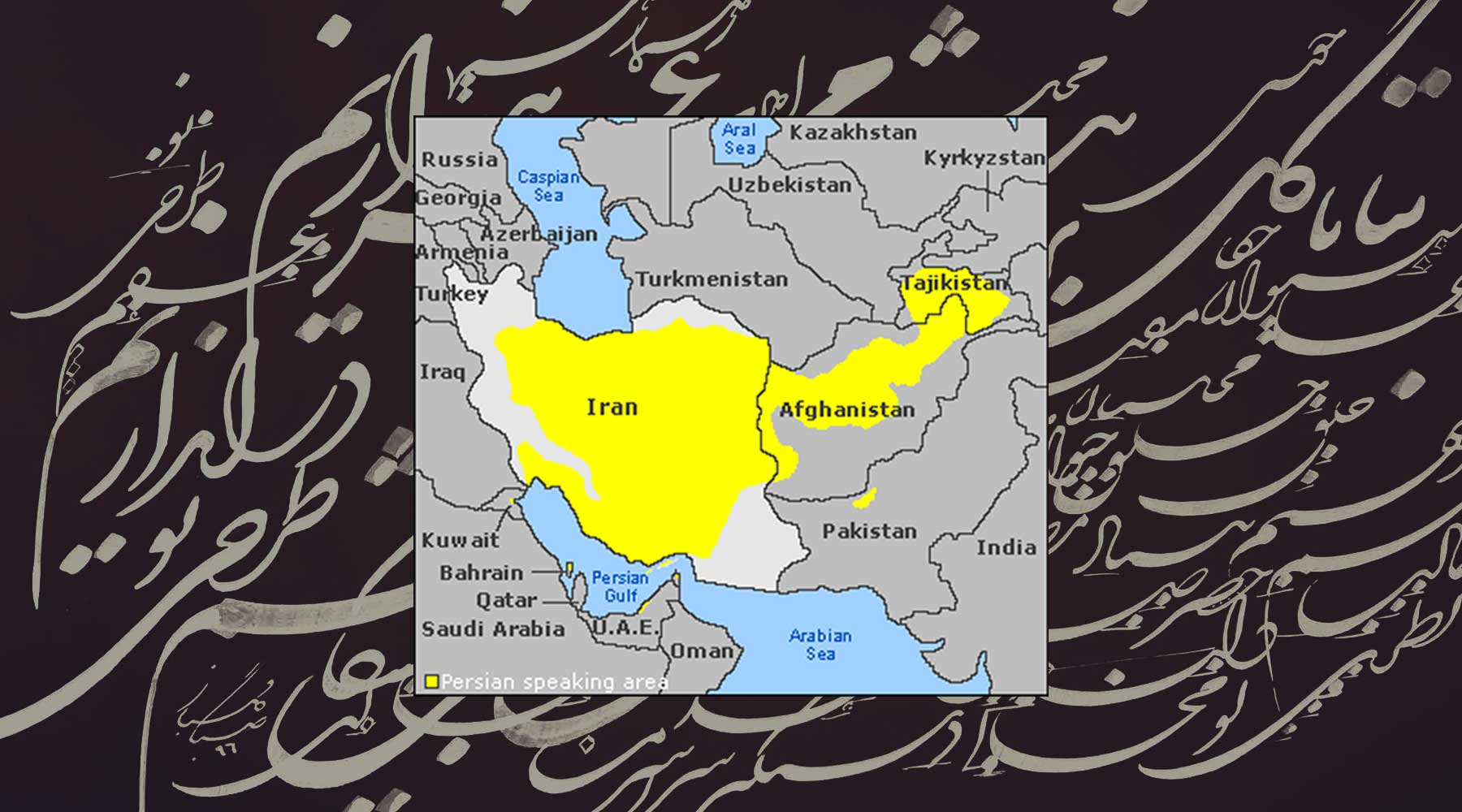
Understanding the geographic distribution of Farsi is the first step in localizing software, deploying AI models, and securing digital infrastructure across the Middle East and Central Asia. The primary hubs for the language are Iran, Afghanistan (where it is known as Dari), and Tajikistan (where it is known as Tajiki). Each of these regions presents unique technical requirements, varying from script encoding to digital sovereignty.
1. Mapping the Persian-Speaking Digital Frontier: Demographic Reach and Connectivity
To understand the technical footprint of Farsi, one must look at the primary nations where it serves as an official or dominant language. The “Persianate” world is not a monolith; rather, it is a diverse digital landscape with varying levels of infrastructure and connectivity.
The Iranian Digital Powerhouse
Iran is the largest Farsi-speaking market, with a population exceeding 85 million. From a tech perspective, Iran is an anomaly: despite international sanctions, it has developed one of the most robust domestic tech ecosystems in the region. For developers, this means a massive user base that is highly tech-savvy, with smartphone penetration rates surpassing 80% in urban centers. Software localization in Iran requires navigating a unique landscape of localized Android stores and domestic payment gateways that operate independently of global systems like Google Play or Stripe.
Afghanistan and the Dari Dialect
In Afghanistan, Farsi is known as Dari and serves as the lingua franca for over half the population. While the digital infrastructure in Afghanistan is less developed than in Iran, mobile connectivity has seen explosive growth over the last decade. For tech providers, Afghanistan represents a “mobile-first” market. Apps must be optimized for low-bandwidth environments and high latency, making “lite” versions of software essential for this demographic.
Tajikistan and the Cyrillic Shift
Tajikistan presents a unique technical challenge for Farsi localization. While the spoken language is mutually intelligible with the Farsi spoken in Tehran, the written script in Tajikistan primarily uses Cyrillic due to its Soviet history. This means that a “one-size-fits-all” approach to Farsi localization will fail in Tajikistan. Developers must account for transliteration engines and dual-script support if they aim to capture the Central Asian Persian-speaking market.
2. Technical Challenges in Farsi Software Localization: Script, RTL, and Encoding
When a tech company identifies a country that speaks Farsi, the immediate next step is addressing the technical debt associated with Middle Eastern scripts. Farsi uses a modified version of the Arabic alphabet, which introduces several layers of complexity in software engineering.
Mastering Right-to-Left (RTL) UI/UX Design
Unlike Latin-based languages, Farsi is written from right to left. This is not merely a matter of text alignment; it requires a complete mirroring of the user interface. In a Farsi-localized app, progress bars must fill from right to left, “back” arrows must point to the right, and navigation drawers must slide out from the right side of the screen. Implementing BiDi (Bidirectional) algorithms is a core requirement for any developer working in this space. Failure to correctly implement RTL layouts leads to “UI fragmentation,” where elements overlap or become unclickable, alienating millions of potential users.
The Nuances of Persian Typography and Unicode
Farsi includes four letters not found in Arabic (پ, چ, ژ, گ). A common technical error is using standard Arabic fonts for Farsi speakers, which can lead to “mojibake” or broken characters. Furthermore, the “Ye” (ی) and “Kaf” (ک) characters in Farsi have different Unicode code points than their Arabic counterparts. If a database is not configured to handle these specific Persian Unicode characters, search functionalities will break. For instance, a user searching for “کتاب” (book) with a Persian “Kaf” will find zero results if the database was populated using an Arabic “Kaf.”
Zero-Width Non-Joiner (ZWNJ) and Text Processing
A specific technical requirement of the Farsi script is the Zero-Width Non-Joiner (ZWNJ), known as the nim-fasele. It is used to separate prefixes or suffixes from the root word without a space, preventing the letters from joining visually. In terms of text processing and search engine optimization (SEO), the ZWNJ is a major hurdle. If a search algorithm does not recognize that “میشود” (it becomes) with a ZWNJ is the same as “میشود” without one, the software’s utility is significantly diminished.
3. The Rise of NLP and AI in the Persian Language Ecosystem
As Artificial Intelligence continues to dominate the tech industry, Farsi has become a focal point for Natural Language Processing (NLP) research. Identifying which countries speak Farsi allows AI companies to better source datasets for Large Language Models (LLMs).
Challenges in Low-Resource Data Collection
While Farsi is spoken by millions, it is often classified as a “low-resource” language in the context of AI training. This is because the volume of high-quality, digitized, and labeled Farsi text available on the open web is significantly lower than English or Mandarin. Tech firms are currently investing in “web crawling” projects specifically targeting Iranian and Afghan digital news outlets and forums to build more robust datasets for models like GPT-4 or Claude to better understand Persian nuances.
Sentiment Analysis and Morphological Complexity
Farsi is a highly inflected and poetic language, making sentiment analysis technically difficult. A single word can have multiple meanings depending on context, and the use of irony and metaphors is prevalent in Persian digital discourse. Developing AI that can accurately perform sentiment analysis for a brand monitoring tool in the Farsi-speaking world requires specialized tokenizers and lemmatizers that can strip away the complex Persian affixes to find the root meaning of a sentence.
Speech-to-Text and Voice Recognition
The regional dialects across Iran, Afghanistan, and Tajikistan create a significant “acoustic model” problem for voice-activated tech. A voice assistant calibrated for a Tehrani accent will struggle to understand a user in Herat (Afghanistan) or Dushanbe (Tajikistan). Current trends in tech involve using Federated Learning to train voice models on local devices across these different countries, allowing the AI to adapt to regional phonetic variations without compromising user privacy.
4. Innovation and the Independent Tech Ecosystem in Farsi-Speaking Regions
When we discuss the countries that speak Farsi, we must also acknowledge the “Digital Sovereignty” that has emerged, particularly in Iran. Due to geopolitical factors and the specific linguistic needs of the population, a parallel tech ecosystem has flourished.
The “Clone” Economy and Local Innovation
Because many global platforms (like Amazon, Uber, or YouTube) have historically been unavailable or unlocalized in Farsi-speaking regions, local tech entrepreneurs have built massive alternatives. Snapp is the Iranian equivalent of Uber; Digikala is the Amazon of the Persian world; and Aparat serves as the primary video-sharing platform. For global tech observers, these platforms are case studies in successful localization. They have solved the RTL issues, integrated domestic mapping APIs, and mastered the local logistics that global players often overlook.
Fintech and the Challenge of Digital Payments
In the Farsi-speaking world, particularly Iran, the banking system is disconnected from the global SWIFT network. This has led to the rise of a sophisticated domestic Fintech sector. Local apps use “Shetab” (the Iranian banking bridge) to process millions of transactions daily. For a tech company looking to enter this space, the challenge isn’t just “what country speaks Farsi,” but rather “how do we integrate with a completely isolated financial API?” This has spurred innovation in blockchain and decentralized finance (DeFi) as alternative methods for cross-border value transfer within the Persian-speaking diaspora.
Cybersecurity and Digital Rights
Finally, the tech landscape in Farsi-speaking countries is heavily defined by cybersecurity concerns. High levels of internet filtering in some regions have led to a tech-savvy population that is highly proficient in the use of VPNs, proxies, and encrypted communication tools. This “cat-and-mouse” game between state infrastructure and user privacy has turned the Farsi-speaking world into a real-world testing ground for censorship-circumvention technologies and decentralized web protocols.
The Future of Farsi in the Global Tech Stack
As we have explored, the question of “what country speaks Farsi” is the starting point for a deep dive into a complex and rewarding technological landscape. Whether it is the 80 million consumers in Iran, the growing mobile population in Afghanistan, or the unique script requirements of Tajikistan, the Persian-speaking world demands a specialized approach to technology.
For the global tech industry, the focus is shifting from simple translation to deep localization. This involves mastering RTL design, contributing to Farsi NLP datasets, and understanding the unique digital infrastructure of the Persianate world. As AI and global connectivity continue to bridge gaps, the ability to effectively integrate Farsi into the global tech stack will be a key differentiator for companies seeking to be truly universal. The Persian language is no longer just a cultural heritage; it is a vital component of the modern digital frontier.
aViewFromTheCave is a participant in the Amazon Services LLC Associates Program, an affiliate advertising program designed to provide a means for sites to earn advertising fees by advertising and linking to Amazon.com. Amazon, the Amazon logo, AmazonSupply, and the AmazonSupply logo are trademarks of Amazon.com, Inc. or its affiliates. As an Amazon Associate we earn affiliate commissions from qualifying purchases.