
The Vietnam War, a brutal and protracted conflict spanning from the mid-1950s to 1975, is primarily remembered for its geopolitical complexities, ideological clashes, and profound human cost. However, beneath the surface of battles and diplomacy lay an immense economic burden that reshaped national treasuries, diverted resources, and cast a long financial shadow over every combatant nation. While the question “what countries fought in the Vietnam War” typically elicits a historical answer about military involvement, a crucial, often overlooked dimension is the staggering financial investment and subsequent economic ramifications for each participating country. This article delves into the monetary aspect of the Vietnam War, exploring how various nations funded their involvement, the immediate economic strains they faced, and the enduring financial legacies that continue to influence their fiscal landscapes decades later. Understanding the economic sacrifices and strategies of the nations involved offers a unique, insightful lens into one of the 20th century’s most defining conflicts.
The Primary Combatants and Their Financial Stakes
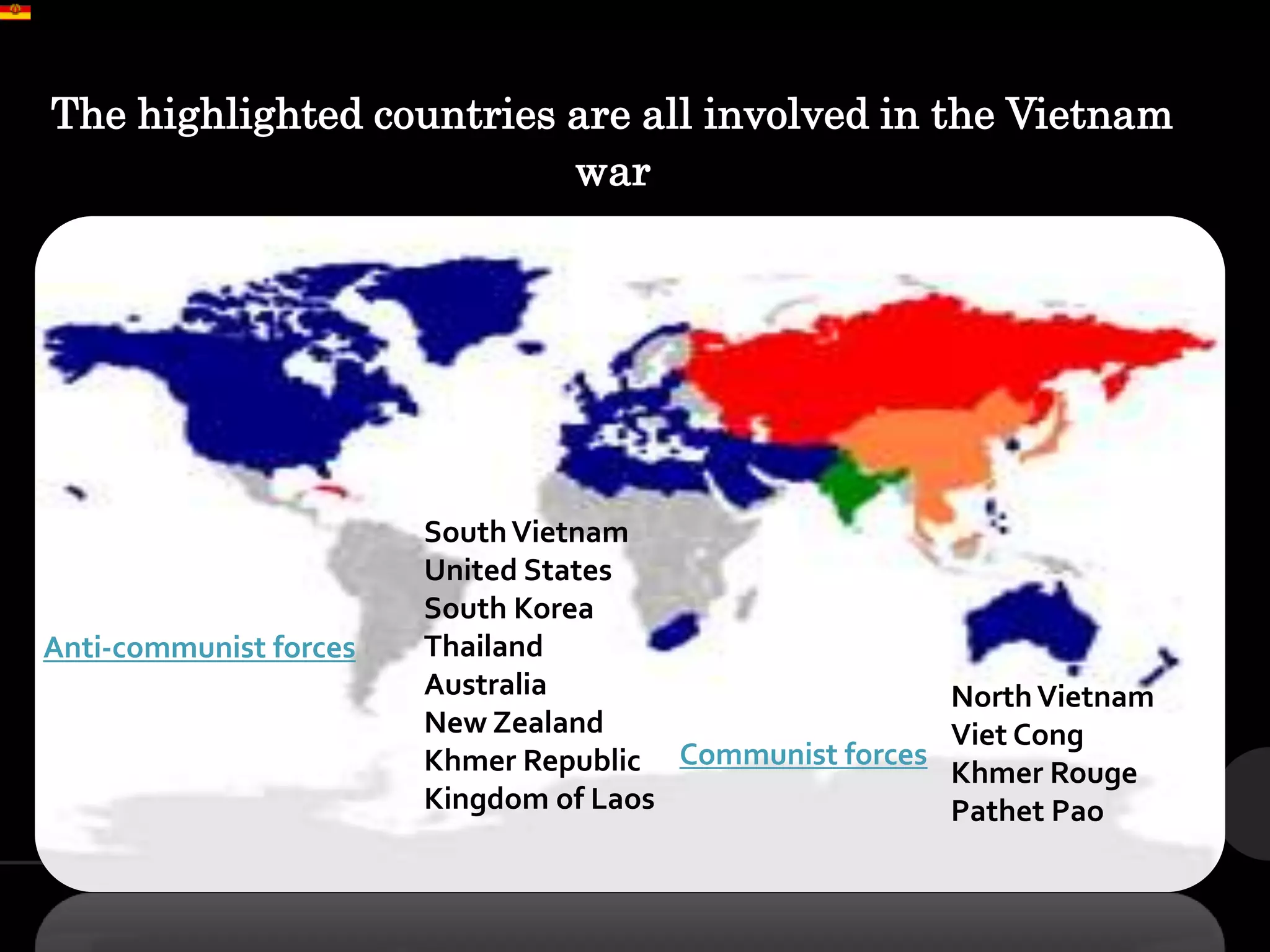
The Vietnam War was far from a localized skirmish; it was a global proxy war involving dozens of nations either directly through military engagement or indirectly through substantial financial and logistical support. Each country’s decision to participate, or to offer aid, was underpinned by complex calculations of geopolitical interest, ideological solidarity, and, crucially, the perceived economic cost versus benefit. The financial commitment required to sustain a modern war machine, project power across continents, or rebuild a war-torn nation tested the fiscal resilience of all involved.
The United States: An Unprecedented Economic Commitment
For the United States, involvement in Vietnam represented an unprecedented economic commitment that stretched its federal budget to its limits. The financial costs were immense and multifaceted. Billions were poured into military hardware, including aircraft, weaponry, and advanced communication systems. The sheer logistical challenge of supplying hundreds of thousands of troops halfway across the world demanded colossal expenditure on transport, fuel, provisions, and infrastructure. Beyond direct military spending, the U.S. government also funded extensive aid programs for South Vietnam, aiming to bolster its economy and military capacity, often through direct grants, military assistance programs, and infrastructure development projects. This “guns and butter” approach, attempting to fund both a costly war and domestic social programs (the “Great Society”), led to significant inflationary pressures within the U.S. economy. The war was largely financed through borrowing and increased taxation, contributing to a growing national debt and ultimately impacting America’s economic stability and its standing on the global financial stage. The cost of maintaining an expeditionary force, combined with the escalating intensity of the conflict, meant that what started as a limited commitment spiraled into an economic black hole, diverting resources that could have been invested in domestic growth and technological advancement.
North Vietnam and the USSR/China: The Costs of Ideological Support
On the opposing side, North Vietnam, along with its primary allies, the Soviet Union and China, also bore a substantial financial burden. North Vietnam, a less industrialized nation, relied heavily on extensive military and economic aid from its communist benefactors. The Soviet Union and China provided vast quantities of weapons, ammunition, vehicles, and fuel, alongside significant economic assistance in the form of loans, grants, and technical expertise. This support was not without its own cost; while ideologically driven, it represented a strategic investment for Moscow and Beijing aimed at expanding their influence and challenging Western hegemony. For North Vietnam, the direct financial cost was measured in the diversion of its limited economic resources towards sustaining its military, rebuilding infrastructure destroyed by bombing, and managing an economy under constant wartime pressure. The long-term economic development of North Vietnam was severely hampered, with resources that could have been used for industrialization and agricultural modernization instead funneled into the war effort. The economic sustainability of the North Vietnamese struggle was thus inextricably linked to the continued financial and material generosity of its powerful allies, making it a proxy conflict in more ways than one.
South Vietnam and Allied Nations: Economic Dependence and Strain
South Vietnam, despite being the recipient of massive U.S. aid, also suffered immense economic strain. Its economy became heavily dependent on foreign assistance, creating an artificial prosperity in some urban centers while rural areas struggled. The war disrupted agriculture, trade, and industry, leading to high inflation, corruption, and a pervasive black market. The need to maintain a large military force placed a disproportionate burden on its national budget, which was often subsidized by American funds. Beyond the principal combatants, several other nations contributed forces to the anti-communist effort, notably South Korea, Australia, New Zealand, Thailand, and the Philippines. While their military contributions were smaller than that of the U.S., they still incurred significant financial costs related to deploying and sustaining their troops, procuring equipment, and providing medical and logistical support. For these allied nations, their involvement represented a financial investment in geopolitical stability, maintaining alliances, and, in some cases, securing their own regional interests, albeit at a tangible cost to their respective treasuries and domestic spending priorities.
Funding the War Machine: Strategies and Sacrifices
Funding a war of the scale and duration of the Vietnam War required innovative and often painful financial strategies. Both sides had to mobilize national resources, persuade their populations to endure economic hardships, and leverage international alliances for material support. The methods employed directly impacted domestic economies and global financial systems.
War Bonds, Taxes, and Inflation: The Domestic Burden
For the United States, the primary methods of funding the war were through increased taxation and borrowing. Income taxes were raised, and the government issued a significant amount of war bonds, appealing to patriotic duty to secure private capital. However, the Johnson administration’s reluctance to fully fund the war through even higher taxes or direct controls on spending led to a reliance on deficit spending. This, combined with the Federal Reserve’s accommodative monetary policy, pumped money into the economy without a corresponding increase in goods and services, resulting in rampant inflation. The cost of living rose significantly, eroding purchasing power and leading to social unrest. The “guns and butter” strategy ultimately proved unsustainable, leading to economic instability that persisted well into the 1970s. For North Vietnam, while reliant on foreign aid, internal funding largely came from centralized state planning, redirection of agricultural output, and forced savings. The population endured severe austerity measures, with resources meticulously channeled to support the military and rebuild after devastating bombing campaigns. The economic model was one of absolute state control, prioritizing military needs over consumer goods or individual prosperity.
Foreign Aid and Geopolitical Financial Leverage
Foreign aid was a critical financial lifeline for both sides, albeit structured differently. For South Vietnam, U.S. economic and military aid was massive, essentially propping up the government and its war effort. This aid often came with conditions, granting the U.S. significant influence over South Vietnamese policy and military strategy. For North Vietnam, aid from the Soviet Union and China was equally vital, arriving as equipment, technical assistance, and food. This aid was a form of geopolitical leverage, solidifying alliances and expanding ideological influence. These financial flows were not merely transactions; they were instruments of statecraft, demonstrating commitments, binding allies, and influencing the strategic direction of the conflict. The provision of aid also incurred domestic costs for the donor nations, representing significant portions of their national budgets that were allocated to external ventures rather than internal development.
The Long Shadow of War: Post-Conflict Economic Repercussions
The cessation of hostilities in 1975 did not mark the end of the financial burden of the Vietnam War. Instead, it ushered in a new phase of economic challenges, as nations grappled with the long-term consequences of their immense wartime spending and the imperative of post-conflict recovery.
Veterans’ Benefits and Social Costs: A Persistent Drain
For the United States, one of the most enduring financial legacies has been the massive and ongoing cost of veterans’ benefits. Millions of service members returned home, many with physical and psychological wounds requiring lifelong medical care, disability payments, and support services. The Department of Veterans Affairs budget has consistently been one of the largest components of the federal budget, a direct and continuous financial echo of the conflict. Beyond direct benefits, the war also imposed significant social costs, including increased healthcare spending for affected communities, and investment in educational and training programs for returning personnel to reintegrate into the civilian workforce. These are costs that span generations, representing a fiscal commitment that far outlasts the active fighting itself.
Reconstruction and Development Challenges
For Vietnam itself, both North and South, the economic devastation was immense. Decades of warfare had ravaged infrastructure, agricultural lands, and industrial capacity. The unified Socialist Republic of Vietnam faced the colossal task of reconstruction, integrating two vastly different economies, and rebuilding a nation from the ground up, all while grappling with international isolation and a lingering embargo from the U.S. The initial years post-war were marked by severe economic hardship, food shortages, and slow development. It wasn’t until the Doi Moi reforms in the late 1980s, embracing market-oriented policies, that Vietnam began its path towards economic recovery and integration into the global economy, a journey that has required significant foreign investment and internal reforms to overcome the legacy of war. The long-term costs of environmental damage, such as from Agent Orange, also posed complex and expensive health and land remediation challenges.
Impact on Global Trade and Investment Flows
The Vietnam War also had broader implications for global trade and investment. For the U.S., the war contributed to the decline of the Bretton Woods system of fixed exchange rates and the eventual end of dollar convertibility to gold, as massive spending undermined faith in the dollar. The resulting inflation and economic instability impacted global markets. For Vietnam, the years of conflict and subsequent isolation hampered its ability to participate in international trade and attract foreign direct investment for decades. This limited its economic growth potential and kept it largely outside the burgeoning global supply chains of the late 20th century. The war diverted resources and attention from other potential economic opportunities and collaborations, shifting investment priorities and altering geopolitical economic alliances, demonstrating how deeply military conflicts can impact the delicate balance of international finance.
Lessons Learned: Financial Prudence in Geopolitical Engagements
The financial history of the Vietnam War offers crucial lessons for policymakers and economists today. It underscores that engaging in geopolitical conflicts is not merely a matter of military strategy and human lives; it is also a monumental financial undertaking with profound, long-lasting economic consequences. The war demonstrated the perils of underestimating the true financial cost of intervention, the inflationary pressures of deficit-financed warfare, and the intergenerational burden of veterans’ care and national debt.
For nations contemplating military action, the Vietnam War serves as a stark reminder of the importance of thorough financial forecasting, transparent cost accounting, and the necessity of aligning military objectives with sustainable economic strategies. It highlights the need to consider not just the immediate battlefield costs, but also the long-term expenses of social welfare, veterans’ health, national debt servicing, and the opportunity costs of diverted resources. In an increasingly interconnected global economy, the financial ripples of conflict can spread far beyond national borders, impacting global trade, investment, and currency stability. The legacy of the Vietnam War’s financial toll emphasizes that true national security and prosperity are inextricably linked to sound fiscal management, even amidst the most challenging geopolitical circumstances.
aViewFromTheCave is a participant in the Amazon Services LLC Associates Program, an affiliate advertising program designed to provide a means for sites to earn advertising fees by advertising and linking to Amazon.com. Amazon, the Amazon logo, AmazonSupply, and the AmazonSupply logo are trademarks of Amazon.com, Inc. or its affiliates. As an Amazon Associate we earn affiliate commissions from qualifying purchases.