
The S&P 500 index stands as one of the most widely recognized and crucial benchmarks for the U.S. equity market. Far from being a mere list of 500 companies, it represents a dynamic portfolio of America’s largest and most influential publicly traded corporations, reflecting the broad health and direction of the national economy. For investors, financial analysts, and economists alike, understanding the composition of the S&P 500 is not just an academic exercise; it’s a fundamental step in comprehending market movements, assessing investment opportunities, and gauging economic sentiment.
This article delves into the intricate details of what makes up this pivotal index. We will explore its structure, the rigorous criteria companies must meet for inclusion, the ongoing evolution of its membership, and the profound implications its composition holds for various financial stakeholders. By the end, you will have a comprehensive understanding of why the S&P 500 is more than just a number—it’s a living, breathing barometer of American corporate power and innovation.
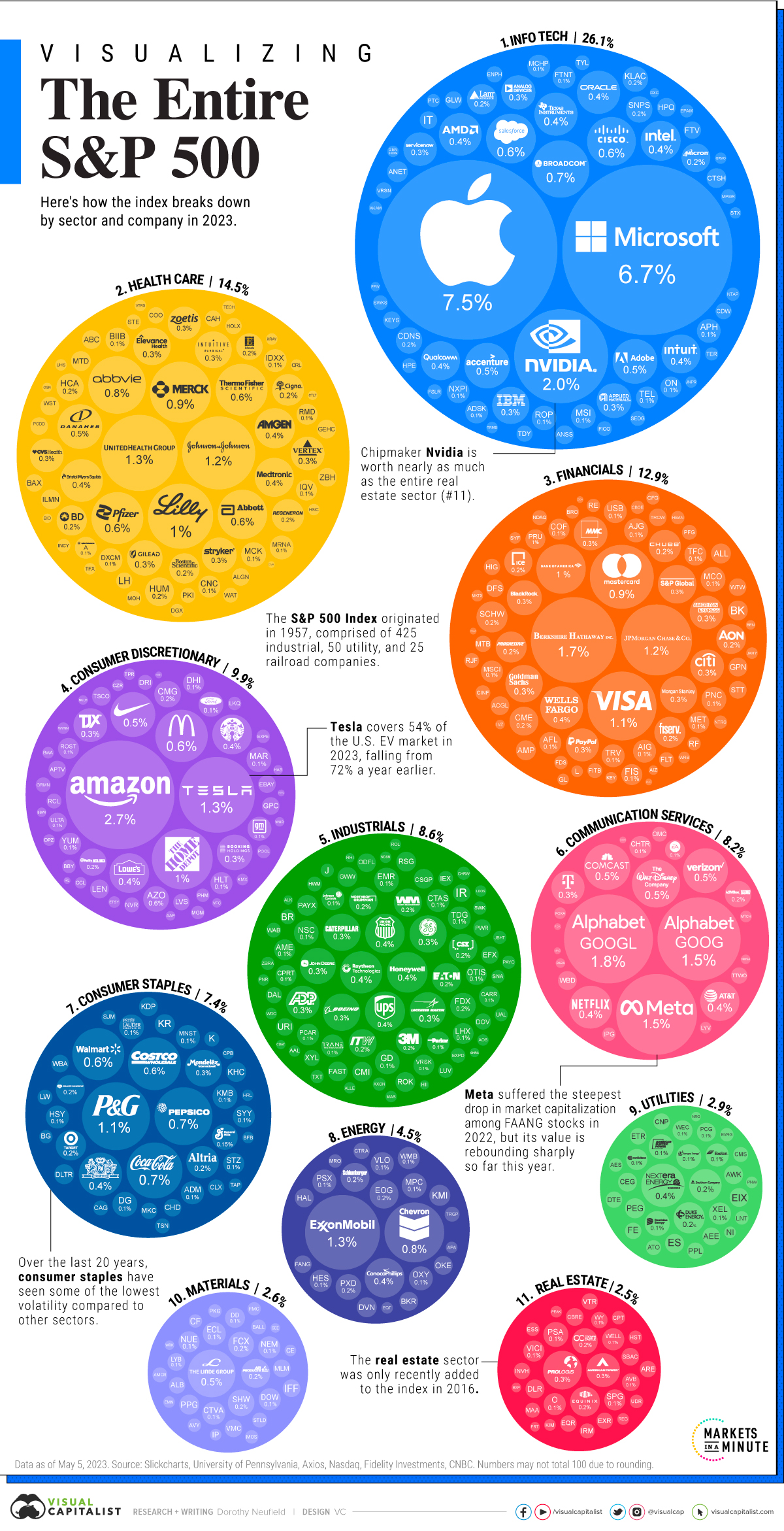
The S&P 500: A Benchmark of American Economic Power
At its core, the S&P 500 (Standard & Poor’s 500) is a stock market index that represents the performance of 500 large companies selected by S&P Dow Jones Indices. These are not just any 500 companies; they are leaders across various sectors, chosen for their size, liquidity, and ability to reflect the broader U.S. economy. Since its inception in 1957, the S&P 500 has evolved to become the most commonly followed equity index, often serving as a proxy for the entire U.S. stock market.
Beyond Just 500 Names: A Market Capitalization-Weighted Index
One of the most critical aspects of the S&P 500 is its methodology: it is a market capitalization-weighted index. This means that companies with larger market capitalizations (stock price multiplied by the number of outstanding shares) have a greater impact on the index’s performance. For example, if Apple, a company with a market cap often in the trillions, experiences a significant price movement, it will exert a far greater influence on the S&P 500’s daily change than a company with a market cap of, say, $50 billion, even if both move by the same percentage.
This weighting scheme ensures that the index accurately reflects the actual economic footprint and investment dollars allocated to these behemoth corporations. It’s not an equal-weighted index where each company contributes equally, nor is it price-weighted like the Dow Jones Industrial Average. The market-cap weighting provides a truer representation of the overall market value and the collective sentiment towards the largest publicly traded entities in the U.S. economy. Consequently, understanding its major constituents is paramount for investors looking to grasp where the bulk of market value lies.
Why the S&P 500 Matters for Investors and the Economy
The significance of the S&P 500 extends across multiple facets of the financial world. For individual and institutional investors, it serves as the primary benchmark against which the performance of large-cap U.S. equity funds, actively managed portfolios, and even individual stock picks are measured. If a fund manager fails to “beat the S&P 500,” it suggests their active strategy might not be generating sufficient alpha, or excess returns, relative to a passively managed index fund.
Economically, the S&P 500 is widely considered a leading indicator of U.S. economic health. Its upward trajectory often signals robust corporate earnings, investor confidence, and a growing economy, while sustained declines can point to economic headwinds or recessionary fears. Analysts frequently dissect the index’s sectoral performance, earnings reports of its constituents, and overall market sentiment derived from its movements to forecast broader economic trends. Moreover, countless financial products, such as exchange-traded funds (ETFs) and mutual funds, are designed to track the S&P 500, offering investors an accessible way to gain diversified exposure to these market leaders.
The Dynamic Composition: How Companies Join and Depart
The S&P 500 is not a static list; it is a living entity, constantly evolving to reflect the shifts in the U.S. corporate landscape. While the number 500 suggests a fixed list, the actual constituents change regularly, driven by economic forces, corporate actions, and the rigorous criteria set by the S&P Dow Jones Indices committee. This dynamic nature is crucial for the index to maintain its relevance as a benchmark of current economic power.
Criteria for Inclusion: More Than Just Being Large
Membership in the S&P 500 is prestigious and highly sought after, often leading to increased investor interest and liquidity for a newly added company’s stock. However, inclusion is not automatic simply by reaching a certain size. The S&P Dow Jones Indices committee employs a comprehensive set of criteria, both quantitative and qualitative, to ensure the index remains a true representation of the U.S. large-cap market. Key criteria include:
- U.S. Company: The company must be based in the United States.
- Market Capitalization: There is a minimum market capitalization threshold, which is adjusted periodically to reflect market conditions. This ensures only large-cap companies are considered.
- Public Float: A substantial portion of the company’s shares must be publicly available for trading (free float) to ensure sufficient liquidity.
- Liquidity: The company’s stock must be actively traded, with adequate volume and reasonable price points to allow for easy buying and selling without significant price impact.
- Profitability: A company must have positive reported earnings in its most recent quarter and for the sum of its reported earnings over the previous four consecutive quarters (GAAP earnings). This ensures financial stability.
- Listing: The stock must be listed on a major U.S. exchange, such as the New York Stock Exchange (NYSE) or NASDAQ.
- Sector Representation: While not a strict quota, the committee aims for sector balance to ensure the index reflects the general distribution of industries in the U.S. economy.
These criteria are designed to ensure that the companies included are not only large but also financially sound, publicly accessible, and representative of various economic sectors.
The S&P Dow Jones Indices Committee: The Gatekeepers
The ultimate decision-making power rests with the S&P Dow Jones Indices committee. This committee of financial experts regularly monitors the market and the index’s constituents, meeting periodically to review potential changes. Their role goes beyond simply applying a checklist; they also exercise qualitative judgment. For instance, they might consider whether a company’s inclusion would enhance the index’s overall representativeness, or if a company is undergoing significant structural changes that might impact its long-term viability as an index member.
This discretionary power allows the committee to maintain the quality and integrity of the index, ensuring it remains a reliable benchmark despite the dynamic nature of the corporate world. Their decisions are closely watched by market participants, as inclusion in or exclusion from the S&P 500 can have tangible effects on a company’s stock price and investor sentiment.
Why Companies Leave the Index
Just as companies join, they also depart the S&P 500. Reasons for removal are diverse and can include:
- Acquisition or Merger: When an S&P 500 company is acquired by another entity, it is removed from the index.
- Bankruptcy or Delisting: Companies that go bankrupt or are delisted from major exchanges obviously no longer meet the criteria.
- Failure to Meet Criteria: A sustained decline in market capitalization, persistent unprofitability, or a significant decrease in liquidity can lead to removal.
- Corporate Restructuring: Major corporate overhauls that fundamentally change a company’s business model or legal structure can also trigger a review.
When a company is removed, another company meeting the inclusion criteria is selected to take its place, ensuring the index maintains its 500 constituents. These changes, though seemingly minor, reflect ongoing shifts in economic power and corporate performance within the U.S. market.
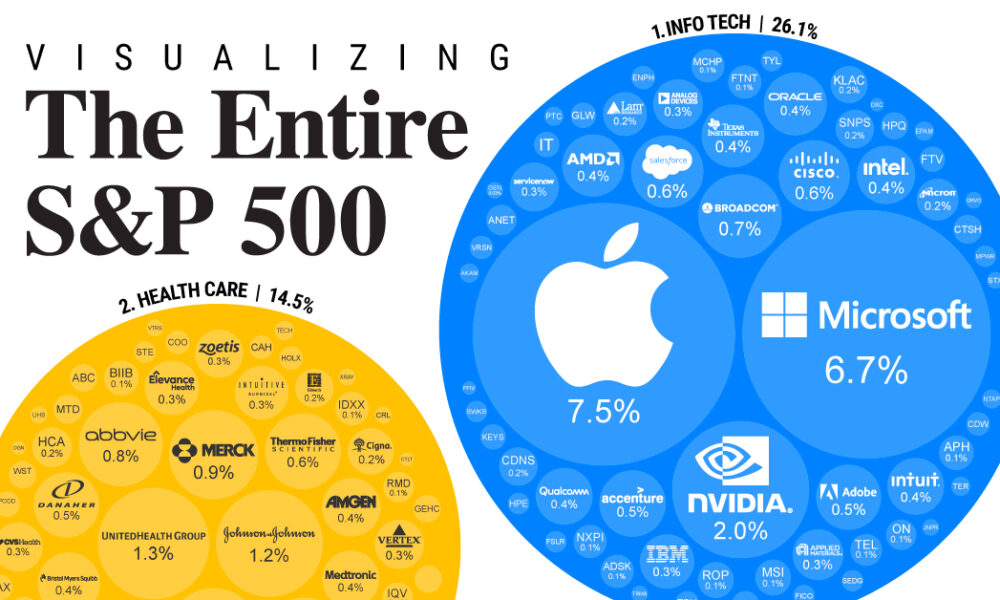
A Sectoral Snapshot: Understanding the S&P 500’s Diversity
While the S&P 500 comprises 500 distinct companies, its overall character and performance are heavily influenced by the relative weightings and fortunes of its constituent sectors. Understanding this sectoral breakdown is crucial for investors seeking to analyze market trends, diversify portfolios, and gauge the economic outlook.
The Dominant Players: Technology and Other Key Sectors
Historically, the S&P 500 has seen shifts in which sectors dominate. In the early 21st century, the Technology sector, alongside Communication Services, has grown to exert an unparalleled influence on the index. Giants like Apple, Microsoft, Amazon (classified under Consumer Discretionary but with significant tech overlap), Alphabet (Google), and Nvidia often command the largest market capitalizations, meaning their performance profoundly impacts the overall S&P 500. Their innovation, global reach, and robust earnings growth have propelled them to the forefront.
Beyond technology, other significant sectors that consistently hold substantial weight include:
- Financials: Comprising banks, insurance companies, and investment firms (e.g., JPMorgan Chase, Bank of America), this sector is crucial for economic liquidity and growth.
- Healthcare: Pharmaceutical companies, biotech firms, and healthcare providers (e.g., Johnson & Johnson, UnitedHealth Group) represent a stable and often growing segment due to demographic trends and ongoing innovation.
- Consumer Discretionary and Consumer Staples: These sectors represent companies whose products and services are bought by consumers. Discretionary companies (e.g., Tesla, Home Depot) are more sensitive to economic cycles, while Staples (e.g., Procter & Gamble, Walmart) provide essential goods and are generally more resilient during downturns.
- Industrials: Companies involved in manufacturing, aerospace, defense, and transportation (e.g., Boeing, Honeywell) are bellwethers for global economic activity.
Each sector brings its own unique set of economic drivers, risks, and growth opportunities, contributing to the overall diversification and representativeness of the S&P 500.
Reflecting Economic Shifts: The Evolving Sector Landscape
The S&P 500’s sectoral composition is not static; it continually evolves to mirror the broader economic landscape and technological advancements. Decades ago, manufacturing and energy might have held larger sway. Today, the ascendancy of technology and information services reflects a fundamental shift in economic value creation. For example, the reclassification of certain companies from Technology to Communication Services (e.g., Facebook, Google) or the emergence of new industries (like renewable energy within Utilities or Industrials) continually reshapes the index’s internal dynamics.
This evolution is vital for the index to remain relevant. It ensures that the S&P 500 continues to reflect where capital is being allocated and where economic growth is most pronounced. For investors, understanding these shifts allows for informed decisions regarding sector rotation, risk management, and the potential for long-term growth across different parts of the economy. It highlights the importance of not just knowing which companies are in the S&P 500, but also what types of businesses dominate its influence.
Investing in the S&P 500: Strategies and Considerations
For many investors, gaining exposure to the S&P 500 is a cornerstone of their investment strategy. Its broad diversification, track record of long-term growth, and representativeness of the U.S. economy make it an attractive option. However, there are various approaches and considerations for incorporating the S&P 500 into a financial plan.
Index Funds and ETFs: Accessible Diversification
The most common and efficient way for investors to participate in the S&P 500’s performance is through index funds and exchange-traded funds (ETFs) that track the index. These investment vehicles hold the stocks of all 500 companies (or a representative sample) in proportions that mimic the S&P 500’s market capitalization weighting.
- Benefits:
- Diversification: Instantly provides exposure to 500 large-cap U.S. companies, significantly reducing company-specific risk compared to investing in individual stocks.
- Low Cost: Index funds and ETFs are typically passively managed, resulting in much lower expense ratios compared to actively managed funds.
- Market Returns: By tracking the index, these funds aim to match the market’s performance, providing a solid foundation for long-term wealth creation.
- Simplicity: They offer a straightforward way to invest in the broader market without the need for extensive individual stock research.
Popular examples include ETFs like SPDR S&P 500 ETF Trust (SPY), iShares Core S&P 500 (IVV), and Vanguard S&P 500 ETF (VOO), as well as various S&P 500 index mutual funds offered by major financial institutions.
Beyond Simple Indexing: Active Management and Analysis
While passive indexing is popular, understanding the S&P 500’s composition is also crucial for active investors and financial professionals. For those who choose to actively manage their portfolios or select individual stocks, the S&P 500 serves as a vital context.
- Benchmarking Active Performance: Active managers constantly compare their returns against the S&P 500. Outperforming the index indicates successful stock selection or sector timing, while underperformance can signal a need for strategic adjustments.
- Sector Analysis: Deeper dives into the S&P 500’s sectoral weightings and individual company performance within those sectors can inform decisions about over- or underweighting specific industries based on economic forecasts or valuation opportunities.
- Fundamental Analysis: Even when selecting individual stocks, investors often look at whether a company is an S&P 500 constituent or a strong candidate for future inclusion, as this can reflect its financial health and market standing.
- Risk Management: Analyzing the concentration of certain sectors or top companies within the S&P 500 helps investors understand systemic risks and make informed decisions about their own portfolio diversification.
For both passive and active investors, the S&P 500 is not just a collection of companies; it’s a powerful analytical tool that offers insights into market structure, economic trends, and investment opportunities.

Conclusion
The question “what companies make up the S&P 500” opens the door to a profound understanding of the U.S. financial landscape. Far from being a static entity, this index is a dynamic, market capitalization-weighted reflection of America’s corporate elite—500 companies carefully selected for their size, liquidity, and profitability. Their collective performance serves as the most widely accepted barometer of the U.S. stock market and a significant indicator of the nation’s economic health.
The S&P Dow Jones Indices committee meticulously curates this list, ensuring that only robust and representative companies meet the rigorous inclusion criteria. This constant evolution—with companies joining due to growth and innovation, and departing through acquisition or decline—ensures the index remains a relevant and accurate snapshot of economic power shifts. From dominant technology giants to essential healthcare providers and resilient financial institutions, the S&P 500’s sectoral diversity offers a comprehensive view of the economy.
For investors, the S&P 500 is more than just an academic curiosity; it’s a foundational element of sound financial planning. Whether through low-cost index funds providing accessible diversification or serving as a crucial benchmark for active management, understanding its composition empowers individuals and institutions to make informed decisions. In essence, the S&P 500 is a living testament to American corporate ingenuity and a vital tool for navigating the complexities of the investment world.
aViewFromTheCave is a participant in the Amazon Services LLC Associates Program, an affiliate advertising program designed to provide a means for sites to earn advertising fees by advertising and linking to Amazon.com. Amazon, the Amazon logo, AmazonSupply, and the AmazonSupply logo are trademarks of Amazon.com, Inc. or its affiliates. As an Amazon Associate we earn affiliate commissions from qualifying purchases.