
The Dow Jones Industrial Average (DJIA), often simply referred to as “the Dow,” stands as one of the most iconic and frequently cited stock market indices globally. For over a century, its movements have been dissected by investors, economists, and the general public alike, serving as a perceived barometer for the health of the U.S. economy and the broader market. Yet, despite its pervasive influence and daily headlines, many remain unclear about its precise composition, how companies are selected, and what its true significance is in today’s complex financial landscape. Far from being a static list, the Dow’s constituent companies represent a carefully curated selection of America’s industrial and economic leaders, evolving over time to reflect shifts in the nation’s business fabric. Understanding which companies comprise this elite group, and why, offers crucial insights into the market’s historical trajectory and its ongoing pulse.
Understanding the Dow Jones Industrial Average: A Legacy of Market Representation
At its core, the Dow Jones Industrial Average is a stock market index that measures the stock performance of 30 large companies listed on stock exchanges in the United States. Conceived by Charles Dow, editor of The Wall Street Journal and co-founder of Dow Jones & Company, it was first published on May 26, 1896, initially featuring just 12 companies, predominantly industrial enterprises like railroads, sugar, and tobacco. Its creation marked a pioneering effort to provide a simple, digestible metric for the overall market’s direction, a task it continues to perform today, albeit with significantly more sophisticated methodologies and a much broader economic scope.
A Pioneering Market Indicator
The historical context of the Dow is vital to appreciating its enduring relevance. In the late 19th century, financial information was far less accessible, and a tool to quickly gauge market sentiment was revolutionary. Charles Dow’s vision was to create an index that could illustrate the health of the industrial sector, which was then the driving force of the American economy. Over the decades, as the U.S. economy diversified and evolved from heavy industry to technology and services, so too did the Dow’s composition. This adaptability has allowed it to maintain its status as a relevant, if sometimes debated, benchmark, bridging the gap between historical market analysis and contemporary financial reporting. It represents not just a collection of stocks, but a narrative of American economic progress and transformation.
The Price-Weighted Methodology
One of the most distinctive and often criticized aspects of the Dow is its price-weighted methodology. Unlike other major indices such as the S&P 500, which are market-capitalization-weighted (meaning larger companies by market value have a greater impact), the Dow assigns influence based solely on the share price of its constituent companies. A one-dollar change in a higher-priced stock will have a greater effect on the index’s value than a one-dollar change in a lower-priced stock, regardless of the companies’ overall size. This is managed by a “Dow Divisor,” a number that adjusts for stock splits, dividends, and changes in the index’s components to maintain historical continuity. While seemingly simplistic, this methodology makes the Dow easier to understand for many and serves as a direct indicator of aggregate price movement among its chosen elite. However, it also means that a relatively smaller company with a high stock price could exert more influence on the index than a much larger company with a lower stock price, a point frequently raised by critics.
The Illustrious Roster: Who’s In and What They Represent
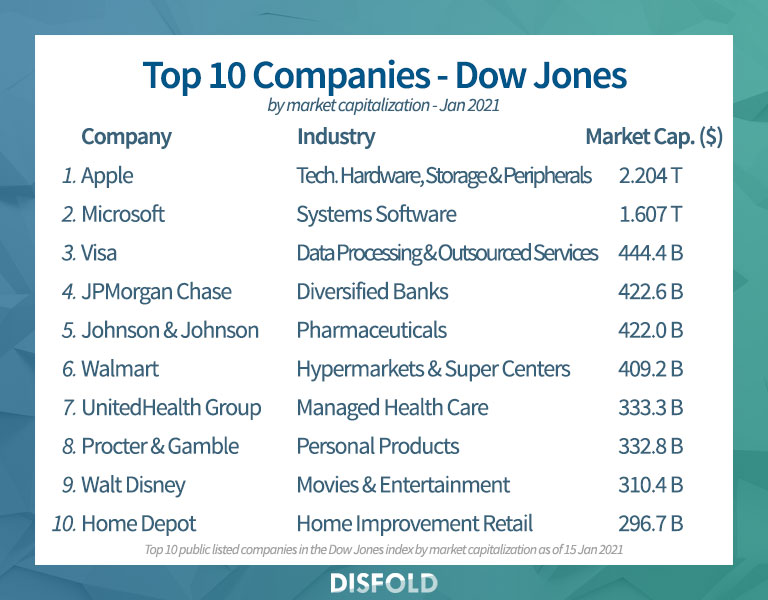
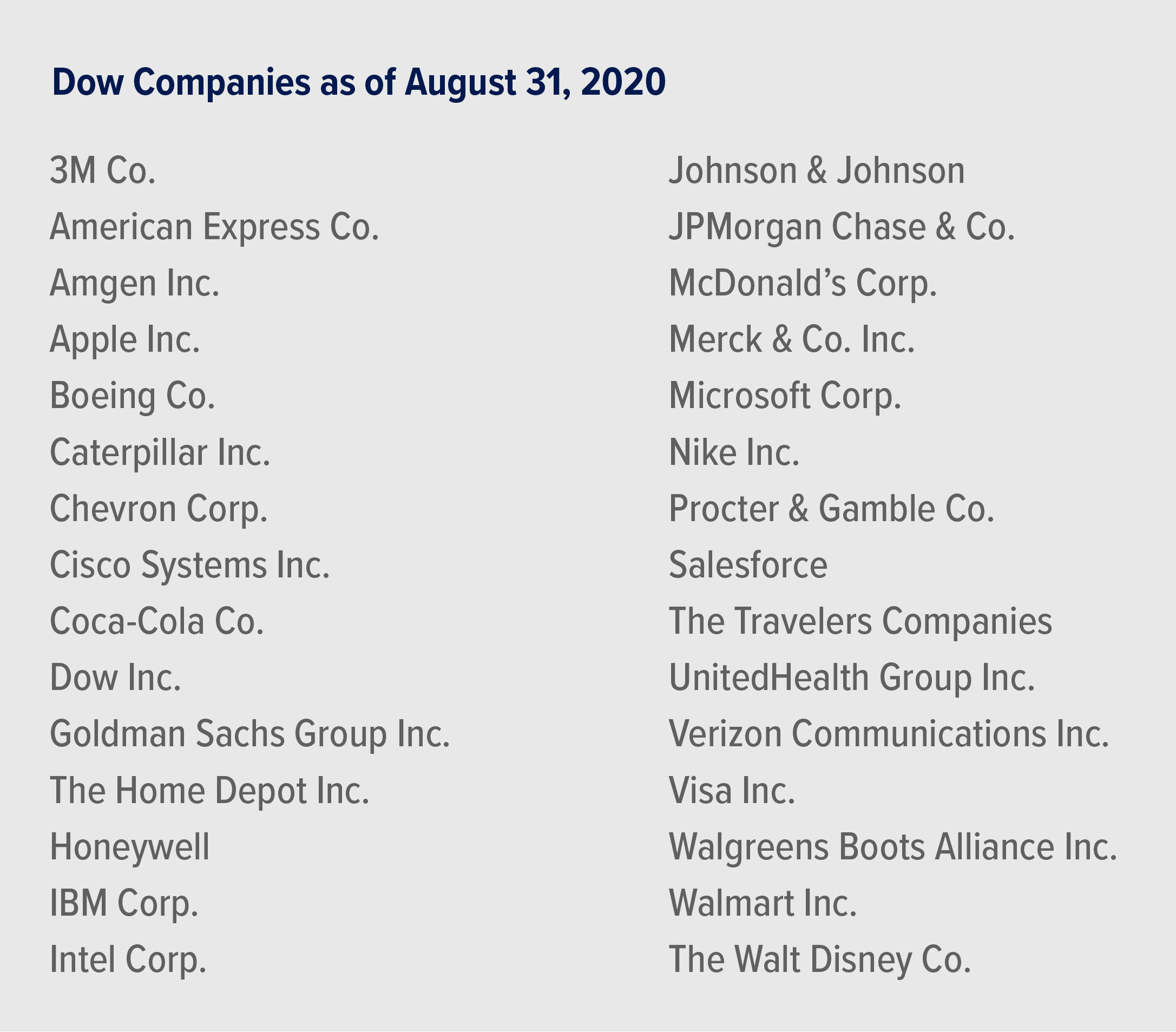
The list of companies comprising the Dow is not fixed; it is a dynamic snapshot of leading U.S. corporations, handpicked to represent diverse sectors of the economy. While the name “Industrial Average” might suggest a focus on manufacturing, the modern Dow reflects a much broader spectrum, including technology, finance, healthcare, retail, and consumer goods. The specific companies are typically household names, global giants whose operations touch billions of lives and whose financial performance often reflects broader economic trends.
Evolution and Dynamic Composition
The Dow has undergone numerous changes to its composition throughout its history. Companies are added and removed periodically to ensure the index accurately reflects the current state of the U.S. economy and market leadership. For instance, the original 12 companies bear little resemblance to today’s list, with many having been acquired, gone out of business, or simply lost their relative prominence. Notable changes in recent history include the addition of companies like Apple and Salesforce, reflecting the growing dominance of the technology sector, and the removal of older industrial stalwarts like General Electric, which had been a continuous component since 1907. These adjustments highlight the committee’s ongoing effort to keep the index relevant and representative, mirroring the ebb and flow of corporate power and innovation in America. Each change is a deliberate decision, often signaling a shift in the perceived drivers of economic growth.
Key Sectors and Influential Players (Illustrative Examples)
While the exact list of 30 companies can shift, generally the Dow includes leaders from various critical sectors. These are not necessarily the largest companies by market capitalization in the U.S., but rather those deemed by the selection committee to be “blue-chip” stocks that offer broad investor interest and represent a significant portion of their respective industries.
- Technology: Companies like Apple (AAPL) and Microsoft (MSFT) represent the tech behemoths driving innovation and consumer behavior. Their high stock prices mean they often exert significant influence on the index’s movements.
- Financial Services: Firms such as JPMorgan Chase (JPM) and Goldman Sachs (GS) reflect the health and activity of the banking and investment sectors, crucial for capital markets.
- Healthcare: Pharmaceutical and healthcare giants like UnitedHealth Group (UNH) and Johnson & Johnson (JNJ) highlight the growing importance and economic weight of the healthcare industry.
- Consumer Goods & Retail: Companies like Procter & Gamble (PG) and Walmart (WMT) indicate consumer spending patterns and the strength of the retail sector.
- Industrials: Even with the shift, foundational industrial companies like Boeing (BA) and Caterpillar (CAT) maintain a presence, demonstrating the enduring importance of manufacturing and heavy equipment.
- Energy: A company like Chevron (CVX) represents the energy sector, critical for economic stability and global supply chains.
These examples underscore the Dow’s attempt to capture a diversified cross-section of the American corporate landscape, with each company’s performance offering a glimpse into its specific industry’s health and, by extension, the broader economy.
The Selection Process: More Than Just Market Cap
The process of deciding which companies make it into the Dow is neither automated nor purely quantitative. It involves a qualitative assessment by a committee and prioritizes factors beyond mere market capitalization, differentiating it significantly from indices like the S&P 500. This deliberate selection process ensures that the Dow maintains its unique character as an indicator of “blue-chip” strength and economic representation.
Criteria for Inclusion
The S&P Dow Jones Indices Committee, which oversees the DJIA, does not publish a rigid set of rules for inclusion. Instead, they outline broad guidelines:
- Reputation and Sustained Growth: A company must have an excellent reputation, demonstrate sustained growth, and be of interest to a large number of investors. This ensures that only well-established and generally stable companies are considered.
- U.S.-Based and Listed: Companies must be organized and domiciled in the United States and listed on either the New York Stock Exchange (NYSE) or Nasdaq.
- Sectoral Representation: The committee strives to maintain adequate sector representation within the index, ensuring it reflects the overall distribution of industries in the U.S. economy. While there isn’t a strict quota, they aim for a balanced reflection.
- Blue-Chip Status: The company should generally be a leader in its industry and have a significant market capitalization, though market cap is not the sole determinant. It’s about being an established, financially sound “blue-chip” company.
- Long-Term Relevance: The committee looks for companies that are expected to maintain their leading position and economic relevance for the foreseeable future, avoiding firms that might be subject to rapid, short-term trends.
This discretionary approach allows the committee to select companies that offer a compelling narrative about the U.S. economy, rather than simply listing the largest entities.

The Role of the S&P Dow Jones Indices Committee
The S&P Dow Jones Indices Committee is comprised of representatives from S&P Dow Jones Indices and The Wall Street Journal. This committee meets regularly to review the index’s composition and consider potential changes. While changes are not frequent, they are highly significant events in the financial world. When a change is announced, it often generates considerable speculation and can impact the stock prices of both the incoming and outgoing companies. The committee’s decisions are based on their expert judgment, aiming to ensure the Dow remains a relevant and accurate reflection of American corporate leadership and economic health, balancing historical prestige with contemporary economic realities. This active management is a hallmark of the Dow, distinguishing it from passively constructed indices.
Significance and Criticisms for Investors
For investors, understanding the Dow’s unique characteristics is crucial. While it provides a quick glance at market sentiment, its limitations must be acknowledged, especially when compared to broader market indices.
A Barometer for the U.S. Economy
Despite its small number of components, the Dow is widely regarded as a barometer for the U.S. economy. Its companies are often global players, and their earnings and outlooks can reflect broader economic conditions, both domestically and internationally. A strong performance by the Dow is generally seen as a sign of confidence in corporate America and the economy, while a significant downturn can signal trouble. It’s an easily digestible headline figure, making it a popular reference point for news outlets and the general public to quickly grasp market movements. For many individual investors, the Dow serves as an accessible entry point into understanding market dynamics.
Limitations of the Dow
However, the Dow is not without its critics, and investors should be aware of its limitations:
- Limited Representation: With only 30 companies, the Dow represents a tiny fraction of the thousands of publicly traded companies in the U.S. economy. This makes it a less comprehensive measure of the entire stock market compared to broader indices.
- Price-Weighted Bias: As discussed, its price-weighted nature means that a company with a higher stock price, regardless of its market cap, has a disproportionate impact on the index’s movement. This can sometimes lead to a skewed perception of overall market performance.
- Lack of Diversity: While aiming for sectoral representation, the limited number of components means that certain sectors or emerging industries might be underrepresented or entirely absent.
- Historical Legacy vs. Modern Market: Some argue that the Dow, with its “industrial” roots and specific selection methodology, is more of a historical artifact than the most accurate reflection of today’s technology-driven, rapidly evolving market.
Dow vs. Other Major Indices
To gain a comprehensive view, investors often look at the Dow in conjunction with other major indices:
- S&P 500: Considered by many to be the best single gauge of large-cap U.S. equities, the S&P 500 tracks 500 of the largest U.S. companies and is market-capitalization-weighted, offering a much broader and more representative view of the overall market than the Dow.
- Nasdaq Composite: Heavily weighted towards technology and growth stocks, the Nasdaq Composite tracks thousands of companies listed on the Nasdaq exchange. It often provides insights into the performance of innovative and rapidly expanding sectors.
- Russell 2000: This index tracks small-cap U.S. companies, offering a glimpse into a different segment of the market that can behave differently from large-cap stocks.
Each index tells a different part of the market story. While the Dow offers a concentrated view of established leaders, the S&P 500 provides breadth, and the Nasdaq highlights growth. A savvy investor understands how to use all these tools for a holistic market assessment.
Investing in the Dow: Strategies and Considerations
For investors interested in gaining exposure to the Dow, direct investment in all 30 individual stocks can be cumbersome and costly. Fortunately, several financial products allow for diversified investment.
ETFs and Index Funds
The most common way for individual investors to gain exposure to the Dow is through Exchange Traded Funds (ETFs) or index funds that track the Dow Jones Industrial Average.
- ETFs: Funds like the SPDR Dow Jones Industrial Average ETF (DIA), often called “Diamonds,” hold the 30 stocks of the Dow in the same proportion as the index. Investing in DIA provides instant diversification across the Dow’s components and is easily bought and sold like a regular stock.
- Index Funds: Mutual funds designed to track the Dow are also available, offering a similar diversified approach but typically with different trading mechanisms (e.g., priced once a day after market close).
These products offer a convenient and cost-effective way to mirror the performance of the Dow, bypassing the need to research and purchase 30 individual stocks.
Long-Term Perspective and Portfolio Diversification
While the Dow comprises robust, blue-chip companies, it should not be the sole focus of a well-diversified investment portfolio. Given its limited scope and price-weighted nature, relying solely on the Dow can expose investors to concentration risk. A balanced portfolio typically includes:
- Broader Market Exposure: Complementing Dow exposure with investments in S&P 500 funds or total stock market funds.
- International Diversification: Including investments in non-U.S. markets to reduce reliance on any single economy.
- Fixed Income: Bonds and other fixed-income securities can provide stability and income, especially during market downturns.
- Alternative Investments: Depending on risk tolerance and financial goals, some investors might consider real estate, commodities, or other alternatives.
In conclusion, the companies that make up the Dow Jones Industrial Average are a curated selection of America’s most prominent and historically significant corporations. While its unique price-weighted methodology and limited number of components present certain limitations, the Dow remains a powerful and easily understood symbol of U.S. economic strength and market sentiment. For investors, understanding its composition, selection criteria, and how it fits into the broader ecosystem of financial indices is key to making informed investment decisions and building a truly diversified portfolio.
aViewFromTheCave is a participant in the Amazon Services LLC Associates Program, an affiliate advertising program designed to provide a means for sites to earn advertising fees by advertising and linking to Amazon.com. Amazon, the Amazon logo, AmazonSupply, and the AmazonSupply logo are trademarks of Amazon.com, Inc. or its affiliates. As an Amazon Associate we earn affiliate commissions from qualifying purchases.