
In the current financial landscape, few entities wield as much influence as NVIDIA. While the world recognizes the company as the primary architect of the hardware powering the artificial intelligence revolution, a more nuanced story is unfolding within its balance sheets. NVIDIA is no longer just a designer of Graphics Processing Units (GPUs); it has transformed into one of the most aggressive and strategic institutional investors in the global markets. Through its corporate venture capital arm, NVentures, and its direct strategic investment programs, NVIDIA is deploying its massive capital reserves to reshape the future of enterprise software, biotechnology, and robotics.

For investors and business analysts, tracking NVIDIA’s capital allocation is akin to reading a roadmap of the next decade’s economic winners. By investing in the very companies that utilize its chips, NVIDIA creates a self-sustaining ecosystem—a virtuous cycle of demand and innovation. This article examines the specific companies and sectors receiving NVIDIA’s financial backing and the broader investment thesis driving these decisions.
The Strategic Architecture of NVentures and Corporate Investments
NVIDIA’s approach to investing differs significantly from traditional venture capital firms. While a standard VC firm seeks the highest possible internal rate of return (IRR) within a specific fund lifecycle, NVIDIA’s investments are primarily “strategic equity.” This means they prioritize companies that expand the use cases for NVIDIA’s hardware and software stack, such as CUDA and the Omniverse platform.
In the 2023–2024 fiscal period alone, NVIDIA participated in dozens of funding rounds, often appearing alongside heavyweights like Microsoft, Google, and Amazon. However, NVIDIA’s presence in a cap table often carries a “kingmaker” status. When NVIDIA invests, it signals to the broader market that a startup’s technology is not only viable but essential to the future of the AI-driven economy. This validation often leads to increased valuations and further capital inflows from traditional institutional investors.
The Focus on Ecosystem Expansion
NVIDIA’s investment philosophy is rooted in the concept of “accelerated computing.” Every company they back is a piece of a larger puzzle. If a startup is building a more efficient way to train large language models (LLMs), an investment from NVIDIA ensures that those models are optimized to run on NVIDIA hardware. This creates high switching costs for the startup and ensures that as the startup grows, NVIDIA’s market dominance grows with it.
Generative AI and Foundation Models: Securing the Software Layer
The most visible portion of NVIDIA’s investment portfolio lies in generative AI and foundation models. These are the companies building the “brains” that power everything from chatbots to automated coding assistants. By taking equity stakes in these firms, NVIDIA ensures it remains at the center of the software stack.
Mistral AI
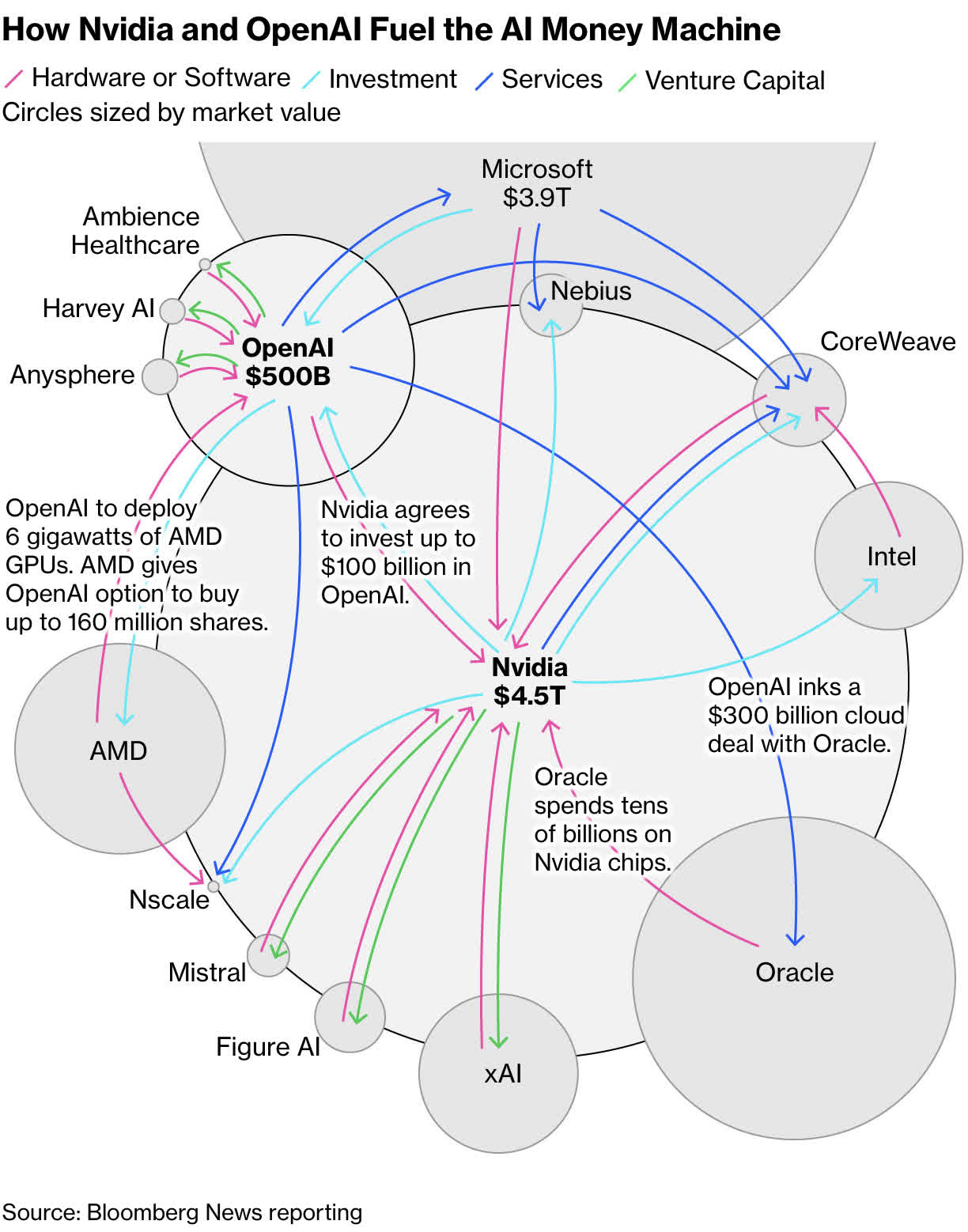
Based in France, Mistral AI has emerged as a European champion in the AI space. NVIDIA participated in Mistral’s significant funding rounds, recognizing the company’s focus on open-weight models that provide high performance with lower computational overhead. From a business perspective, Mistral represents a strategic hedge. By supporting a European-based LLM provider, NVIDIA strengthens its ties with the EU market and ensures its hardware remains the global standard, regardless of regional regulatory shifts.
Cohere
Cohere is another cornerstone of NVIDIA’s portfolio. Unlike consumer-facing AI like ChatGPT, Cohere focuses strictly on enterprise AI solutions, helping businesses build custom LLMs tailored to their proprietary data. NVIDIA’s investment here is a calculated bet on the “Enterprise AI” boom. As corporations move from experimentation to deployment, they require secure, scalable infrastructure. By funding Cohere, NVIDIA is effectively funding the demand for the H100 and B200 chips required to run these enterprise-grade models.
Anthropic and Wayve
NVIDIA has also participated in rounds for Anthropic (though it competes with other cloud providers) and Wayve, a leader in AI-driven autonomous driving. Wayve is particularly interesting from a business finance perspective. It utilizes “embodied AI,” which requires massive amounts of real-world data processing. NVIDIA’s investment here bridges the gap between digital AI and physical robotics, a sector NVIDIA believes will be the next trillion-dollar market.
Healthcare and Biotech: The Intersection of Silicon and Biology
One of NVIDIA’s most ambitious investment sectors is the pharmaceutical and biotechnology industry. CEO Jensen Huang has frequently stated that digital biology will be one of the most significant applications of AI. To that end, NVIDIA is using its capital to transform how drugs are discovered and tested.
Recursion Pharmaceuticals
In one of its most publicized moves, NVIDIA made a $50 million investment in Recursion Pharmaceuticals. This was more than just a cash infusion; it was a partnership to accelerate the training of Recursion’s biological foundation models on NVIDIA’s cloud services. For investors, this represents a shift in the biotech business model. Instead of a “hit or miss” laboratory approach, Recursion uses AI to simulate drug interactions. NVIDIA’s equity stake allows it to capture the upside of potential drug breakthroughs while selling the compute power necessary to achieve them.

EvolutionaryScale and Lunit
NVIDIA has also backed EvolutionaryScale, a startup focusing on “biological LLMs” that can design new proteins. Furthermore, their investment in Lunit—a company using AI for cancer diagnostics—demonstrates a commitment to the “AI-as-a-service” model in healthcare. These investments serve as a hedge against the cyclical nature of hardware sales; even if the demand for gaming GPUs fluctuates, the long-term capital expenditure from the healthcare sector into AI infrastructure is expected to grow exponentially.
Infrastructure and the Cloud: Building the “AI Factory”
NVIDIA’s investment strategy also targets the very “plumbing” of the internet. As traditional cloud providers like AWS and Azure develop their own internal chips, NVIDIA is investing in specialized cloud providers to ensure a diversified distribution channel for its hardware.
CoreWeave
CoreWeave is perhaps the most important infrastructure play in NVIDIA’s portfolio. Originally a crypto-mining company, CoreWeave pivoted to provide large-scale GPU clusters for AI workloads. NVIDIA has invested heavily in CoreWeave, and in return, CoreWeave has become one of the largest purchasers of NVIDIA’s high-end chips. From a corporate finance standpoint, this is a masterclass in strategic alignment. By helping CoreWeave scale via equity investments and favorable chip allocations, NVIDIA creates a dedicated, high-growth customer that isn’t incentivized to build its own silicon.
Lambda Labs
Similar to CoreWeave, Lambda Labs provides GPU-based cloud services and workstations. NVIDIA’s backing of Lambda Labs ensures that researchers and smaller startups—who may not have the budget for massive enterprise contracts—still have access to NVIDIA-powered compute. This democratizes the hardware and prevents any single cloud provider from holding too much leverage over NVIDIA.
Robotics and the Industrial Omniverse
The final pillar of NVIDIA’s investment strategy is robotics and “Embodied AI.” This involves investments in companies that are building the physical machines of the future, from humanoid robots to automated warehouses.
Figure AI
NVIDIA joined a high-profile funding round for Figure AI, a company developing general-purpose humanoid robots. This investment is deeply tied to NVIDIA’s “Omniverse” strategy—a platform for simulating digital twins of factories and robots. If Figure AI succeeds, every robot produced will likely be trained in a digital environment powered by NVIDIA and will contain an NVIDIA Jetson or Thor chip as its brain.
Applied Intuition
Focusing on the software side of autonomy, Applied Intuition provides the simulation and software infrastructure for autonomous vehicle development. NVIDIA’s investment here highlights the move toward software-defined vehicles. By owning a stake in the tools used to develop autonomous systems, NVIDIA ensures that the entire industry remains tethered to its development ecosystem.
Financial Implications: The “NVIDIA Effect” on Market Dynamics
The sheer volume of NVIDIA’s investments—estimated to involve over 30 companies in the last year alone—has created a unique market phenomenon. When NVIDIA’s 13F filings are released, the “NVIDIA Effect” often causes immediate spikes in the share prices of the companies mentioned. For example, when NVIDIA revealed its stake in SoundHound AI (an audio AI company) and Nano-X Imaging (medical imaging), both stocks saw triple-digit percentage gains in short periods.
However, for the long-term business investor, the real value lies in the synergy. NVIDIA is effectively building a “closed-loop” economy. They provide the capital to startups, who then use that capital to buy NVIDIA chips or lease NVIDIA-powered cloud space, which in turn increases NVIDIA’s revenue and stock price, providing more capital for future investments.
Risk Factors and Portfolio Concentration
While this strategy has been incredibly successful during the current AI bull market, it does carry risks. The primary risk is “concentration.” If the AI bubble were to burst or if a major shift in architecture rendered GPUs less efficient for certain tasks, NVIDIA’s entire portfolio of startups would be devalued simultaneously. Furthermore, regulatory bodies are increasingly looking at “incumbent-startup” relationships. The FTC and other global regulators are scrutinizing whether these investments constitute a form of anti-competitive behavior by locking startups into specific hardware ecosystems.
Conclusion: Investing in the Next Industrial Revolution
NVIDIA is no longer just a participant in the market; it is the market’s primary architect. By investing in Mistral, CoreWeave, Recursion Pharmaceuticals, and Figure AI, NVIDIA is diversifying its interests across every major vertical of the modern economy. Their portfolio reveals a clear conviction: the future of wealth creation is no longer in just “software” or “hardware,” but in the seamless integration of the two via artificial intelligence.
For those following the money, NVIDIA’s investments suggest that the next major breakthroughs will occur at the intersection of AI and the physical world—specifically in biotech, robotics, and specialized cloud infrastructure. As NVIDIA continues to deploy its billions, it isn’t just seeking financial returns; it is ensuring that the entire future of computing continues to run on NVIDIA silicon. For the savvy investor, watching where NVIDIA puts its money is the most direct way to see where the global economy is headed next.
aViewFromTheCave is a participant in the Amazon Services LLC Associates Program, an affiliate advertising program designed to provide a means for sites to earn advertising fees by advertising and linking to Amazon.com. Amazon, the Amazon logo, AmazonSupply, and the AmazonSupply logo are trademarks of Amazon.com, Inc. or its affiliates. As an Amazon Associate we earn affiliate commissions from qualifying purchases.