
The Dow Jones Industrial Average (DJIA), often simply referred to as “the Dow,” stands as one of the most recognizable and frequently cited stock market indices globally. For over a century, it has served as a benchmark for the health of the U.S. stock market and, by extension, the broader American economy. While many investors might be familiar with its daily movements, fewer delve into the specifics of which companies comprise this elite group and why their inclusion or exclusion matters. Understanding the constituents of the Dow is not merely an academic exercise; it offers crucial insights into the evolution of American industry, the dynamics of market performance, and sophisticated investment strategies.

Understanding the Dow Jones Industrial Average
Established in 1896 by Charles Dow and Edward Jones, the DJIA initially aimed to capture the performance of America’s burgeoning industrial sector. Its longevity and consistent presence in financial news have cemented its status as a key indicator, influencing investor sentiment and providing a snapshot of the market’s pulse.
A Brief History and Purpose
The Dow began with just 12 companies, predominantly industrial giants like General Electric and American Cotton Oil. Over time, as the U.S. economy diversified and evolved, so too did the index’s composition. Its primary purpose remains to represent a broad cross-section of major American industries, reflecting shifts in economic dominance from manufacturing to technology, healthcare, and finance. It is an index of 30 “blue-chip” companies, which are well-established, financially sound, and generally leaders in their respective fields. These companies are selected not just for their size, but also for their reputation, sustained growth, and broad investor interest, making them bellwethers for economic trends.
Price-Weighted vs. Market-Cap Weighted Indices
A fundamental aspect distinguishing the Dow from many other modern indices, such as the S&P 500, is its unique calculation methodology. The DJIA is a price-weighted index. This means that stocks with higher share prices have a greater impact on the index’s value than stocks with lower share prices, regardless of their total market capitalization. For instance, a $1 increase in a $100 stock will move the Dow more than a $1 increase in a $20 stock, even if the latter company has a significantly larger market valuation. This contrasts sharply with market-capitalization-weighted indices, where companies with larger total market values (share price multiplied by shares outstanding) exert more influence. While this price-weighted approach is a historical artifact, it means that managing a portfolio that precisely tracks the Dow requires a different strategy compared to market-cap-weighted benchmarks.
The Current Landscape: Key Constituents of the DJIA
The precise list of companies in the Dow is not static; it evolves to reflect changes in the U.S. economy. While the committee strives for stability, removals and additions are made periodically to ensure the index remains a relevant barometer.
A Diverse Cross-Section of American Industry
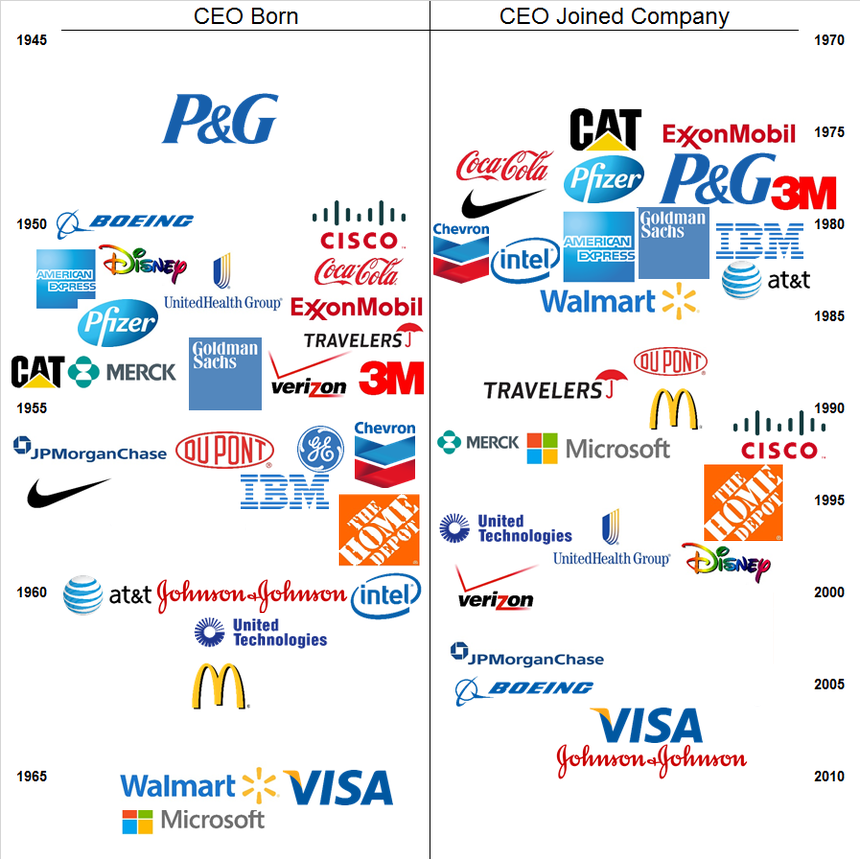
As of recent compositions, the Dow includes a wide array of sectors, moving far beyond its industrial roots. Tech giants like Apple and Microsoft, for example, demonstrate the profound shift in economic leadership towards innovation and digital services. Healthcare is strongly represented by companies such as Johnson & Johnson and UnitedHealth Group, underscoring the sector’s critical and growing importance. Financial services firms like Goldman Sachs and JPMorgan Chase highlight the centrality of capital markets, while consumer staples (Procter & Gamble, Coca-Cola) and discretionary companies (Nike, McDonald’s, Disney) reflect the strength of consumer spending. Industrials, though no longer dominant, still maintain a presence through firms like Boeing and Caterpillar, showcasing the enduring significance of manufacturing and infrastructure.
This diverse mix ensures that the Dow provides a multifaceted view of corporate America. Investors tracking the Dow are essentially gaining exposure to a carefully curated selection of companies that are leaders in their respective fields and collectively paint a picture of the nation’s economic output and innovation.
The Dynamic Nature of the Index
It is crucial for investors to understand that the Dow’s composition is not immutable. The committee responsible for its oversight makes changes when a company’s business is no longer representative of the broader market, when a significant merger or acquisition occurs, or to improve the overall sector balance of the index. These changes can have implications for investors, particularly those holding index funds or exchange-traded funds (ETFs) that track the DJIA. When a company is added, funds tracking the Dow must purchase its shares, potentially driving up its price. Conversely, a removal can lead to selling pressure. For individual investors, changes serve as a reminder that even the most established indices are subject to strategic adjustments to maintain their relevance.
The Selection Process: How Companies Join and Depart
Unlike some indices that follow strict quantitative rules for inclusion, the Dow’s selection process is more subjective, guided by a committee’s discretion. This unique aspect lends both strength and occasional criticism to its composition.
The Role of the S&P Dow Jones Indices Committee
The decision-making power for the DJIA’s composition lies with the Averages Committee at S&P Dow Jones Indices. This committee does not adhere to rigid criteria like market capitalization alone. Instead, their choices are based on a qualitative assessment aimed at ensuring the index accurately reflects the health and direction of the U.S. economy. When considering a company for inclusion, they look at several factors that transcend simple metrics.
Criteria Beyond Market Cap: Reputation and Representation
The committee considers a company’s excellent reputation, sustained growth, and investor interest as paramount. A company must be a significant player in its industry, generating a substantial portion of sales in the U.S. and be well-regarded among investors. The goal is to ensure the index maintains adequate sector representation, avoiding overconcentration in any single industry, and that its 30 components collectively offer a useful proxy for the broader stock market. For instance, if a particular sector like technology gains significant economic importance, the committee might seek to add a leading tech company if it feels the sector is underrepresented. Conversely, if an existing component’s business significantly declines or becomes less relevant to the general economy, it might be replaced. This subjective, forward-looking approach allows the Dow to adapt to economic shifts more organically than purely quantitative indices.
Why the Dow Matters to Investors and the Economy
Despite criticisms of its price-weighted methodology and its limited number of components compared to broader indices, the Dow’s influence on financial markets and public perception remains profound.
A Bellwether of Economic Health
Historically, the Dow has been viewed as a barometer for the U.S. economy. Its performance is often cited in news reports as a quick summary of market sentiment. While the S&P 500, with its 500 components and market-cap weighting, provides a more comprehensive view, the Dow’s collection of 30 blue-chip companies often moves in tandem with the broader market and can signal underlying economic trends. A consistently rising Dow often indicates investor confidence and economic expansion, while sustained declines can suggest a downturn. For individual investors, monitoring the Dow provides an accessible, high-level overview of how the market is generally performing, even if it doesn’t represent every niche.
Implications for Portfolio Diversification
For investors constructing a diversified portfolio, understanding the Dow’s components can be instructive. While simply investing in all 30 companies might not offer ideal diversification due to the index’s specific construction, the underlying principle of investing in financially sound, leading companies across various sectors is valuable. Investors might use the Dow as a starting point to identify robust companies that have demonstrated long-term stability and growth. However, relying solely on the Dow for diversification could lead to sector concentration risks, given its limited number of stocks and the committee’s specific selection biases. A truly diversified portfolio typically includes a broader range of companies, including small and mid-cap stocks, international equities, and various asset classes beyond stocks.
The Perils and Promises of Tracking the Dow
Tracking the Dow can offer both opportunities and challenges. On the one hand, investing in companies that have demonstrated the stability and leadership required for Dow inclusion can lead to consistent long-term returns. These companies often pay dividends and possess strong balance sheets, making them attractive to value-oriented investors. On the other hand, the price-weighted nature of the index means that certain high-priced stocks can disproportionately influence performance, which might not always align with an investor’s desired exposure. Moreover, the index’s concentrated nature means that the poor performance of even a few major components can significantly drag down the entire average. For example, a major industrial downturn impacting a few key components could heavily weigh on the index, even if other sectors are performing well.
Investing in Dow Companies: Strategies and Considerations
For investors interested in the companies that form the bedrock of the Dow, there are several avenues to consider, each with its own advantages and disadvantages.
Individual Stock Analysis
One direct approach is to research and invest in individual companies within the Dow. This requires diligent fundamental analysis to assess each company’s financial health, competitive advantages, management quality, and future growth prospects. Investors choosing this path can tailor their holdings to align with their specific financial goals, risk tolerance, and ethical considerations. For example, an investor bullish on the technology sector might choose to heavily invest in Apple or Microsoft, while one seeking stable income might favor dividend-paying giants like Coca-Cola or Johnson & Johnson. The benefit here is complete control over the portfolio, but it demands significant time, research, and expertise.
ETF and Mutual Fund Options
For those seeking diversified exposure to the Dow without the complexities of individual stock selection, Exchange Traded Funds (ETFs) and mutual funds that track the DJIA are popular choices. Funds like the SPDR Dow Jones Industrial Average ETF (DIA) aim to replicate the performance of the index by holding the 30 component stocks in proportions that reflect their weighting within the Dow. These funds offer instant diversification across the Dow’s constituents, typically come with lower expense ratios than actively managed funds, and provide liquidity as they trade like stocks on an exchange. This approach is ideal for investors who believe in the long-term strength of the Dow’s blue-chip companies and prefer a passive investment strategy.

Long-Term Growth vs. Short-Term Volatility
Investing in Dow companies, whether individually or through funds, generally aligns with a long-term growth strategy. These established companies, often referred to as “blue chips,” are less prone to the extreme volatility seen in speculative or smaller growth stocks. They tend to be stable, generate consistent earnings, and often return value to shareholders through dividends and share buybacks. However, even these titans are not immune to market corrections, economic downturns, or company-specific challenges. While the Dow components historically demonstrate resilience, investors must maintain a long-term perspective, understanding that short-term market fluctuations are a natural part of the investment landscape. A patient approach, focused on the fundamental strength and ongoing innovation of these leading American enterprises, is typically rewarded over extended periods.
aViewFromTheCave is a participant in the Amazon Services LLC Associates Program, an affiliate advertising program designed to provide a means for sites to earn advertising fees by advertising and linking to Amazon.com. Amazon, the Amazon logo, AmazonSupply, and the AmazonSupply logo are trademarks of Amazon.com, Inc. or its affiliates. As an Amazon Associate we earn affiliate commissions from qualifying purchases.