
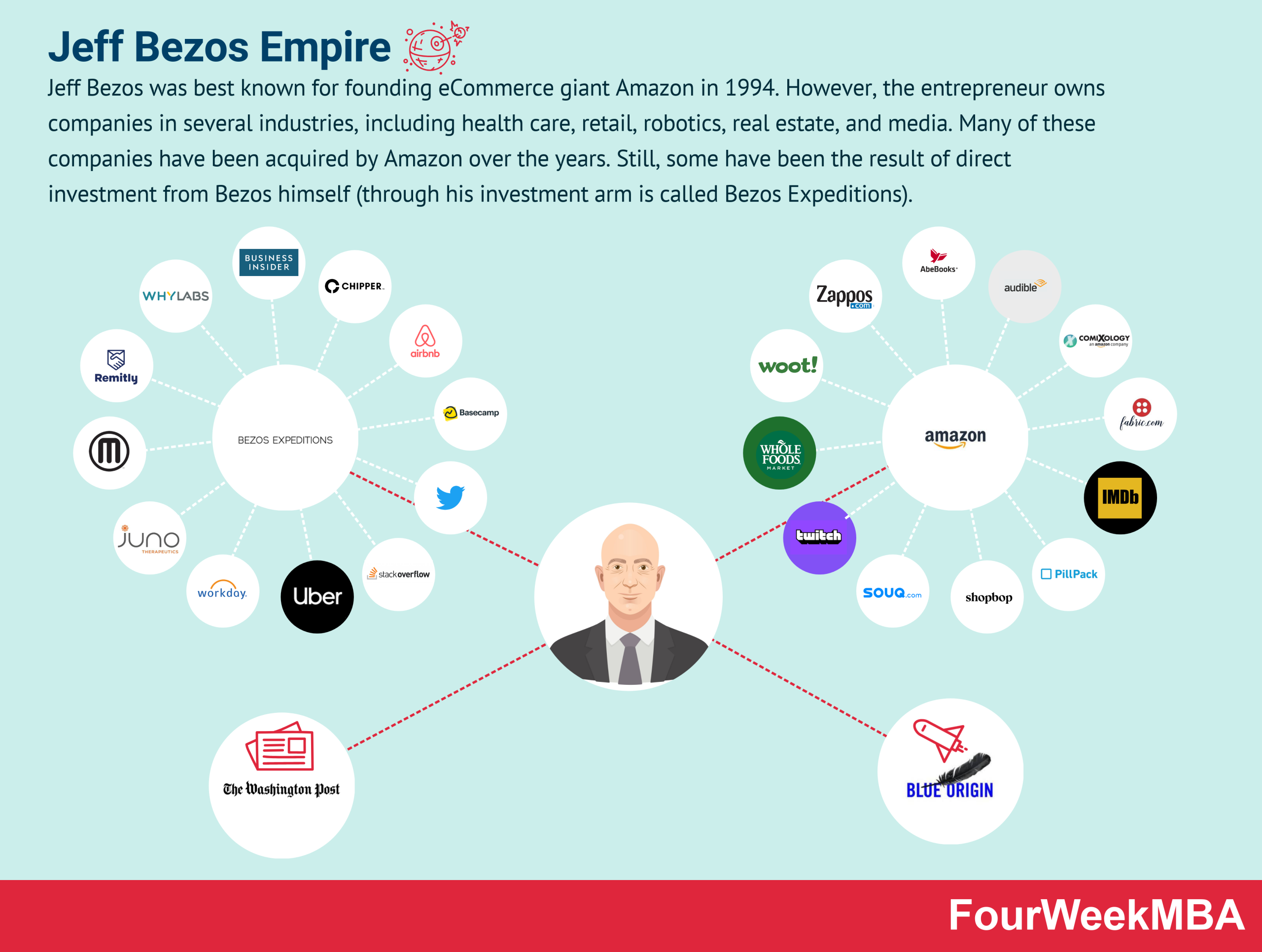
Jeff Bezos, a name synonymous with innovation and immense wealth, is primarily known as the visionary founder of Amazon. Yet, to assume his financial empire begins and ends with the e-commerce giant would be a significant oversight. His entrepreneurial spirit, coupled with an unparalleled capacity for long-term strategic thinking, has led him to deploy vast sums of capital across a diverse range of ventures, shaping industries far beyond online retail. This article delves into the intricate web of companies and investments under Bezos’s influence, examining the financial rationale, the strategic deployments of capital, and the broader implications for his personal and philanthropic legacy, all viewed through the lens of robust financial analysis.
The Core Pillar: Amazon’s Enduring Financial Power
At the heart of Jeff Bezos’s financial story lies Amazon, a company that began as an online bookstore and mushroomed into a global behemoth touching nearly every aspect of consumer life and cloud computing. Understanding Bezos’s current ownership portfolio requires first acknowledging the profound and ongoing financial relationship he maintains with his most celebrated creation.
From Bookstore to Global Conglomerate: Amazon’s Financial Genesis
Amazon.com, founded in 1994, wasn’t just a business idea; it was a financial gamble on the nascent internet’s commercial potential. Bezos famously raised capital from early investors, including his parents, and launched the venture from his garage. His initial ownership stake, built on this early capital and relentless reinvestment, laid the foundation for an unprecedented accumulation of wealth. Amazon’s strategy, often characterized by razor-thin margins and aggressive expansion, was a deliberate financial play: prioritize market share and long-term growth over immediate profitability. This long-term capital deployment strategy, initially viewed skeptically by many financial analysts, ultimately proved to be a masterclass in value creation, propelling Amazon’s stock to astronomical heights and cementing Bezos’s status as one of the world’s richest individuals. His wealth is intrinsically tied to the continued financial performance and valuation of Amazon shares, even after his departure as CEO.
Shareholder Value and Strategic Exits: Bezos’s Relationship with Amazon Stock
While Bezos stepped down as CEO in July 2021, he remains Amazon’s largest individual shareholder, retaining a significant equity stake. This continued ownership means that Amazon’s financial health, its quarterly earnings, market cap fluctuations, and strategic direction, still directly impact his net worth. Over the years, Bezos has strategically diversified his portfolio by periodically selling Amazon shares. These carefully timed divestments are not merely about cashing out; they are critical financial maneuvers that generate the liquidity necessary to fund his other ambitious projects and philanthropic initiatives. For instance, he famously stated he sells approximately $1 billion worth of Amazon stock annually to fund Blue Origin. This systematic reduction in his Amazon holdings, while still retaining a substantial position, exemplifies a sophisticated wealth management strategy aimed at funding new ventures while managing concentration risk inherent in holding a single, albeit dominant, asset. It reflects a shift from an operational leader whose compensation was largely equity-based to a strategic investor deploying capital globally.
Blue Origin: Investing in the Final Frontier
Beyond the terrestrial dominion of e-commerce, Jeff Bezos has embarked on a deeply personal yet monumentally expensive venture into space exploration through Blue Origin. This company represents a significant allocation of his personal capital, underscoring a long-term investment philosophy that often transcends conventional financial returns.
A Personal Investment in Space Exploration: Funding and Vision
Blue Origin, founded by Bezos in 2000, is a privately funded aerospace manufacturer and spaceflight services company. Unlike Amazon, which was initially funded by external investors and eventually went public, Blue Origin has primarily been a recipient of Bezos’s personal wealth. This distinction is crucial from a financial perspective. Without the pressures of public shareholders demanding quarterly profits, Blue Origin operates on a different financial timeline, one dictated by engineering milestones and scientific advancements rather than immediate revenue generation. Bezos’s commitment to funding Blue Origin through the sale of his Amazon stock highlights an extraordinary deployment of capital towards a highly speculative, capital-intensive industry. It’s an investment driven by a deeply held passion for space colonization and a long-term vision for humanity’s future, rather than an expectation of near-term financial payback. The scale of this private funding is colossal, distinguishing it from most other ventures and signaling a profound personal financial commitment.
The Long-Term Capital Bet: Financial Returns vs. Foundational Goals
From a traditional investment standpoint, Blue Origin is a high-risk, high-reward proposition with an exceptionally long time horizon for realizing substantial financial returns. The upfront capital expenditure required for rocket development, manufacturing facilities, and extensive testing is immense. While the nascent space tourism and satellite launch markets offer potential revenue streams, the competitive landscape (featuring rivals like SpaceX) and the inherent technical challenges mean profitability is not guaranteed in the near term. Bezos’s investment in Blue Origin can be seen as a “foundational investment” – one designed to lay groundwork for future industries and human expansion, rather than generate immediate shareholder value. It’s a strategic allocation of capital that aims for transformational impact, viewing the financial returns as a potential byproduct of achieving a grander vision, possibly decades in the future. This patient capital strategy is a hallmark of truly deep-pocketed investors who can afford to wait out the market cycles and build entirely new economic paradigms.
The Washington Post: A Strategic Acquisition with Broader Implications
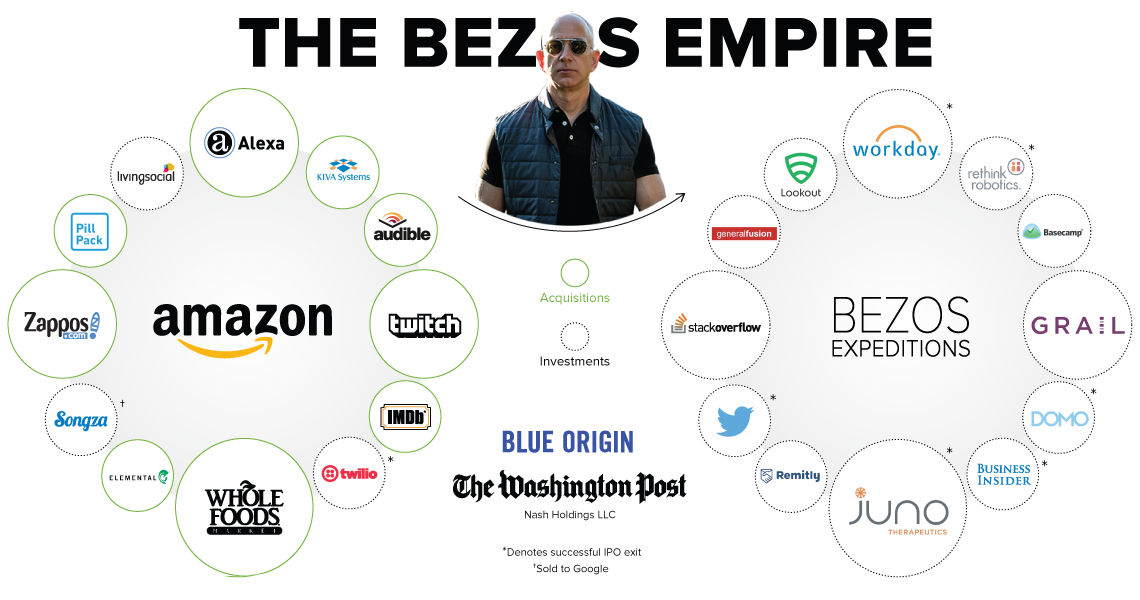
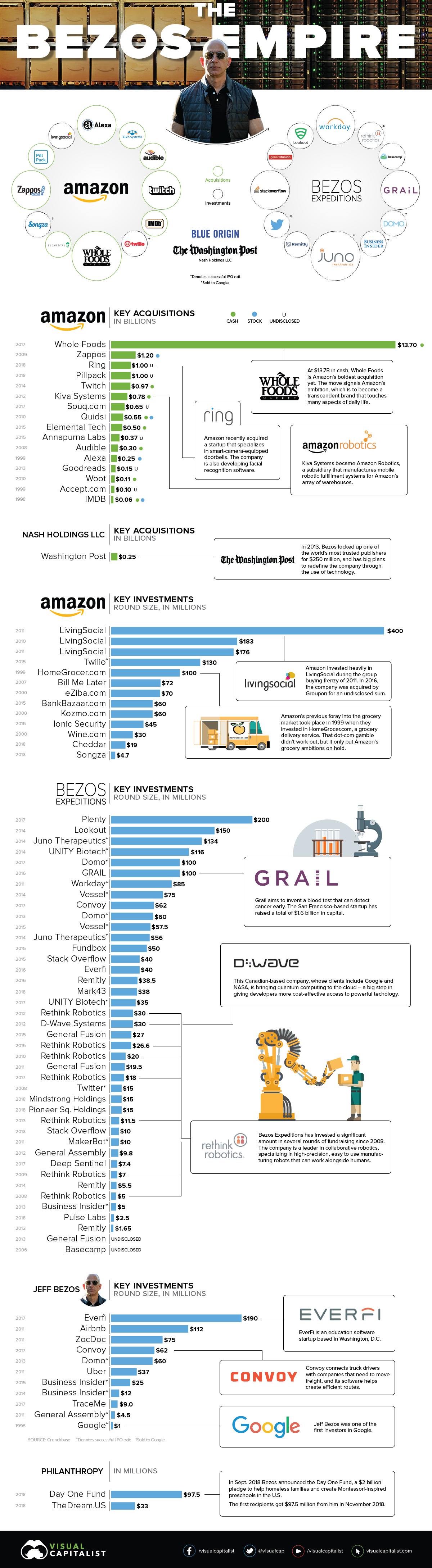
In 2013, Jeff Bezos made headlines with another significant acquisition, this time outside the tech realm: he personally purchased The Washington Post for $250 million. This move was not merely a foray into media but a strategic financial and operational play designed to revitalize a venerable institution facing severe economic headwinds.
Reinvigorating an Institution: Capital Infusion and Business Model Innovation
At the time of its acquisition, The Washington Post, like many traditional newspapers, was grappling with declining print revenues, readership shifts to digital platforms, and mounting financial losses. Bezos’s personal capital infusion, rather than a corporate acquisition by Amazon, allowed the Post to embark on a radical transformation without the direct pressure of public shareholders or short-term profitability demands. His approach was fundamentally a financial and operational overhaul. He encouraged investment in digital technology, data analytics, and subscription models, leveraging the lessons learned from Amazon’s customer-centric and data-driven approach. This capital allocation enabled the Post to invest heavily in its digital infrastructure, expand its journalistic staff, and experiment with new revenue streams. Financially, this meant moving away from reliance on advertising and towards a robust, predictable digital subscription model. The turnaround has been notable, with the Post reportedly achieving profitability and significant growth in digital subscriptions under Bezos’s ownership, demonstrating the power of strategic capital deployment combined with operational expertise.
Beyond Profit: The Financial Value of Influence and Data
While The Washington Post has shown significant financial improvement under Bezos, the acquisition’s value extends beyond simple profit-and-loss statements. For a figure like Bezos, owning a respected media institution also brings intangible financial benefits, particularly in terms of influence and access to information. In an increasingly data-driven world, control over a major news outlet provides insights into public sentiment, policy debates, and global events that can be invaluable for a titan of industry with vast financial interests. Moreover, the Post’s resurgence under his ownership serves as a powerful testament to his business acumen, further enhancing his personal brand equity which, while intangible, has a direct financial value in terms of access to opportunities, partnerships, and favorable public perception. This strategic financial calculus considers not just direct monetary returns but also the broader ecosystem of influence and information that underpins long-term wealth creation and preservation.
Bezos Expeditions and Other Venture Plays: Diversifying the Portfolio
Beyond his headline-grabbing ventures, Jeff Bezos also operates a private investment vehicle, Bezos Expeditions. This entity serves as his personal venture capital arm, through which he makes numerous smaller, yet strategically significant, investments in high-growth companies across various sectors, further diversifying his already vast financial portfolio.
Identifying High-Growth Potential: Early-Stage Investments and Exits
Bezos Expeditions focuses on identifying and funding companies with disruptive potential, often in their early stages. This strategy is classic venture capital: provide critical early funding in exchange for equity, hoping that a few successful exits will generate substantial returns that more than cover the losses from less successful ventures. Historically, Bezos Expeditions has made impactful investments in companies like Google (an early personal investment predating the formal fund), Airbnb, Twitter, and Uber, demonstrating a keen eye for nascent technologies and business models that would go on to reshape industries and create immense shareholder value. These investments represent a calculated financial risk, deploying capital into innovative startups with the potential for exponential growth. The returns from successful exits (selling shares once the companies mature or go public) provide additional liquidity and significantly contribute to Bezos’s overall wealth, creating a self-sustaining financial ecosystem of reinvestment.
Strategic Partnerships and Indirect Holdings: The Broader Ecosystem
Bezos’s influence also extends to a broader ecosystem of companies through indirect holdings and strategic partnerships that may not be direct “ownership” in the traditional sense but represent significant financial interests. These can include investments made by venture capital funds that Bezos has backed as a limited partner, or strategic alliances formed through Amazon’s corporate venture arms (like the Alexa Fund). These indirect holdings expand his financial footprint across emerging technologies, consumer services, and global markets. Such investments are often made with an eye toward future synergies with his existing empire, or simply to gain exposure to promising new sectors. This layered approach to investment ensures that Bezos’s capital is not only diversified across different companies but also across different stages of growth and strategic objectives, from foundational long-term bets to high-growth venture plays.
Managing a Billionaire’s Wealth: Strategies for Sustained Financial Influence
Managing a fortune of Jeff Bezos’s magnitude involves far more than simply holding shares. It necessitates sophisticated financial strategies encompassing asset allocation, philanthropic capital deployment, and meticulous estate planning to ensure sustained financial influence and legacy building.
Philanthropic Capital Deployment: The Bezos Earth Fund and Day One Fund
In recent years, a significant portion of Bezos’s capital has been directed towards ambitious philanthropic endeavors, marking a new phase in his financial strategy. The Bezos Earth Fund, launched in 2020 with a $10 billion commitment, is dedicated to combating climate change. This represents one of the largest philanthropic commitments in history and involves a structured deployment of capital over many years, funding scientists, NGOs, activists, and private sector innovators. Similarly, the Day One Fund, launched in 2018 with a $2 billion commitment, focuses on funding non-profit organizations that help homeless families and creating a network of high-quality, full-scholarship preschools in underserved communities. From a financial perspective, these funds represent massive capital endowments that are managed to maximize their impact, often investing in a diversified portfolio to ensure their longevity and ability to issue grants. This shift reflects a strategic re-allocation of a portion of his immense wealth towards societal impact, becoming a significant financial force in the philanthropic sector.
The Long Game: Estate Planning and Legacy Building through Investments
For billionaires like Bezos, wealth management extends far beyond personal consumption to encompass a multi-generational legacy. Estate planning for a fortune of his scale is a complex financial undertaking involving trusts, foundations, and strategic asset transfers designed to minimize taxes, preserve wealth, and direct capital towards specified beneficiaries or causes for decades, if not centuries. His ongoing investments, from Blue Origin’s long-term vision to his venture capital activities, are not just about personal financial gain but also about shaping a lasting legacy. The companies he owns, and the way he deploys his capital, are integral to defining his impact on technology, journalism, space exploration, and philanthropy. This “long game” investment philosophy is about using capital as a tool for profound and enduring influence, ensuring that his financial decisions today will resonate across future generations and continue to fuel innovation and societal progress. The strategic diversification of his portfolio, coupled with his philanthropic commitments, forms a robust framework for not just accumulating wealth, but intelligently deploying it for maximum long-term impact.
aViewFromTheCave is a participant in the Amazon Services LLC Associates Program, an affiliate advertising program designed to provide a means for sites to earn advertising fees by advertising and linking to Amazon.com. Amazon, the Amazon logo, AmazonSupply, and the AmazonSupply logo are trademarks of Amazon.com, Inc. or its affiliates. As an Amazon Associate we earn affiliate commissions from qualifying purchases.